







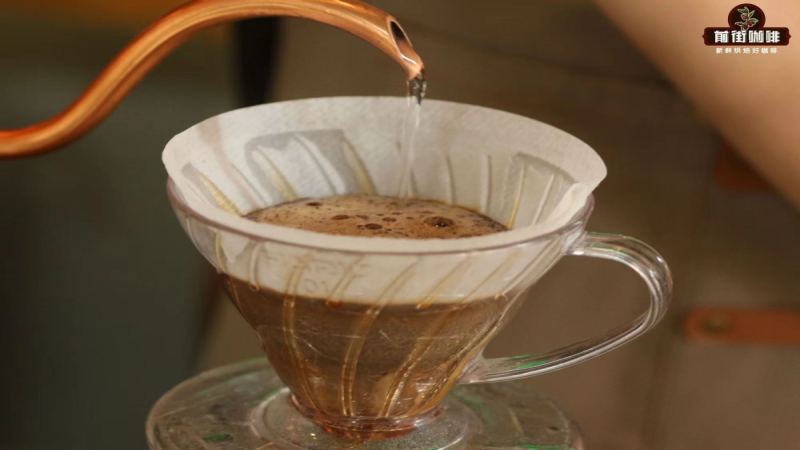
What Does Yunnan Coffee Arabica Coffee Taste Like in a Pour-Over?
Yunnan small-bean coffee is mostly Catimor, a hybrid of Arabica and Robusta, so it brings nutty aroma, herbal and chocolate notes, and soft acidity in a pour-over. Catimor was bred by the Portuguese research center CIFC in 1959 from Timor and Caturra, inheriting Robusta's resistance to leaf rust and high yields, which is why it dominates Yunnan plantings above ninety percent.
The Robusta lineage has long raised flavor concerns, since the fruit ripens fast and can develop insufficiently if handled poorly. Washed processing at Baoshan helps clean up the cup, and pour-over lets the layers shift as the coffee cools. Using hotter water and a slightly finer grind coaxes out sweetness and keeps negative, earthy notes in check.
Pour-over extraction can reveal a coffee's layered flavors as the temperature changes, so what would Yunnan small-bean coffee taste like when interpreted through pour-over? Before you start brewing, let's go through the varietal background of Yunnan small-bean coffee with Front Street—from the origins of Catimor, to the terroir conditions of the Baoshan producing region, and then to the clean profile brought by washed processing. This article will also provide Front Street's recommended pour-over parameters and flavor description, to help you gain a more complete understanding of this Yunnan bean that combines nutty aroma, herbal and chocolate notes, with soft acidity.
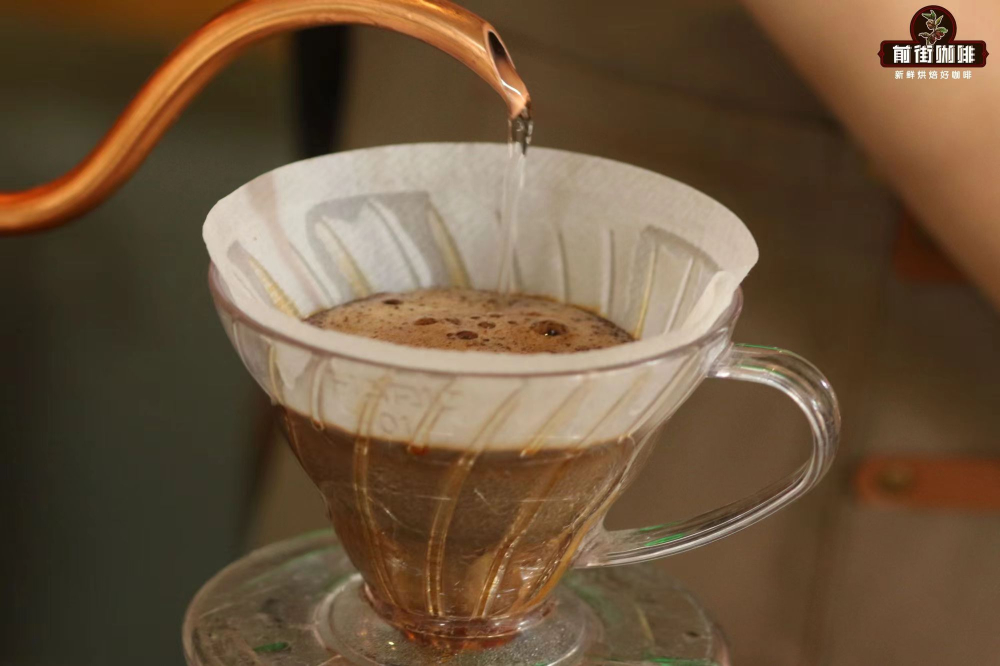
Pour-over has always been Front Street's preferred extraction method; the black coffee obtained after pouring hot water reveals different layers of flavor as the temperature changes. If we switch to pour-over to interpret Yunnan small-bean coffee, what kind of taste will we get? Before the formal brewing, let's first get to know several key characteristics of Yunnan small-bean coffee together with Front Street.
Starting from the variety of Yunnan small-bean coffee
Among the coffee beans produced in Yunnan, Catimor accounts for more than ninety percent. Catimor is a hybrid of Arabica and Robusta; on one hand, it inherits Robusta's strong disease resistance and high yield, and on the other hand, because of this Robusta lineage, its flavor has long been questioned.
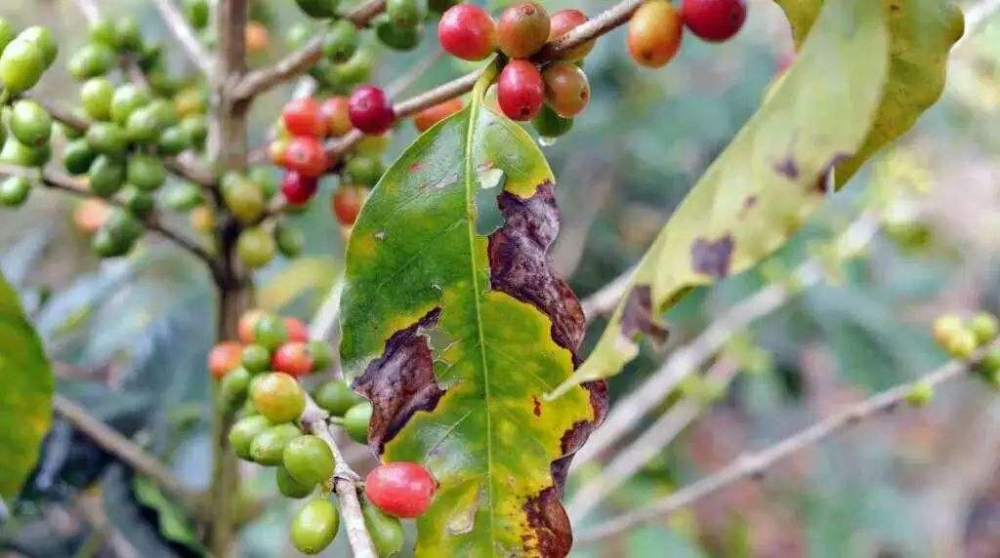
Catimor is the offspring of Timor and Caturra. To explain its origins clearly, we have to start with leaf rust. Leaf rust can be called an incurable disease of coffee trees. It first appeared in 1861 in the Lake Victoria producing region of East Africa, then spread rapidly to many places in Southeast Asia, and eventually affected large coffee-producing areas in southern, central, and western Africa. In order to save the coffee industry, in 1959 the Portuguese Coffee Leaf Rust Research Center CIFC bred Catimor with the goals of disease resistance, high yield, and flavor at the same time.
Catimor inherited Timor's Robusta genes, giving it stronger resistance to coffee berry disease and coffee leaf rust, and better performance against pests and diseases overall. Its fruit ripens quickly and yields are considerable. But this also means flavor development may be insufficient, and if not handled properly, it can easily produce negative sensations such as heavy bitterness and grassy notes.
What Yunnan introduced early on was mainly pure Arabica Typica, which suffered from leaf rust attacks, along with poor disease resistance and low yield. In 1992 Nestlé introduced Catimor to Yunnan. With its disease resistance and high yield, Catimor quickly replaced traditional varieties and became the mainstream of Yunnan's coffee industry. So what locals call Yunnan small-bean has also changed from Typica to the widely planted Catimor of today. The Yunnan everyday coffee beans launched by Front Street come precisely from Baoshan Catimor.
Baoshan coffee producing region
Baoshan began large-scale coffee cultivation as early as 1952, and has more than sixty years of production history to date. It was once called "Asia's best coffee producing region."
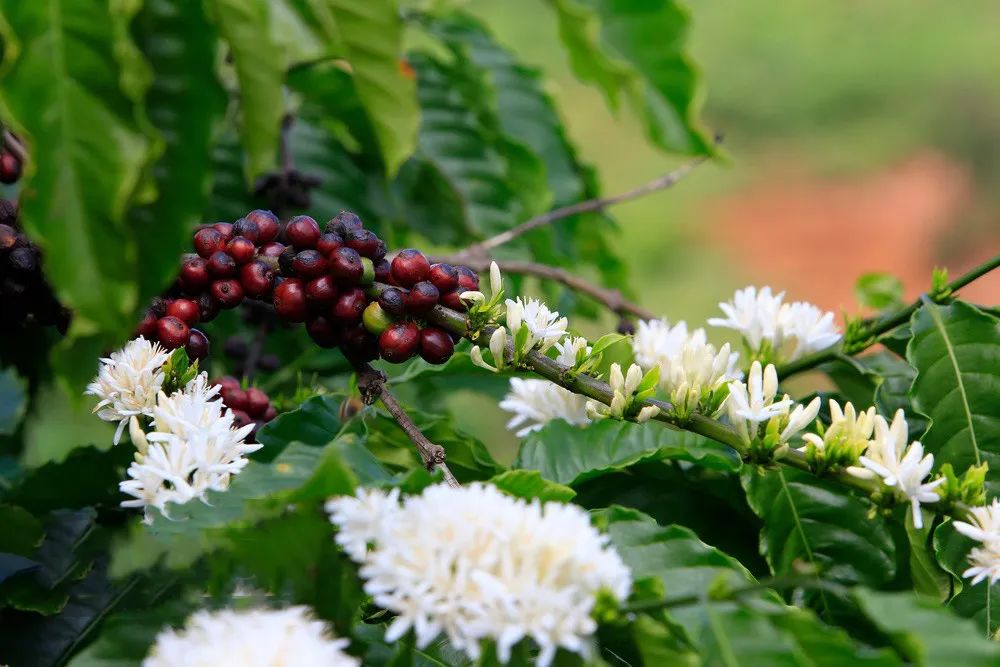
Baoshan is located on a low-latitude plateau, with diverse topography and landforms, and belongs to a low-latitude mountainous subtropical monsoon climate, forming a three-dimensional climate of "four seasons on one mountain, different weather every ten li." Here the annual temperature difference is small while the daily temperature difference is large, with an average annual temperature of 14–17°C; rainfall is abundant, with distinct wet and dry seasons and uneven distribution, and annual rainfall ranges between 700–2100 mm. The reasonably low rainfall provides favorable conditions for coffee cherry growth and also creates the unique sweet aftertaste of Baoshan small-bean coffee.
Washed processing
The harvest period of Yunnan coffee cherries usually falls in the rainy season, making it difficult to widely adopt sun-drying for as long as three to four weeks. Local coffee farmers adapt to local conditions, and under the hot and rainy climate, most choose the washed method to process green coffee beans.
After picking, the coffee cherries are first machine-depulped to remove the skin and pulp. The depulped beans are sent into fermentation tanks to ferment, using fermentation to break down the pectin layer; after fermentation is complete, they are repeatedly rinsed with clean water to remove the decomposed pectin, and finally the coffee beans are dried for 1–2 weeks. Once dried, the beans can be stored, waiting to be shipped to various places.
Washed coffee has the characteristics of being clean, stable, low in defect rate, and higher in acidity, and can better present the coffee's own flavor. The Yunnan everyday coffee beans launched by Front Street are precisely washed Baoshan small-bean coffee. Front Street's original intention in making everyday coffee beans is to hope that everyone can understand major producing regions by tasting the basic flavors of the producing areas, so we selected multiple classic producing regions, such as Africa's Yirgacheffe, the Americas' Brazil and Colombia, Asia's Indonesia Sumatra... most of which use washed processing to present the distinctive profile of the producing region.
Reference for pour-over Yunnan small-bean coffee
Front Street believes that Yunnan coffee should carry a rich coffee aroma while also having a certain amount of acidity, so a medium roast level is chosen. Coffee beans enter their best tasting period 4–7 days after roasting. Beyond this time (about one and a half months after roasting), the aroma may already have faded and some woody notes may develop. To avoid this situation, Front Street has mentioned in many articles that the most important thing is to only ship coffee beans freshly roasted within 5 days, so everyone can taste coffee with excellent flavor.
Considering that Yunnan small-bean coffee leans toward a balanced mouthfeel, that is, avoiding excessively high acidity and heavy bitterness. Therefore, Front Street uses a V60 dripper, with a medium-fine grind size and medium water temperature for extraction.
Brewing parameters:
Dripper: hario v60
Dose: 15g
Water temperature: 90 degrees Celsius
Grind size: 75% passing through a No. 20 sieve
Water-to-coffee ratio: 1:15
Three-stage pouring: wet the coffee bed with twice the weight of the coffee grounds in water, forming a dome and blooming for 30s, then pour in a small stream in circles from the inside out until 125g as the first stage. Wait until the coffee bed drops to half the height of the dripper, then continue pouring the third stage with the same fine stream until 225g, until all the coffee liquid has filtered through, then remove the dripper. The time is about 2 minutes.
The pour-over Yunnan small-bean coffee smells very nutty. On the palate there are herbal notes, chocolate, and caramel, with a faint fruity acidity in the aftertaste. The overall mouthfeel is balanced, with good cleanliness.
For professional coffee knowledge exchange and more coffee bean information, please follow Coffee Workshop (WeChat public account cafe_style)
For more specialty coffee beans, please add the private WeChat of Front Street Coffee (FrontStreet Coffee), WeChat ID: qjcoffeex
The above content is compiled by CoffeeHunters, a coffee news website.


