







What Are Civet Coffee Beans and Is Kopi Luwak Black Coffee?
Indonesian civet coffee, known as Kopi Luwak, is made from beans that pass through a civet's digestive tract before being collected, cleaned, and roasted. Its flavor is mellow and low in bitterness and acidity, with an earthy, gamey aroma, a syrupy body, honey and chocolate notes, and a cool mint-like finish. It is black coffee when brewed without milk or sugar.
Much of what is sold as Vietnamese civet coffee is instant powder, only civet-flavored rather than the real thing, since Vietnam mainly grows Robusta for blends. Genuine Kopi Luwak is expensive and now often farmed rather than gathered in the wild, so buyers should check origin and form. Brewing with a medium-dark roast and a KONO dripper keeps the cup sweet and smooth.
Indonesian civet coffee is often called the "nobility" of coffee, formally known as Kopi Luwak, and its flavor is noted for being mellow, low in bitterness and acidity, and having a unique cool finish. This article discusses whether it belongs to black coffee, how to identify genuine versus fake civet coffee, and the differences between wild and farmed civet coffee. It also sorts out its formation process from digestion by the civet to fermentation processing, while retaining Front Street Coffee's medium-dark roasting approach and KONO dripper brewing parameters, helping readers understand the true taste and current market situation of this rare coffee.
For more specialty coffee knowledge, please follow the WeChat public account: Front Street Coffee (FrontStreet Coffee)
In Indonesia, civet coffee is regarded by many as the "nobility" of coffee. Indonesian coffee usually has an earthy aroma and Chinese herbal medicine character, and its body is also relatively high; civet coffee's earthy, gamey smell is even more pronounced, and its texture is so thick that it approaches syrup. It also has a special aroma, and after drinking it, a slight mint-like coolness remains in the mouth, which is not common in ordinary coffee. After finishing it, take a deep breath, or hold a sip of cold water in your mouth, and a coolness will rise from the mouth to the throat, just like having just eaten a mint candy.
After brewing, civet coffee presents an aroma similar to honey and chocolate. Even without sugar and creamer, it has a sweet, silky mouthfeel, is not bitter, not sour, not astringent, and does not upset the stomach after swallowing. Even when the coffee cools, the taste remains sweet and mellow.
Many civet coffees have appeared on the market, among which Vietnamese civet coffee is relatively common. Is this authentic civet coffee? Vietnam's coffee export volume is very large, and it is the world's second-largest coffee-producing country. The main coffee species produced in Vietnam is Robusta coffee beans, and Robusta is generally used as an auxiliary blend for instant coffee and espresso. The Vietnamese civet coffee sold is instant coffee, the kind in individual packets that is dissolved directly in boiling water. This kind of civet coffee is fake civet coffee; it is only civet-flavored coffee, not authentic civet coffee. Authentic civet coffee cannot be this cheap. Its output determines that it cannot be sold so cheaply. Civet-flavored coffee is merely coffee with a flavor similar to civet coffee, and it contains no civet coffee at all.
Civet coffee
Authentic civet coffee comes from Indonesia, and its original name is "civet coffee." Cat shit coffee is only another name for this coffee; its formal name is "Kopi Luwak." Kopi means "coffee" in Indonesian, while Luwak refers to a wild animal called the "civet." The origin of civet coffee can be traced back to the Indonesian colonial era, when the Dutch government prohibited locals from eating and roasting coffee from the plantations, yet accidentally discovered that coffee beans excreted by wild civets after eating in the plantations had a completely different and delicious flavor.
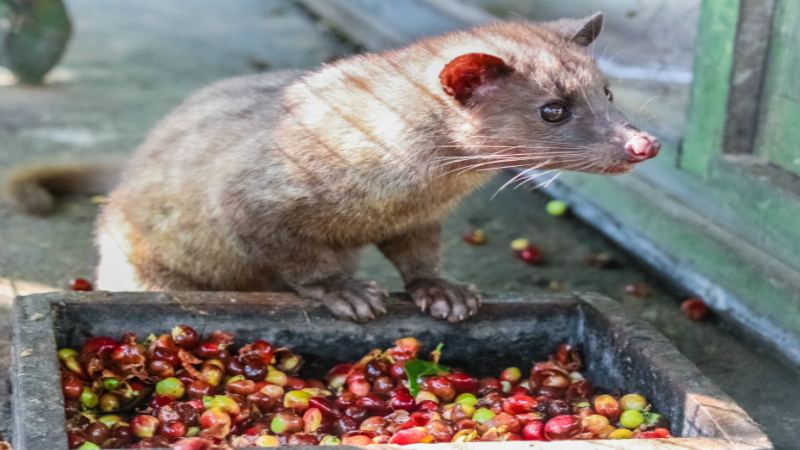
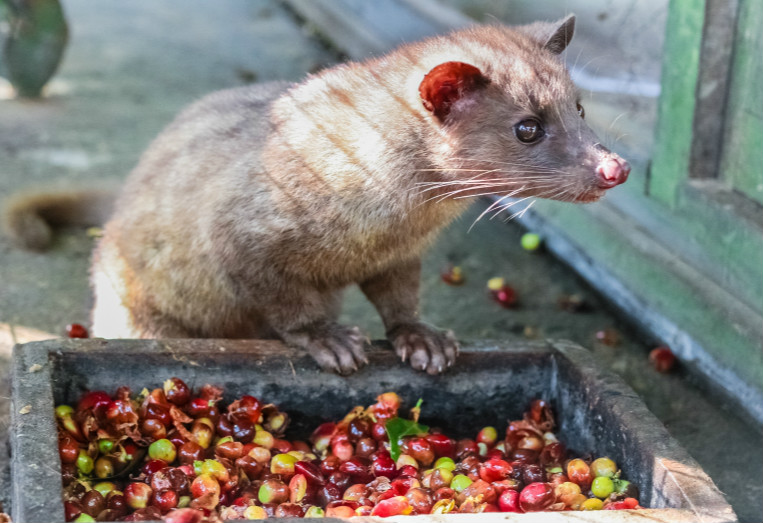
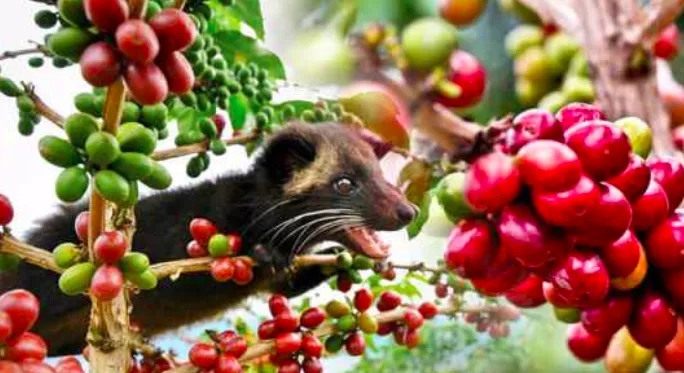
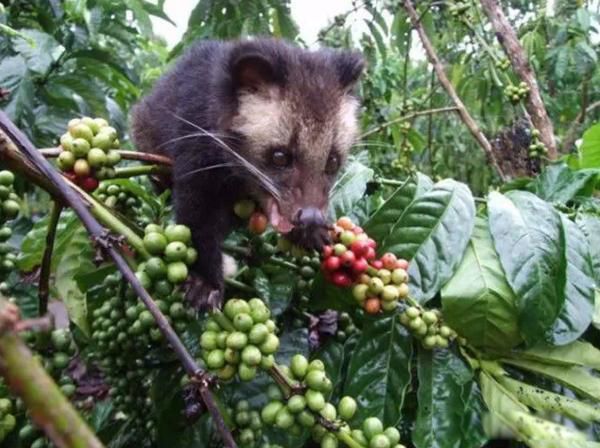
Civet coffee (Kopi Luwak) was originally obtained from the feces of an animal called the civet on the Indonesian island of Sumatra and processed into green coffee beans. Although this most expensive coffee is related to feces, it also creates civet coffee's excellent taste. The civet is a wild omnivore, and locals like to call it luwak. It has a pointed mouth and dark gray fur, and likes to jump for ripe, sweet, fully red coffee cherries to treat itself. The pulp of the coffee cherry is digested when it passes through the civet's digestive tract, while the hard, indigestible coffee beans are excreted with the feces. The coffee beans undergo natural fermentation in the body, creating the wondrous processing process of civet coffee: when the civet excretes the coffee beans, the feces pass through the nearby reproductive organs, so the coffee beans are stained with the musk oil secreted by the reproductive organs, thereby gaining a special layer of flavor. Through this digestive process, the coffee beans undergo a magical change, with a unique flavor and a particularly fragrant, mellow taste that other coffee beans cannot compare with.
After the civet eats the coffee beans, it breaks down the proteins in the coffee beans, and many components in the coffee beans have already changed. Compared carefully with ordinary coffee beans, perhaps due to the acidic corrosion of the Luwak's intestinal tract, the usually uneven surface of the coffee beans becomes noticeably smoother. "Bioenergy" replaces the traditional processing technique, reducing the acidity and bitterness in the green beans, hence the particularly fragrant and mellow character. What is special about the Luwak is that when the civet excretes the coffee beans, the feces pass through the nearby reproductive organs, so the coffee beans are stained with the musk oil secreted by the reproductive organs, adding a special layer of flavor.

"Civet coffee" has a stronger earthy, gamey smell, and its thickness is even closer to syrup. After drinking it, a faint minty coolness also remains in the mouth. This is an "exclusive taste" that ordinary coffee does not have. After drinking a cup, take a deep breath or hold a sip of cold water, and you can clearly feel a coolness from the mouth to the throat, truly as if you had just finished a mint throat lozenge. Civet coffee tastes especially fragrant and mellow, and its rich, rounded, sweet mouthfeel is also unmatched by other coffee beans.
Since civet coffee became famous, its price has been high, and the civet has become the spokesperson for civet coffee. "Civet coffee" is the coffee with the smallest production in the world. The number of wild civets is limited, and only experienced villagers can go deep into the forest to find traces of them and collect their feces. Although people have gradually begun to farm civets artificially, specifically for producing coffee beans, current global annual output does not exceed 400 kilograms. A 50-gram bag of coffee beans is worth 1,500 yuan and can only brew 3 to 4 cups. Converted, a cup sells for about 400 RMB. Therefore, civet coffee is not something ordinary customers can afford. Some people even say that after drinking civet coffee, they are reluctant to brush their teeth for several days, hoping only to savor the rounded flavor of civet coffee more.
Civet coffee actually comes from the excrement of the civet. Wild civets, after eating coffee cherries, digest and ferment the coffee beans in their bodies. Because of the secretive nature of the civet's defecation, civet coffee beans are hailed as a treasure of nature. However, consumer demand is simply too great, and in order to meet market needs, the industry of artificially farming civets emerged.
Farmers confine civets in cramped, leaky iron cages and feed them coffee cherries every day. The civets no longer choose coffee cherries to satisfy hunger, but are forced to eat large amounts of coffee cherries while locked in narrow cages, making the civets defecate continuously. Day after day, they verge on collapse, biting their companions and their own legs, passing blood, and dying one after another, greatly reducing the civet population.
Today's civets are all farmed, and the taste of the coffee still depends on the quality of the coffee cherries fed to them. Although the quality of coffee cherries generally varies in character, the Arabica variety is somewhat better in quality than the Robusta variety. Of course, the prices of these coffees also differ. Generally speaking, specialty-grade coffee is of the Arabica variety, while Robusta is mostly used for instant coffee.
Civet coffee green beans are hard to come by, so its brewing method places even more emphasis on care. If you want to enjoy the true flavor of civet coffee, it is recommended not to add sugar or milk to the coffee.
How Front Street brews civet coffee
Because it is necessary to better express civet coffee's herbal flavor and mellow mouthfeel, Front Street Coffee (FrontStreet Coffee) uses medium-dark roasting for civet coffee beans. Medium-dark roasted beans generally have a relatively high dehydration rate, so they are lighter in weight. During brewing, the grounds do not completely settle at the bottom, and the water is immediately absorbed as soon as it is poured. Due to vigorous degassing, the grounds are surrounded by bubbles, thus creating channels, and the fresher the beans, the longer these channels last, causing the water level to drop quickly. I generally use a thick stream of water and slowly go in circles. Front Street uses a KONO dripper for brewing, because the mouthfeel it brings out is rounder and mellower, and the flavor expression is more direct.
Front Street Coffee's (FrontStreet Coffee) Indonesian civet coffee beans use medium-dark roasting, and the brewed coffee has a smooth mouthfeel. In order to express the herbal and nutty flavors of civet coffee beans, Front Street uses a KONO dripper in the subsequent brewing stage. The KONO dripper, because the mouthfeel it brings out is rounder and mellower, and the flavor expression is more direct. However, the KONO dripper has relatively poor degassing effect, because its ribs are straight and its depth is only one quarter of the dripper. Apart from the area above this one quarter, it fits closely against the cup wall and forms a sealed state. The reason Front Street chooses the KONO dripper when brewing medium-dark roasted civet coffee beans is that the only degassing part of the KONO dripper is that one quarter of the ribs. When the water level passes over the rib area, the water volume in the dripper keeps rising, increasing pressure through the weight of the water. Because the outlet is relatively small, it can extend the contact time between coffee particles and water a little longer. As the water flow drives it, this can more effectively extract soluble substances and achieve our desired high-body effect.
Front Street brewing parameters for civet coffee:
Civet coffee green beans are hard to come by, so its brewing method places even more emphasis on care. If you want to enjoy the true flavor of civet coffee, it is recommended not to add sugar or milk to the coffee. Front Street Coffee (FrontStreet Coffee) hopes to better express the herbal flavor and mellow mouthfeel of Indonesian civet coffee beans, so when roasting, Front Street gives this Indonesian civet coffee bean a medium-dark roast level.
Medium-dark roasted coffee beans generally have a higher weight-loss ratio, and the beans are relatively lighter in weight. During brewing, the coffee grounds will not completely settle at the bottom, so the water is immediately absorbed as soon as pouring begins; due to vigorous degassing, the coffee grounds are surrounded by bubbles, and channels are thus created; and the fresher the beans, the longer these channels last, making the water level drop faster; so Front Street generally uses a thick stream of water and slowly goes in circles to brew medium-dark roasted Indonesian civet coffee beans.
Using a Kono dripper, water temperature: 88°C, dose: 15 grams, coffee-to-water ratio: 1:15, grind size: medium-fine grind (75% passing through a Chinese standard No. 20 sieve)
Civet coffee flavor description : herbal, nutty, dark chocolate, fermented note.
The above content is compiled by CoffeeHunters, a coffee news website.


