







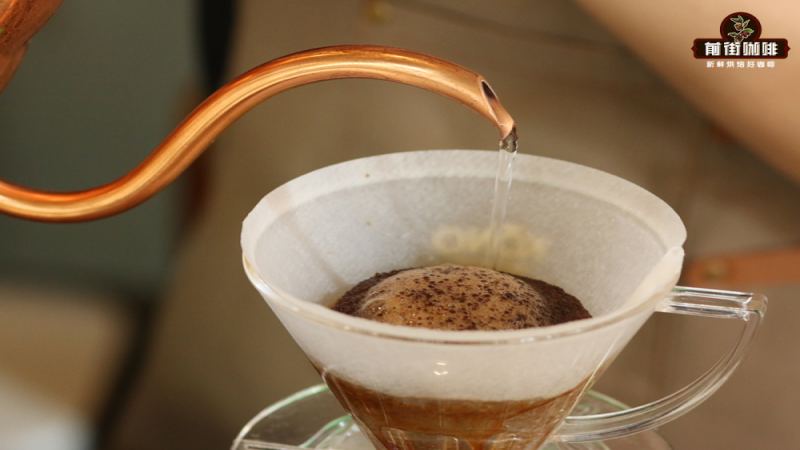
What Coffee-to-Water Ratio Should a Pour-Over Start With?
Start a pour-over at 1:15, meaning 15 grams of coffee to 225 milliliters of hot water. That ratio is the first variable to lock down because it sets both strength and extraction. The American Coffee Association once landed on 1:18 through surveys, but with today's bean varieties and processing methods that figure works better as a starting point than a fixed rule.
Adjust from the 1:15 base by style: loosen toward 1:16 when the goal is to highlight floral notes and acidity, and tighten slightly for a heavier cup. A three-pour technique with 15 grams of medium-ground coffee keeps the bed even and the timing repeatable. Keep water temperature and grind steady while changing only the ratio, so each cup shows what that single change did.
The coffee-to-water ratio is the first parameter to lock down in pour-over coffee, as it directly influences both the strength and extraction yield. The American Coffee Association once arrived at a golden ratio of 1:18 through extensive surveys, but today's bean varieties and processing methods are vastly different, making this value more of a starting point than an iron rule. Front Street Coffee's store offerings commonly use 15 grams of grounds with 1:15, meaning 225 milliliters of hot water is poured; if the goal is to highlight floral notes and acidity, the ratio is loosened to 1:16. This article revolves around how the coffee-to-water ratio affects flavor, how different beans should be fine-tuned, and a hands-on three-pour technique using 15 grams of grounds, helping beginners find a brewing rhythm that suits them.
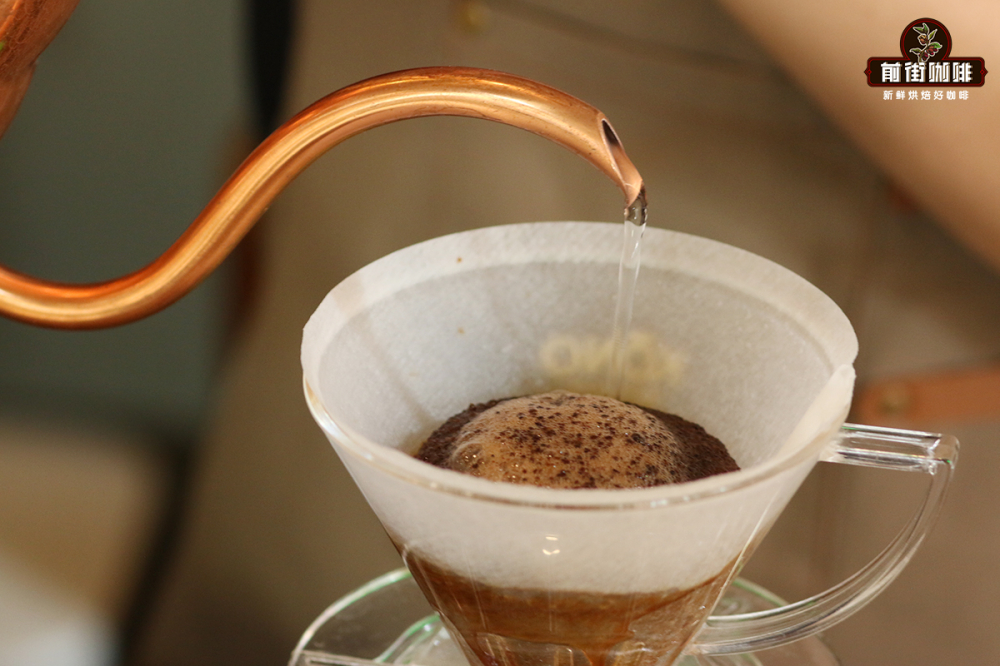
When brewing coffee, the coffee-to-water ratio is often the first variable that needs to be locked down. So is there a universally recognized standard? The American Coffee Association once gave a so-called golden ratio of 1:18 through surveys and extensive practice, meaning every 1 gram of coffee grounds corresponds to 18 milliliters of water. However, the quality and processing techniques of the coffee beans used back then differ noticeably from today's. Although this ratio still applies to most brewing devices other than espresso, it can only serve as a reference. Beans from different origins each have their own character, and what really matters is making flexible adjustments through various brewing parameters so the beans can show their best state.
During pour-over brewing, water acts as a solvent, drawing out the dissolvable flavor substances from the coffee grounds, and the coffee-to-water ratio essentially determines how much water is used to release these substances. It refers to the ratio of coffee grounds to total poured water and directly affects the strength of the final cup. Regardless of the brewing method used, Front Street Coffee always determines the coffee-to-water ratio before extraction. For example, when Front Street Coffee's stores make a drink, a single cup usually uses 15 grams of coffee grounds, and at a 1:15 ratio, a total of 225 milliliters of hot water is poured.
All else being equal, the more water poured, the lower the coffee's strength and the more dispersed the taste; the less water poured, the higher the strength and the more concentrated and full-bodied the flavor. At the same time, increasing the amount of water also raises the extraction yield, allowing more dissolvable substances to enter the cup. Extraction yield refers to the proportion of dissolvable substances released from the coffee relative to the weight of the coffee grounds. The further into the later stages, the lower the extraction efficiency, and it easily brings out undesirable bitterness that affects the final taste. Therefore, only by finding a suitable coffee-to-water ratio can you balance the desired strength and extraction yield.
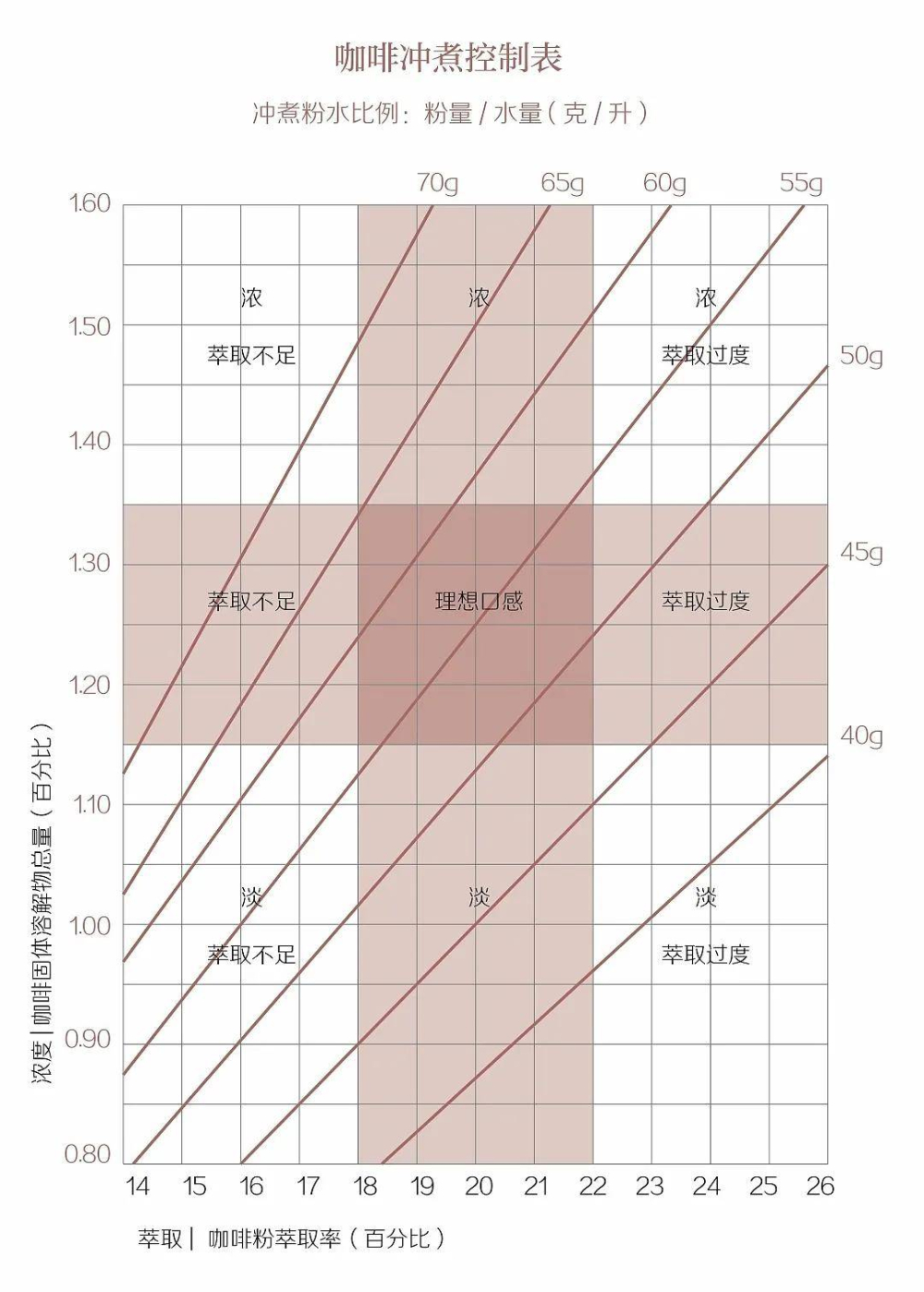
The coffee-to-water ratio is usually determined by experience, and there are no hard-and-fast rules. For example, when Front Street Coffee's stores serve Jamaican Blue Mountain coffee, a 1:15 ratio is used for a balanced strength; but when serving Hacienda La Esmeralda sun-dried Red Label coffee, Front Street Coffee wants a clearer flavor and brighter acidity, so it switches to 1:16 extraction. Based on Front Street Coffee's past brewing experience, friends new to pour-over can start with 1:15 to 1:18, that is, 15 grams of coffee grounds for a single serving corresponding to 225 to 270 grams of water.
The coffee-to-water ratio is not the only factor determining flavor; extraction time, water temperature, grind size, pouring method, and the characteristics of the dripper and filter paper all affect the final taste. Once you begin to understand the connections among the various pour-over parameters, variables that were originally fixed, such as the coffee-to-water ratio and water temperature, become tools you can adjust up or down to make coffee taste better.
Based on past experience, Front Street Coffee recommends that beginners just starting out use a three-pour method. Three-stage extraction helps dissolve flavor substances more fully, adds layers to the mouthfeel, and avoids over-extraction caused by steeping too long. If using 15 grams of coffee grounds, a 1:15 coffee-to-water ratio, and a total water amount of 225 milliliters, the three pours can be divided as: 30 milliliters, 95 milliliters, and 100 milliliters, corresponding on the scale to: 30 grams, 125 grams, and 225 grams.
Here Front Street Coffee selects its own roasted sun-dried Red Cherry coffee beans and pairs them with a Hario V60 dripper for brewing. The V60's spiral rib design allows the coffee grounds to degas better, maximizing the activation of the volatilization and dissolution of aromatic and acidic substances. Because the Yirgacheffe is a light roast, the coffee beans are harder in texture and require hot water at 92°C to 93°C to bring out the floral and fruity notes in the coffee.
In terms of grind size, Front Street Coffee recommends a medium-fine grind (78% passing rate on the Chinese standard No. 20 sieve), with a coarseness close to fine granulated sugar. If ground too coarse, it is hard to extract a rich, rounded flavor, and the coffee will taste thin; if the particles are too fine, it easily over-extracts at high water temperatures, producing bitterness.
As for the brewing ratio, Front Street Coffee believes both 1:15 and 1:16 can work: choose 1:15 if you want a richer mouthfeel, or choose 1:16 if you want to taste the floral sweetness more clearly and let the flavors spread out more.
First, place the folded filter paper into the dripper and fit it snugly, pour in 15 grams of ground coffee, and tare the digital scale. For the first pour, add 30 grams of water and bloom for 30 seconds, starting the timer as you pour, using a slow stream throughout and circling from the center outward, making sure to wet the entire bed of grounds. After 30 seconds, use a slightly stronger but steady stream to pour the second stage of 95 grams of water, with the goal of lifting the entire bed of grounds; the stream should be poured vertically and evenly, and at this point the timer scale shows 125 grams, with the pour finishing at around 55 seconds.
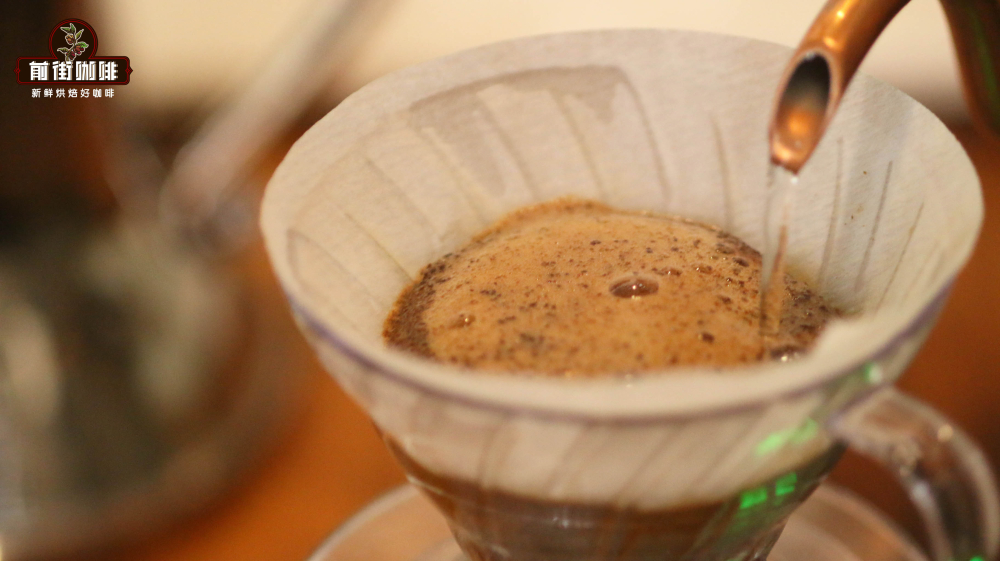
When the liquid level drops to the halfway point, begin the third pour of 100 grams using a smaller stream in a small circle, trying to keep the stream from circling too widely, as that easily disrupts the bed of grounds and causes under-extraction. The final total water amount is 225 grams, and the drip finishes at about 2 minutes. After removing the dripper, swirl the coffee liquid in the server to even it out, and it is ready to taste.
For professional coffee knowledge exchange and more coffee bean information, please follow Coffee Workshop (WeChat public account: cafe_style).
For more specialty coffee beans, please add the private WeChat of Front Street Coffee (FrontStreet Coffee), WeChat ID: qjcoffeex.
The above content is compiled by CoffeeHunters, a coffee news website.


