







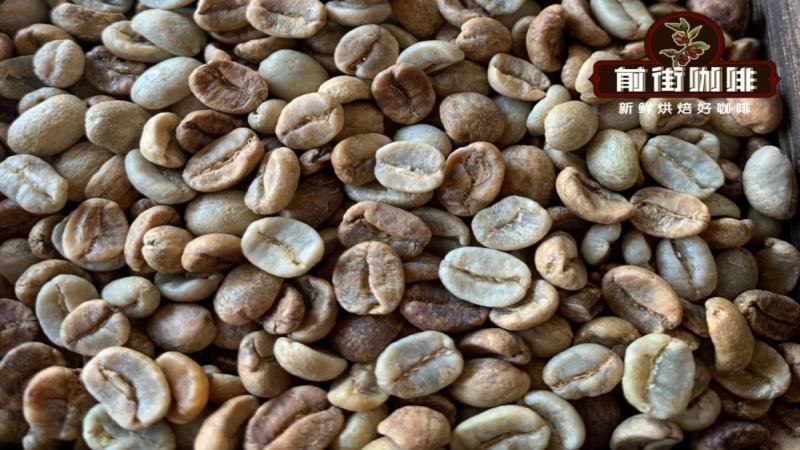
Which Growing Conditions for Coffee Shape Costa Rica Geisha?
Costa Rica Geisha grows mainly in the Tarrazu region, a fertile volcanic zone in Central America with humid climate, nutrient-rich volcanic rock soil, steady rainfall and high altitude. Dense forest provides natural shade. Those growing conditions for coffee let the variety express floral aroma and layered fruit acidity, though each estate's microclimate and soil still show through in the cup.
Two examples from Tarrazu illustrate the point. The washed Geisha from La Candelilla Estate shows jasmine aroma, citric acidity and a honey green tea finish, while the Mirazu Estate Geisha blend, planted near 1,700 meters, brings raisin sweetness, strawberry gummy candy and a nutty creamy mouthfeel. Variety composition and processing method account for much of the difference between the two lots.
Geisha emerged from Ethiopia, rose to prominence in Panama, and now the high-altitude volcanic regions of Costa Rica are also cultivating a Geisha with a distinctive style. Front Street Coffee is bringing two beans this time: a washed Geisha from La Candelilla Estate and a Geisha blend from Mirazu Estate. The former is known for its jasmine aroma, citric acidity, and honey green tea finish, while the latter presents raisin sweetness, strawberry gummy candy, and a nutty creamy mouthfeel. Both beans come from the Tarrazu region, yet each has its own charm due to differences in estate microclimate, variety composition, and processing method. Below, we will go through the estate backgrounds, variety origins, green bean processing methods, roasting curves, and brewing comparisons one by one, to help coffee lovers find the cup they prefer.
Geisha Coffee Beans From its origins in Ethiopia to its rise to fame in Panama, Geisha has long stood at the forefront of specialty coffee with its intoxicating floral fragrance and richly layered fruit acidity. This variety has also attracted many countries with high-altitude conditions to introduce and cultivate it. Whether in its native Ethiopia or in Costa Rica with its fertile volcanic soil, Geisha continues to be studied and developed. Front Street Coffee has also sourced several Costa Rican Geishas, among which the most representative are the La Candelilla Estate Geisha and the Mirazu Estate Geisha blend. Next, let's take a look at what makes Costa Rican Geisha so unique.
Costa Rican Geisha coffee beans are mainly grown in the Tarrazu coffee region
The Tarrazu region is located in the fertile volcanic zone of Central America, with a humid climate, nutrient-rich volcanic rock soil, abundant rainfall year-round, high altitude, and dense forests providing natural shade, creating extremely ideal growing conditions for coffee trees. Although many estates are located within the Tarrazu region, the microclimate, soil conditions, and variety differences of each estate are fully reflected in the cup's terroir. It is precisely these subtle variations bestowed by nature that attract Front Street to continually seek out different beans within the same region for comparison.
Let's first talk about Mirazu Estate
The name Mirazu means overlooking Tarrazu. The estate is located at an altitude of 1,700 meters in Tarrazu, with a magnificent and stunning landscape. The owner's careful selection of microclimates has laid a solid foundation for the quality of coffee produced at Mirazu. Mirazu Estate is not far from La Candelilla Estate, and the owner Esteban Sanches was in fact one of the founding members of La Candelilla Estate. He himself combines a spirit of scientific experimentation with a professional academic background, and has a strong interest in coffee variety research, so he opened Mirazu Estate nearby to try cultivating varieties such as ET47 Ethiopian landrace and to explore various processing methods. It is worth mentioning that the small wet-processing equipment at the estate's processing station was designed and assembled entirely by Esteban Sanches himself.
Next, let's talk about La Candelilla Estate
The name La Candelilla comes from a group of shining fireflies. The area around La Candelilla Estate has abundant water sources and high humidity, and the coffee trees on the estate provide fireflies with a well-shaded habitat. The estate is located in the Tarrazu region of Costa Rica, at an altitude of 1,750 meters. Tarrazu's fertile volcanic soil, mild and pleasant temperatures, and stable abundant rainfall provide excellent growing conditions for local coffee trees. The microclimate of La Candelilla Estate is very favorable for coffee growth, and the temperature difference between day and night helps the fruit accumulate more nutrients, thereby producing more refined flavors. Front Street believes that this high-altitude environment with significant temperature differences is exactly what Geisha coffee trees crave. The temperature difference slows the growth of the coffee trees and lengthens the time for flavor formation, so the brewed coffee tastes richer. The clear, transparent aroma of high-altitude Geisha is difficult to replicate in Geisha grown at low altitudes.
Coffee Variety
Front Street mentioned at the beginning that Mirazu Estate produces a Geisha blend coffee bean. As long as the beans come from the same origin, the same estate, or the same cooperative, they can be defined as single-origin coffee. The Mirazu Estate Geisha blend that Front Street has sourced is composed of Geisha, ET47, SL28, and Maico. Among them, ET47 is worth mentioning. Its laboratory number is 47, because many varieties were introduced during the same period and most were distinguished and identified by numbers. After obtaining ET47, estate owner Esteban Sanches devoted himself to studying it. This variety can be called a complex composite, carrying many excellent flavors, such as fruity sweetness, a round and clean mouthfeel, and elegant, pleasant acidity. As for what exactly ET47's "ancestors" are, the Costa Rican Coffee Institute has not yet announced.
Since this article is about Costa Rican Geisha coffee beans , an introduction to the Geisha variety is naturally indispensable. Geisha was first collected in the coffee forests of Ethiopia in the 1930s. In 1953, it was brought to the Tropical Agricultural Research and Higher Education Center (CATIE) in Central America, where it was recorded as T2722. However, this plant has fragile, easily broken branches and was not favored by farmers, so it was not widely planted.
Green Coffee Bean Processing Methods
The La Candelilla Estate Geisha coffee beans sourced by Front Street Coffee use the washed processing method. In order to highlight this bean's bright acidity and floral characteristics, the estate owner chose washed processing for the green beans. The selected coffee cherries are sent to a depulper to initially remove the skin and pulp; the green coffee beans with residual pulp and mucilage are placed in water and fermented for about 24 hours; after fermentation is complete, the green coffee beans with parchment are washed in a flowing water channel to remove the pulp and mucilage; after washing, they are sun-dried or dried with a mechanical dryer to reduce the moisture content to about 12%. Finally, the parchment layer of the green beans is removed.
The Mirazu Geisha blend coffee beans sourced by Front Street Coffee use the raisin honey processing method. The estate owner first sorts the harvested coffee cherries, places the selected coffee cherries on raised beds to dry for at least three days, then removes the skin while retaining the mucilage before drying. During the drying process, the coffee beans must be constantly turned to ensure even drying. At the same time, the turning frequency must be well controlled, drying slowly to ensure the coffee undergoes fermentation, but not so slowly that it over-ferments. Through cupping, Front Street Coffee found that the raisin honey process retains 100% of the mucilage for sun drying, giving the coffee very high sweetness and also a preserved-fruit-like fermented sweetness.
Front Street Coffee Roasting Records
Mirazu Geisha blend coffee beans: Yangjia 800N, charge weight 480g. Preheat the roaster to 200°C, then lower to 175°C for charging, adjust the gas to 120, open the damper to 3, turning point at 1'32", and maintain the gas; at 114°C, keep the gas unchanged and open the damper to 4. At 6'15", the beans turn yellow, the grassy smell disappears, and the dehydration phase begins. At 140°C, lower the gas to 100 and keep the damper at 4. At 9'00", dehydration is complete, wrinkles and dark patches appear on the bean surface, and the toast aroma turns into coffee aroma, which is the prelude to first crack, so pay attention to listening for the sound of first crack. At 10'25", first crack begins, open the damper fully to 5, and keep the gas unchanged. After first crack, develop for 1'30" and drop at 193.5°C.
La Candelilla Estate Geisha coffee beans: Yangjia 800N, charge weight 480g. Charge at 180°C, gas at 130, damper opened to 3; turning point at 1'32", when the temperature reaches 130°C, open the damper to 4 and keep the gas unchanged; at 151.6°C, the bean surface turns yellow, the grassy smell completely disappears, and the dehydration phase begins. At 7'56", ugly wrinkles and dark patches appear on the bean surface, and the toast aroma clearly turns into coffee aroma, which can be defined as the prelude to first crack. At this time, listen carefully for the sound of first crack. At 8'30", first crack begins, open the damper to 5, develop for 1'28" after first crack, and drop at 190°C.
Front Street Coffee Brewing Comparison
In order to better compare the flavors of the two coffee beans, Front Street used a V60 dripper to brew these two coffees, with 15g of coffee grounds, a 1:15 coffee-to-water ratio, a water temperature of 90°C, and a medium-fine grind size.
Front Street's three-pour brewing method:
First, preheat the dripper and server. Add 15 grams of coffee grounds and gently tap to level the surface of the coffee grounds. Begin the first pour, pouring 30 grams of water in a circular motion from the center and letting it bloom for 30 seconds. The ideal state is that the coffee grounds are evenly saturated with water and puff up into a small "coffee burger." After 30 seconds, begin the second pour. In this stage, keep the water stream height at 3-5 cm and pour 95 grams of water in concentric circles from the center outward. At this point, the total amount of water poured is 125 grams. Observe that the entire coffee liquid surface should be golden coffee foam. When the coffee bed is about to be exposed, begin the final pour. In this stage, pour 100 grams of water, slowly drawing circles in concentric circles while keeping the flow consistent. When all the coffee liquid in the dripper has flowed into the server, remove the dripper and end the extraction. The total time is 1 minute 55 seconds.
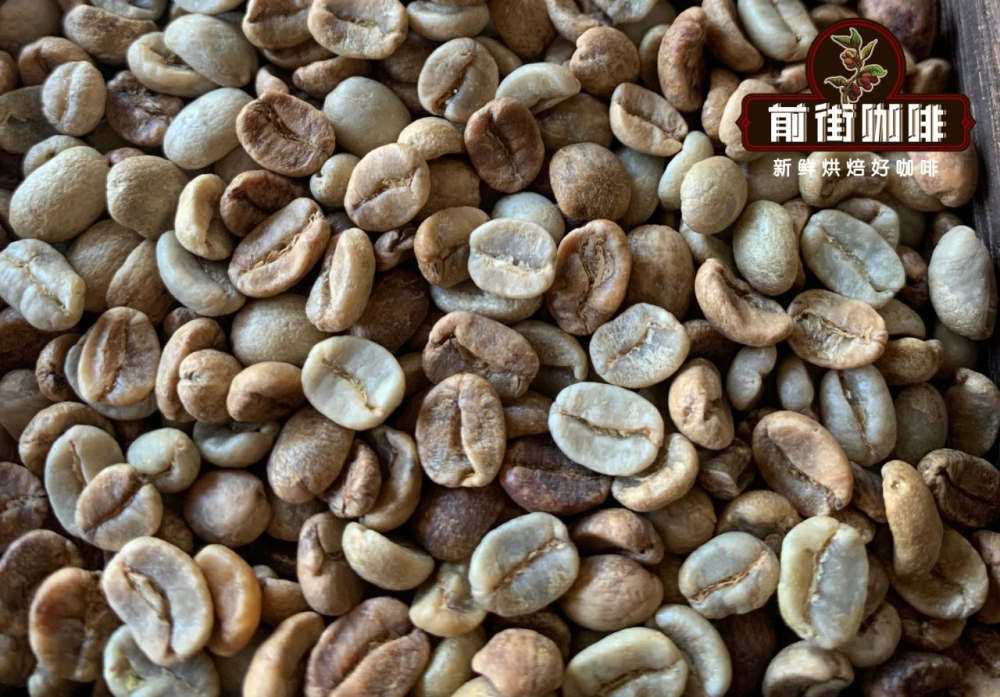
After brewing, the Geisha blend shows a jasmine aroma, with raisin sweetness and strawberry gummy candy sweetness on the palate, and a nutty creamy mouthfeel, while La Candelilla Estate is much fresher, with a clear jasmine fragrance, lemon acidity, and a honey green tea finish. If you want a more obviously sweet cup, you can choose the Mirazu Estate Geisha blend coffee beans; if you want something fresher, you can choose the La Candelilla Estate Geisha coffee beans.
The above content is compiled by CoffeeHunters, a coffee news website.


