







Where Are Arabica Beans Grown for Chinese Coffee?
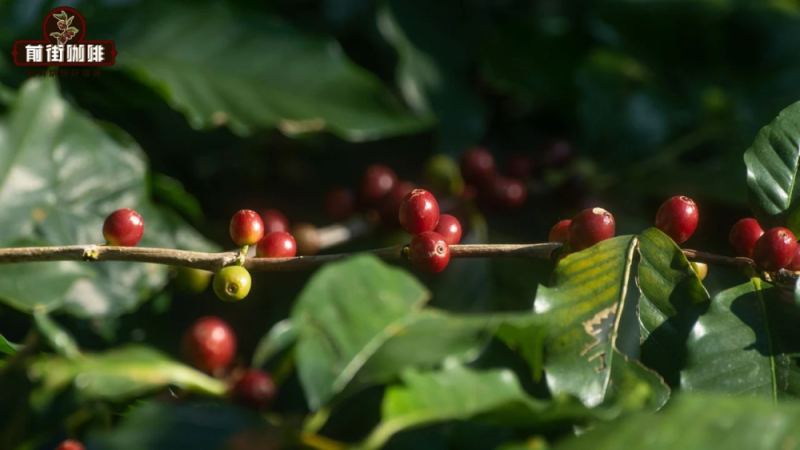
Yunnan is a main answer to where are arabica beans grown in China. The harvest peaks from mid-December, with higher-altitude plots ripening later, and Front Street's estate sits in a semi-primitive forest in Lincang near the Myanmar border at about 1,300 meters, farmed without pesticides. Picking there starts in mid-December.
Yunnan arabica coffee falls under the arabica species, so brewed without milk it is black coffee. Common varieties include Catimor and Typica; Baoshan is often treated as a premium production area. Front Street's sun-dried Typica lot, called Front Street 2013, yielded just over 200 kilograms and was well received by customers, and new-season inquiries began arriving by November.
The coffee harvest season in Yunnan typically peaks in mid-December, with higher-altitude plots maturing a bit later, and the same applies to Front Street's estate in Lincang near the Myanmar border. Last year, Front Street launched a self-grown and self-processed Yunnan sun-dried Typica named "Front Street 2013," with a total output of just over 200 kilograms, yet it won unanimous praise from customers; since November this year, people have been constantly asking when the new season's crop will arrive. This article will address whether Yunnan arabica coffee counts as black coffee, how to choose local brands, the differences between Catimor and Typica, why Baoshan is regarded as a premium production area, and the cultivation, processing, roasting, and cupping performance of Front Street 2013 sun-dried Typica, providing coffee enthusiasts with a relatively complete reference.
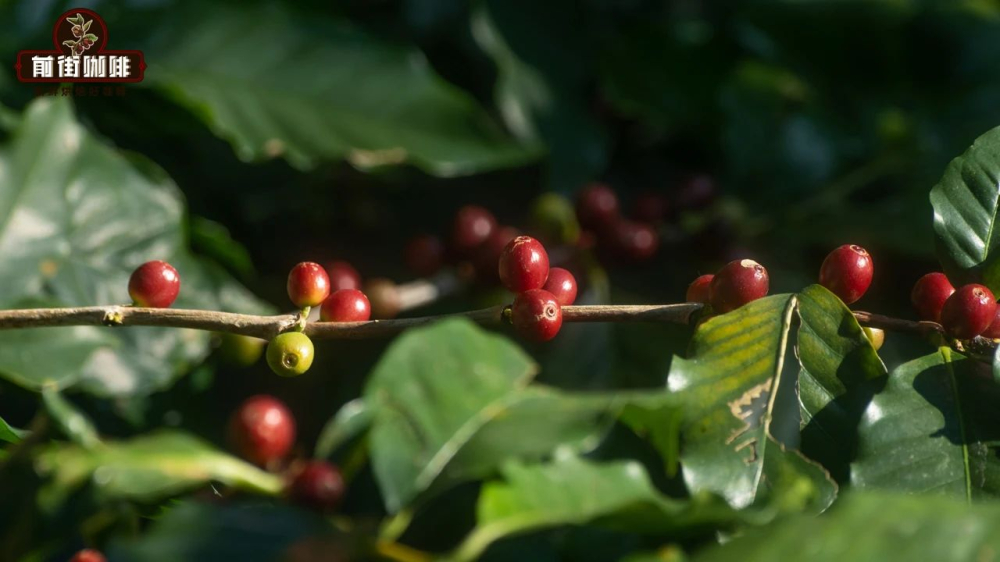
Every year from mid-December, Yunnan gradually enters the peak harvest season, while higher-altitude areas have to wait a little longer, and Front Street's Yunnan estate follows this rhythm as well. Last year, Front Street named a batch of self-grown and self-processed Yunnan sun-dried Typica "Front Street 2013." With an output of just over 200 kilograms, it nevertheless won unanimous recognition from customers. By November this year, quite a few customers had already come asking whether the self-produced Yunnan beans had arrived, and Front Street's baristas could only reply with a smile: "They're still hanging on the trees!"
Yunnan has now entered the harvest period, with lower-altitude areas ripening faster and higher-altitude areas relatively slower. Front Street's estate is located in a semi-primitive forest in Lincang near Myanmar, at an altitude of about 1,300 meters, cultivated without pesticides or pollution throughout, so picking can only begin in mid-December.
Looking back on Front Street's tortuous journey of growing coffee in Yunnan
If you just want to own a ready-made Yunnan coffee estate, it is actually not difficult. The reason Yunnan coffee farmers have long been unwilling to grow coffee is that the picking wage for one kilogram of coffee is even higher than its selling price; unless there is idle labor at home, they cannot be bothered to pick even when the fruit is ripe. For this reason, buying a small plot from a farmer before harvest and doing some sun-drying or honey processing can produce so-called "Yunnan specialty coffee" in just two or three months.
Front Street Coffee is not sure whether this rather controversial approach is appropriate. As a former director of a Yunnan coffee factory commented: the current situation of over one million mu of Catimor in Yunnan is the core problem urgently needing reform and improvement. Debate is a good thing, but it should not be used to deny all current efforts. Front Street deliberately chose the hardest path: selecting high ground, cultivating arabica varieties, planting rationally, and beginning to plant and nurture coffee seedlings in Yunnan.
This year is Front Street Coffee's fourteenth year, and many people do not realize that Front Street's coffee cultivation actually predates its roasting by half a year. Front Street's predecessor was called "Dazhen Coffee," a name that came from our desire to grow coffee in a place in Guangdong called Dazhen. By the time the seedlings we grew from Catimor reached 20 centimeters, more than half a year had passed, and only then did we truly understand the relationship and proper sequence among variety, altitude, and processing method.
First choose the right variety, then plant it at a suitable altitude, and once mature, experiment to find a processing method that can express its unique flavor—this is the only logical chain by which Front Street believes specialty coffee can present a clear regional flavor.
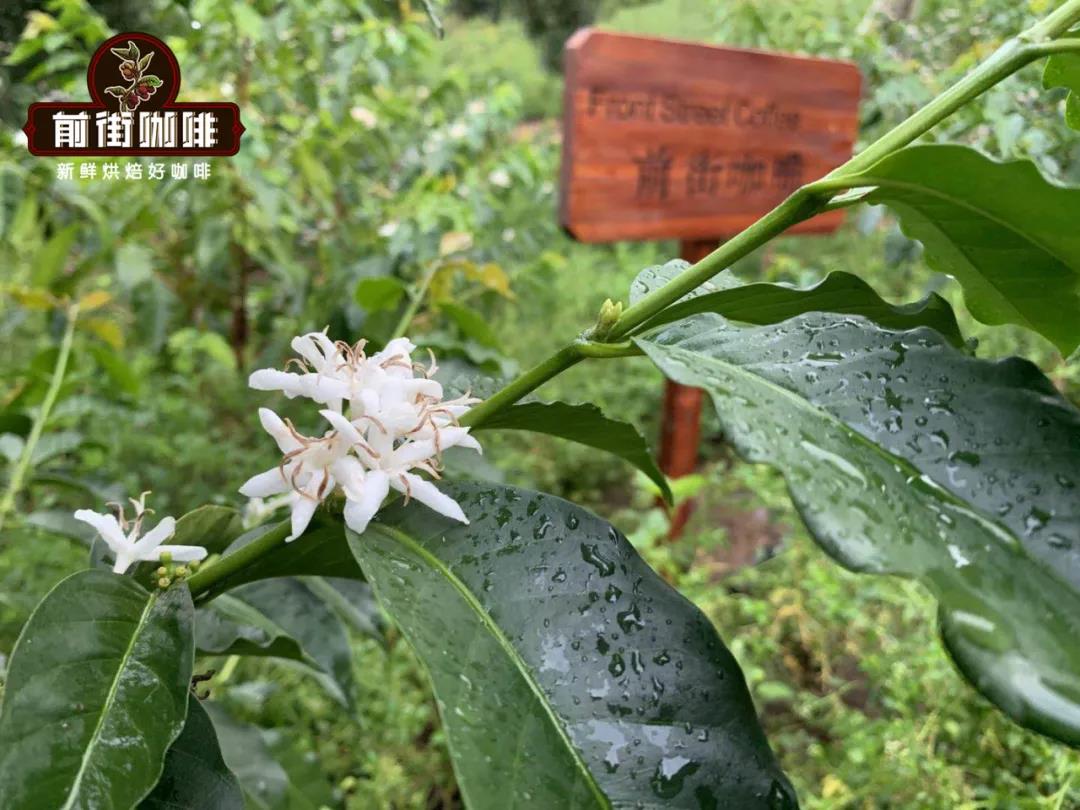
So we gave up the plan to grow coffee in Guangdong. Because the place where we first roasted coffee was on Bao'an Front Street, we renamed "Dazhen Coffee" to "Front Street Coffee." At Front Street, while roasting, we continued moving forward with the idea of growing specialty coffee, successively visiting the Tropical Crops Research Institute (which has a coffee germplasm bank under the Ministry of Agriculture) with deep research on coffee cultivation, and also visiting a few coffee farmers growing specialty coffee. We clarified why Yunnan does not grow mainstream specialty varieties such as Typica and Bourbon, and by chance found suitable land.
Arabica has clear altitude requirements for cultivation, usually needing to be above 1,000 meters; if better flavor is desired, the altitude must be even higher. However, the altitude of most mountain ranges in Yunnan happens to sit right on the qualifying line, which is also a shortcoming of Yunnan coffee. To compensate for the altitude disadvantage, on the premise of excellent varieties, more refined agronomic management must be invested.
Front Street did not directly buy an existing estate, but instead purchased a hillside suitable for growing coffee. Because we know well that no matter how good the land is, if the variety is wrong, the flavor will not be ideal (at that time Yunnan generally grew Catimor). Therefore Front Street chose to grow coffee from scratch, and the selected variety was Typica—an excellent-flavored representative among arabicas. Typica has extremely low yield, only one-third that of Catimor, so its price is naturally higher. At the same time, both Typica and Bourbon are highly susceptible to coffee leaf rust, which is one reason farmers are unwilling to grow arabica.
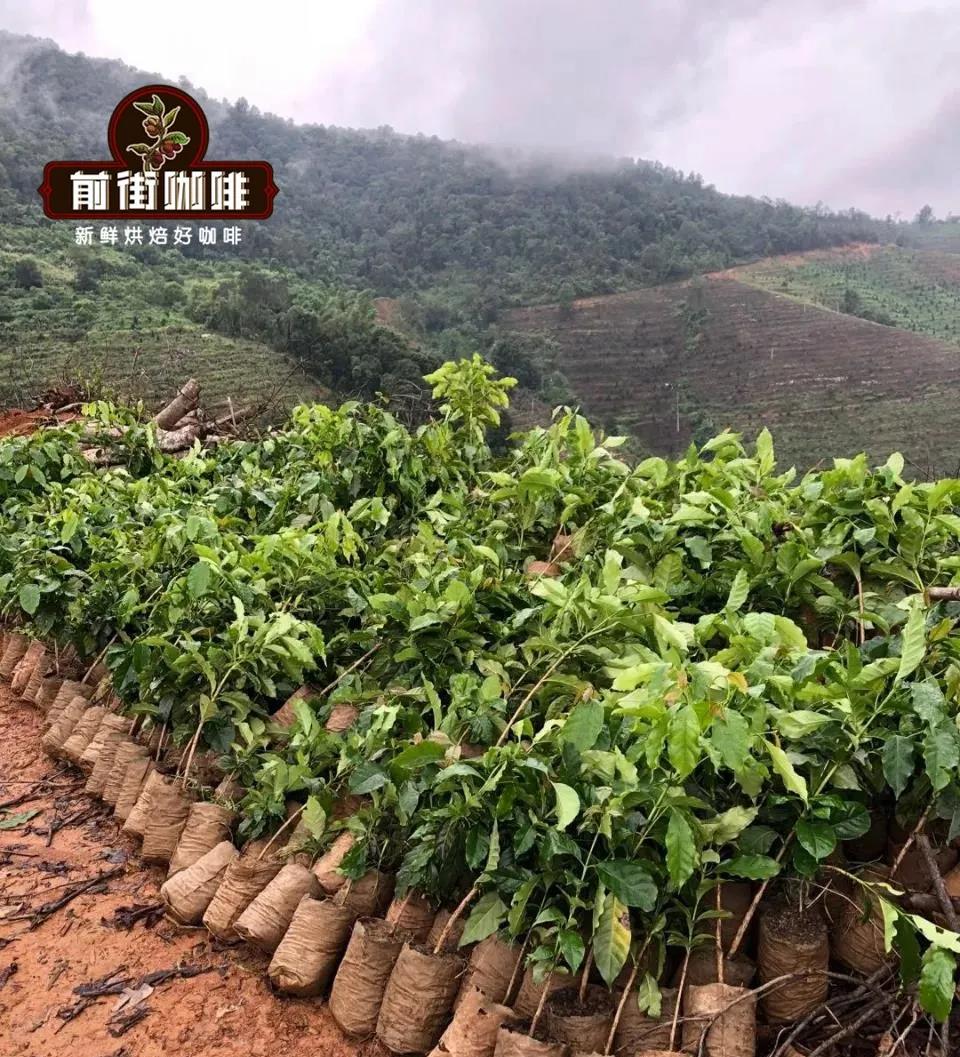
Yunnan has no four seasons, only a dry season and a rainy season, and most coffee-producing areas are similar, which is also the fundamental reason some production areas adopt the sun-dried method. Entering June, the rainy season begins in the production area, and the next three to four months will bring rain, which is the most favorable period for growing coffee. Only by planting seedlings at this time and relying on months of rain can they grow a robust root system and survive the first dry season, which lasts half a year.
Growing coffee from scratch has an extremely high time cost. Coffee takes three to four years from seedling to first fruiting, and then experimenting with suitable processing methods and finally reproducing them takes at least five years to obtain the first batch of coffee. No one can guarantee producing excellent specialty coffee on the first try, and Front Street firmly believes there is no such easy thing in the world. After multiple rounds of variety selection and breeding, then refined processing experiments after fruiting, several more years passed, and only by the eighth year did the coffee Front Street planted in Yunnan finally reach its first mass production.
The variety of Yunnan arabica coffee—Catimor
At present, most coffee trees in Yunnan belong to a hybrid variety called "Catimor," which is what we commonly call Yunnan arabica coffee. If you want a light taste of the basic flavor of the Yunnan production area, buying Front Street · Yunnan Arabica is just right. In 1959, the Portuguese moved Caturra, a mutant of Brazilian Bourbon, to East Timor, where it was crossed with Timor, which has Robusta lineage, and unexpectedly succeeded in breeding Catimor with super-strong disease resistance and productivity. Because leaf rust swept through coffee-producing countries worldwide, with the assistance of international organizations, producing countries vigorously promoted Catimor to resist leaf rust and increase productivity.
The variety planted in Front Street's Yunnan estate, however, belongs to the ancient, pure arabica "Typica." Because its young buds are yellow-brown, it is also called "red-tip coffee." Compared with Catimor, Yunnan Typica is also overall dominated by nutty and brown-sugar notes, but the Typica variety gives Front Street 2013 more refined acidity, slightly lower body, greater balance, and better cleanliness, making it suitable for friends who want to try Yunnan specialty coffee.
The cultivation altitude of Yunnan arabica coffee
Yunnan arabica coffee-growing areas are mainly distributed in Lincang, Baoshan, Simao, Xishuangbanna, Dehong, and other prefectures. Baoshan is above 1,200 meters in altitude, with an average temperature of 21.5°C and a maximum of 40.4°C, and basically no frost year-round, making it recognized as the best Yunnan arabica coffee production area. The arabica coffee cultivated here is strong but not bitter, fragrant but not harsh, with small and uniform beans, a rich and mellow aroma, and fruity notes.
For arabica, 1,200 meters is the watershed for quality. North of Baoshan in Yunnan lies the Gaoligong Mountains, which block the Siberian cold current that would otherwise sweep straight down in winter; June to August is the rainy season, often clear for a few minutes and rainy for half an hour, shrouded in mist and clouds, with many mountains, forming a protective microclimate for coffee growth.
Front Street 2013 sun-dried processing
In the past, Colombian coffee farmers mostly hired harvest workers paid by the day, with wages settled by fruit weight. To earn more money, they sought only efficiency and did not pick but strip—coffee cherries grow in clusters, so they stripped them all regardless of whether they were ripe or not, and later discarded the unripe and overripe cherries, which greatly affected coffee quality.
Because Front Street's scale is not large, the daily maintenance workers are also responsible for harvesting, picking fully red cherries one by one. Then 2 to 3 layers were spread on drying nets, with the fully red coffee cherries spread flat to dry until they turned purplish-red. The mesh of the drying bed helps the fruit breathe, avoiding negative over-fermentation notes, so this Front Street sun-dried Typica presents a heavier mouthfeel, with citrus and berry notes, and a hint of fermented wine aroma and caramel sweetness.
Roasting Front Street 2013 sun-dried Typica
In roasting, Front Street referred to the corresponding characteristics of the production area and decided to use a medium roast to highlight the sweetness of this coffee.
Flavor comparison
Parameters:
Dripper: Hario V60; dose 15 grams; water temperature 90°C; grind size: medium-fine (80% passing a Chinese standard No. 20 sieve); coffee-to-water ratio: 1:15; staged extraction.
The ribs of the V60 dripper are curved from top to bottom and vary in length; during brewing, air escapes more smoothly and the flow rate is faster, so the extracted coffee has more distinct flavor layers.

First bloom with 30 grams of water for 30 seconds, then pour with a small stream from the center to 125 grams in stages, and when the water level drops and is about to expose the coffee bed, continue pouring to 225 grams and stop; when the water level drops and is about to expose the coffee bed, remove the dripper (timing starts at the beginning of blooming); extraction time is minutes.
The flavor performance of Front Street 2013 coffee beans from Front Street's estate: the dry aroma has faint caramel and nutty notes; on the palate, chocolate is the main note, with brown-sugar sweetness and slight fruity acidity, and the finish carries some black tea character. The overall flavor is relatively rich and layered.
The above content is compiled by CoffeeHunters, a coffee news website.


