








What Does G1 Grade Mean in Ethiopian Coffee?
G1 is the top grade in the Ethiopian coffee system, reserved for lots with the fewest defects, and it applies to this Sidamo Santa Vini coffee from the DWD company's Santa Vini processing station at 2,050 meters. The lot is a 74158 variety given a whole red cherry, 96-hour anaerobic natural process, showing citrus, pineapple, guava, and a red wine finish.
Sidamo Province was established in 1942 and takes its name from the Sidama people; the trade spelling Sidamo remains standard, and the region borders Kenya near Lake Awasa in the East African Rift Valley. Coffee trees there grow between roughly 1,550 and 2,200 meters, where slower fruit maturation and later harvests let aroma compounds build into the layered, complex cup this lot is known for.
Santa Vini Processing Station is located in the high-altitude zone of Ethiopia's Sidamo region, renowned for its whole red cherry harvesting and 96-hour anaerobic natural process. Its 74158 variety coffee beans present rich layers of citrus, pineapple, guava, and a red wine finish. This Sidamo Santa Vini, newly listed by Front Street Coffee, comes from a high-altitude processing station under DWD Company, at an elevation of 2050 meters, Grade G1. This article will explore the historical and geographical background of the Sidamo region, the origin of the Red Cherry Project, the fine fermentation process at Santa Vini Processing Station, and the breeding history of the disease-resistant variety 74158, helping readers fully understand the flavor formation and origin story of this bean.
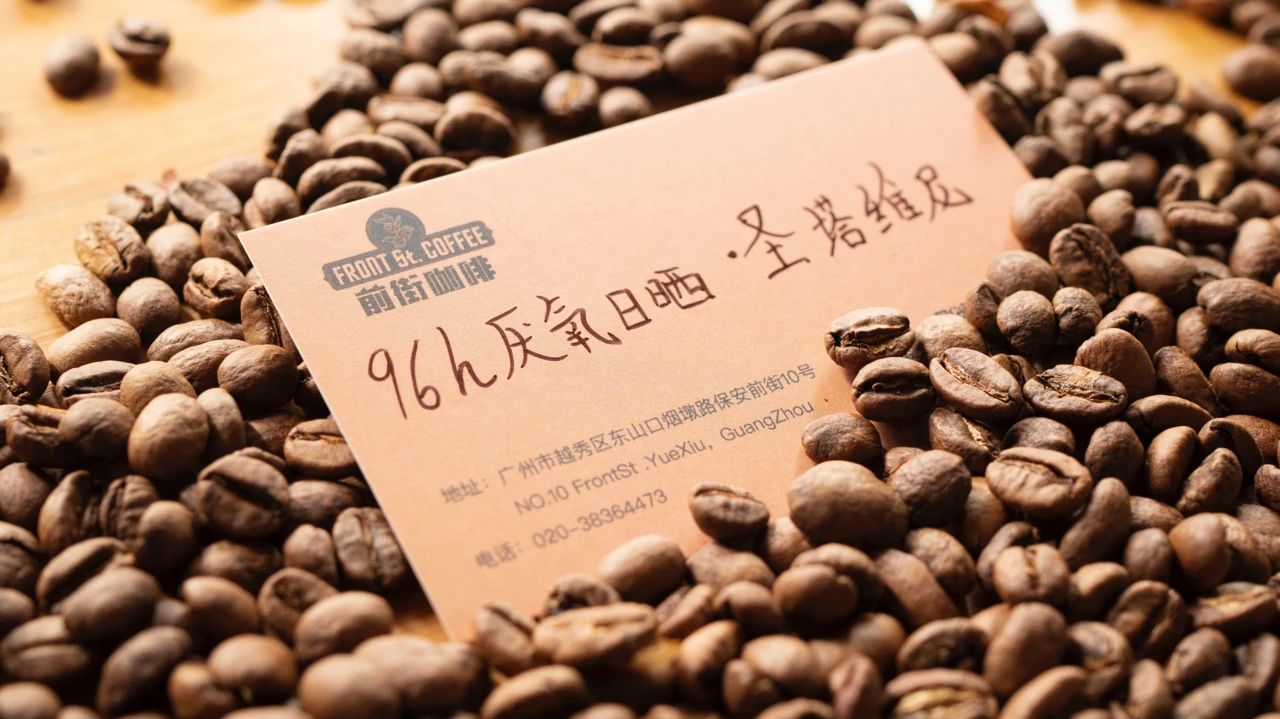
Front Street Coffee: Ethiopia Sidamo Santa Vini 74158 Coffee Beans
Country: Ethiopia
Grade: G1
Region: Sidamo
Processing Station: DWD Santa Vini Processing Station
Altitude: 2050 meters
Process: Whole Red Cherry 96-Hour Anaerobic Natural
Variety: 74158
Flavor: Citrus, Pineapple, Guava, Red Wine Finish
Region Introduction
According to Front Street Coffee's research, Sidamo Province was established in 1942, and its name derives from the indigenous Sidama people who have long inhabited the area—a land that was once the site of the Sidama Kingdom. There have always been differing views in the industry regarding the spellings Sidamo and Sidama, but in the coffee trade, Sidamo is more commonly used, so the name "Sidamo" is generally adopted.
Geographically, the Sidamo region is located in the southern highlands of Ethiopia, adjacent to Lake Awasa in the East African Rift Valley and bordering Kenya. The area has a high elevation, abundant rainfall, fertile soil, and rich native tree resources, providing ideal conditions for coffee cultivation. Coffee trees in the region are mostly distributed at altitudes between 1550 and 2200 meters. In high-altitude environments, the fruit maturation cycle is longer, aroma compounds accumulate more fully and complexly, and the harvest time is later compared to other Ethiopian regions.
The complexity of historical changes has caused Sidamo's borders to interweave with those of other administrative regions, making it one of the most difficult origins in the world to delineate. Compared to other regions, Sidamo's coverage is both large and scattered. The Ethiopia Commodity Exchange (ECX) divides it into five zones—A, B, C, D, and E—based on geographical indications, with each zone containing multiple sub-regions, covering over 50 cooperatives and more than 200 washing stations in total. Under the combined influence of different altitudes, humidity, soil, and microclimates, coffee flavors can vary subtly from village to village.
The Santa Vini processing plant under DWD Company is about a 40-minute drive from the town of Santa Vini and is one of the higher-altitude facilities among the company's 17 processing plants. If one has the opportunity to visit the Santa Vini processing plant, they can see coffee farmers processing large quantities of freshly harvested whole red coffee cherries—a practice that can be traced back to the "Red Cherry Project" launched in 2007.
In 2007, a Dutch green bean trader proposed the "Red Cherry Project" to obtain higher-quality Ethiopian coffee beans. The project required replacing mechanical harvesting with manual picking, selecting only ripe cherries. Ripe coffee cherries are red, while unripe ones are mostly green. Mechanical harvesting tends to mix in unripe cherries, which brings undesirable flavors to the coffee.
Compared to the Gaosi processing station, also under DWD Company, Santa Vini has a drier climate and lower average temperatures, which slows the growth rate of coffee cherries, allowing them to accumulate sufficient nutrients over a longer period. After harvesting, the coffee cherries are sorted and graded. Qualified red cherries are loaded into fermentation tanks, injected with carbon dioxide, and subjected to a 96-hour anaerobic fermentation.
After fermentation is complete, the coffee cherries are moved to raised beds for drying, during which they are turned regularly to ensure even drying. When temperatures are too high, shade nets are used to prevent over-drying. After about 20 to 24 days of drying, when the moisture content drops to 12%, the beans can be stored.
What Does "74158" Mean?
After the 1970s, Coffee Berry Disease (CBD) spread rapidly across major Ethiopian coffee regions. Infected coffee cherries gradually turn from green to gray-black, eventually necrotizing on the branches. Once a coffee tree is infected, crop losses can reach as high as 80%.
Starting in 1972, growers began applying chemical fungicides to control CBD. Although this achieved some results, spraying alone could not fundamentally solve the problem. The long-term solution lay in selecting varieties with strong natural resistance.
In 1973, the Ethiopian coffee institution JARC (Jimma Agricultural Research Center) identified 19 collection sites in the southwestern region. By 1975, researchers had collected 639 seed samples. Through scientific identification and field trials, 13 coffee varieties were ultimately selected that were resistant to CBD, drought-tolerant, high-yielding, and outstanding in flavor.
The varieties subsequently numbered 74*** and 75*** were bred and improved from these mother trees. JARC recorded this category as "1974/1975 CBD-Resistant Selections." The "74" represents 1974, the year the variety was cataloged, and the last three digits are the trial sample number. The well-known 74 series were all recorded during this period.
Therefore, "74" indicates that the bean was discovered in 1974, and "158" is the number of this particular bean, with a medium bean size. Front Street Coffee speculates that 74158's rise to fame is largely due to the Cup of Excellence (COE) in Ethiopia, and the Santa Vini processed with 96-hour anaerobic natural method is precisely an award-winning standout in that competition.
The full name of the Cup of Excellence (COE) is "Cup of Excellence." It is a green coffee competition held on a national basis once a year, bringing together outstanding estates large and small across the country. The competition has a special rule: flavored beans are strictly prohibited from entering. It is precisely this prohibition that allows participants to more directly experience the excellent natural flavors of the region.
The above content is compiled by CoffeeHunters, a coffee news website.


