







How Does Front Street Coffee Approach Pour-Over Water Control?
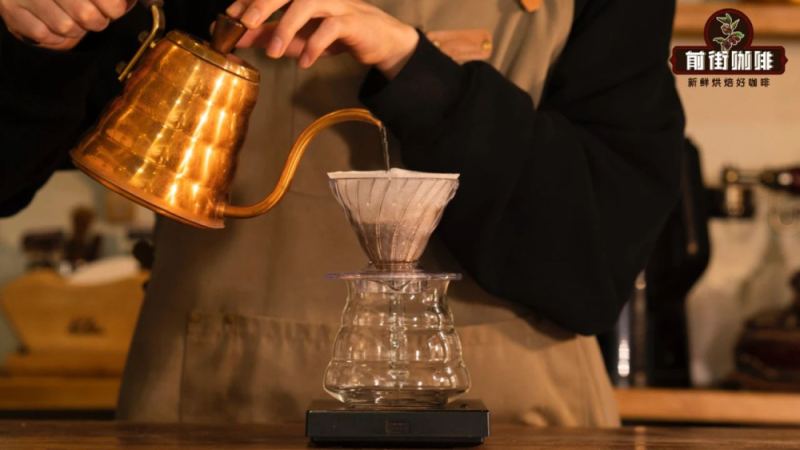
Pour-over comes down to four fixed things: the right water temperature, a set dose of coffee, a set amount of water, and a set time. If those parameters are verified for a bean, the same brew should repeat the same flavor. Three-stage pouring breaks the water into stages so the grounds are fully contacted and all the water passes through the coffee bed.
Front Street Coffee uses a Yirgacheffe Gudingding case to show the stages in practice, tracking how the bed drains between pours. Water that runs down the V60 ribs without touching the grounds produces a thin, flavorless cup, which is the problem technique is meant to solve. Beyond caffeine content in white coffee, the same fixed-parameter thinking applies to any dripper and any bean.
Many pour-over beginners have watched a ton of tutorial videos and memorized a pile of standard procedures, yet the advice they end up with is often just "practice more and you'll get it." Front Street Coffee believes the core logic of pour-over isn't really that complicated: at the right water temperature, use a fixed dose of coffee, and pour a fixed amount of water within a fixed time. If these parameters have already been verified, then the same bean should basically reproduce the same flavor. The key lies in whether, during those two minutes, the water and coffee grounds make sufficient contact, and whether all the water passes through the coffee bed before flowing into the server. This article will start from the three stages of pouring technique and, using Front Street's specific brewing case of Yirgacheffe Gudingding, break down the practical key points of three-stage pouring.
For more specialty coffee knowledge, please follow: Front Street Coffee (Frontsteet Coffee)
Many friends just getting into pour-over have watched tons of tutorial videos and heard all kinds of standard procedures, but the summary they hear most often in the end is: "Go back and practice more, and you'll naturally brew it well." Front Street Coffee (FrontStreet Coffee)'s view is that the fundamental goal of pour-over is nothing more than this—appropriate water temperature, a fixed dose, and pouring a set amount of water within a set time. If these parameters have already been tested and confirmed to meet the requirements of fixed pour-over parameters, then the same coffee should basically present the same taste. In those brief two minutes, whether the water and grounds can fully contact each other, and whether all the water passes through the coffee bed before flowing into the server, are the real problems that technique adjustment needs to solve.
If the goal itself isn't clear, then endlessly emphasizing various techniques and methods becomes somewhat mystical. Some people complain that the coffee they brew has no flavor, but when you look at the brewing basket they send a photo of, the water has all slipped straight from the V60 dripper's ribs into the server—water that never passed through the coffee grounds, how could it possibly have flavor?
Pour-over of course can't be done without practicing pouring, and there's no shortcut for this. But few people will tell you how pour-over pouring should be practiced, what the tricks and steps are, and how to improve faster. So no matter how many times beginners watch others brew, it's just a superficial glance, at most copying vaguely, and the final extraction result is often less than satisfactory.
Some say you should use a thin stream when brewing coffee, while others say you should use a strong stream for pour-over—so should the stream be strong or thin?
Pour-over pouring can actually be divided into three stages:
Pouring during the bloom stage, pouring while air is being released, and pouring as the coffee grounds settle. The stream in these three stages is basically different in each.
First, let's look at pouring during the bloom:
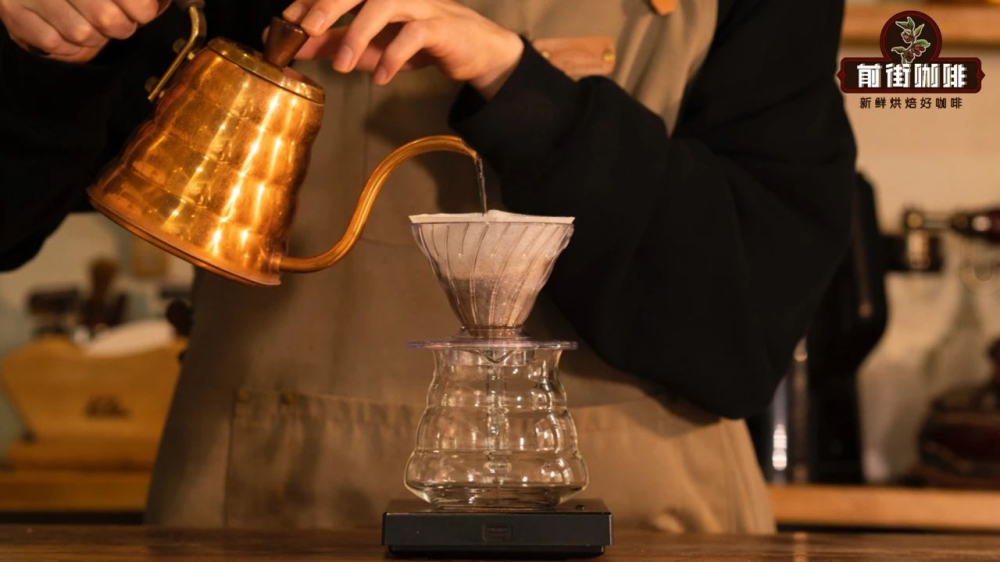
In order to let the water stay around the coffee grounds and allow the grounds to absorb water during the bloom, a relatively gentle thin stream is usually used, feeling as if you're gently placing hot water onto the coffee grounds and letting the hot water slowly soak through the coffee bed. Once the stream is too large or too forceful, before the coffee grounds have had time to absorb water, a large amount of hot water will run down into the server below, diluting the concentration of the coffee liquid extracted later.
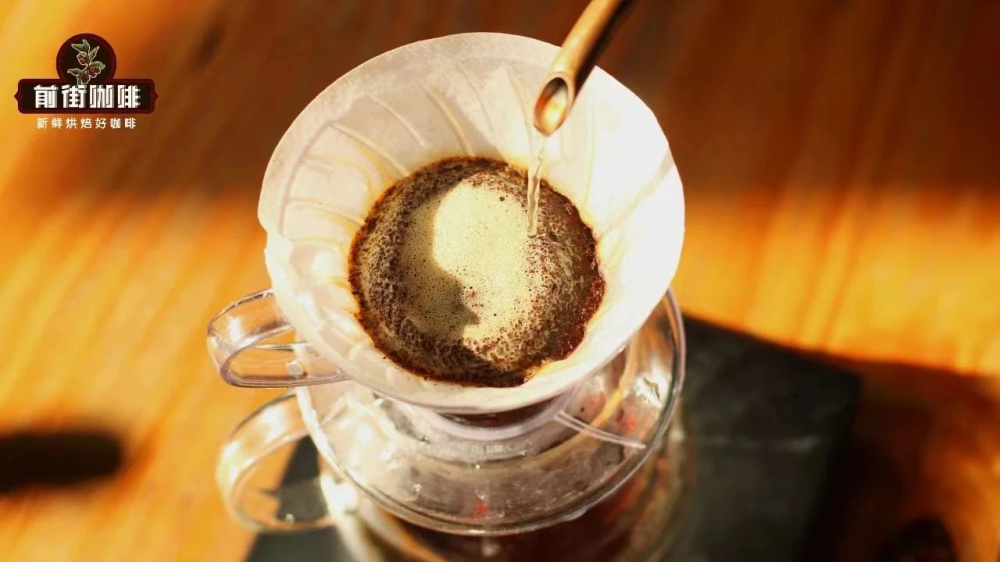
Next, you need to decide how long to pour the thin stream based on the state and degree of expansion during the bloom. After the bloom ends, the coffee grounds will basically still retain some air, and a second pour will produce foam; the coarseness of the foam reflects the air content within the coffee grounds.
The amount of air in the coffee grounds determines whether the grounds float on the water surface or sink to the bottom of the dripper. With more air, the coffee grounds float on the water surface, and at this point you need a thin, gentle stream to disturb the coffee bed and help the air inside the grounds escape. If the stream is too large or too strong, it will flow directly into the server at the bottom, making the coffee taste weaker. If there's too much air and the foam is very large and hard to drive out, sometimes you even need to pause pouring, let more air escape, and then continue pouring.

Another approach is: don't let the coffee grounds float, and with each pour, follow the principle of not exceeding the height of the coffee bed, pouring multiple times. In this situation, if you use a large or overly strong stream, the coffee grounds will easily all float to the surface, and with no filter layer at the bottom to block the stream, the hot water will easily flow straight into the server, diluting the original coffee flavor, reaching the target water amount before the flavor has been fully extracted, and the coffee bed will also tend to form a deep V-shaped wall of grounds.
There's also another situation:
During the bloom, the expansion isn't obvious—other people get a little hill or a little steamed bun, but yours is a small plain; or during the second pour the foam is very fine, the color easily turns white, and after just a few pours the foam is gone...
This situation is more likely to appear with light roasts, lower water temperatures, coffee beans stored too long, or coffee grounds ground too fine, such as Geisha, Butterfly, and Huakui.
Finally, Front Street Coffee (FrontStreet Coffee) will try a hands-on three-stage pour
Front Street Coffee (FrontStreet Coffee) Yirgacheffe Gudingding coffee beans
Grade: G1
Variety: Heirloom
Growing altitude: 1650m~1800m
Processing method: Washed
In 1995, Ethiopia redivided its regions, and the Yirgacheffe we're familiar with was assigned to the Gedeo zone within the new SNNPR. Currently Yirgacheffe is located in the central part of Gedeo. Front Street Coffee (FrontStreet Coffee)'s Kochere uses the washed processing method; compared with natural processing, washed processing consumes more water resources, which also gives Front Street's Gudingding coffee its white floral notes and citrus profile, making it very suitable for beginners.
Brewing parameters
Dripper: V60
Dose: 15g
Coffee-to-water ratio: 1:15
Temperature: 91~92°C
Grind size: fine granulated sugar (80% passing through a No. 20 sieve)
Brewing analysis
1. Bloom with 30g water for 30 seconds.
2. For the first pour, in order to bring out elegant floral and fruity notes and a sweet-tart sensation, use a low water level and a small stream with medium-intensity agitation (about 40 seconds, pouring about 90g of water), then stop pouring for 5 seconds;
3. For the second pour, raise the stream higher + increase agitation to extract sweetness (35 seconds, pouring about 80g of water)
4. Continue pouring while lowering the stream height and reducing agitation, aiming to adjust concentration and bring out an appropriately high-quality bitterness to balance the coffee's mouthfeel, and to leave an aftertaste (about 15 seconds, pouring about 25g of water)
5. Before the water in the dripper has completely drained, remove it quickly to prevent over-extracted bitter flavors from falling into the server.
If the number of stages in the above brewing method is changed, for example using a one-pour method or a 3-stage extraction, then the technique needs to be switched at the appropriate moment. Of course, finding the most suitable "combination" according to different coffees' flavor information is also an unavoidable path for every coffee person.
Summary
Overall, the strength of the stream should basically be adjusted according to the condition of the coffee foam. When there is a lot of foam on the coffee grounds, you should use a relatively thin, gentle stream and pour slowly to increase the time for driving air out of the coffee grounds; when the foam on the coffee grounds decreases or disappears, you should use a larger stream to disturb the coffee grounds deposited at the bottom, avoiding blockage of the coffee bed that causes side flow.
For more specialty coffee knowledge, please follow: Front Street Coffee (FrontStreet Coffee)
The above content is compiled by CoffeeHunters, a coffee news website.


