







What does arabica coffee mean for high-sweetness brewing?
High-sweetness water level means pouring fast enough that water entering the dripper outpaces water draining out, raising the coffee bed to roughly two-thirds of the dripper's capacity. The taller water column keeps the bed structure even, so sweetness and layering come through more clearly, and a flat coffee bed after brewing usually signals the technique was missed.
What does arabica coffee mean in practice here: high-density light-roast arabica beans, such as floral and fruity single origins, do not suit this method because they extract too quickly. Front Street Coffee recommends a conical dripper with three pours instead, adjusting the water level to the bean so the cup stays bright rather than bitter.
Want to brew a pour-over coffee with a prominent sweetness and distinct layers? This article revolves around the practical brewing technique of the "high-sweetness water level," explaining in detail its principles, applicable conditions, and key operational points, and explaining why high-density light-roast beans are not suitable for this method. It also shares Front Street Coffee's recommended floral and fruity Arabica single-origin beans and conical dripper pairing ideas, with complete three-pour parameters and a hands-on demonstration to help you achieve a richer coffee flavor experience with simple adjustments.
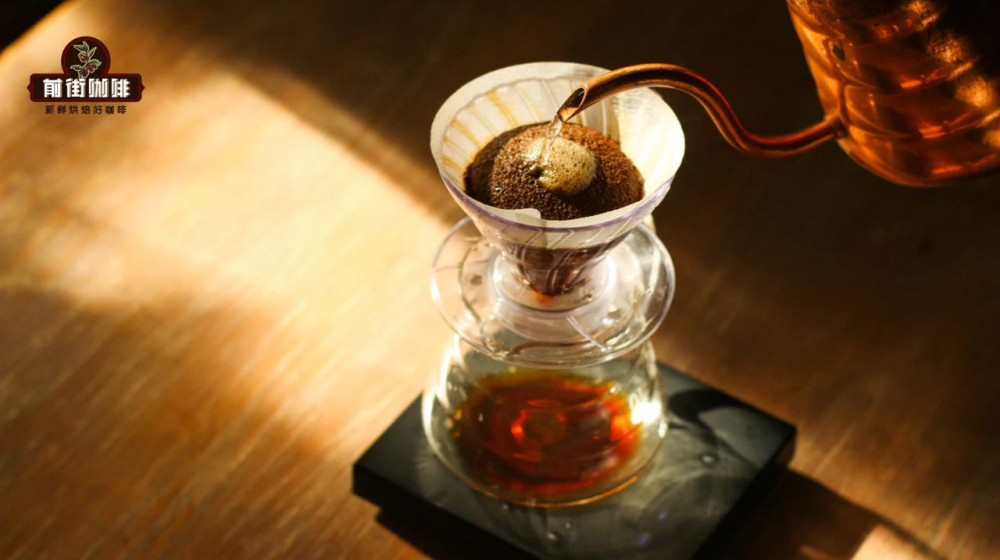
In the coffee community, the term "high-sweetness water level" has been mentioned repeatedly by many bloggers, and Front Street Coffee is one of them. Its principle is actually not complicated—the core purpose is to make the brewed coffee more likely to present a distinct layering and prominent sweetness.
So what exactly does high-sweetness water level mean? Simply put, it refers to a water level height that allows the coffee's sweetness to be more fully released, roughly around two-thirds of the dripper's capacity.
If you feel that your daily coffee always falls a bit short, with flavors that aren't bright enough, and after brewing the coffee bed appears relatively flat, then you might as well try this little trick. Front Street Coffee believes it could very likely elevate the expressiveness of the coffee in your cup by a notch.
The reason is that the final texture of the coffee changes with different brewing methods, parameters, and equipment. Some brewing schemes bring a balanced, full-bodied mouthfeel, while others highlight layering and flavor intensity...
The root of these differences lies in the fact that different brewing methods, parameters, and equipment alter the coffee bed structure and extraction efficiency, which in turn affects the types and amounts of substances released by the coffee particles, ultimately shaping different coffee textures. This is exactly why the high-sweetness water level can enhance layering.
If you frequently read Front Street Coffee's content, the operation of raising the water level or coffee bed should be familiar to you. The method is to speed up the pouring rate so that the amount of water poured in exceeds the amount draining out of the dripper, and the water level rises due to the continuously accumulating water inside the dripper.
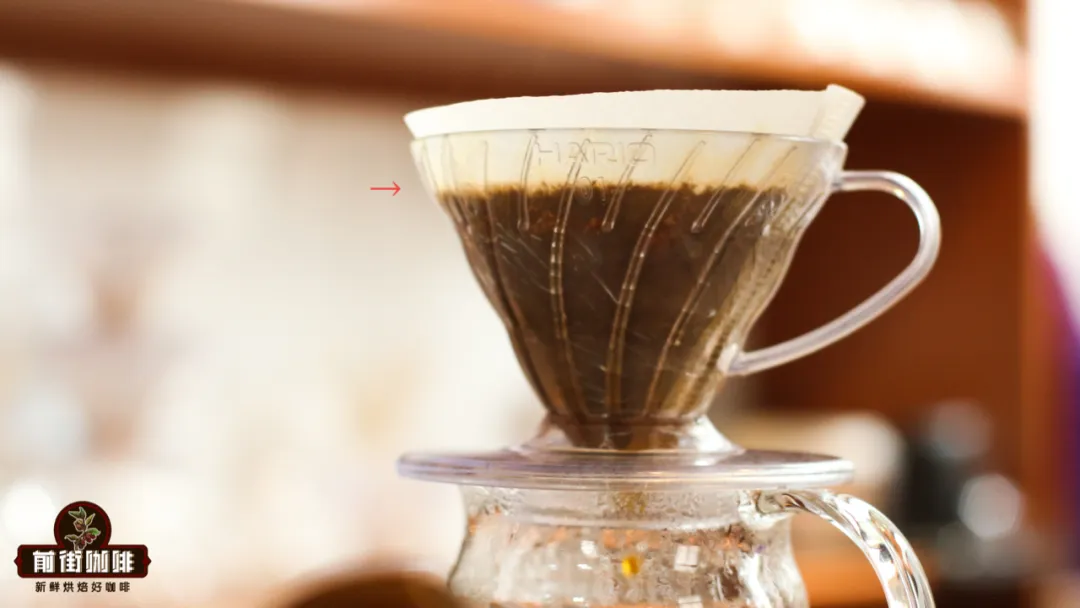
However, simply raising the coffee bed cannot guarantee brewing a cup of richly layered, high-sweetness coffee. As Front Street Coffee has said before, the parameters and equipment used are equally crucial. Moreover, raising the coffee bed also has limits to its applicable scope—not all coffees are suitable for this operation.
Which coffees are not suitable?
That's right—high-density light-roast coffee beans. This type of coffee grounds has high density and finds it difficult to float up along with the rising water level. If you force the water level up while the coffee grounds cannot rise with it, the hot water will flood and submerge the coffee bed.
If you are also using a dripper with many diversion ribs like the V60, then the hot water that has flooded over the coffee bed may flow directly away from areas without coffee grounds, bypassing the coffee grounds without participating in extraction and falling into the server. This lowers overall extraction efficiency and negatively affects the coffee's texture.
Therefore, when raising the water level, if you find that the coffee bed is not rising along with it, you should immediately adjust your pouring plan. Specifically, reduce the flow rate to prevent bypass water from appearing and avoid interfering with the coffee's extraction and flavor.
What coffee beans, equipment, and parameters should be paired with it?
As the saying goes, one cannot make bricks without straw. To brew a sweet and fragrant coffee, you first need a bag of high-quality Arabica single-origin beans. For example, types with floral, tropical fruit, peach, lychee, or fermented notes—you can choose Front Street Coffee Strawberry Candy, Front Street Coffee Blackberry, as well as Front Street Coffee Huakui and Front Street Coffee Xizhua. The coffee brewed with these beans has delicate aromas and ample layering, making them very cost-effective Arabica choices.
In terms of equipment, this mainly refers to the dripper. Front Street Coffee relatively recommends pairing with a conical dripper. Because compared with flat-bottom or fan-shaped drippers, the same amount of grounds can pile up into a thicker coffee bed in a conical dripper. A thicker coffee bed will cause certain differences in extraction, thereby allowing the coffee to present richer layers.
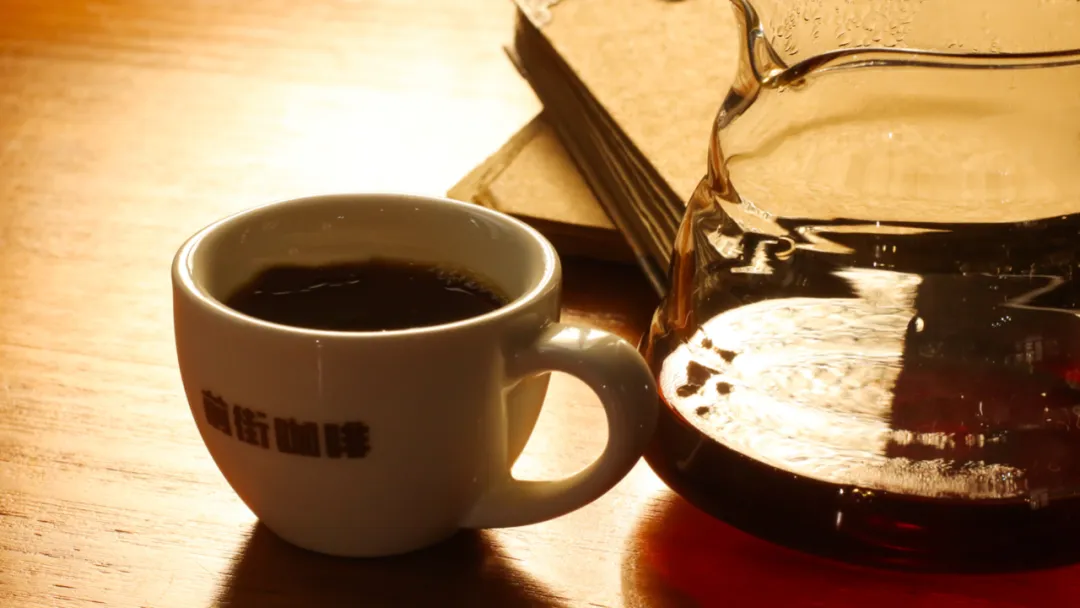
As for parameters, it's much simpler—just choose a set of parameters that can dissolve an appropriate amount of substances from the coffee grounds. In other words, the extraction efficiency should be just right. If you don't know what parameters to use or how to operate specifically, you can take a look at Front Street Coffee's brewing sharing below.
Brewing Sharing
The bean Front Street Coffee selected this time is Front Street Ethiopia Huakui from the bean list, paired with a V60 dripper. The extraction parameters are as follows:
Dose: 15g
Grind size: 75%~80% passing rate on a No. 20 sieve, Ek43 setting 10
Coffee-to-water ratio: 1:15
Water temperature: 92°C
First, bloom with 30ml of hot water for 30 seconds to release the carbon dioxide in the coffee beans that hinders extraction.
After the bloom, pour 120ml of hot water in a large circular motion with a relatively strong flow. Front Street Coffee's pouring speed here is 6ml/s, completed within 20 seconds.
When the hot water in the dripper has basically drained through, you can see that the coffee bed has formed a bowl shape. At this point, the hot water needs to be poured in a concentrated manner toward the center.
Since the second pour is relatively fast, the drainage speed will also be relatively fast. If you want the coffee to obtain sufficient extraction, then during the third pour you should reduce the pouring speed and extend the extraction time to ensure the coffee reaches a sufficient extraction yield.
Therefore, the third pour uses a small flow, poured in a small circular motion at the center. This segment pours a total of 75ml of hot water, and Front Street Coffee's pouring speed is 4ml/s. After all the poured hot water has drained through the dripper, you can remove the dripper and end the extraction.
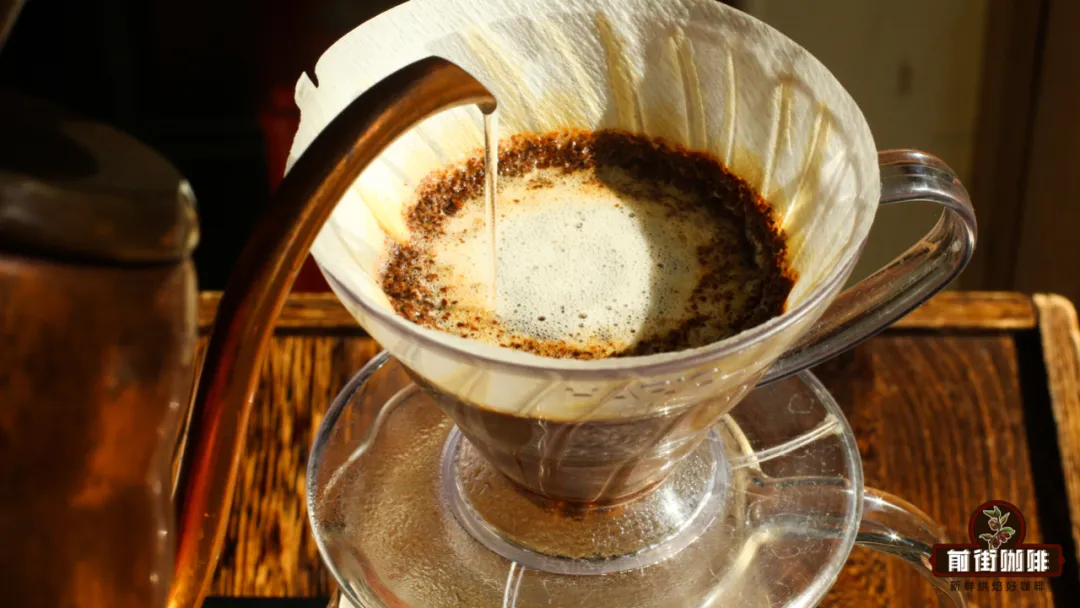
Total time: 2 minutes 15 seconds. The Huakui brewed this way, just as Front Street Coffee said, has particularly high sweetness and particularly rich layers. Orange blossom, strawberry, citrus, cream, honey—these are the rich aromas Front Street Coffee can capture from it, with a finish of oolong tea fragrance. After swallowing, the long-lasting berry aftertaste becomes increasingly obvious in the mouth, very pleasant.
Although it looks not much different from the brewing Front Street Coffee usually shares, if you actually brew and compare them, you'll find the differences still exist: one cup is more substantial, the other is lighter and richer in layers. Each has its own merits.
The above content is compiled by CoffeeHunters, a coffee news website.


