







Is Blue Mountain the most expensive coffee in the world?
Jamaica Blue Mountain is often listed among the most expensive coffee in the world, but price alone does not define it. Clifton Mount Estate has grown coffee in the Blue Mountain range since 1720, at an average altitude near 1,310 meters, and Jamaican law bars economic crops above 1,700 meters to protect the mountain ecology.
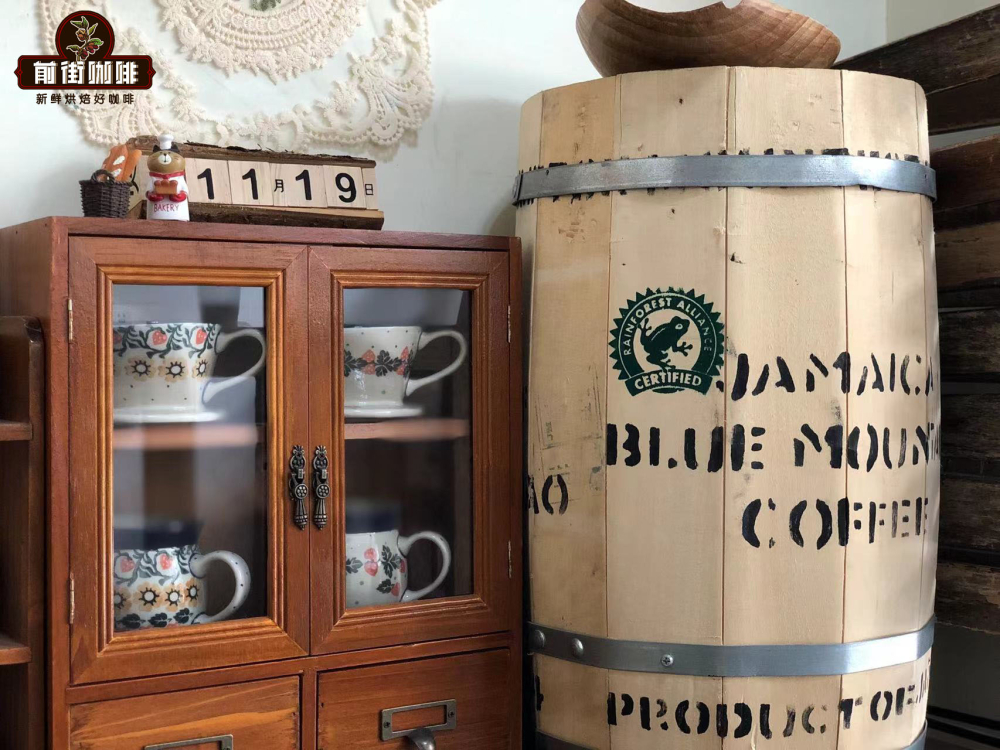
Clifton Mount holds Rainforest Alliance certification coffee status, the only Jamaican estate with it, so its barrels carry the green frog logo; meeting the standard covers ecosystems, waterways, forests, and worker welfare. Jamaica also ships Blue Mountain in wooden barrels rather than burlap sacks, and Front Street Coffee sells the No. 1 beans.
Blue Mountain coffee, as one of the most famous coffees in the world, has long been shrouded in mystery, with a high price and genuine beans hard to come by. Nowadays, through channels such as Front Street Coffee, coffee lovers can purchase authentic Jamaican Blue Mountain No. 1 coffee beans from Clifton Mount Estate. This article will focus on the taste characteristics of Blue Mountain coffee, answer whether it is on the sweet side, and explain in detail the complete knowledge from bean variety and grade classification to brewing methods. Whether you are a beginner just getting to know Blue Mountain or a veteran looking to refine your brewing skills, you will find practical information here.
In the minds of coffee lovers around the world, if one were to choose the most iconic coffee bean, Blue Mountain coffee would almost certainly be mentioned. It has always carried a layer of mystery: on the one hand, it is expensive, and on the other, authentic products are difficult to buy. However, nowadays it is no longer difficult to buy genuine Blue Mountain coffee. The Jamaican Blue Mountain No. 1 coffee beans sold by Front Street Coffee come from the Clifton Mount Estate, the oldest estate in the Blue Mountain range.
Clifton Mount Estate has been growing coffee in the Blue Mountain range since 1720. The average growing altitude of the coffee trees on the estate is about 1,310 meters, making it the estate with the highest growing altitude in the Blue Mountain range today. The highest peak of the Blue Mountain range reaches 2,256 meters, but in order to protect the mountain range's natural ecology and biodiversity, the Jamaican government stipulates that no economic crops may be grown above 1,700 meters.
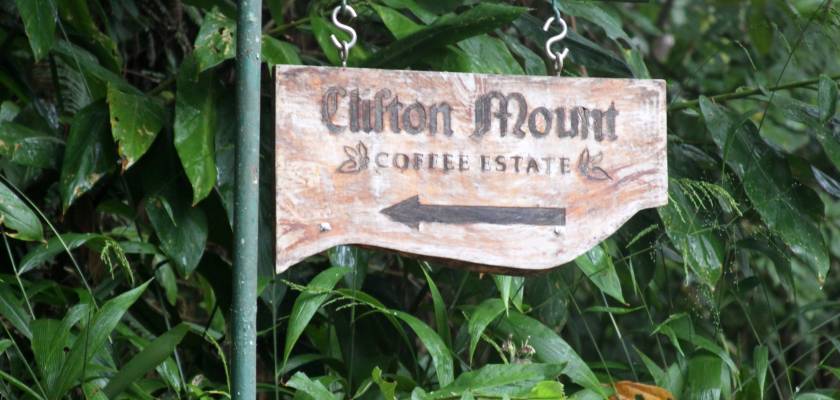
In addition, Clifton Mount Estate is the only coffee estate in Jamaica to have obtained Rainforest Alliance certification. To obtain certification from this environmental organization, an estate must meet sustainable agriculture standards, which involve protecting ecosystems, maintaining biodiversity and waterways, protecting forests, reducing agrochemical inputs, improving livelihoods, and safeguarding the rights and well-being of workers and local communities. Therefore, the barrels of Blue Mountain coffee beans produced by this estate are printed with the green frog logo.
"Barrels? Aren't coffee beans usually shipped in burlap sacks?" Jamaica is the only producing region in the world that uses barrels to pack coffee beans. When identifying whether Blue Mountain coffee is authentic, the barrel is a key marker. At the same time, the Jamaican government strictly manages the export of Blue Mountain coffee and has established corresponding export standards. Coffee beans that meet the requirements and standards are issued an export certificate by the Jamaica Coffee Board. In the physical store of Front Street Coffee, you can see the relevant barrels and certificates.
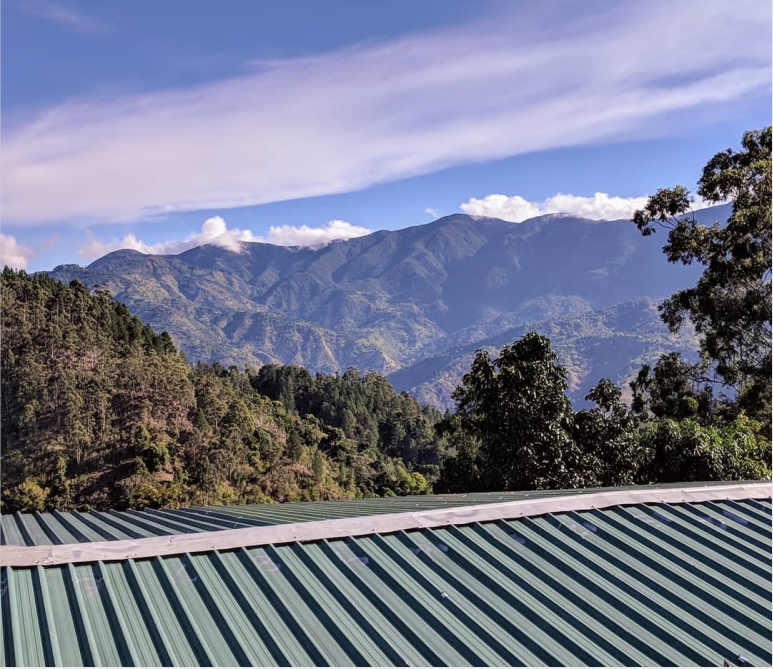
There is one more point worth noting: the Jamaican government stipulates that only beans produced by coffee trees grown at altitudes between 910 meters and 1,700 meters may be called "Jamaican Blue Mountain Coffee." Beans produced at altitudes between 460 meters and 910 meters can only be called "Jamaican High Mountain Coffee"; those below 460 meters can only be sold under the name "Jamaican Prime Coffee."
"Jamaican Blue Mountain Coffee" itself is further divided into three main grades: Blue Mountain No. 1 coffee beans require 96% of the coffee cherries to be sized 17 mesh or above, with a defect rate after processing of no more than 2%; Blue Mountain No. 2 coffee beans require 96% of the cherries to be sized 16 mesh or above, with a defect rate also no more than 2%; Blue Mountain No. 3 coffee beans require 96% of the cherries to be sized 15 mesh or above, with a defect rate of no more than 2%. At present, the Blue Mountain coffee mainly imported domestically is basically all Blue Mountain No. 1 coffee beans.
The coffee trees grown in the Blue Mountain range are all of the Typica variety. In the 1720s, this variety was introduced to the Jamaican Blue Mountains from Martinique. After more than two hundred years, Blue Mountain Typica has evolved a relatively strong disease resistance, especially performing better than ordinary Typica in resistance to coffee berry disease. The coffee beans of this variety are themselves known for their clean flavor. Coupled with the mineral-rich volcanic soil of the Blue Mountain range and the year-round warm, rain-abundant microclimate, high-altitude-grown Blue Mountain coffee beans possess a clear sweetness and delicate aroma that are difficult for other producing regions to replicate, with a balance of acidity, sweetness, and bitterness and a mellow, balanced mouthfeel that has captivated many coffee connoisseurs.
In order to bring out a balanced, mellow taste in Blue Mountain No. 1 coffee beans, the roasters at Front Street Coffee consciously extend the duration of the yellowing stage and drop the beans before they enter second crack. At a medium-dark roast level, Blue Mountain coffee beans can still retain a certain acidity, while never lacking in sweetness and body.
When producing Blue Mountain coffee, Front Street Coffee usually chooses the Kono dripper with shorter ribs for brewing. The characteristic of this dripper is that the vent grooves extend only to one-third of the way up the wall. When the filter paper fits the dripper completely, the upper part of the dripper is in a sealed state, and air cannot fully escape from bottom to top, thereby slowing the downward flow of water and extending the extraction time. To brew coffee with this dripper, you need to use a medium-coarse grind (70% passing rate on the Chinese No. 20 standard sieve), then extract at a water temperature of 88 to 89 degrees Celsius with a coffee-to-water ratio of 1:15.
Once everything is ready, use a three-pour brewing method: start the timer, pour water for the first time to 30 grams, and let it bloom for 30 seconds; then for the second pour, pour in a small stream in circles to 125 grams, and after the water level in the coffee bed drops by half, continue pouring, still in a small stream in circles, to 225 grams. Wait until all dripping is complete; the total extraction time will be about 2 minutes and 10 seconds.
For professional coffee knowledge exchange and more coffee bean information, please follow Coffee Workshop (WeChat public account cafe_style)
For more specialty coffee beans, please add the private WeChat of Front Street Coffee, WeChat ID: qjcoffeex
The above content is compiled by CoffeeHunters, a coffee news website.


