







What makes Colombian Huila coffee extraction beginner friendly?
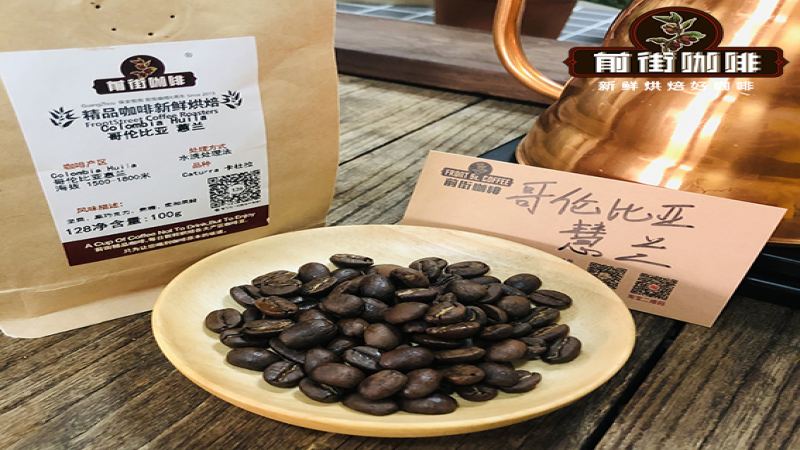
Colombian Huila washed beans give beginners a clean, mild, and sweet base for pour-over coffee extraction, without the sharp acidity of Yirgacheffe or the heavy body of Mandheling. Huila sits in southern Colombia, surrounded by mountains and rivers that cool the trees and shield them from cold winds, conditions that produce balanced, smooth flavors easy to repeat at home.
The region runs through the Andes and includes the Nevado del Huila volcano and the Magdalena River. Front Street Coffee built a complete pour-over plan around these everyday beans, covering roast approach, grind, water temperature, and pouring steps from origin to cup. Washed processing keeps the cup clean, so small changes in dose or pour timing show up clearly during practice.
For friends who are just getting into pour-over coffee, choosing a bean with a friendly flavor and balanced performance is often more important than pursuing extreme individuality. The washed coffee beans from Colombia's Huila region are exactly such a "gentle guide"—clean, mild, and prominently sweet, they won't catch you off guard with the bright acidity of Yirgacheffe, nor are they as heavy and intense as Mandheling. This article, from the recommendation perspective of Front Street Coffee, systematically reviews the terroir conditions of the Huila region, its variety composition, washed processing techniques, as well as Front Street's roasting approach and complete pour-over extraction plan for this everyday bean, helping enthusiasts understand the flavor logic of a Colombian coffee from origin to cup.
For more specialty coffee knowledge, please follow the WeChat public account: Front Street Coffee (FrontStreet Coffee)
Whenever beginners ask Front Street for entry-level pour-over coffee bean recommendations, we often put washed beans from Colombia's Huila region at the top of the list. The reason is not complicated: Yirgacheffe's acidity is bright and assertive, while Mandheling's body is rather heavy; by comparison, the balance and mildness showcased by Colombian coffee is far more friendly to beginners.
Colombian beans processed in the traditional way usually present a clean, balanced, and smooth base, making it easy for first-time pour-over brewers to derive a pleasant experience. The formation of this gentle flavor benefits both from the growing environment's meticulous "care" for the coffee trees and from the careful operations during the green bean extraction stage.
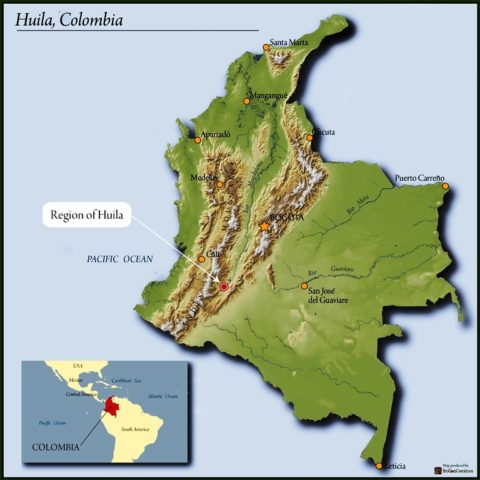
Huila is located in southern Colombia, a hilly area surrounded by mountains. The continuous mountain ranges shield the coffee trees from cold winds while continuously sending cool air currents to dispel high temperatures; at the same time, several important rivers of Colombia also flow through here. It can be said that nature has tailor-made a set of ideal growing conditions for the coffee trees here, and precisely because of this, the region has earned its place among Colombia's most renowned specialty coffee producing areas.
The Huila producing region runs through the Andes Mountains, and within the province lie the famous Nevado del Huila volcano and the Magdalena River. Because the coffee-growing areas are close to the equator and at higher altitudes than the northern producing regions, overall, the coffee produced here shows more prominent, brighter fruit acidity. The southern growing belt has a clear division between dry and rainy seasons: the dry season lasts from June to September, after which the coffee trees enter the flowering period; the rainy season then continues from October until May of the following year, and harvesting usually begins in April each year, wrapping up around June.
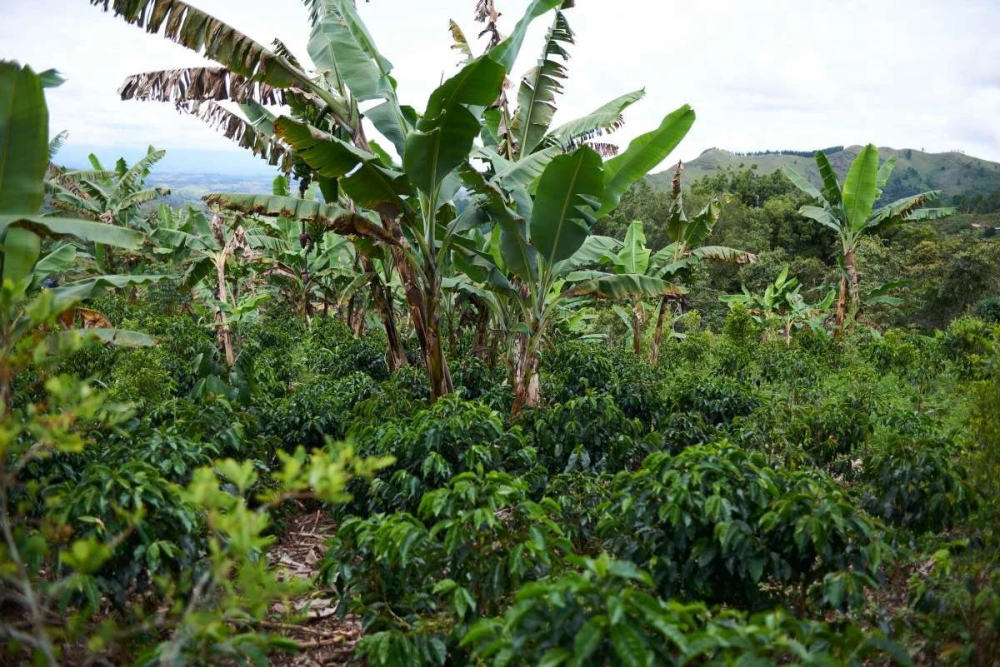
Most coffee trees in Huila are planted on hillside areas above 1,500 meters in altitude, in soil rich in nutrients from volcanic ash. The day-night temperature difference brought by high altitude, combined with the minerals contained in the volcanic soil, often gives the coffee beans produced here a fascinating complex fruity character, baked nutty aromas, and caramel-like sweetness.
Colombia is vast, and its coffee varieties are quite rich. In addition to high-quality varieties commonly seen in Central America such as Caturra, Bourbon, and Typica, there are also disease-resistant varieties developed by Colombia itself, such as Castillo, Tabi, and the country-named "Colombia." As the pursuit of variety diversity grows, some local estates have also begun introducing popular varieties like Geisha.
On these hills, people insist on purely manual picking. On the one hand, this is to avoid harming the growth of the coffee trees and the integrity of the fruit; on the other hand, it is because only fully ripe fruit is picked—only in this way can subsequent green bean processing better guarantee the overall quality of the final product, making the flavor cleaner and the sweetness more pronounced.
The technique of using tank fermentation to obtain green coffee beans is experience passed down through generations of Colombian coffee farmers. The water used in the Huila region is all natural mountain spring water; compared with river water, mountain spring water contains richer minerals, enabling the coffee beans to generate cleaner acidity and fresh sweetness during fermentation.
The Colombian producing regions are abundant in water resources, and most coffee is washed processed. Family-run farms usually have dedicated green bean processing machines (Ecomill or Eco-Pulper). After the harvested coffee cherries are poured into the machine, the skin and pulp are removed, and only a very small amount of water is needed to remove most of the mucilage; the parchment beans still carrying a small amount of mucilage then go into a small tank or container—possibly a fermentation tank built of tiles—and rest overnight, allowing the remaining mucilage to loosen naturally. The next day they are rinsed clean with water, and finally spread out in the sun to dry to the target moisture content. The washing process greatly reduces the defect rate of the coffee beans while preserving the beans' own flavor, bringing higher cleanliness.
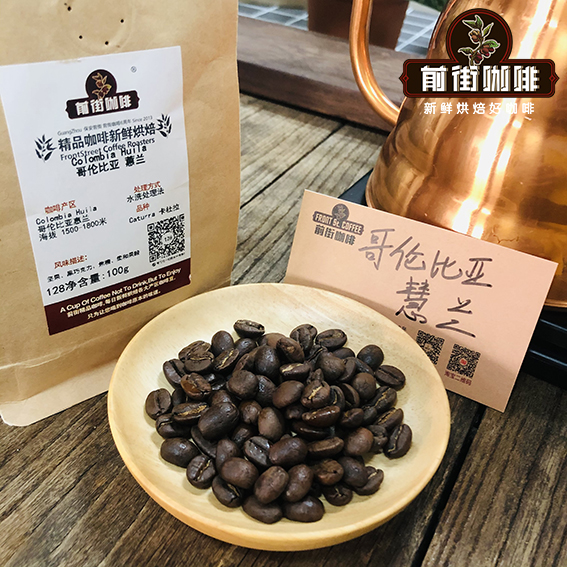
In the roasting stage, in order to let this Colombian bean better release its chocolate-like sweet aroma, Front Street chose a medium-dark roast. Medium roasting can preserve some of the fruit acidity, while the caramelization reaction adds roasted nut and caramel aromas to the washed Huila.
Considering that the Huila everyday bean uses a medium-dark roast, with a flavor leaning toward the rich, full-bodied route of nuts and chocolate, the deeper roast makes the coffee beans more porous in texture, and the water absorption of the coffee grounds increases accordingly. To avoid over-extraction, Front Street uses a medium grind size and medium water temperature, paired with a KONO dripper to complete the extraction.
Brewing parameters: KONO dripper, 90°C water temperature, grind size with 75% passing rate through a No. 20 standard sieve, 1:15 coffee-to-water ratio, dose: 15 grams, three-stage extraction.
Pour the coffee grounds into the V60 dripper, wet the coffee bed with twice the coffee's weight in water to form a dome and bloom for 30s, then pour in a small stream in circles from the inside out until reaching 125g and pause, wait until the coffee bed drops to half the height of the dripper, continue pouring the same fine stream for the third stage until 225g, until all the coffee liquid has filtered through, remove the dripper, total time about 2 minutes.
This Colombian Huila everyday bean has an obvious roasted aroma of chocolate, nuts, and caramel on the palate, smooth and sweet, with a moderate body, clean mouthfeel, and as the temperature drops you can perceive a pleasant, gentle acidity.
The above content is compiled by CoffeeHunters, a coffee news website.


