







How Did Geisha Coffee Become So Expensive?
Geisha coffee commands high prices because the trees produce low yields and the variety keeps winning a reliable of Panama green bean competition. After Hacienda La Esmeralda won the 2004 BOP, prices climbed, reaching a record $1,029 per pound in 2019, so limited supply meets intense demand from specialty roasters.
The variety traveled from Ethiopia's Kaffa Forest through Kenya, Uganda, Tanzania, and Costa Rica before arriving in Panama. Panamanian Geisha grown at high altitude often shows floral aromas and fruit acidity, but Panama is not the only source, and the BOP later split Geisha into its own category because it placed so highly against other varieties.
Geisha coffee enjoys a near-legendary status in the specialty coffee world, its elegant floral aromas and captivating fruit acidity enchanting countless coffee lovers. This variety set out from Ethiopia's Kaffa Forest, passed through Kenya, Uganda, Tanzania, and Costa Rica, and finally made a stunning debut at Hacienda La Esmeralda in Panama. After winning the 2004 BOP competition, its value soared, setting a record of $1,029 per pound in 2019. Why is Geisha so expensive? Is Panamanian Geisha necessarily the best? In this article, Front Street Coffee will take you through the origins of Geisha, analyze its rise to fame, cultivation challenges, and flavor characteristics, and share a Boquete-region Geisha suitable for beginners to try, along with a practical three-pour brewing method.
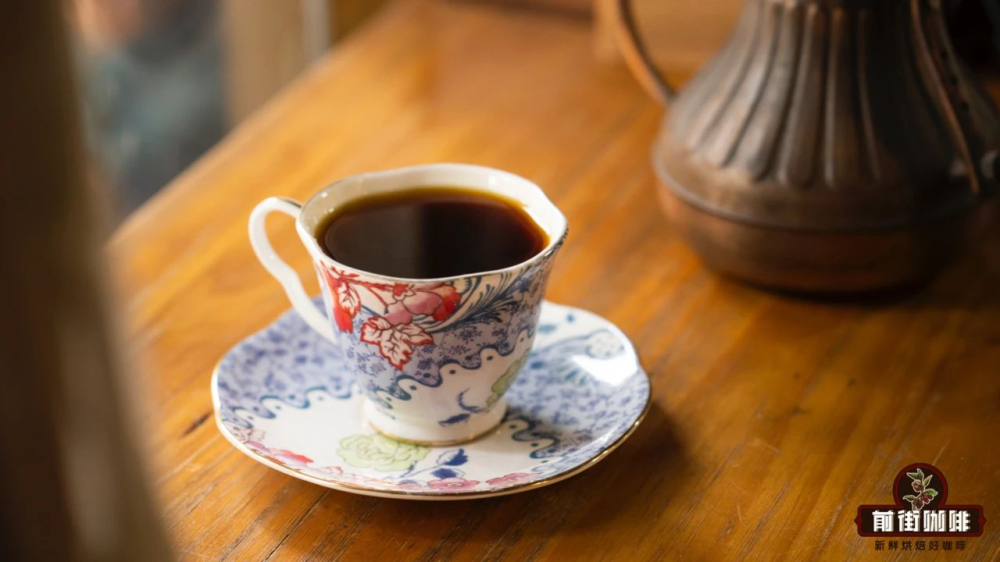
Among specialty coffee enthusiasts, a joking saying often circulates: "If you don't know the name of Geisha, you've wasted your life even if you've drunk coffee from all over the world." This saying is enough to illustrate Geisha's transcendent status in the coffee world. Whether a novice just stepping into the door of specialty coffee or a seasoned veteran who has been immersed for years, anyone who begins exploring specialty coffee will inevitably hear all kinds of praise for Geisha. Geisha is so highly regarded because of its extremely delicate flavor expression—especially Geisha grown at high altitudes in Panama, which often presents elegant and charming floral aromas and fruit acidity, captivating countless coffee people.
Some even half-jokingly say that specialty coffee beans fall into only two categories: one is Geisha, and the other is all the rest of Arabica. Although this is an exaggeration, Geisha is recognized as one of the noblest varieties in specialty coffee, and this has remained unquestioned for the past eighteen years. Geisha is expensive because its coffee trees have a low fruiting rate, so yields are naturally limited, and the variety has repeatedly won the Best of Panama (BOP) green bean competition.
Because Geisha has participated year after year and placed extremely high, it has been quite unfavorable for other competing varieties. Therefore, BOP later separated Geisha from other varieties into its own category for evaluation, which shows just how strong its quality and level are, and it is only reasonable that its value exceeds that of other varieties. So what exactly made Geisha's legend? In this article, Front Street Coffee (FrontStreet Coffee) will introduce this legendary variety—Geisha.
Like many coffee varieties, Geisha's place of origin is also Ethiopia. In 1931, botanists conducted sampling research in Ethiopia's Kaffa Forest. This sampling was actually to find superior varieties among the disease-resistant trees collected from the Kaffa Forest after the major coffee leaf rust outbreak in 1860 (the trees collected at that time were sent to Kenya for selection and screening). French biologist Jean-Pierre Labouisse later verified this clue and found that the coffee beans originally labeled as from Geisha Mountain actually came from different trees, meaning they were not simply a single type of Geisha coffee.
These seeds marked as Geisha were sent to Kenya in 1931 and 1932 for selection and sample investigation, and in 1936 they were transferred to Uganda and Tanzania. In 1953, Costa Rica's Tropical Agricultural Research and Higher Education Center introduced the Geisha experimental variety planted in Tanzania into the country and archived it under the number "T2722." In the 1960s, Mr. Don Pachi of Panama's Hacienda Don Pachi introduced Geisha from Costa Rica's Tropical Agricultural Research and Higher Education Center, initially to resist leaf rust, so Don Pachi also shared it with other estates.
Until 2004, Geisha coffee remained unknown. During a cupping session, Hacienda La Esmeralda in Panama discovered that some coffee trees had flavors slightly different from the other planted varieties, with a very unique citrus fruit profile.
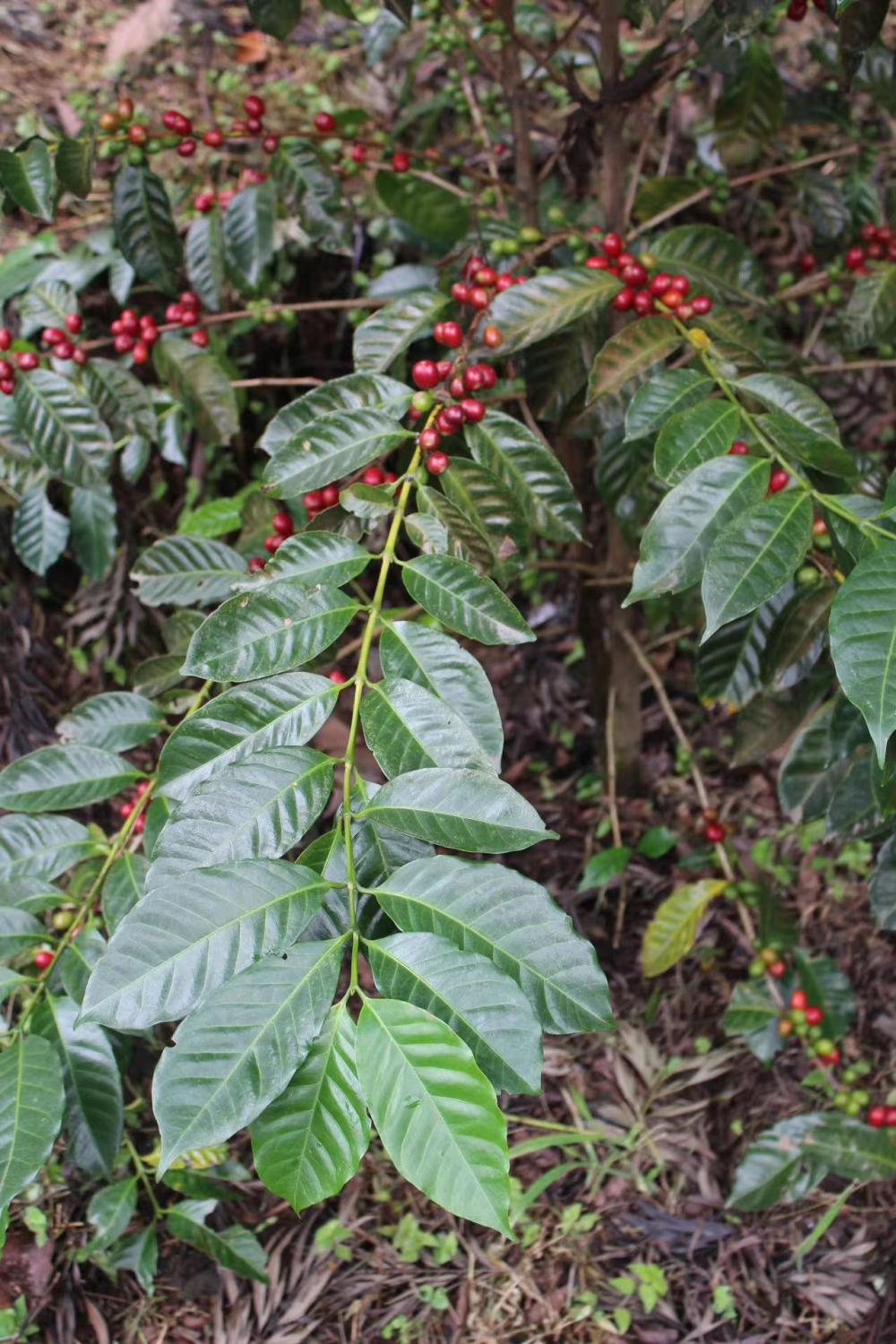
Before 2004, when processing coffee, they would harvest and process all the coffee trees on the estate together. But in 2004, they decided to process the fruit from those rather unusual-looking coffee trees separately and send it to compete, ultimately winning the championship in that year's BOP competition with an extremely high score.
At first, Hacienda La Esmeralda also did not know exactly what variety this aromatically captivating coffee bean belonged to. Because production was scarce, the variety had originally been introduced only for disease prevention and pest and disease experiments, so it was casually planted in a windbreak forest, and it was precisely in this harsh environment that the variety developed its uniquely distinctive flavor. Later, through genetic comparison and verification of its transmission path, it was confirmed that its plant genes were the same as those of the coffee variety collected from Ethiopia's Geisha Mountain, so it was named Geisha. Because the pronunciation is similar to the Japanese word for "geisha," it is also called geisha coffee, while the Chinese name "瑰夏" was given by Mr. Yuan, head of the China region for Front Coffee Monroe Green Bean Company.
After winning in the Panama cupping, Geisha's fame spread rapidly. By the principle of supply and demand, with scarce production and many people wanting to try it, Geisha's auction transaction prices climbed straight up. From $350.25 per pound in 2013, to $803 per pound in 2018, and now to $1,029 per pound, it keeps breaking its own price record every year. Although more and more coffee farmers are beginning to grow Geisha, the upward price trend remains unstoppable.
After Geisha became famous, in many coffee competitions, Hacienda La Esmeralda's Geisha beans were contestants' first choice. In addition to Hacienda La Esmeralda, many estates in Panama later also grew extremely refined Geisha and participated in competitions and auctions. Many estates hold auctions, bidding at high prices for premium Geisha. At the 2019 Best of Panama (BOP) competition, Panamanian Geisha, with a high price of $1,029 per pound, continued to firmly sit on the throne of the most expensive coffee, adding yet another weight to its price.
Of course, not all Panamanian Geisha is so expensive; the key also depends on the reputation of the producing estate and whose Geisha has a more refined and prominent flavor. Some Panamanian Geisha not traced to a specific estate also performs very well in flavor. Just like the Panamanian Boquete-region Geisha coffee sold by Front Street Coffee (FrontStreet Coffee), it also has Geisha's unique and charming flavor. For friends who are just getting into specialty coffee and do not dare to casually spend on high-priced Geisha, this Panamanian Boquete-region Geisha coffee is very suitable as an introductory try, and the price of 98 yuan for 100g is also quite affordable. Although it is not as refined and delicate as Geisha from famous estates, it is enough to let people clearly feel the charm of Geisha coffee beans.
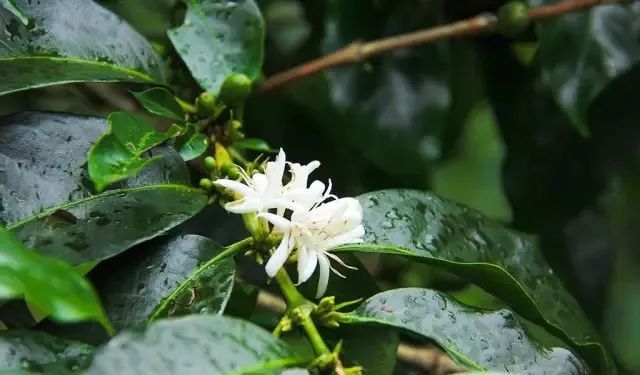
Some may ask, since Geisha is so famous, why not just plant more? But it happens to be an extremely difficult variety to manage. According to the owner of Hacienda La Esmeralda, Geisha's root system is not strong enough and is even quite weak, so the mortality rate in the early planting stage is relatively high. It is so weak that using traditional pruning methods or improper pruning may cause Geisha trees to die—it can resist wind but cannot withstand rough handling; that is Geisha. At the same time, yields are low. Compared with traditional varieties, Geisha's harvest volume is considerably smaller, and planting requires a large number of shade trees to block sunlight for the weak Geisha trees. The planting altitude must also be above 1,500 meters, otherwise it will lose its elegant and delicate unique flavor. In addition, fully manual processing is required, so if you want Geisha coffee beans to maintain high quality, mass production is almost impossible.
Seeing this, everyone can understand why Geisha is difficult to mass-produce. So how should such an elegant Geisha be brewed to taste good? Because Geisha beans are relatively hard and tend to sink and clog the drainage holes, the grind size uses a coarseness with a 78% passing rate on the Chinese standard No. 20 sieve (about the size of fine granulated sugar). For the dose, Front Street still chooses 15g, paired with a small Hario V60 dripper, and the brewing ratio is recommended to be adjusted to 1:16. On one hand, use one extra part of water to maintain the coffee extraction yield; on the other hand, lower the coffee concentration to between 1.15% and 1.25%, at which concentration the coffee's best flavor can be experienced. For water temperature, maintain 91°C.
Once everything is ready, use a three-pour brewing method: start the timer, make the first pour to 30g of water, and bloom for 30 seconds; then begin the second pour, circling with a small stream of water to 125g, wait until the water level in the coffee bed drops halfway before pouring again, continuing to circle with a small stream of water to 225g. After all dripping is complete, the total extraction time is about 2 minutes 10 seconds to 2 minutes 20 seconds.
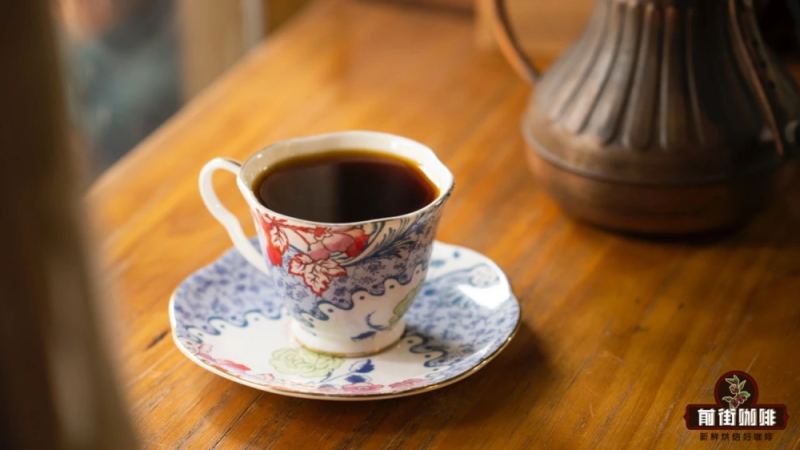
Brewed flavor of Panamanian Boquete-region Geisha coffee beans: citrus, white floral, green tea-like body, honey.
For more specialty coffee beans, please add the private WeChat of Front Street Coffee (FrontStreet Coffee), WeChat ID: kaixinguoguo0925
The above content is compiled by CoffeeHunters, a coffee news website.


