







How does coffee bean processing change the cup?
Coffee bean processing shapes flavor as much as origin and variety do. The three mainstream methods are natural, washed and honey, and each changes how much acidity, sweetness and body ends up in the cup. Natural processing is the oldest approach, common in Ethiopia, where whole fruit dries on raised beds before hulling.
During natural drying, the fruit rests about 27 to 30 days until moisture falls to roughly 11 to 13 percent, then a huller removes skin and pulp. Fruit dried on concrete can pick up dust and earthy notes, and hulling tends to break beans, so hand sorting follows. Kenya's K72 method, Indonesia's wet-hulled style and anaerobic fermentation add further variation.
The flavor of coffee depends not only on its origin and variety—the processing method also plays a key role. Today, more and more coffee enthusiasts are paying attention to the processing techniques behind the beans. Front Street Coffee takes this opportunity to systematically sort out the three major mainstream methods—natural, washed, and honey—and also introduce Kenya's K72-hour processing, Indonesia's wet-hulled method, and the emerging anaerobic fermentation technique. From fruit picking, fermentation, and drying to hulling, how does each step affect the acidity, sweetness, and body in the final cup? What unique character do different processing methods give to beans like Yirgacheffe, Mandheling, and the Costa Rica Musician Series? This article will compare everything from the operational process to the flavor performance, helping you make clearer judgments when buying and tasting.
For more specialty coffee knowledge, please follow our WeChat official account: Front Street Coffee.
Among customers buying coffee beans at Front Street Coffee today, noticeably more people are paying attention to each bean's processing method, which reflects that everyone's understanding of coffee is deepening. So Front Street would like to take this opportunity to talk with you about several common coffee processing methods.
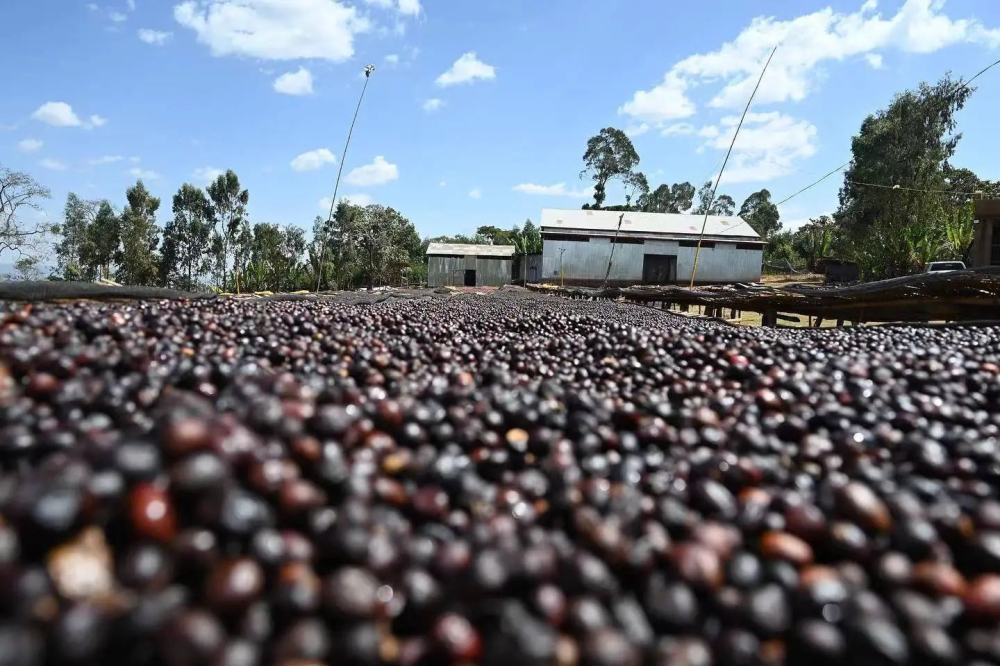
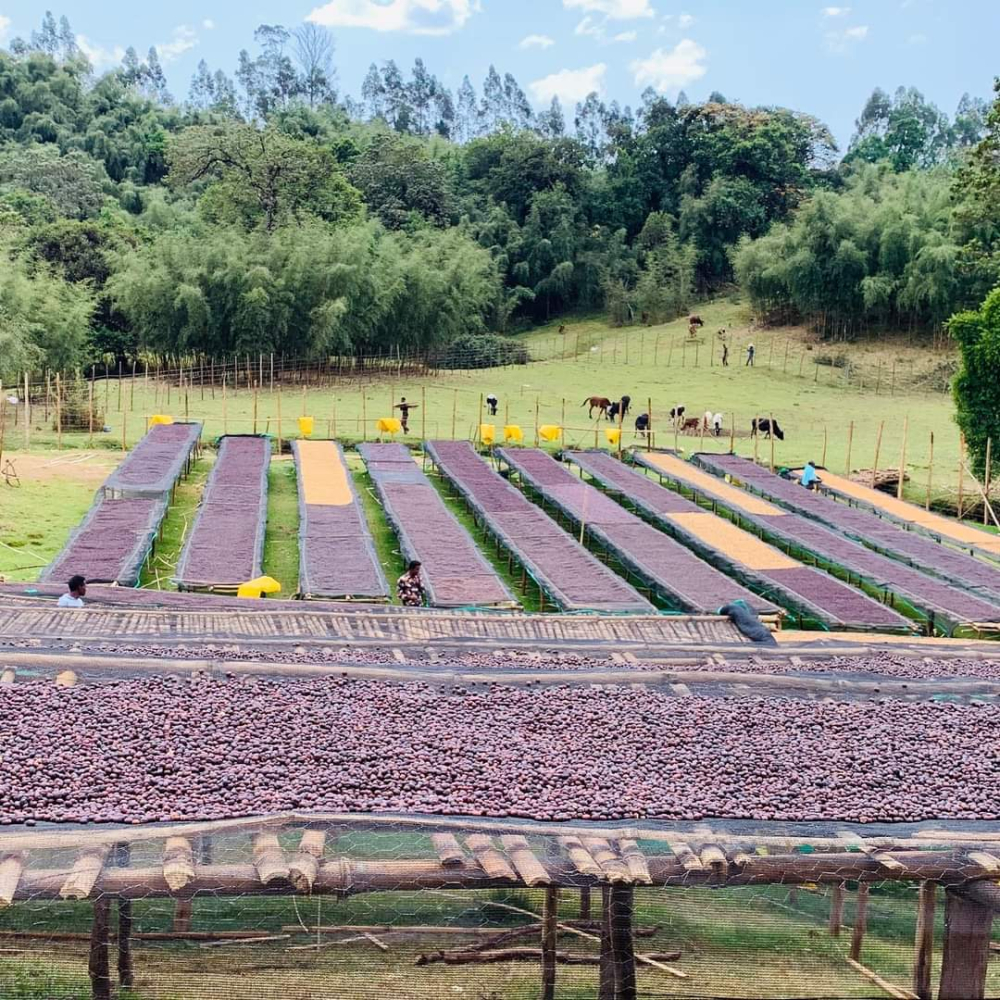
Front Street will first talk about the oldest method in coffee fruit processing—the natural method. This is one of the most traditional ways of processing coffee beans, and it is especially common in Ethiopia, the birthplace of coffee. The method is to first manually sort the picked coffee fruits, remove defective beans, and then spread the fruits on raised drying beds or tarps; if conditions are limited, some places also spread them directly on concrete ground, but this makes it easy for the beans to pick up dust and an earthy taste, and sand or stones may also be mixed in during collection.
After checking the information, Front Street learned that the drying period for coffee fruits is about 27 to 30 days. At this point, the moisture content of the fruit drops to around 11% to 13%. Once it reaches the standard, a huller can be used to remove the skin and pulp. After that, another round of manual hand sorting is needed, because during hulling the fruit is relatively dry and prone to breaking, so broken beans must be picked out.
The greatest advantage of the natural method is that it does not require much equipment; as long as the weather is sunny, it can be done. Therefore, regions like Ethiopia in Africa, which have dry climates and little rainfall, are very suitable for this method. Among the beans Front Street offers, quite a few use natural processing, such as the Ethiopia Yirgacheffe Natural Red Cherry. Because it undergoes natural processing, it presents an alcoholic aroma with a fermented quality.
Besides the natural method, washed processing is also a very commonly used method, and many large estates adopt it. The general process is as follows:
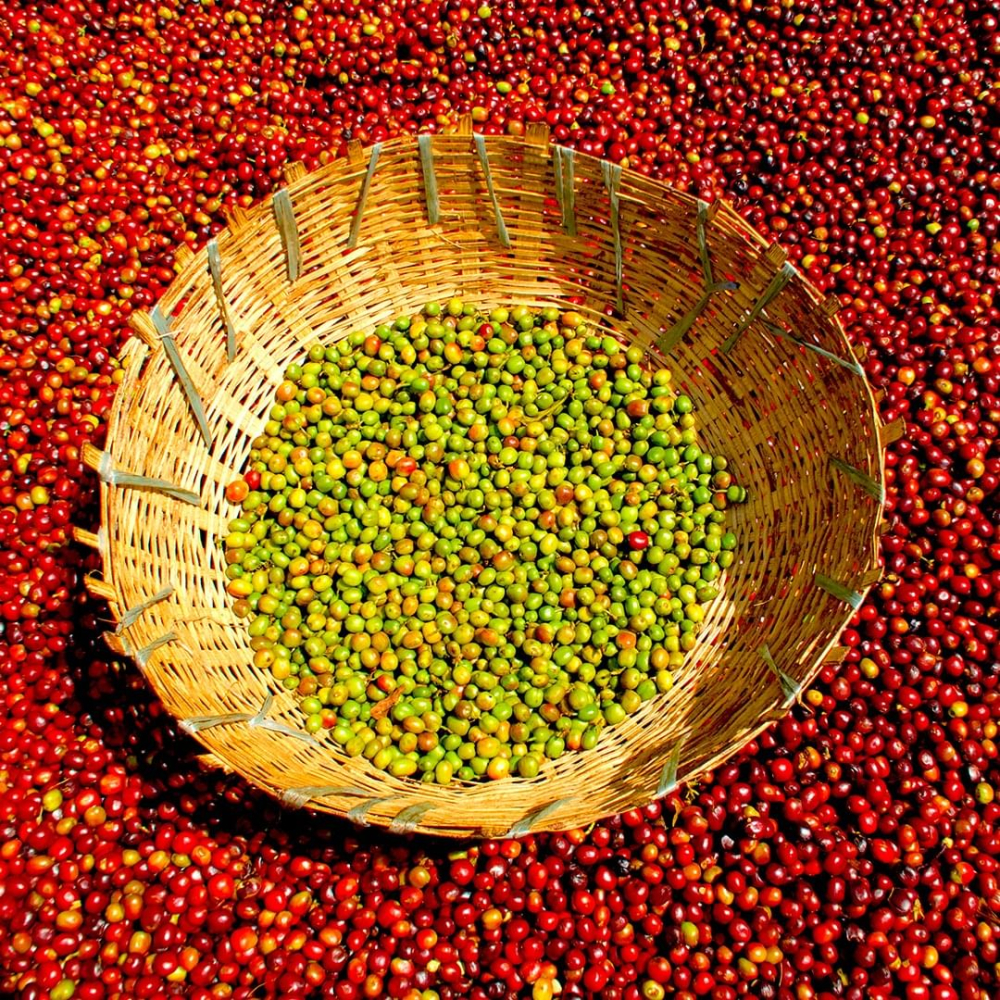
1. Pour the coffee fruits into water and use the principle of flotation to remove defective beans, such as unripe ones, overripe ones, or mixed-in debris. 2. Send the selected fruits into a depulper to remove the outer skin and pulp. At this point, a layer of mucilage still remains on the surface of the fruit, and a large amount of clean water is needed to wash it off.
3. Use fermentation to remove the mucilage, and this process takes about 18 hours. After fermentation ends, the fermenting bacteria still cling to the surface of the fruit, so it must be rinsed again with a large amount of clean water. In this step alone, producing 1 kilogram of coffee beans requires 40 to 50 kilograms of clean water. Front Street finds this number quite astonishing, and it is precisely the reason why some regions cannot adopt washed processing. 4. After washing, the coffee beans can be dried. In some regions they are placed outdoors to dry directly, while processing plants with the means to do so use machines to dry them, reducing the moisture content to about 11%, after which a huller is used to remove the parchment and silver skin.
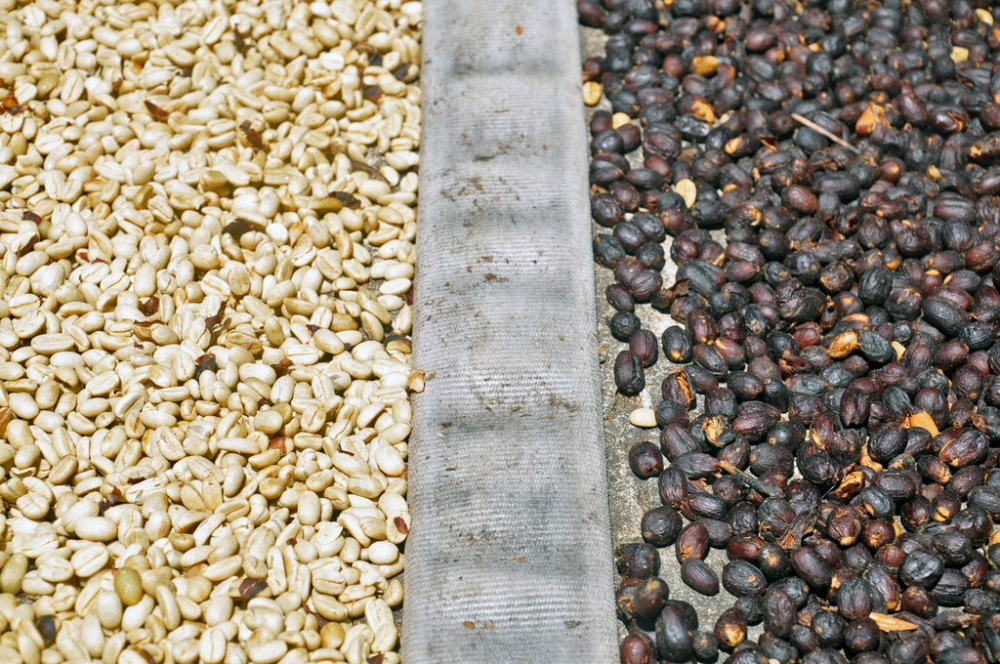
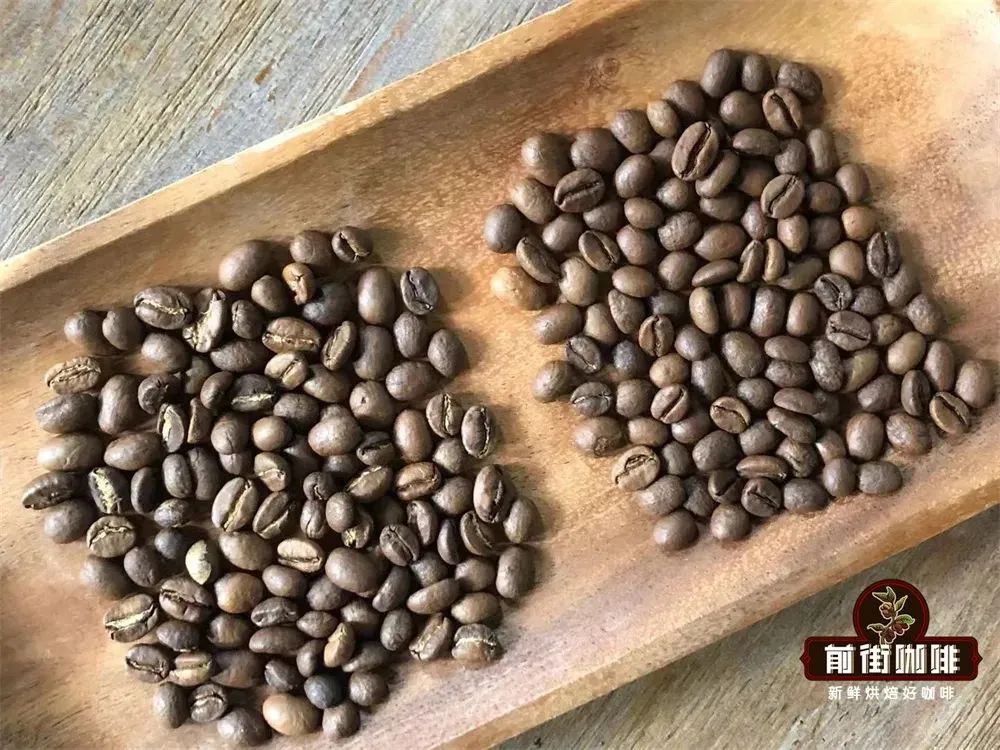
Among the guests who come to Front Street for coffee, the most frequently asked question is what exactly the difference is between washed and natural. Front Street will start with the coffee beans themselves. Still taking Ethiopia Yirgacheffe as an example, under normal circumstances, washed Yirgacheffe beans are blue-green, while natural Yirgacheffe beans tend toward yellow-green. Therefore, washed beans retain more silver skin, while natural beans have less silver skin.
Do not underestimate silver skin. When brewing, Front Street has found that too much silver skin mixed into the coffee grounds can seriously interfere with flavor expression, preventing the coffee's flavor from being fully released. If comparing these two processing methods from the perspective of flavor, Front Street believes washed beans taste brighter, with a clean flavor and no off-notes, and also carry acidity and fruity aromas. Natural beans, because they are dried for a longer time and undergo a slow fermentation process, have a faint fermented alcoholic aroma when tasted. In addition, natural beans have more prominent sweetness and fruity acidity than washed beans, and a fuller body. So overall, the bean quality of washed processing is often superior to that of natural processing.
What Front Street introduced above is the conventional washed method. Next, let's talk about Kenya's K72-hour processing method, which is an extension of washed processing. The difference between K72-hour processing and basic washed processing lies in the fermentation stage: after the first 24 hours of fermentation, replace with a large amount of clean water, then ferment for another 24 hours, replace with clean water again, and continue fermenting for another 24 hours. This cycle is repeated three times, and only after fermentation is complete does drying begin. Therefore, Front Street has found that the acidity of Kenyan coffee beans is more vivid than that of ordinary washed beans, similar to the fresh acidity of dried plums and cherry tomatoes.
If you often buy coffee beans at Front Street Coffee, you will notice that among the daily beans series on Front Street's shelves, aside from the Brazil Red Fruit using semi-natural processing and the Indonesia Mandheling using the wet-hulled method, the other five daily beans all use washed processing. This is because Front Street has always emphasized that washed processing represents the foundational flavor of a producing region and is very suitable for beginners who are just getting into coffee.
Next, Front Street will talk about honey processing. Honey processing is a method originally created in Costa Rica: first remove defective beans through washed flotation, then send the selected fruits into a depulper to remove the skin and pulp but retain the mucilage, and then place them on raised beds to dry for about one to two weeks. During this time, the beans must be constantly turned so they dry evenly, allowing the coffee beans to fully absorb the sugars in the mucilage.
Raisin honey processing, by contrast, retains 100% of the mucilage. First, defective beans are removed through flotation, then the fruits are placed directly on raised beds to dry for at least three days, after which a huller is used to remove the skin and pulp. The mucilage is retained and drying continues. Because it undergoes natural drying and the mucilage is not removed, both raisin honey processed and honey processed coffee beans have quite high sweetness. For example, in the Costa Rica Musician Series offered by Front Street, Bach, Chopin, Mozart, and Beethoven all have very high sweetness in flavor, accompanied by rich tropical fruit notes.
Honey processing is not suitable for rainy weather. A humid and rainy environment like Indonesia's will cause coffee beans to mold. Therefore, Indonesia usually uses its local wet-hulled method to process coffee beans. The general steps are as follows:
1. Remove the skin and pulp of the coffee fruit, retaining the parchment and mucilage. 2. Put the processed fruit into a water tank to ferment and remove the mucilage. 3. Then dry the coffee beans with the parchment in the sun for two to three days, reducing the moisture content to about 20%. 4. Then remove the parchment, dry the green beans again until the moisture content drops to about 11%, and they are ready for storage.
Wet-hulled processing of green beans also brings the drawback of unstable quality, but on the positive side, wet-hulled processing gives Indonesian coffee its uniquely distinctive flavor: low acidity and a strong herbal spice note. Among the five Mandheling coffees offered by Front Street, aside from Natural Mandheling, the rest all use this type of processing method.
As technology continues to advance, the processing techniques for coffee green beans are also constantly evolving. In recent years, anaerobic fermentation processing has emerged, and some also call it "carbonic maceration" or red wine processing. In fact, the process is not complicated: it uses biotechnology, such as stainless steel tanks that can control oxygen intake and output, time, temperature, and pH, to place coffee beans in a low-oxygen or oxygen-free environment, thereby enhancing the coffee's flavor and sweetness.
For example, the Colombia Rainbow Flower Moon Night and Rose Valley offered by Front Street use anaerobic fermentation processing. Flower Moon Night uses anaerobic natural processing, so it has a rich strawberry flavor and creamy mouthfeel; Rose Valley uses double washed anaerobic enzyme processing, so its sweet-and-sour sensation is more prominent, accompanied by peach flavor. Both of these are very popular with customers at Front Street Coffee.
Front Street believes that the coffee market is developing rapidly today, with all kinds of coffee beans emerging one after another. Rich processing methods bring different flavor experiences to everyone who loves coffee, and also provide more diverse choices.
The above content is compiled by CoffeeHunters, a coffee news website.


