







Why Is Panamanian Geisha Coffee So Highly Priced?
Panama built its specialty reputation on Geisha, and Hacienda Deborah is one of the estates drawing attention in recent years. Geisha was first collected from Ethiopian forests in the 1830s, sent to a Tanzanian research station, registered at CATIE in Central America in 1953 as T2722, and distributed to Panama from 1960. Deborah's Savage Series Geisha sells at 198 yuan per 100 grams.
Anaerobic natural processing ferments whole cherries without oxygen before drying, which shapes the fruity, floral character the variety is known for. Panamanian geisha coffee from Deborah can be compared with Hacienda La Esmeralda Green Label Geisha on price. Other lots, such as Boquete Geisha and the Butterfly blend, share the citrus, jasmine, and tea-like base notes while showing estate-specific aromatics.
Panama is renowned in the global specialty coffee scene for Geisha coffee, and Hacienda Deborah is one of the high-end Geisha producers that has attracted much attention in recent years. This article will start from the perspective of Front Street Coffee, trace the historical development of the Geisha variety from Ethiopia to Panama, analyze the impact of high-altitude cultivation on flavor, and focus on introducing Front Street's newly launched Deborah Estate Savage Series Geisha. The article will also explain in depth the principles and advantages of anaerobic fermentation natural processing, compare the price difference between Hacienda Deborah and Hacienda La Esmeralda Green Label Geisha, and take you through a comprehensive understanding of what makes this Geisha coffee, priced at 198 yuan for 100 grams, so unique.
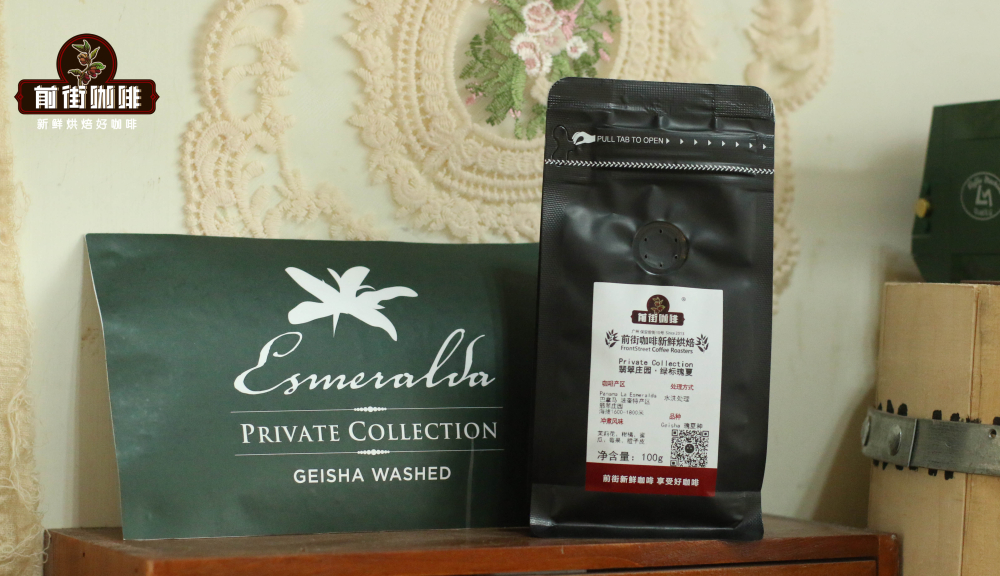
Panama occupies an important position in the global specialty coffee world because of its Geisha coffee, and this coffee bean is also one of the most expensive varieties at present. Front Street Coffee currently offers a number of single-origin beans from the Panama region, the vast majority of which belong to the Geisha variety. In addition to the well-known Front Street Hacienda La Esmeralda Red Label Geisha and Front Street Hacienda La Esmeralda Green Label Geisha, there is also Front Street Boquete Geisha from the core producing area, as well as a Geisha blend—Front Street Butterfly. These coffees all carry the signature citrus, jasmine, and tea-like base notes of the Geisha variety, while also presenting their own unique aromatic expressions due to the different cultivation methods and processing techniques of each estate.
However, Geisha coffee did not originally originate in Panama. Front Street Coffee has consulted a large amount of material and now summarizes and shares the relevant information as follows:
Geisha was first collected from the primitive coffee forests of Ethiopia in the 1830s and was subsequently sent to a research station in Tanzania. In 1953, it was introduced to the Tropical Agricultural Research and Higher Education Center (CATIE) in Central America, where it was registered as T2722. In 1960, CATIE distributed Geisha coffee seeds to various places in Panama. Although Geisha is considered to have strong tolerance to coffee leaf rust, it was not favored by local farmers because of its fragile branches, so it was not planted on a large scale and was mostly used only as windbreaks. In 2004, the Peterson family in the Boquete region of Panama entered Geisha coffee in the "Best of Panama" competition and auction. With its stunning flavor performance, Geisha received extremely high praise, broke the green coffee auction price record at the time, and won the BOP coffee competition championship. Since then, Geisha coffee has become world-famous.
It is worth noting that there is considerable naming confusion surrounding Geisha coffee, because several genetically different plant types are all called Geisha, and many of them have similar geographical origins in Ethiopia. A genetic diversity analysis conducted by World Coffee Research confirmed that the Panamanian Geisha descendants of T2722 are unique and significantly different from the Geisha coffee grown in Ethiopia. As is well known, most Panamanian Geisha coffee is grown in the high-altitude Boquete producing area. When coffee plants are well managed at high altitudes, they can display extremely high flavor quality, usually expressed as delicate floral notes (jasmine) and rich fruity tones. The reason is that temperatures are lower at high altitudes, which slows the growth rate of coffee. During slower growth, coffee can absorb more nutrients and energy, often bringing higher sweetness. At the same time, high-altitude areas usually have better drainage systems, reducing water during the coffee's growth process, thereby concentrating the flavors produced by sugars and making the coffee sweeter.
The two spellings Geisha and Gesha are often used interchangeably, which is related to the lack of a fixed translation from Ethiopian dialects into English. In coffee variety records, the spelling is "Geisha," and coffee researchers and germplasm banks have mostly used this spelling for decades, causing it to be promoted and used first in the coffee industry. But this coffee was originally collected near Ethiopia's Gesha Mountain, so many people in the coffee industry prefer to call it Gesha.
A while ago, Front Street launched a new Geisha coffee from the Savage Series of Hacienda Deborah in Panama. This is another proud creation of the estate owner, Mr. Savage. The coffee beans in this series are not produced at Hacienda Deborah itself. Instead, Mr. Savage purchases Geisha grown by small farmers near the estate and uses it to develop a novel Geisha coffee with a unique flavor. He directly named the series after himself, which is enough to prove that he has full confidence in this coffee bean.
FrontStreet Coffee's Deborah Savage coffee uses the anaerobic fermentation natural processing method. Even friends who often drink specialty coffee may not understand anaerobic fermentation very thoroughly, so today FrontStreet Coffee will first share this coffee processing method with everyone. Anaerobic/anaerobic fermentation refers to processing coffee in a completely sealed fermentation tank with no oxygen. Green coffee beans are loaded into a special container, and carbon dioxide or other gases are introduced to create a relatively anaerobic or oxygen-deficient environment in the container. After about 18-24 hours, the anaerobic process begins to cause mucilage breakdown and an increase in CO2 pressure in the tank. This pressure forces the flavors of the juicy mucilage into the coffee parchment. The pressure is released through a one-way valve at the top of the barrel—or usually through a pipe above a water basin. Anaerobic fermentation has many levels and may take up to 120 hours, sometimes even 240 hours. Anaerobic fermentation means fermenting coffee in a completely oxygen-free state. In this environment, the coffee produces lactic acid, making the coffee's acidity softer and its mouthfeel smoother. This processing method also allows producers to better control sugar, temperature, pressure, PH value, and fermentation time. Anaerobic natural means that after the coffee undergoes anaerobic treatment, it is processed again by the natural method. After the coffee is fermented for three days in an oxygen-free environment, it is then placed on raised beds for natural drying.
Since FrontStreet Coffee added Hacienda Deborah Geisha to its bean list, many regular customers have been curious about what kind of estate Hacienda Deborah is and why it is priced higher than the famous Hacienda La Esmeralda Green Label Geisha (FrontStreet Coffee's Green Label price is 168 yuan for 100 grams, while Hacienda Deborah Geisha coffee is 198 yuan for 100 grams). Today Front Street will provide a comprehensive answer to this question.
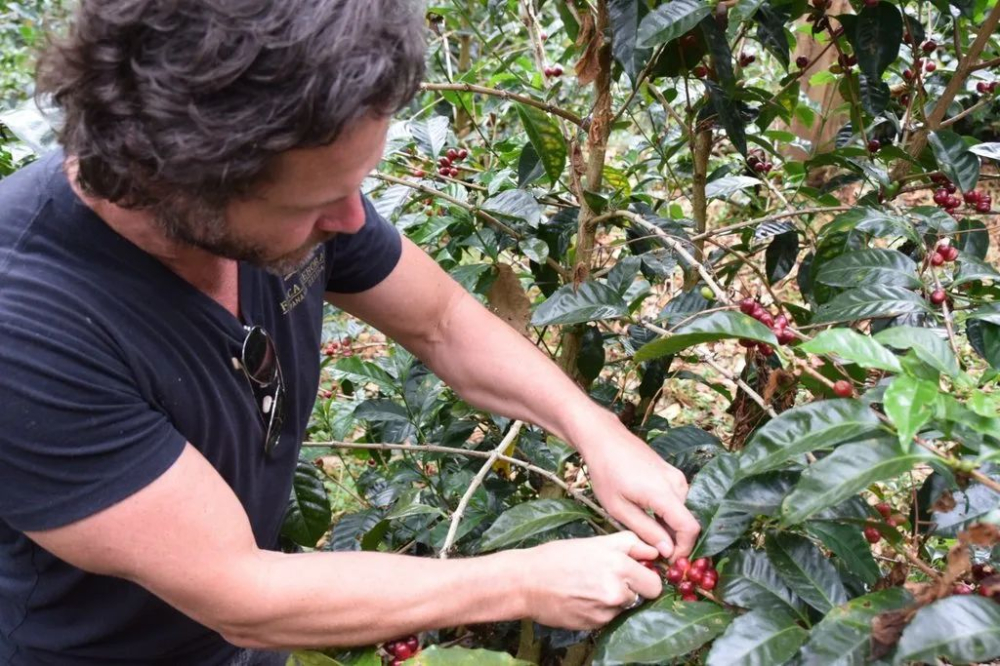
Hacienda Deborah is located in Panama, more precisely in the volcanic region of Chiriqui Province. The plantation is more than 1,900 meters above sea level and is one of the most remote coffee farms in Panama. The area is very suitable for coffee production: volcanic soil, high altitude, and the perfect balance between rain and tropical sunlight bring unique coffee plants to life. Finca Deborah's commitment to the environment is extraordinary: the farm is powered entirely by a solar power system, and the people working on the farm are focused on protecting the ecology for future generations. The selection of Geisha coffee is a serious matter, and the workers are dedicated professionals centered on excellence. The harvest is closely monitored, and the coffee is carefully selected, with only the ripest cherries collected.
The estate owner, Jamison Savage, is an American who has devoted the past decade to building Hacienda Deborah. In order to establish in Panama a next-generation coffee processing facility focused on the environment. The farm does not use pesticides or toxins. These farms are located at extremely high altitudes, making them among the highest and more remote farms in Panama, operating on solar power and within a harmonious ecosystem. Jamison believes that coffee trees are at their best when surrounded by local flora and fauna. This authentic, holistic, and sustainable farming approach, originality and creativity, combined with advanced technical practices, have made Jamison one of the most impressive high-end coffee producers in the world.
The quality of this Geisha is excellent, with plump beans. Front Street used a medium-light roast, developing for 1 minute 20 seconds after the start of first crack before discharging, to express this bean's sweetness, acidity, and floral and fruity aromas.

Cup profile
What Front Street found most stunning during cupping was that its acidity is very full, like the flavor and mouthfeel of drinking yogurt, accompanied by relatively sweet tropical fruit flavors such as pineapple.
The above content is compiled by CoffeeHunters, a coffee news website.


