








How does coffee bean processing shape Yunnan Catimor flavor?
Washed and natural processing give Yunnan Baoshan Catimor two different cups. The washed lot comes out cleaner with clearer acidity and a lighter body, while the natural lot carries more fruit sweetness and a heavier, rounder mouthfeel. Both come from Lujiangba, a dry-hot valley area suited to small-bean Arabica.
Yunnan coffee was introduced in the late nineteenth century, and large-scale planting began in 1988 with government support. The Baoshan growing belt mostly sits between 800 and 1,200 meters, with some plots reaching about 1,400 meters. The 2020 drought affected local output, and Catimor differs from the Typica heirloom in both plant traits and cup profile.
Baoshan's Lujiangba in Yunnan, with its unique dry-hot valley climate, has become a premium production area for small-bean Arabica coffee. Among the three coffees Front Street Coffee cultivates in Yunnan, the natural-process and washed Catimor each have distinctive characteristics. This article systematically compares the effects of the two processing methods on Catimor flavor, from green bean appearance, roasting curves, and cupping performance to brewing parameters, while also introducing the origins of the Catimor variety, the impact of Yunnan's 2020 drought on production, and the differences between the Typica heirloom variety and Catimor. Whether you want to understand the regional taste of Yunnan coffee or grasp the flavor tendencies of different processing methods, this content provides detailed reference.
Front Street Coffee currently offers three Yunnan coffees: Front Street Yunnan Typica Huaguoshan coffee beans, natural-process Front Street Yunnan Catimor small-bean coffee beans, and washed Front Street Yunnan Catimor small-bean coffee beans. This article focuses on the latter two Catimor coffees, comparing the flavor differences of Yunnan Catimor under the two processing methods one by one, from green bean identification, roasting operations, and cupping evaluation to brewing practice.
Both of these Front Street Yunnan Catimor coffees are produced in Baoshan, Yunnan. Coffee was introduced to Yunnan around the late nineteenth century, and large-scale cultivation began in 1988 with government support. Yunnan borders Vietnam, Laos, Myanmar, and other countries near the Tropic of Cancer, providing ideal conditions for coffee cultivation. Baoshan's Lujiangba has a dry-hot valley climate rarely seen in China, particularly suitable for the development of small-bean Arabica coffee. This area is located on the eastern slope of the Gaoligong Mountains and along both banks of the Nujiang River. Most of the small-bean coffee growing belt lies between 800 and 1,200 meters in elevation, with a small portion having moved up to around 1,400 meters. The raw material base has a subtropical monsoon climate.
Front Street notes that Baoshan small-bean coffee is among the finest in China and even globally, with beans of uniform size, full and substantial, a refreshing smell, abundant aroma, and a mellow yet not harsh entry. At the 1980 National Coffee Conference, it was recognized as the "crown of national coffee." On December 24, 2010, the former General Administration of Quality Supervision, Inspection and Quarantine officially approved geographical indication product protection for "Baoshan small-bean coffee."
In 2020, Yunnan suffered a drought, and coffee production was affected. That year, influenced by a combination of monsoon climate, terrain conditions, El Niño, and deforestation, Yunnan received less rainfall. During the coffee tree flowering period from February to March, rainfall in the production areas dropped significantly compared with the previous year, decreasing by more than sixty percent on average year-on-year, and the drought was severe. From April 22 to 27, heavy rainfall occurred in central, southern, and western Yunnan, temporarily easing the drought, and average rainfall in the production areas basically recovered to a level higher than the same period last year. However, the severe drought in February and March had already prevented the first batch of coffee crops from setting fruit normally, adversely affecting Yunnan's coffee production that year.
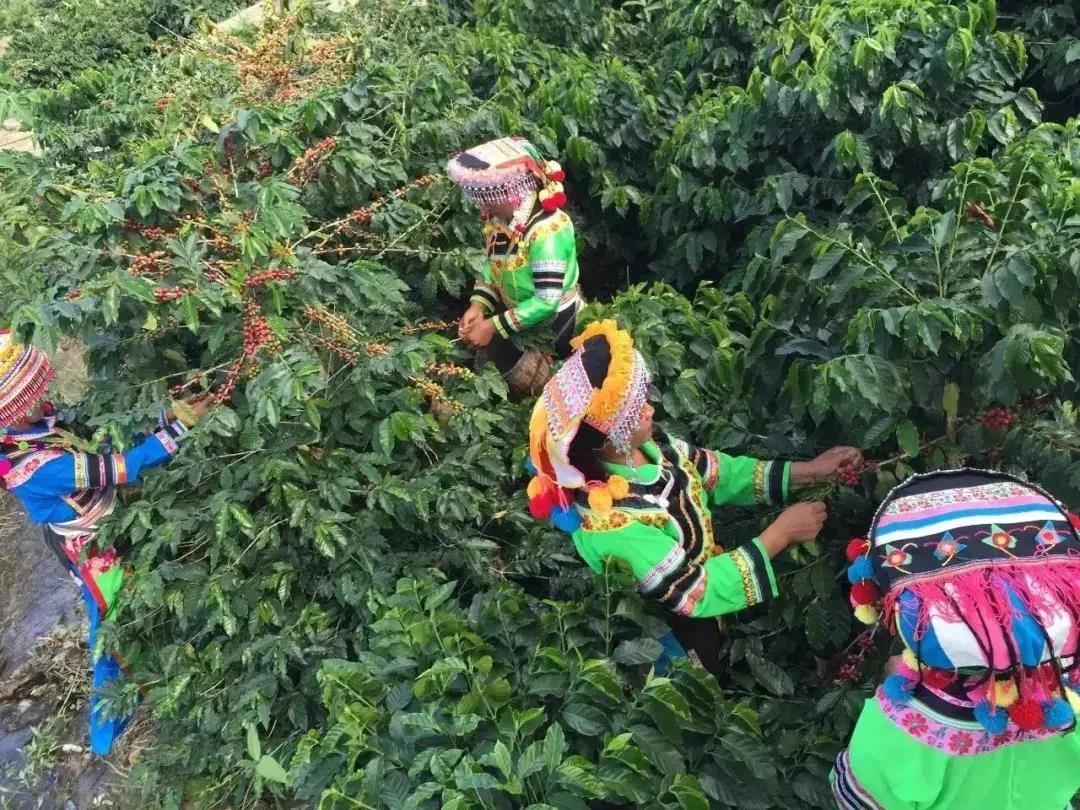
According to statistics from the Pu'er Tea and Coffee Industry Development Center, as of March 31, 162,200 mu of coffee in Pu'er City were affected. As Yunnan's largest coffee production area, Pu'er City has 695,700 mu of coffee planted, with about 23.3% of farmland hit by drought. After damage in the first production season, the flowering degree of coffee trees in the second production season was also affected. Although the main force is in the second production season, relevant departments still stated that coffee beans in the Baoshan production area would decrease slightly compared with the same period last year, while other production areas such as Pu'er, Lincang, and Dehong performed on par.
Regarding Yunnan small-bean coffee varieties, in 1959 the Portuguese moved the Brazilian Bourbon mutant Caturra to East Timor and crossed it with Timor, which carries Robusta lineage, successfully breeding Catimor with excellent disease resistance and productivity. After coffee leaf rust spread through coffee-producing countries worldwide, with the assistance of international organizations, producing countries vigorously promoted Catimor to resist leaf rust and increase productivity. Catimor is a combination of Arabica and Robusta; Robusta provides good leaf rust resistance and rich oils, with high yield and easy cultivation. Through cupping coffee beans of the Catimor variety, Front Street believes it combines the mellow flavor of Robusta with the rich taste of the Typica heirloom variety, and because its cultivation requirements are not high, it has thus been widely planted in Yunnan.
Regarding Yunnan coffee bean processing methods, Front Street Coffee only truly appreciated the power of the local rainy season after planting coffee trees in Yunnan. Due to the year-round rainy season and unstable climate, most Yunnan coffee beans use washed processing. The specific method is: use a pulper to separate most of the fruit pulp from the coffee beans, then introduce the parchment beans into a clean water tank and soak and ferment them to thoroughly remove the remaining mucilage layer. About five years ago, the washed method was usually the preferred processing method for high-quality coffee beans. The washing process can use buoyancy to pick out unripe and defective beans, and fermentation is easier to control, so the flavor is less likely to carry off-notes than natural beans, instead presenting pronounced fruit acidity, higher complexity, and a cleaner cup performance (without negative flavors such as astringency or sharpness).
How does Front Street Coffee handle its other natural-process beans? Although Yunnan has a year-round rainy season, there are always periods of fine weather, so farmers back then used red cherry natural processing. Red cherry refers to fully ripe coffee fruit. During the harvest period, farmers pick only ripe red cherries, placing them one by one into baskets. After picking, the fruit is uniform in size, close in ripeness, and free of impurities. During processing, defective beans and unripe or overripe fruit are first removed by hand, then the red cherries are spread flat on raised wooden frames or entire drying racks to sun-dry, avoiding contact with the ground so the beans do not pick up off-notes. During sun exposure, they are constantly turned to ensure even moisture loss; every three to five days, moldy and defective beans are removed by hand. After the fruit skin dries and hardens, a huller is used to remove the dry hard skin. After obtaining green beans, in pursuit of perfect taste, farmers perform one final sorting. Front Street believes that natural processing itself can enhance the sweetness of coffee beans, and because fully ripe fruit is selected at harvest, the mucilage has a higher sugar content, so red cherry natural beans are sweeter and have a fuller, more solid mouthfeel than coffee beans from common natural processing methods.

Front Street Coffee comparison of the two processing methods for Yunnan Catimor coffee beans:
Through green bean comparison, Front Street noticed that the washed coffee is blue-green, with a green bean aroma carrying acidic fragrance; the natural-process coffee is yellowish, with a green bean aroma carrying fermented fragrance.
Through roasted bean comparison, Front Street believes the biggest distinction between natural and washed beans is: natural beans have their silver skin shed very cleanly, while washed beans retain pale yellow silver skin at the center line. The reason is that during roasting, the silver skin at the coffee bean's center line is the hardest to shed. Natural beans, because the outer silver skin is connected as a whole sheet, more easily shed together with the center-line silver skin; washed beans' silver skin clings to the bean body in fragmented pieces, and the silver skin in the center-line crack cannot be easily peeled off.
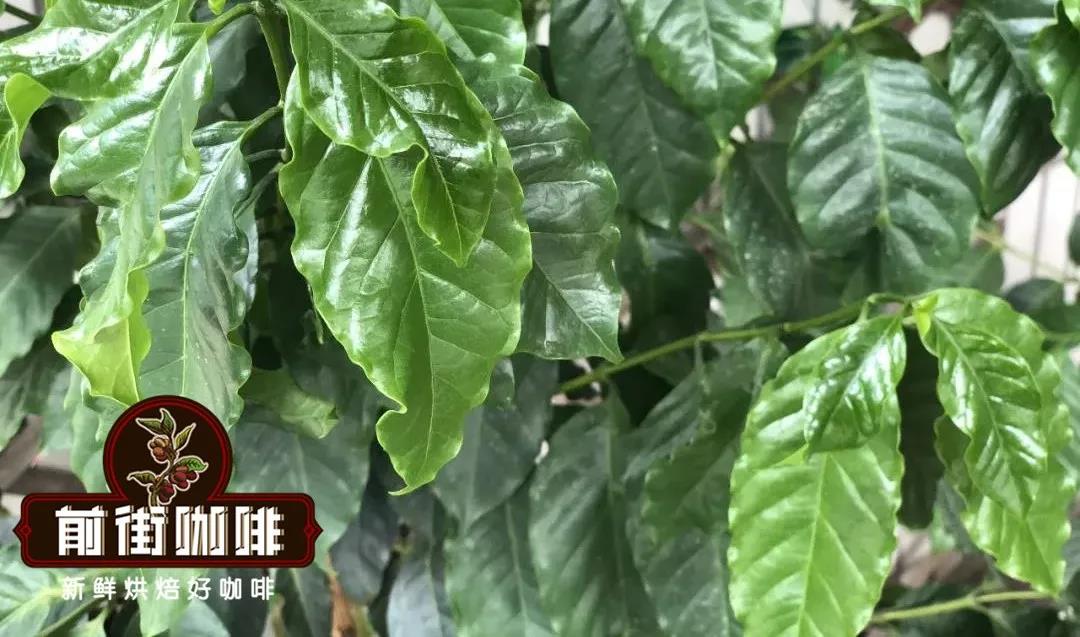
Front Street Coffee record of roasting Front Street Yunnan Catimor coffee beans:
Front Street natural Catimor roasting: roaster Yangjia 800N, roasting amount 300 grams. Charged at 165°C, heat 130, damper set to 3; turning point 1'32", when the temperature was 128°C the damper was opened to 4, heat unchanged; when the temperature was 153°C the bean surface turned yellow, the grassy smell completely disappeared, entering the dehydration stage; when the temperature reached 157°C, heat was adjusted to 100, damper unchanged; at 9'00", ugly wrinkles and dark patches appeared on the bean surface, and the toast smell clearly turned to coffee aroma, which can be defined as the prelude to first crack. At this time, listen carefully for the sound of the first crack point. First crack began at 10'06", damper fully open, developed for 3 minutes after first crack, dropped at 198.5°C.
Front Street washed Catimor roasting: roaster Yangjia 800N, roasting amount 300 grams. Charged at 190°C, heat 120, damper set to 3; turning point 1'40", when the temperature was 145°C the damper was opened to 4, heat unchanged; when the temperature was 166°C the bean surface turned yellow, the grassy smell completely disappeared, entering the dehydration stage; when the temperature reached 188°C, heat was adjusted to 60°C, damper to 5; at 8'37", ugly wrinkles and dark patches appeared on the bean surface, and the toast smell clearly turned to coffee aroma, which can be defined as the prelude to first crack. At this time, listen carefully for the sound of the first crack point. First crack began at 9'00", damper unchanged, developed for 3 minutes after first crack, dropped at 198°C.
Front Street Coffee cupping report for Front Street Yunnan Catimor coffee beans:
Front Street Coffee conducts cupping within 8-24 hours after roasting the sample coffee beans. The cupping bowls generally used by Front Street Coffee's roasters are 200ml ceramic bowls, marked with 150ml and 200ml scale lines. According to SCAA standards, the water TDS is about 150ppm; too low TDS easily causes over-extraction, while too high affects mouthfeel and easily causes under-extraction. The water temperature used for cupping is 94°. For cupping grind size, according to SCAA cupping standards, the grind size is controlled so that the passage rate through a No. 20 standard sieve (0.85 millimeters) is 70%-75%. Ratio: 11 grams of coffee powder plus 200 milliliters of hot water, i.e. 1:18.18, so that the extracted concentration falls exactly within the golden cup range of 1.15%-1.35%. Steeping time: 4 minutes.
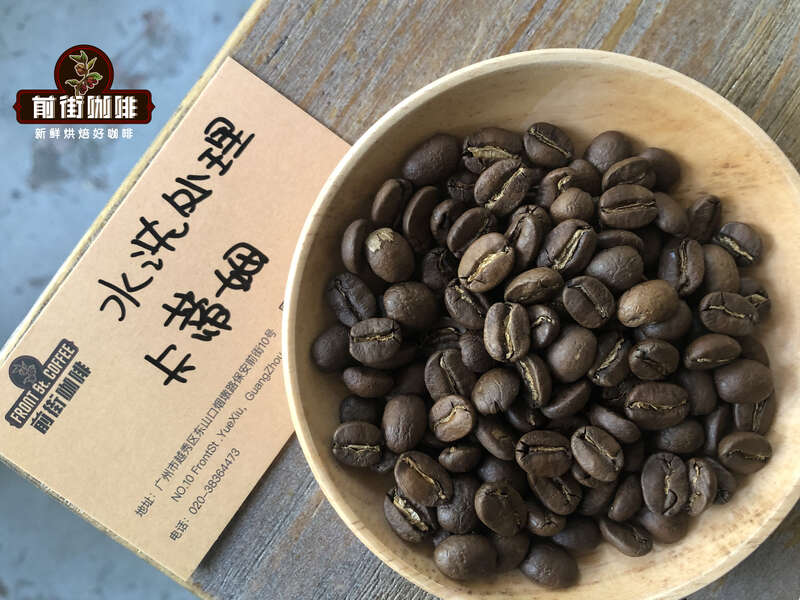
Front Street Yunnan natural Catimor: red berry fruit acidity on entry, nuts, vegetal herbal aroma, smooth on entry, nuts and chocolate in the middle, caramel sweetness in the finish, medium body with a full mouthfeel.
Front Street Yunnan washed Catimor: smooth on entry, Asian herbal aroma, lively and bright acidity, salivation on both cheeks, soft acidity, good mellow balance, rich layers, with black chocolate, honey, and sucrose notes clearly evident in the aftertaste, and a brown sugar flavor after fully cooling.
Front Street Coffee brewing notes for Front Street Yunnan Catimor coffee beans:
Dripper: V60
Dose: 15g coffee
Water temperature: 90°C
Grind size: 80% passage rate through a No. 20 standard sieve
Water-to-coffee ratio: 1:15
Front Street brewing method: 30g water for blooming, bloom time 30s, first pour to 125g and stop, vertical stream, slow circling with a small stream; second pour to 225g, with the stream and circling speed slightly faster to reduce clogging of the dripper by coffee grounds, which would cause over-extraction. (Timing starts at blooming.) Extraction time is 2 minutes.
Front Street Yunnan natural Catimor brewed flavor: red berry juice-like sensation on entry, aromas of nuts, cocoa, and licorice, a caramel-like sweet aftertaste, with a mellow, solid, and smooth mouthfeel.
Front Street Yunnan washed Catimor brewed flavor: smells strongly of nuts, with herbs, chocolate, and caramel on entry, and a slight faint fruit acidity in the aftertaste.
The above content is compiled by CoffeeHunters, a coffee news website.


