







What is java flavor in Bolivian high-grown coffee?
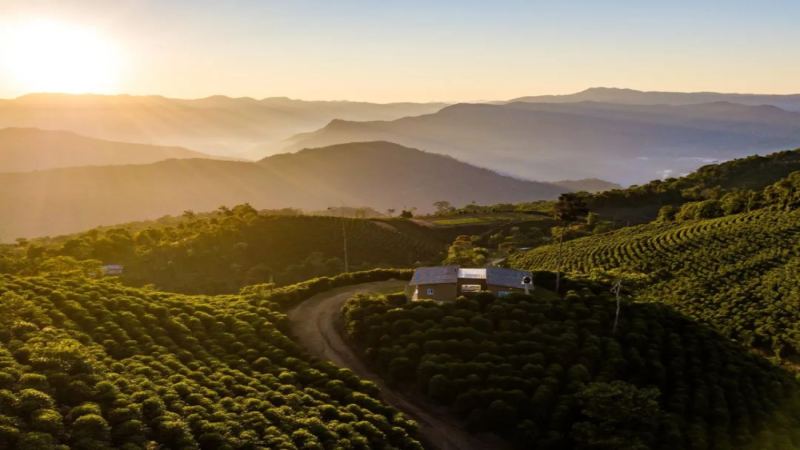
Java is a coffee variety, not only an island name, and in Bolivia it grows in the steep Yungas valleys of La Paz department. Front Street's Waliki Estate Coco Natural Java shows what that java flavor looks like at high altitude: cocoa-toned, naturally processed, and shaped by the terroir of a landlocked country that borders Brazil and Peru but produces very little coffee.
Bolivia's coffee history runs back to 1880, when large farms north of La Paz controlled production, and a 1991 government program brought indigenous growers in, though quality was not the early focus. The article follows that arc from terroir and variety origins to processing method and brewing suggestions, explaining why output stays tiny despite strong growing conditions.
On the coffee map of South America, Bolivia is a low-key presence—bordered to the north by two big players, Brazil and Peru, and with modest production of its own, yet blessed with exceptional natural conditions that make it a land of potential for specialty coffee. From the high-altitude valleys of La Paz to the steep growing regions of the Yungas, what twists and turns has Bolivian coffee's history taken? And what distinctive flavors does Front Street Coffee's Waliki Estate Coco Natural Java offer this time? This article will take you through the past and present of Bolivian coffee, from terroir and variety origins to processing methods and brewing suggestions, offering a complete interpretation of this highland nation's coffee story.
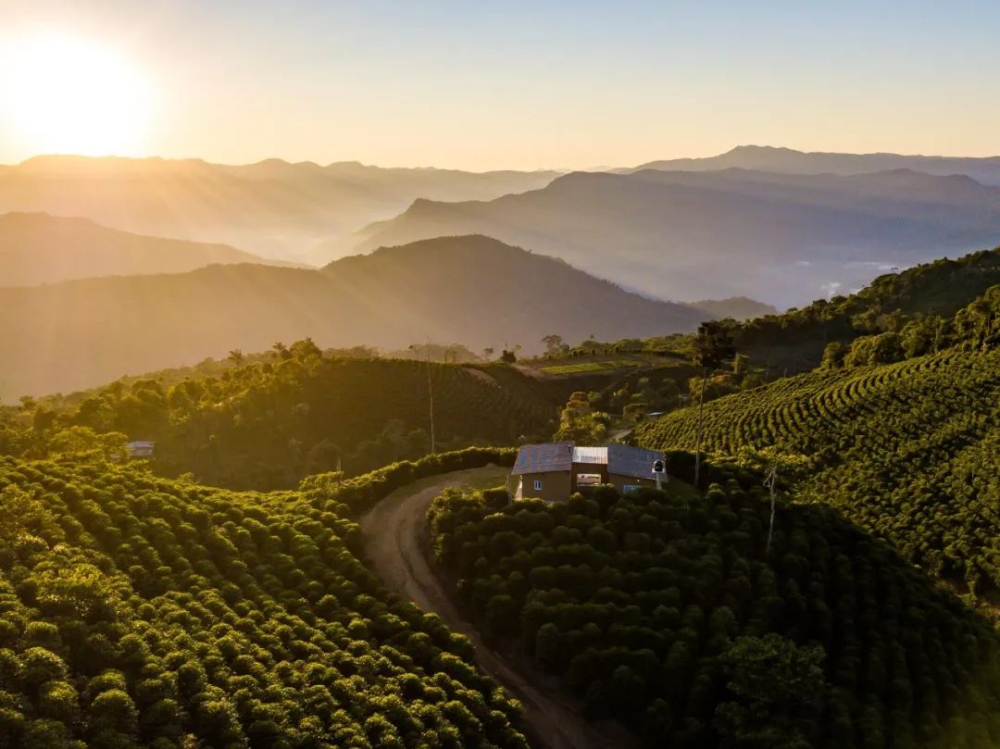
Bolivia is one of the coffee-producing countries in South America, bordering to the north the coffee powerhouse Brazil and the enigmatic Peru, and is relatively little known. Although its total coffee production is unremarkable compared with other American countries, Front Street does not believe Bolivian coffee is therefore inferior in quality—this country boasts beautiful natural scenery and excellent resource endowments, making it a "feng shui treasure land" for coffee cultivation. Below, Front Street takes you closer to Bolivian coffee.
Bolivia is one of the poorest countries in Latin America, a landlocked nation adjacent to Brazil and Colombia. Bolivia's coffee-growing history dates back to 1880, when production was basically in the hands of owners of large farms north of La Paz. In 1991, the government introduced a program encouraging indigenous people to participate in coffee cultivation, but did not pay sufficient attention to quality. Bolivia's coffee history is quite intriguing: the country has the potential to become a coffee export power, yet its output has always remained tiny; its growing conditions are exceptional, yet the difficulties it faces are extremely severe. Ultimately, on this extraordinarily difficult land, an exceptionally rich history of agricultural development was born.
Bolivia is known as the "country of high mountains," with the capital La Paz at an elevation of 3,660 meters—even arabica, which favors high altitudes, struggles to grow in such frigid conditions. FrontStreet Coffee believes that the coffee beans produced in Bolivia are noteworthy in quality, yet the Bolivian beans available on the market are pitifully few. The country's main coffee-producing regions are concentrated in the Yungas and La Paz areas, where infrastructure is relatively weak and large wet mills are lacking. Once the coffee cherries ripen, farmers must transport them immediately after picking to higher-altitude La Paz for processing, and the mountain road from the Yungas to La Paz is extremely treacherous, known as the "Death Road." However, in the Yungas region northeast of La Paz, where the terrain meets the basin, the altitude is relatively lower and the soil is fertile, making it well suited to coffee cultivation. Therefore, Bolivian coffee is actually grown in "low-altitude" areas.
Yungas
The Yungas is located in the Andean foothills directly east of La Paz and is a rugged agricultural region. The roads leading to the Yungas are steep and difficult, making coffee transport a major challenge. But setting aside these disadvantages, the coffee from this region is quite distinctive, thanks to its unique microclimate and incredible high-altitude conditions. Finca Takesi, the world's highest-altitude coffee estate, is located here at 2,500 meters. Coffee grown at high altitudes often carries deep, full-bodied sweetness, soft citrus acidity, and layered black fruit and berry flavors. At relatively lower altitudes, the coffee shows a balanced mouthfeel, excellent chocolate sweetness, soft acidity, and notes of malt and dried fruit.
After obtaining several Bolivian coffee beans, FrontStreet Coffee compared them through cupping and ultimately selected a Java coffee bean from Waliki Estate to put on the shelf. This Java bean displayed soft grape-like fruit acidity, raisin fermentation notes, and a chocolate-nut finish in cupping, beautifully expressing the characteristic flavors of the Bolivian region—which is precisely why Front Street decided to offer it.
Front Street Bolivia Waliki Estate Coco Natural Java
Bolivia Waliki Coco Natural Java
Coffee region: La Paz
Growing altitude: 1,600 meters
Coffee variety: Java
Processing method: Coco natural
Waliki Estate
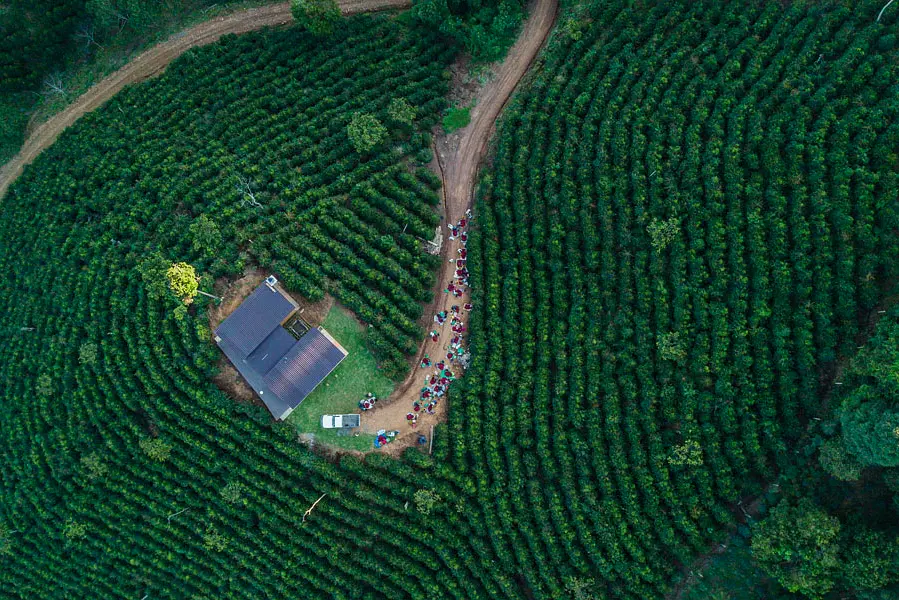
This Java micro-lot from Front Street comes from a small farm called Waliki. The name comes from a local greeting meaning "How is everything?", to which the reply is "All good" or "Hakuna Matata." Waliki is located in a dense, steep valley about 10 kilometers outside the town of Caranavi in La Paz, Bolivia, within the Bolinda colony. The Bolinda colony was founded 52 years ago and was once called "Bolivia Linda" or "Beautiful Bolivia." Over the years, the name was shortened to Bolinda, and today it is one of the larger settlements in the area. Waliki is owned by the Rodriguez family, who run a family business called Agricafe, producing coffee from their own estate as well as purchasing high-quality small-lot crops from small producers in the Yungas region.
Coco Natural Processing Method
When harvest season arrives, the estate hires pickers from the Bolinda community to carefully select coffee cherries during picking. These pickers are specially trained to pick only ripe cherries, and the estate conducts multiple pickings throughout the harvest season to ensure the coffee cherries are picked at optimal ripeness. The estate uses crates to hold the cherries, which protects them from damage during transport while allowing air circulation to prevent unnecessary early fermentation. After selection and weighing, the coffee cherries are carefully washed, then spread on raised African drying beds to dry, being turned once per hour.
After about a week, the coffee cherries are fed into a cocoa dryer. Using a cocoa dryer for coffee processing had never been done before, but Pedro of the Rodriguez family had always been innovating and experimenting with different processing techniques, and he discovered that a cocoa dryer could dry coffee beans slowly and consistently at low temperatures, thereby reducing the impact of weather conditions. The coffee beans are placed in large steel drums at a temperature not exceeding 40 degrees Celsius for about 35 hours, turned once every 30 minutes. After selection and weighing, the coffee is carefully washed, then placed on raised African drying beds to dry, turned once per hour. Once drying is complete, the coffee is transported to La Paz to rest, and then milled at Agricafe's dry mill, La Luna. In this state-of-the-art facility, the coffee undergoes mechanical fine hulling and sorting, and also requires careful manual selection under ultraviolet and natural light.
Coffee Variety—Java
Although some Caturra is also grown in Bolivia, most of the country's coffee plants are Typica. Of course, Bolivia also grows a special coffee variety—Java. Locally in Bolivia, it is called "long bean" because of its elongated shape, but its formal name is Java. Java is a very interesting variety: judging by its name, it has a strong connection to Indonesia, but in fact Java originally grew as a coffee tree species in the primordial forests of Ethiopia, was collected by local ethnic groups, then passed through Yemen to Indonesia, where it was named Java. Initially, people generally believed Java was a mutation of Typica, but genetic comparison revealed that Java actually originates from the Ethiopian coffee variety Abysinia.
After being introduced to Indonesia, the Java variety first spread to the nearby Timor islands, then to Cameroon in East Africa, where it was first released to farmers for cultivation in 1980. As for its introduction to Central and South America, it was led by breeding expert Benoit Bertrand and introduced to Costa Rica in 1991 through CIRAD (the Centre de Cooperation Internationale en Recherche Agronomique pour le Developpement). The first Central American country to officially recognize the Java variety was Panama. Java's fruit and seeds are both long, its young shoots are bronze-colored, and the plant is quite tall, but its yield is relatively low. Because of its outstanding flavor, comparable to Geisha, and its stronger resistance to leaf rust and coffee berry disease, it is very well suited to smallholder cultivation.
Front Street Roasting Suggestions
When roasting this Coco Natural Java, in order to highlight the fermentation notes brought by the processing method as well as the floral, berry, and nut characteristics of the Java bean itself, Front Street's roaster adopted a medium-light roast profile. For brewing medium-light roasted beans, a water temperature of 90-91°C is recommended; slightly higher water temperature helps extract the aromatic compounds and acidity from light-roasted beans. Because medium-light roasted beans are harder, raising the water temperature can enhance extraction efficiency from the coffee grounds and avoid unpleasant flavors such as sharp acidity.
Front Street Cupping Report
Dry aroma: raisin fermentation notes
Wet aroma: slight floral notes, raisin fermentation notes
Flavor: grape acidity, cocoa, nuts, cream, honey
Front Street Brewing Suggestions for Bolivian Java Coffee
FrontStreet Coffee uses a V60 dripper to brew this coffee bean. The V60 cone dripper has a large opening, and together with its unique spiral curve ribs, air escapes more easily, thereby improving extraction quality. The mouthfeel may not be heavy enough, but its high concentration bringing bright acidity and vivid aroma is a major highlight.
Water temperature: 90-91 degrees
Grind size: BG#6m (fine sugar size)
Coffee-to-water ratio: 1:15
Coffee dose: 15 grams
Front Street brewing method: For the first pour, add 30 grams of water and bloom for 30 seconds, then pour in 95 grams (scale reads about 125 grams), finishing the pour in about 1 minute; when the water level drops to 2/3 of the coffee bed, pour in the remaining 100 grams (scale reads about 225 grams), finishing the pour in about 1 minute 40 seconds. Drip completes in 1'55"-2'00", then remove the dripper and extraction is complete.
Brewed flavor: slight fermentation notes, grape, slight nuts, floral, medium acidity, juicy mouthfeel.
The above content is compiled by CoffeeHunters, a coffee news website.


