







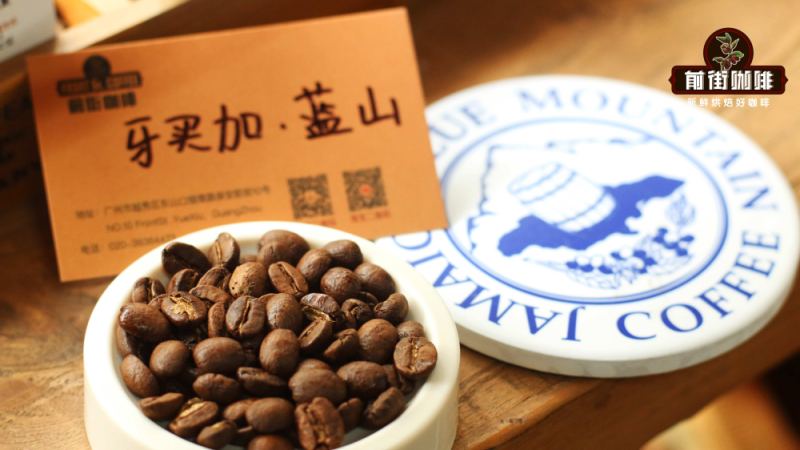
How do you brew Rainforest Alliance certified coffee?
Blue Mountain coffee is scarce and costly in cafes, so many drinkers buy the beans and brew pour-over at home. To get the dark chocolate, nut, and cream notes with balanced acidity, sweetness, and bitterness, control four things: water temperature, grind size, the coffee-to-water ratio, and pouring technique. The Clifton Estate Blue Mountain No. 1 is a washed Typica.
Clifton Estate sits at 1,310 meters and is the only Blue Mountain estate holding Rainforest Alliance certified coffee status, which is why it is often chosen for home brewing. The estate dates to the mid-eighteenth century and is the largest in the Blue Mountain area, though it remains small by international standards. Its Typica beans also respond well to a lighter roasting process.
Blue Mountain coffee has a scarce yield, and a single cup in a café is quite expensive. Many enthusiasts choose to buy Blue Mountain coffee beans and brew them at home by pour-over to save money. However, few people can accurately brew out the flavor of Blue Mountain coffee. This Clifton Estate Blue Mountain No. 1 introduced by Front Street Coffee comes from the oldest coffee estate in Blue Mountain and is also the only Blue Mountain estate with Rainforest Alliance certification. It uses the Typica variety and washed processing, and its flavor is known for dark chocolate, nuts, cream, and a balance of acidity, sweetness, and bitterness. This article will systematically explain how to correctly brew Blue Mountain coffee by pour-over from four dimensions: water temperature, grind size, coffee-to-water ratio, and brewing technique, helping you consistently present the mellow richness and balance of this top-grade bean at home.
For more specialty coffee knowledge, please follow: Front Street Coffee ( Frontsteet Coffee )
Because Blue Mountain coffee has a limited yield, its price in cafés has remained high, so many coffee enthusiasts have turned to buying Blue Mountain coffee beans and brewing them at home by pour-over, saving a considerable amount of money. But according to Front Street Coffee's observations, many people actually do not know how to correctly brew out the flavor of Blue Mountain coffee. In this next article, Front Street Coffee will explain the pour-over coffee-to-water ratio and brewing method for Jamaican Blue Mountain coffee.
Front Street Coffee Jamaican washed Blue Mountain No. 1 coffee beans
Country: Jamaica
Region: Blue Mountain (Clifton Estate)
Altitude: 1310m
Variety: Typica
Processing method: Washed processing
Flavor: Dark chocolate, nuts, cream, balanced acidity, sweetness, and bitterness.
Blue Mountain Clifton Estate
This Blue Mountain coffee bean introduced by Front Street Coffee comes from Blue Mountain's oldest Clifton Coffee Estate. This estate began planting and producing coffee as early as the mid-eighteenth century, and it is also currently the largest estate in Blue Mountain, but by international standards, Clifton Estate can only be described as small-scale cultivation.
The reason Front Street chose Clifton Estate's Blue Mountain coffee is that it is the only estate in Jamaica with "Rainforest" certification. The symbol of this certification is a small green frog; and obtaining this certification is not that simple, because to meet this standard, a series of requirements must be met. The alliance protects the farm and its surrounding ecosystem, restricts pesticide use, and evaluates benchmarks such as waste management. Only coffee that passes the assessment and is certified can be called "Rainforest Alliance Certified Coffee."
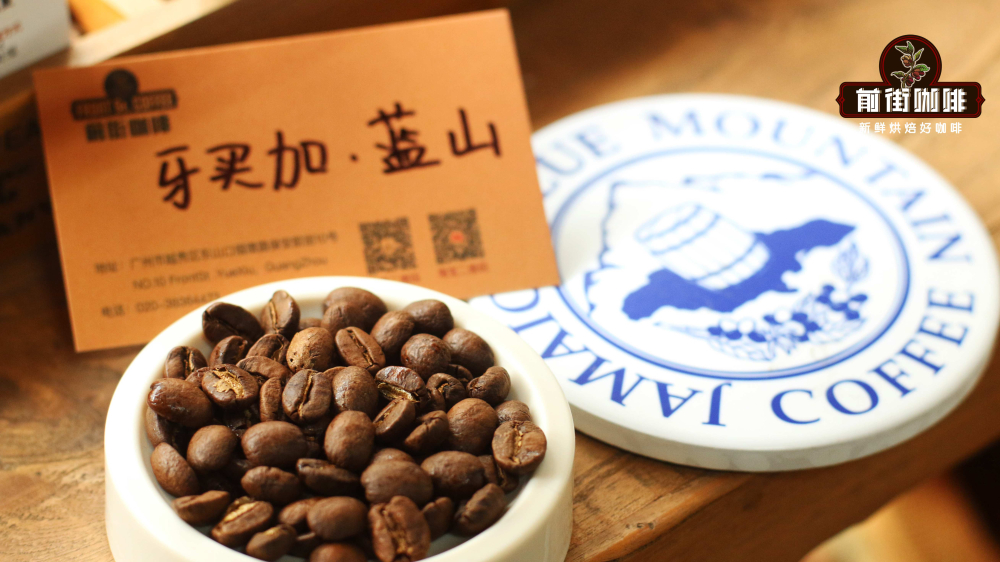
Blue Mountain coffee bean grading standards
At the same time, this Clifton Blue Mountain coffee bean introduced by Front Street Coffee is also the highest grade standard No. 1 among Blue Mountain coffee beans. According to CIB standards, only coffee grown at an altitude of 1000-1700 meters is called Jamaican Blue Mountain coffee. It has a low yield, large beans, excellent quality, harmonious taste, and simultaneously possesses appropriate acidity, bitterness, aroma, body, and sweetness. It is globally recognized as a top-grade coffee, so the price of the national treasure Blue Mountain No. 1 is the highest among all Blue Mountain coffees.
(1) No.1 - 17/18 screen, defective bean ratio no more than 2%.
(2) No.2 - 16/17 screen, defective bean ratio no more than 2%.
(3) No.3 - 15/16 screen, defective bean ratio no more than 2%.
(4) Peaberry - 10MS, defective bean ratio no more than 2%.
Blue Mountain coffee bean variety
Next, the variety of this coffee bean is also the oldest native Arabica variety, Typica. According to Front Street Coffee's understanding, Blue Mountain Typica was transplanted from Martinique to Jamaica's Blue Mountain in the 1720s. After more than 200 years, Blue Mountain Typica evolved better disease resistance, especially better resistance to coffee berry disease than ordinary Typica. However, once Blue Mountain Typica leaves Jamaica, it cannot replicate its sweet and delicate aroma. Typica has bronze-colored top leaves, oval or pointed bean shape, a tall tree body, and slightly inclined branches at an angle of 50—70 degrees. Its flavor is elegant, but the plant is weak, has poor disease resistance, and each tree's coffee yield is very low with few fruits.
From the above, it can be seen that the flavor of this coffee bean is very good. So how can its flavor be perfectly presented through the pour-over coffee extraction method?
How to correctly brew Blue Mountain coffee beans by pour-over?
Front Street Coffee believes that to brew a good pot of coffee, you mainly start from these four aspects: water temperature, grind size, coffee-to-water ratio, and brewing technique.
1. Water temperature
When brewing pour-over coffee with coffee beans of different roast levels, Front Street Coffee also chooses different water temperatures. During roasting, the substances contained in coffee beans are lost as the roast level deepens, so dark-roasted coffee beans are brewed at a lower temperature to avoid extracting too many off-flavors. For medium-light roasted beans, Front Street Coffee suggests using a water temperature of 90-91°C, and for medium-dark roasted beans, it suggests using a water temperature of 87-89°C.
For example, this Blue Mountain coffee bean is mainly famous for its mellow mouthfeel and balanced flavor, and Front Street Coffee uses a medium-dark roast to process it in order to highlight the mellowness of Blue Mountain coffee.
2. Grind size
Grind size refers to the size of the coffee particles, because grind size affects the contact time between coffee and water. If the coffee grounds are finer, water can extract more substances in the same amount of time, but with a fine grind, the coffee is prone to over-extraction during brewing; conversely, the coarser the coffee grind, the fewer substances are extracted by water in the same amount of time, but with a coarser grind, the coffee is prone to under-extraction.
Also, because everyone's grinder is different, the parameters are also different. Here Front Street suggests buying a No. 20 cupping correction sieve with a sieve aperture of 0.85mm. We take 10g of coffee beans, adjust to an approximate grind size and grind them into coffee grounds, then pour them into the sieve for sifting, and weigh the sifted coffee grounds (be sure to sift until no more coffee grounds can pass through the sieve to complete the sifting).
A sifting pass rate of 80% (8g can be sifted out from 10g of grounds) is the most suitable grind size for medium-light roasted coffee beans, and a sifting pass rate of 70%-75% (7-7.5g sifted from 10g of grounds) is the most suitable grind size for medium-dark roast. If it exceeds the suitable sifting rate, adjust the grind size coarser appropriately; if it does not reach the suitable sifting rate, adjust the grind size finer appropriately.
3. Coffee-to-water ratio
This is the difference in taste of pour-over coffee extraction parameters based on the SCAA Golden Cup extraction theory by Front Street Coffee
[Heavy taste] 1:10~1:11, i.e. 1:12.5~1:13.5 under the Golden Cup standard
[Moderate taste] 1:12~1:13 (i.e. 1:14.5~1:15.5 under the Golden Cup standard)
[Light and fresh] 1:14~1:16 (i.e. 1:16.5~1:18.5 under the Golden Cup standard)
A ratio of coffee bean grams to brewing water of 1:14.5~1:15.5 is the easiest way to reach the golden range of 18%~22% Golden Cup extraction yield and 1.15%~1.35% concentration.
So here Front Street Coffee suggests that when brewing this Blue Mountain coffee bean, you might as well use the less error-prone 1:15 coffee-to-water ratio.
4. Brewing technique
Finally, the pour-over technique is also very important. Commonly seen methods include the three-stage method, one-cut method, drip method, and so on. Here Front Street Coffee suggests that beginners use the three-stage pouring method to brew, because this technique is suitable for light-roasted, medium-light, and medium-roasted coffee beans. The segmented extraction method of three-stage pouring can clearly define the front, middle, and back-end flavors of the coffee and can better ensure the presentation of the coffee's flavor. Next, Front Street Coffee will teach everyone how to perform pour-over coffee three-stage pouring .
Three-stage brewing technique:
First pour: Pour in 30ml of water and bloom for 30 seconds. Many coffee enthusiasts do not know the meaning of blooming in pour-over coffee. In fact, blooming is needed because coffee beans undergo a series of chemical reactions and physical changes during the roasting process from green beans to roasted beans. After reaching a certain degree of roasting, a large amount of gas (mostly carbon dioxide) accumulates inside the coffee beans.
Generally speaking, the fresher the beans and the closer to roasting, the more bubbles usually appear during blooming. Dark-roasted beans also release more gas during blooming than light-roasted beans. Front Street Coffee's coffee beans are all freshly roasted, so customers are generally advised to rest the beans for three days first, letting the coffee beans release carbon dioxide first, so that instability and under-extraction problems can be avoided during brewing.
After the gas is released during blooming, the coffee particles can absorb water evenly, allowing later extraction to be even. A good bloom can allow the coffee grounds to quickly and fully degas while also allowing the coffee grounds to fully and quickly contact water, helping the coffee grounds be extracted evenly. These are precisely the purpose and significance of blooming in pour-over coffee.
Second pour: Pour in 100ml
The second pour starts from the center, injecting a small stream of water into the bottom of the coffee bed. In order for the penetrating force of the water stream to be concentrated, the range of circular movement should be small, about the size of a yuan coin, and then expand outward. From the start of the second pour, pay attention to the water amount and try not to exceed the height of the coffee bed. That is, when the water stream circles close to the filter paper, you can stop pouring.
Third pour: Pour in 95ml
As the thicker coffee bed originally along the edge of the filter paper becomes heavier from absorbing water, it slides down and becomes thinner as the water level drops. When the water level drops to halfway, you can proceed with the third pour.
From the start of the third pour, observe the extent of the water level drop. Likewise, start pouring from the center in circles, and do not let the water amount exceed the height of the coffee bed. At this time, you will also observe that the foam ratio has already covered the surface. The third pour should increase the tumbling of coffee particles, allowing all settled particles to tumble, thereby dissolving soluble substances.
The rolling particles will begin to stop when water is no longer added. At this point, it relies on the flow rate caused by the dropping water level to create friction among the coffee particles. So once water addition stops, the coffee grounds sink downward, causing clogging, so pay special attention to the rhythm of water addition. If pouring is interrupted too many times, it is equivalent to letting the coffee grounds stay soaked in water the whole time. This will cause astringency and off-flavors in the tail-end extraction of the coffee.
Blue Mountain coffee brewing flavor: On the palate there are flavors of dark chocolate and nuts, high cleanliness, very bright, good body, and balanced acidity, sweetness, and bitterness.
For more specialty coffee knowledge, please follow: Front Street Coffee ( Frontsteet Coffee )
The above content is compiled by CoffeeHunters, a coffee news website.


