







How do Lintong, Golden and Aged Mandheling differ?
Mandheling is a Sumatra coffee name, but it is not one single thing. Strictly speaking, the Lintong area of South Sumatra and the land around Lake Toba are the core producing regions, while most North Sumatra coffee is Gayo from the Aceh area. Beans from around Lake Tawar may also be sold as Aceh or Tawar lake coffee.
Golden Mandheling comes from the Lintong region of North Sumatra. Only fully ripe cherries are picked by hand, then processed semi-washed and dried in the sun. After hulling, the beans are dried and refined again, followed by two rounds of green bean cleaning and four rounds of hand-picking. This extended sorting is what separates Golden Mandheling coffee from standard Lintong lots.
Mandheling coffee is a classic representative of the Sumatra producing region, but the names commonly seen on the market—Lintong, Golden, Tiger, Aged, and so on—often leave people confused. This article systematically sorts out the producing-area definitions, variety backgrounds, processing methods, and flavor characteristics of each type of Mandheling, and introduces the appearance differences and cupping performance of four Mandheling green beans under the Front Street brand. From the mountainous areas around Lake Toba to the Aceh producing region, from semi-washed processing to long-term aging, it breaks down the key information behind these Mandhelings one by one, helping coffee enthusiasts build a clear cognitive framework.
In coffee circles, Mandheling is often called "Sumatra coffee." Most of what is produced in North Sumatra is Gayo, with Ateng as the main variety; beans from the area around Lake Tawar in the north can be called Aceh coffee or Tawar lake coffee; while only Lintong in South Sumatra and the surroundings of Toba lake are suitable to bear the name Mandheling. Strictly speaking, the Lintong area is the core producing region of Mandheling. Mandheling is produced in the mountainous areas around Lake Toba. This lake is located north of Medan, the capital of Sumatra province, and is an alpine freshwater lake with an average elevation of about 900 meters.
When we usually refer to Mandheling, we generally mean Typica or its variants grown in the mountainous areas around Lake Toba.
In recent years, Mandheling from the Lintong region has also begun to be further subdivided. Mandhelings named after smaller place names have gradually appeared on the market, such as Sidikalang, abbreviated as SDK Mandheling. The meaning of the word Lintong has also gradually narrowed, and now mostly refers to the producing area near Lintongnihuta.
Golden Mandheling is produced in the Lintong region of North Sumatra, Indonesia. At harvest time, only fully ripe cherries are picked entirely by hand one by one to ensure the quality of the initial bean selection. The coffee cherries are processed using the SEMI-WASHED method, dried naturally in the sun, and after hulling are dried and refined once more, followed by two rounds of green bean cleaning and four rounds of Hand-Pick manual selection. Because of this, Golden Mandheling can be said to be a top-grade Mandheling coffee that has undergone strict selection.
Tiger Mandheling coffee comes from Aceh. In Aceh, coffee is the region's second-largest export cash crop. There are about 60,000 small-scale coffee farmers locally, each with about 1 to 2 hectares of coffee planting land. Indonesia's traditional coffee trade method is a multi-link, multi-point supply chain, starting from farmers and passing through multiple layers of middlemen before gradually gathering into large export shipments. In Indonesia's coffee trading system, direct trade in which a single window purchases from farmers and then arranges exports is quite rare locally in Indonesia.
Aged coffee beans do not mean leaving green coffee beans sitting for a long time—this is not acceptable, because green coffee beans will also spoil after being stored for a long time, changing from fresh cyan to white, then to yellow, becoming bland and tasteless, and even growing bugs. Like aged alcoholic beverages, green beans must undergo proper processing and long-term storage before they can truly be called [Aged Coffee]. So-called Aged bean means: allowing green beans to naturally age by extending storage time (usually 2 to 3 years). These changes include reduced acidity, color change, and thickened bean body. The storage environment must be cool and ventilated. Because the storage environment is darker and the time is longer, aged coffee always struggles to shake off complex flavors resembling mustiness or what is commonly called burlap sack or leather~
If we observe the green beans carefully, we will find that Mandheling beans still have quite a lot of peaberries, which is caused by hulling the beans when their moisture content is relatively high and the bean body is relatively soft.
[Front Street Golden Mandheling] has a screen size of 18+, so it is noticeably larger than other Mandheling beans. Due to its higher moisture content, the green beans tend to be darker green; [Front Street Tiger Mandheling] green beans are round and plump, slightly yellow with green, and have better uniformity; [Front Street Lintong Mandheling] green beans are grayish green, with some large and some small, and relatively speaking are not very uniform; [Front Street Aged Mandheling], due to the processing method, has a rather special green bean color—orange with a blackish tint—and looks wrinkled on the surface, while the green bean size is also relatively uniform.
The requirement for Front Street Mandheling Tiger is that only Mandheling with an aroma reminiscent of traditional Chinese herbal medicine and a defect rate below 4% at 17 screen and above can be called Tiger.
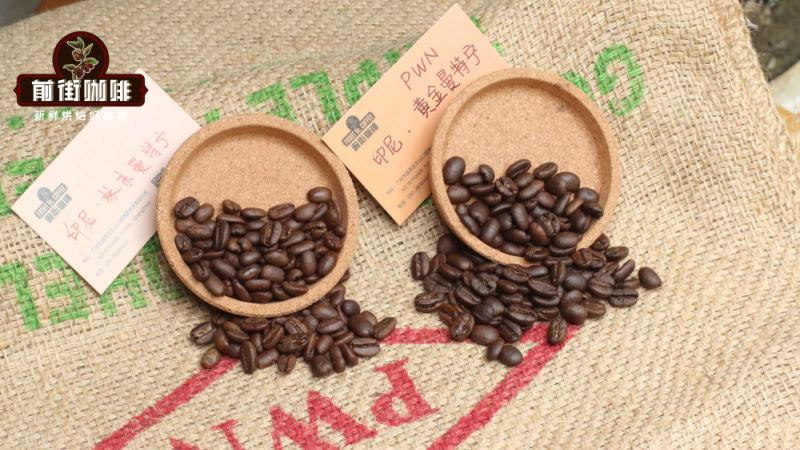
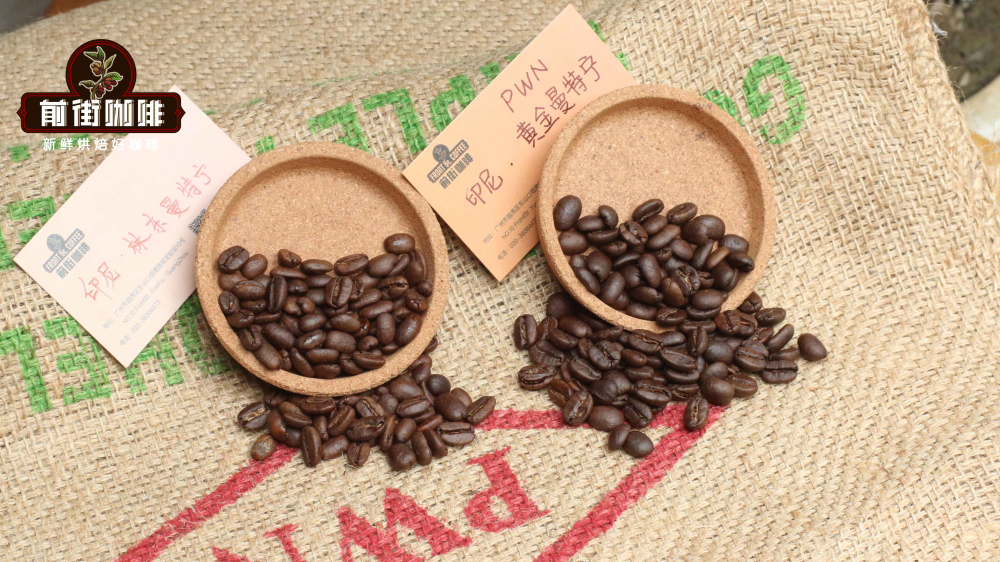
The Front Street Golden Mandheling marked "PWN" is the abbreviation of the Indonesian company Pawani, and the Golden Mandheling coffee produced by this company has already been registered in Indonesia!
[Front Street Lintong Mandheling] herbal medicine, chocolate, caramel, high body, overall relatively balanced;
[Front Street Golden Mandheling] nuts, spices, herbs, licorice, chocolate, caramel, clean flavor, low acidity, soft;
[Front Street Tiger Mandheling] nuts, cream, dark chocolate, caramel, traditional Chinese herbal medicine, obvious sweetness, relatively clean and clear flavor;
[Front Street Aged Mandheling] ripe pu-erh, caramel, herbs, chocolate, relatively low acidity.
The above content is compiled by CoffeeHunters, a coffee news website.


