







What does Bolivian java variety coffee taste like?
Bolivian coffee is scarce in the specialty market, mostly because growing altitudes are high, total production is small, and processing stations sit at lower elevations. Cherries travel over a dozen hours on rugged mountain roads before reaching the plant, so only limited amounts arrive intact. High-altitude Bolivian lots show deep sweetness, gentle citrus acidity, and layered black fruit and berry notes.
The Yungas region is Bolivia's core coffee belt, with growing altitudes from 1,500 to 2,500 meters, microclimates, and fertile soil. Lower-altitude areas tend to give a more balanced cup with chocolate sweetness, mild acidity, and malt and dried-fruit flavors. Waliki Estate uses a cocoa natural processing method, and the Java variety brings its own distinctive character to the profile.
Bolivian coffee has always been a relatively obscure presence in the specialty coffee circle. Its high-altitude cultivation, rugged mountain transport, and limited production make it difficult to enter the market on a large scale. But it is precisely this environment that creates Bolivian coffee's unique flavor expression. The Yungas region, as the country's core coffee belt, has growing altitudes ranging from 1,500 to 2,500 meters, along with microclimates and fertile soil. This article will take you through the characteristics of Bolivia's coffee regions, the origins of the Java variety, and the innovative cacao natural processing method at Waliki Estate, while also sharing Front Street Coffee's roasting and brewing suggestions.
For more specialty coffee knowledge, please follow the WeChat official account: FrontStreet Coffee
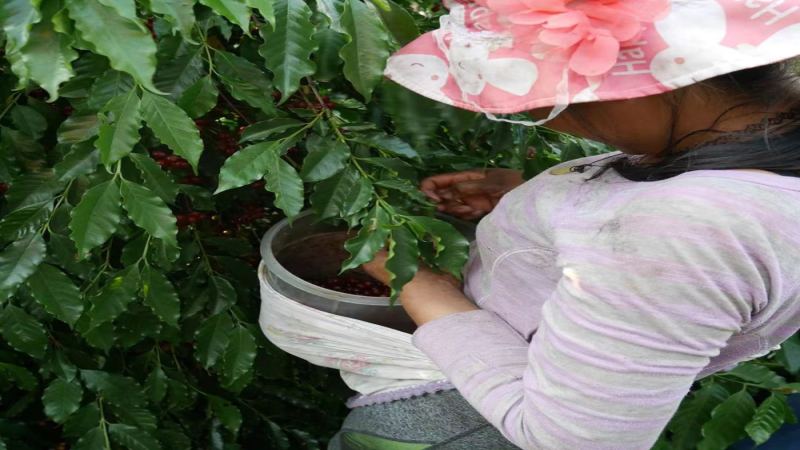
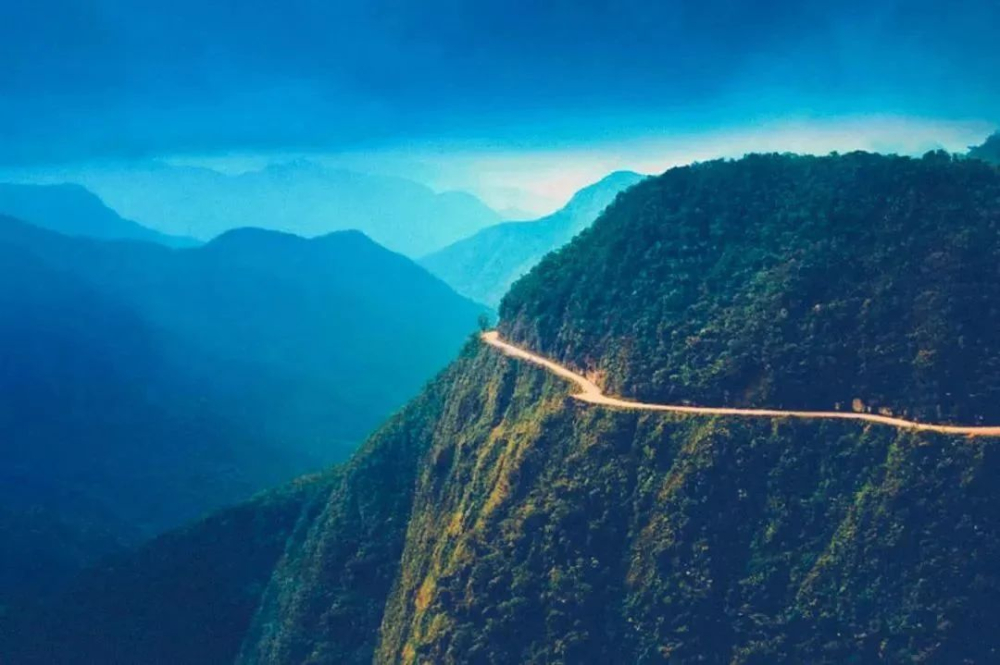
Bolivian coffee is not really mainstream in the specialty coffee world, largely because the growing altitudes are high, total production is limited, and processing plants are mostly located in lower-altitude areas, so after the coffee cherries are picked, they must travel over a dozen hours along rugged mountain roads before arriving. This long transport not only makes it easy for the cherries to ferment and spoil prematurely, but the mountain roads themselves also carry considerable driving risks, so the number of high-quality cherries that ultimately arrive at the processing plant intact is quite limited. Front Street believes that coffee produced in Bolivia's high-altitude areas often shows deep, full sweetness, gentle citrus acidity, and layered black fruit and berry notes. Regions at relatively lower altitudes tend to show a more balanced mouthfeel, excellent chocolate sweetness, mild acidity, and malt and dried-fruit flavors. For this reason, Front Street also recently purchased a batch of Bolivian coffee beans, and after a series of tests including cupping and brewing, decided to put this bean on the shelf.
Bolivian Coffee Regions
Bolivia is located in the central part of South America, bordered to the north by the major coffee-producing country Brazil and the coffee secret land Peru. This country is known as a land of high mountains. The capital, La Paz, sits at an altitude of 3,660 meters, and even Arabica, which favors high altitudes, cannot grow in such a frigid zone. The Yungas region northeast of La Paz is connected to a basin, with an altitude of about 1,500m to 2,500m, an average annual temperature of 10-15 degrees, relatively lower altitude, and fertile soil, making it Bolivia's most core coffee-producing region. Yungas
Yungas is located in the Andean foothills directly east of La Paz and is a rugged agricultural region. The roads leading to Yungas are both steep and dangerous, making it very difficult to transport coffee out smoothly. But setting aside these unfavorable conditions, the coffee from this region is highly distinctive, because it has a unique microclimate and incredible high altitude. Finca Takesi, the highest-altitude coffee estate in the world, is also located here, at an altitude of up to 2,500 meters.
The infrastructure in the Yungas region is relatively backward, lacking large-scale washed processing plants. After the coffee cherries ripen, farmers must transport them immediately after picking to La Paz, which is at a higher altitude than the region, for processing, and the road from Yungas to La Paz is extremely treacherous, known as the "Death Road." During transport, the coffee cherries easily ferment and rot, producing pungent and other undesirable odors.
Region & Estate: La Paz Waliki Estate Altitude: 1,600m Processing Method: Cacao Natural Coffee Variety: Java
Bolivian Coffee Bean Varieties
Although Bolivia also grows some Caturra, most of the local coffee trees are still Typica. Of course, Bolivia also grows a special coffee variety—Java. This Bolivian coffee bean that Front Street purchased is exactly the Java variety.
Locally in Bolivia, this variety is called Long Bean, named for its slender bean shape, but its formal name should be Java. Java is a very interesting bean variety. From the name, one can see a strong connection with Indonesia, but in fact Java originally originated in the primitive forests of Ethiopia, was collected by local ethnic groups, then spread through Yemen to Indonesia, and was named Java there. In the past, it was generally believed that Java was a variety of Typica, but after genetic comparison it was found that Java actually comes from the Ethiopian coffee variety Abysinia.
Bolivian Coffee Bean Processing Method — Cacao Natural
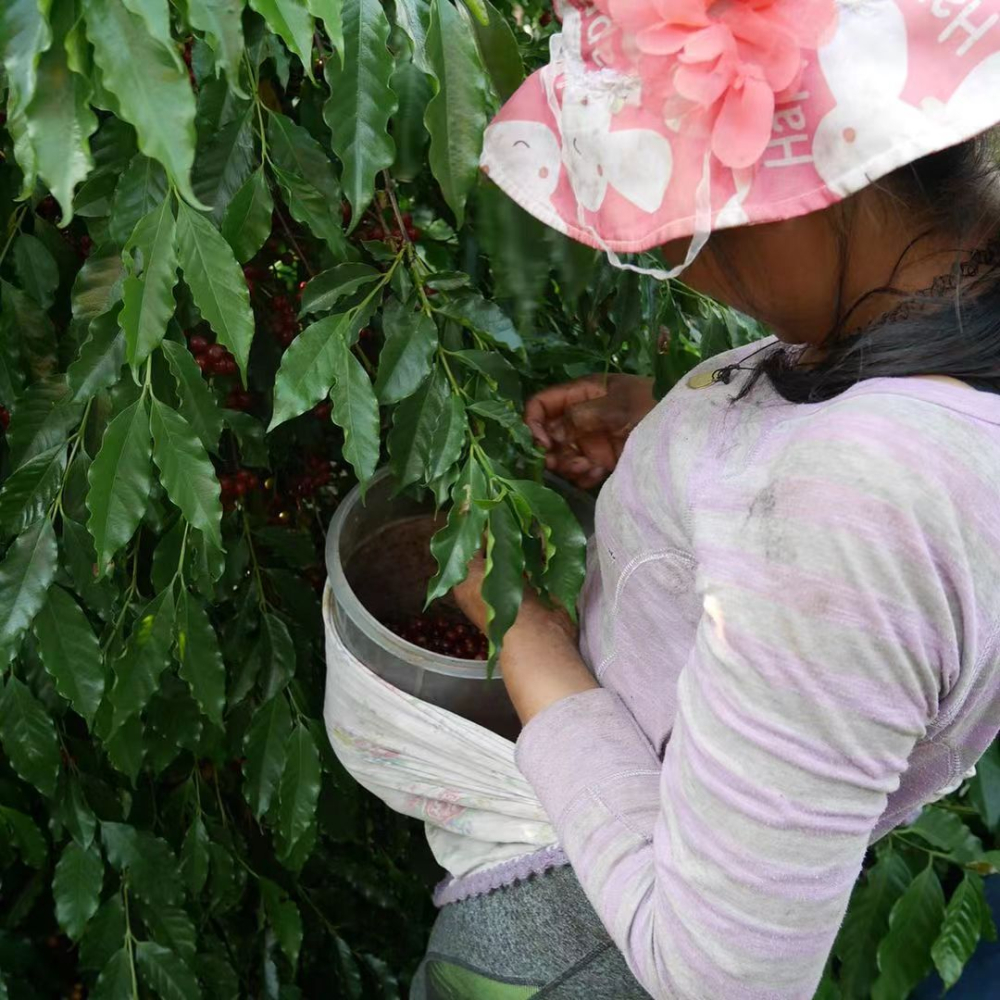
Because Bolivia's climate is colder than that of other coffee-origin countries, many farmers choose machine drying rather than sun drying, which gave rise to a new natural processing method—Cacao Natural. During the harvest season, Waliki Estate hires pickers from the Bolinda community to carefully select coffee cherries during picking. These pickers are specially trained to pick only ripe cherries, and the estate carries out picking in multiple rounds during the harvest season to ensure that the coffee cherries are picked at optimal ripeness.
Waliki Estate uses crates to ensure the coffee is not damaged during transport, while also keeping the cherries ventilated to prevent unnecessary early fermentation. After selection and weighing, the coffee cherries are carefully washed and then placed on raised African drying beds to dry, turned once per hour. After about a week, the coffee cherries are placed into a cacao dryer.
Before this, cacao dryers had never been used for coffee bean processing. The owner of Waliki Estate has always been innovating and experimenting with different processing techniques, and discovered that a cacao dryer can dry coffee beans slowly and consistently at low temperature, thereby reducing the impact of weather conditions. After the coffee beans are dried, they are transported to La Paz to rest, and then hulled at Agricafe's drying factory La Luna. This factory uses machinery for careful hulling and sorting, and in addition, manual sorting is also required under ultraviolet light and natural light.
Front Street Roasting Suggestions Bolivian coffee beans are suitable for light, medium, and dark roasting. Dark roasting can make Bolivian coffee taste mellow and sweet, with an alluring pine resin note and rich vinous aroma. Light and medium roasting carry bright berry acidity, along with the sweet aroma of almond and hazelnut. When roasting this cacao natural Java, in order to highlight the fermented note brought by the processing method as well as the floral, berry, and nut characteristics of the Java bean itself, Front Street's roaster used a medium-light roast level.
Front Street Cupping Report
Front Street Brewing Suggestions
Water temperature: 90-91°C
Grind size: EK43s grinder setting 10 (fine sugar size)
Coffee-to-water ratio: 1:15
Dose: 15 grams
Front Street brewing method: For the first pour, add 30 grams of water for a 30-second bloom, then pour 95 grams (the electronic scale shows about 125 grams), finishing the pour in about 1 minute. When the water level drops to two-thirds of the coffee bed, pour the remaining 100 grams (the electronic scale shows about 225 grams), finishing the pour in about 1 minute 40 seconds. Drawdown is completed at 1'55"-2'00". Remove the dripper and extraction is complete.
Brewed flavor: slight fermented note, grape, slight nut, floral, medium acidity, juicy mouthfeel.
The above content is compiled by CoffeeHunters, a coffee news website.


