







What are the Gesha Village coffee grades?
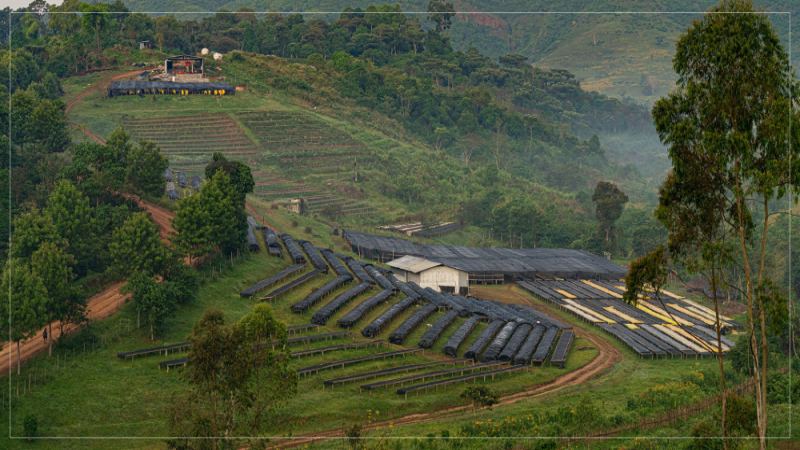
Ethiopia's Gesha Village Coffee Estate is one of the few farms growing Gesha on a large scale. Its lineup is split into five grades: Auction, Gold, Red, Green, and Chaka. Each grade carries different flavor characteristics, production share, and cupping scores, and the tiering gives buyers a clear reference when selecting lots from this estate.
Panama gesha from Hacienda La Esmeralda can be traced back to Ethiopia's Gesha Mountain, and Gesha Village was founded to work with those original genetics. In 2007 Adam Overton and Rachel Samuel encountered the Gera coffee forest in Bench Maji, then met Mule Estate owner Willem Boot in 2009, who urged them to seek the Gesha homeland. They found wild Gesha in the Gori Gesha forest.
Ethiopia's Gesha Village Coffee Estate is one of the few estates specializing in large-scale Gesha cultivation. Its product line is divided into five grades: Auction, Gold, Red, Green, and Chaka. This article provides a detailed analysis of each grade's flavor characteristics, production proportion, and cupping performance, along with Front Street Coffee's roasting and brewing parameters for various lots of Gesha, helping coffee enthusiasts gain a comprehensive understanding of Gesha Village's grading system and purchasing direction.
For more specialty coffee knowledge, please follow our WeChat official account: FrontStreet Coffee
You may have heard of the Gesha coffee from Panama's Hacienda La Esmeralda, but did you know? In Ethiopia, known as a natural gene treasury of coffee, there also exists a large estate dedicated to growing Gesha—Gesha Village Coffee Estate. As is well known, Panama's Gesha variety can be traced back to Ethiopia's Gesha Mountain. So what flavor profile would the original Gesha varieties owned by Gesha Village Coffee Estate present? Today, FrontStreet Coffee takes you to explore this estate in depth.
The Origin Story of Gesha Village Coffee Estate
Coffee cultivation in Ethiopia is mainly based on forest wild growth and smallholder farmers. Large-scale estate-style cultivation like Gesha Village Coffee Estate is quite rare, and it is precisely the representative that breaks this tradition.
In 2007, documentary director Adam Overton and his photographer wife Rachel Samuel first encountered the Gera coffee forest in the Bench Maji region while filming a documentary on the Ethiopian coffee industry for the Ethiopian government, which sparked the idea of establishing their own coffee estate and brand.
In 2009, the Overtons met the famous Mule Estate owner and BOP judge Willem Boot. Willem Boot's suggestion pointed them in the right direction: return to Ethiopia and search for the original homeland of Gesha. So they came to Bench Maji—a region in southwestern Ethiopia near South Sudan, where many villages are called Gesha Village, considered the most likely birthplace of the original Gesha.
Adam followed Willem Boot to explore the forests around the estate. In an area surrounded by dense jungle, they discovered multiple wild tree species, and the most exciting find was wild Gesha.
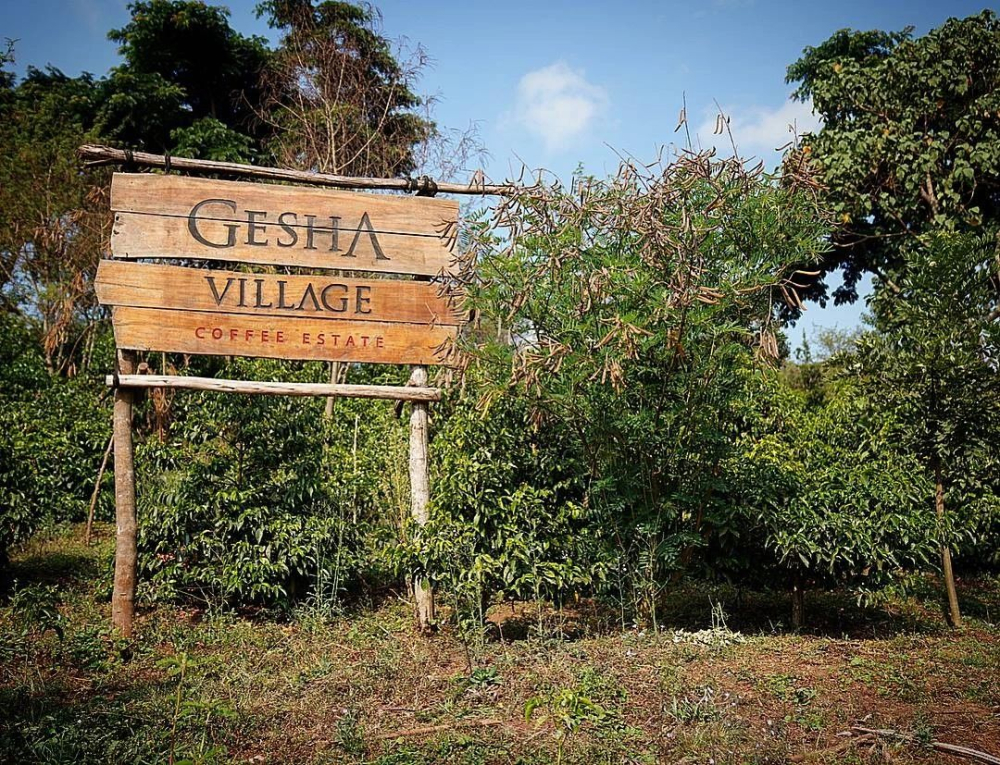
They later learned that this was the Gori Gesha forest—the very location where the Gesha variety was first discovered. They collected seeds from the original Gesha trees, selected them, and planted them at Gesha Village. Ultimately, they decided to establish an estate here, named Gesha Village Coffee Estate, located about 12 miles from the Gori Gesha forest, covering 475 hectares.
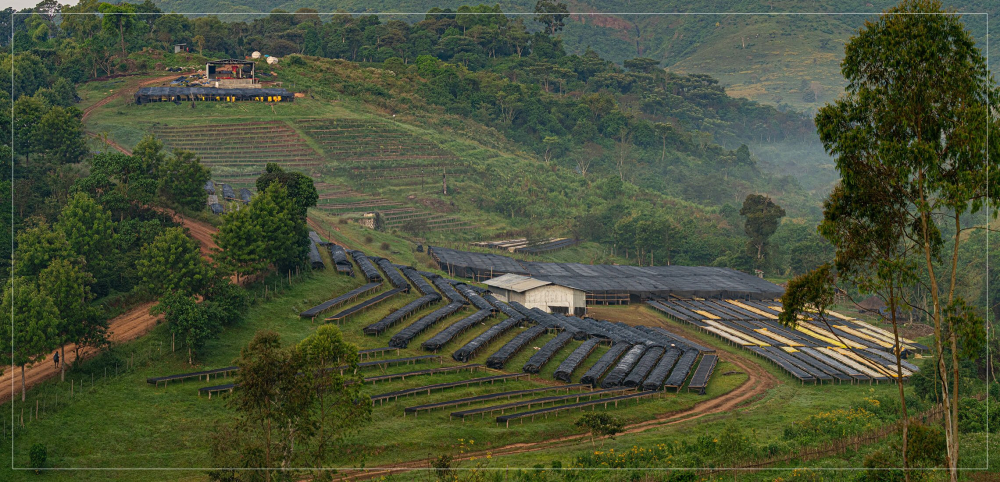
Completely different from the vast majority of Ethiopian farms, Gesha Village is not a small farm but a large estate covering 500 hectares, equipped with its own washing station and laboratory. The entire farm grows only the Gesha variety, rather than the Ethiopian heirloom varieties that typically cannot be identified by specific variety.
Coffee Varieties at Gesha Village
Gesha Village cultivates three varieties, all named after the exploration teams that discovered coffee at the time: Gesha1931, Gori Gesha, and Illubabor provided by the Ethiopian Coffee Research Center.
Gesha1931 was confirmed through observation of plant morphology, bean shape, bean size, and cupping performance, and is considered the closest to the mother plant of Panama Gesha. The Gori Gesha variety was collected by the estate owner during a personal expedition in 2011 from the Gori Gesha wild coffee forest 20 kilometers from the current Gesha Village farm, and no duplicate samples have been found in other regions.
Gesha Village Coffee Grading System
Auction
Auction lots account for only 3.7% of Gesha Village's annual production. They are the estate's top-tier lots obtained through rigorous multi-stage selection and can only be acquired through global auctions. Detailed information on the 2020 Gesha Village auction can be found via the relevant portal.
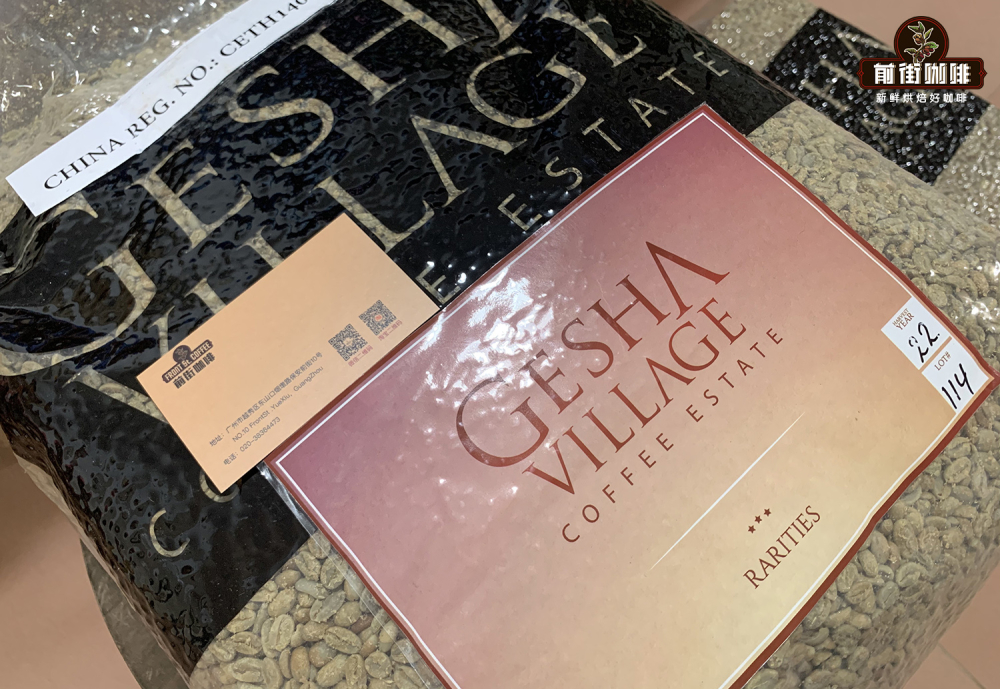
In addition to auction lots, Gesha Village also adopts a product line structure similar to Hacienda La Esmeralda, divided into RARITIES (Gold), GROWERS RESERVE (Red), SINGLE-TERROIR (Green), and CHAKA.
Gold RARITIES
Gold lots account for approximately 10% of Gesha Village's annual production. They have complex flavors and are extremely rare, representing the estate's highest grade outside of auction lots.
Many baristas choose Gold lots as competition beans, and roasters with high quality requirements also purchase them. These lots have complete traceability, with each lot featuring prominent flavors and high complexity.
FrontStreet Coffee Ethiopia Gesha Village Coffee Estate Gold Gesha Region: Ethiopia Bench Maji Estate: Gesha Village Coffee Estate Oma Block Altitude: 1900-2040 meters Variety: Gesha1931 Processing: Natural
In the 2022 harvest season, FrontStreet Coffee cupped a Gold lot from the Oma Block (Oma 114 lot), which underwent natural processing with a drying time of up to 32 days. The variety was Gesha1931, exclusive to this block.
After grinding, the coffee beans emit a dry aroma of fruit. Upon pouring 94°C hot water, floral and berry aromas rush forth. When sipping, it presents distinct citrus and creamy notes, with soft acidity and prominent sweetness. The sweet flavors of caramel and cream linger persistently, with a fermented note in the finish.
Red RESERVE
Red lots account for approximately 15% of Gesha Village's annual production, with complete traceability and cupping scores exceeding 88 points (SCA standard), presenting typical Gesha Village flavors. Their flavor intensity and complexity are slightly inferior to Gold lots, making them very cost-effective single-origin lots.
FrontStreet Coffee Ethiopia Gesha Village Coffee Estate Red Gesha
Region: Ethiopia Bench Maji Estate: Gesha Village Coffee Estate Shewa-Jibabu Block Altitude: 1973-2069 meters Variety: Gori Gesha Processing: Natural
In the 2020 harvest season, FrontStreet Coffee selected a natural Gori Gesha from the Shewa-Jibabu Block. During cupping, this Red lot displayed tropical fruit, bergamot, and lemon notes, with creamy sweetness interwoven with fermented notes. After the temperature dropped slightly, jasmine floral notes gradually emerged, followed by flavors reminiscent of toffee and almond.
Green SINGLE-TERROIR
Green lots come from a single block of Gesha Village Coffee Estate and are single variety. Each lot number provides complete traceability information, including farm block name, coffee variety, and processing dates. Green, like Red and Gold, belongs to single-block single-variety lots, but has no cupping score requirement, making it an entry-level single-block lot.
FrontStreet Coffee Ethiopia Gesha Village Coffee Estate Green Gesha Region: Ethiopia Bench Maji Estate: Gesha Village Coffee Estate Bangi Block Altitude: 1911-2001 meters Variety: Gori Gesha Processing: Natural
FrontStreet Coffee cupped a Green lot from the Bangi Block in the 2020 new harvest season. The variety was the block-exclusive Gori Gesha, also naturally processed. During cupping, it had prominent berry sweetness, a full and rich mouthfeel, presenting flavors of cherry, red berry, and honey, with a fermented aromatic note in the finish.
Chaka CHAKA
Unlike other lots, Chaka lots blend coffee from all blocks of the estate and the entire production season. Chaka lots are available in both natural and washed processing, covering Gesha Village's three major varieties: Gesha1931, Gori Gesha, and Illubabor.
FrontStreet Coffee Ethiopia Gesha Village Coffee Estate Chaka Lot
Region: Ethiopia Bench Maji Estate: Gesha Village Coffee Estate Altitude: 1900-2100 meters Variety: Gori Gesha, Gesha1931, Illubabor Processing: Natural
Estate's Exquisite Natural Processing
FrontStreet Coffee's Gesha Village coffee undergoes natural processing. First, floating debris and impurities are removed, then the cherries are sun-dried in thin layers on African raised beds covered with plastic sheeting. During the drying process on the drying beds, they are sorted again to remove insect-damaged beans and green-colored beans. The total drying time is 18 to 30 days. Front Street believes that naturally processed coffee has prominent sweetness, soft acidity, and presents complex fruity notes in flavor.
FrontStreet Coffee Roasting Analysis
Since this lot is from the 2022 new harvest season with higher moisture content, the dehydration time is extended during roasting. The final roast level is determined as medium-light to highlight the fruity sweetness.
Yangjia 800N, 500g batch: Charge at 175°C, heat setting 130, airflow damper at 3; turning point at 1'36", when temperature reaches 92.8°C, at 3 minutes open airflow damper to 4 and increase heat to 140; when temperature reaches 152.6°C, bean surface turns yellow, grassy smell completely disappears, entering the dehydration phase, reduce heat to 100; at 8'20", wrinkles and dark patches appear on bean surface, toast aroma distinctly turns to coffee aroma, which can be defined as the prelude to first crack. At this point, listen carefully for the sound of first crack. First crack begins at 9'55", open airflow damper to 5, develop for 1'30" after first crack, drop at 193.5°C.
FrontStreet Coffee Brewing Sharing
Brewing Parameters
Dose: 15g Ratio: 1:15 Grind: Fine pour-over grind (78% passing through No. 20 standard sieve) Water temperature: 90°C
Front Street brewing method: First rinse the filter paper and preheat the dripper and carafe. Bloom with 30g water for 30 seconds, then pour in a slow circular motion until reaching 125g, pause, and when the water level is about to expose the coffee bed, continue circular pouring until 225g and stop. When the water level is about to expose the coffee bed again, remove the dripper. (Timing starts from the beginning of bloom) Total extraction time is exactly 2 minutes.
Flavor Description
【Gold】Intense jasmine floral aroma. Delicate flavors of peach, apricot, candied fruit, melon, and Satsuma mandarin, plus honey sweetness;
【Red】Overall balanced mouthfeel, with prominent nutty flavors;
【Green】Sweet berry aroma, full and rich mouthfeel, with hints of cherry, red berry, and honey flavors. The finish carries a fermented aromatic note.
【Chaka】Relatively light fermented aroma, overall mouthfeel has citrus and grapefruit acidity, relatively soft. Of course, flavor descriptions vary from person to person.
The above content is compiled by CoffeeHunters, a coffee news website.


