








Which Coffee Beans Suit Iced Pour-Over Brewing?
Iced pour-over is a variation on hot pour-over, designed to reproduce a similar flavor at low temperature. Grind finer than for hot brewing: a typical setup uses 15g of coffee with the number 20 standard sieve pass rate near 85 percent, water at 90 to 92 degrees Celsius, and a tighter ratio to compensate for dilution by ice.
Bean choice matters as much as technique. Light-roast washed African coffees, honey-processed lots, and clean Colombian varieties often hold their fruit and acidity over ice, while very dark roasts and heavy earthy profiles can turn flat. Bean size and density are not reliable guides on their own; origin, roast level, and process do more of the work. Serve it as black coffee over ice.
In the heat of summer, iced pour-over coffee becomes the top choice for many coffee lovers. But not all coffee beans are suitable for iced brewing, and there are clear differences in flavor and mouthfeel between hot pour-over and iced pour-over. Starting from Front Street Coffee's actual brewing methods, this article compares in detail the differences between iced pour-over and hot pour-over in grind size, coffee-to-water ratio, water temperature, and pouring technique, and uses three beans—Front Street Ethiopia Huakui, Brazil Queen's Estate Yellow Bourbon, and Indonesia Golden Mandheling—for flavor comparison. It also sorts out which types of coffee beans are and aren't suitable for making iced pour-over, and recommends standout beans such as Front Street Ethiopia TOH Washed Champion Bean Huaxu, Front Street Strawberry Candy, Front Street Blackberry, Front Street Colombia Sidra, and Front Street Big Belly Button, helping you choose the right beans in summer and brew a clean, refreshing cup of good coffee.

Pour-over coffee can fully showcase the origin flavors of coffee beans. Normally, Front Street tends to recommend drinking hot pour-over, but the high temperatures of midsummer lead many customers to switch to iced pour-over. Guests often ask, what exactly is the difference in taste between iced pour-over and hot pour-over? Today Front Street will talk about this question.
What are the differences between iced pour-over and hot pour-over in the brewing process?
Iced pour-over is essentially a variation developed from hot pour-over, with the goal of still reproducing a flavor performance close to hot pour-over at low temperatures. Take Front Street Coffee's brewing parameters as an example.
When Front Street makes hot pour-over (light roast beans), it uses 15g of coffee grounds, with the grind size set so that the No. 20 standard sieve pass rate is 80%, the water temperature controlled at 90-92°C, the coffee-to-water ratio at 1:15, and the total poured water at 225ml. The pouring uses a three-stage method: the first stage is 30ml for a 30-second bloom, the second stage pours 100ml, and the third stage pours 95ml.
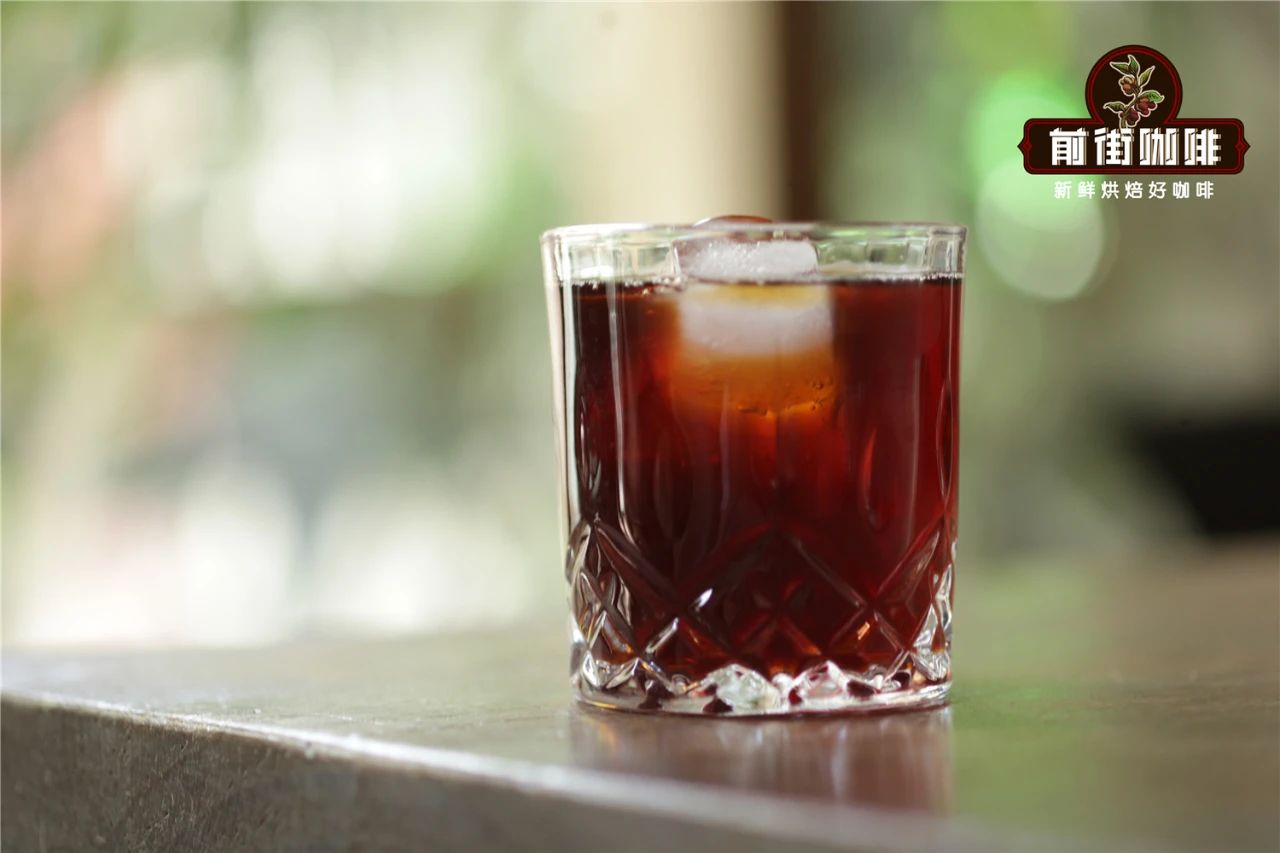
When Front Street makes iced pour-over, it also uses 15g of coffee grounds and keeps the water temperature at 90-92°C, but the grind is finer than for hot brewing, with the No. 20 standard sieve pass rate reaching 85%. The coffee-to-water ratio is adjusted to 1:10, the total poured water is 150ml, and an additional 100g of ice cubes is prepared for cooling and dilution. The pouring is also divided into three stages: the first stage is 30ml for a 30-second bloom, the second stage is 60ml, and the third stage is 60ml. After finishing, pour the coffee liquid into a cup containing 100g of ice cubes and shake until uniform.
Comparing the two sets of methods, it can be seen that iced pour-over grinds the beans finer, uses less water to extract a high-concentration hot coffee liquid, and then cools and dilutes it with ice cubes, ultimately obtaining iced coffee.
What is the difference in taste between the two?
In order to systematically compare the differences in flavor and mouthfeel between iced pour-over and hot pour-over, Front Street selected three beans for comparison: Front Street Ethiopia Huakui (light roast), Front Street Brazil Queen's Estate Yellow Bourbon (medium roast), and Front Street Indonesia Golden Mandheling (dark roast).
Front Street Ethiopia Huakui
Hot pour-over: obvious berry-like aroma, with citrus and berry acidity on the palate, good sweetness as well, rich layers, and a smooth mouthfeel.
Iced pour-over: the aroma is relatively weaker, with a faint floral note, soft and pleasant citrus acidity, accompanied by waves of tea-like notes, overall fresh and clean, with a refreshing mouthfeel but somewhat thin.
Front Street Brazil Queen's Estate
Hot pour-over: nutty aroma, with a rich creamy peanut flavor on the palate, prominent sucrose sweetness, and a full mouthfeel.
Iced pour-over: the aroma is not obvious, with slight fruity acidity, sucrose-like sweetness and a chocolate finish, high cleanliness, but a thinner mouthfeel than hot brewing.

Front Street Golden Mandheling
Hot pour-over: caramel and chocolate aroma, rich and mellow mouthfeel, interwoven chocolate and spice flavors, with an obvious caramel sweetness in the finish.
Iced pour-over: roasted nut aroma, overall showing chocolate, herbal, and nutty tones, clean but one-dimensional, and Mandheling's signature mellowness is not reflected in iced brewing.
Overall, hot pour-over is richer and more comprehensive in flavor expression, which is also why Front Street usually suggests customers taste hot single-origin coffee. Although iced pour-over has a lighter overall flavor than hot pour-over and a more prominent acidity, some beans still perform excellently as iced pour-over, especially in hot summer weather, when a good cup of iced pour-over is often more popular.
However, not all coffee beans taste good as iced pour-over. Full-bodied beans represented by Front Street Mandheling perform excellently in hot brewing, but their flavor drops significantly when made into iced pour-over.

Of course, some beans are outstanding when made into iced coffee. For example, last year's Front Street Ethiopia TOH Washed Champion Bean Huaxu, when used for pour-over iced coffee, tastes like honey pomelo tea. Front Street also recommends choosing specially processed beans with prominent flavors to make iced coffee, such as Front Street Strawberry Candy, Front Street Blackberry, Front Street Colombia Sidra, and Front Street Big Belly Button. These beans can still maintain good flavor when made as iced pour-over, refreshing and clean, very suitable for drinking in the scorching summer.
The above content is compiled by CoffeeHunters, a coffee news website.


