







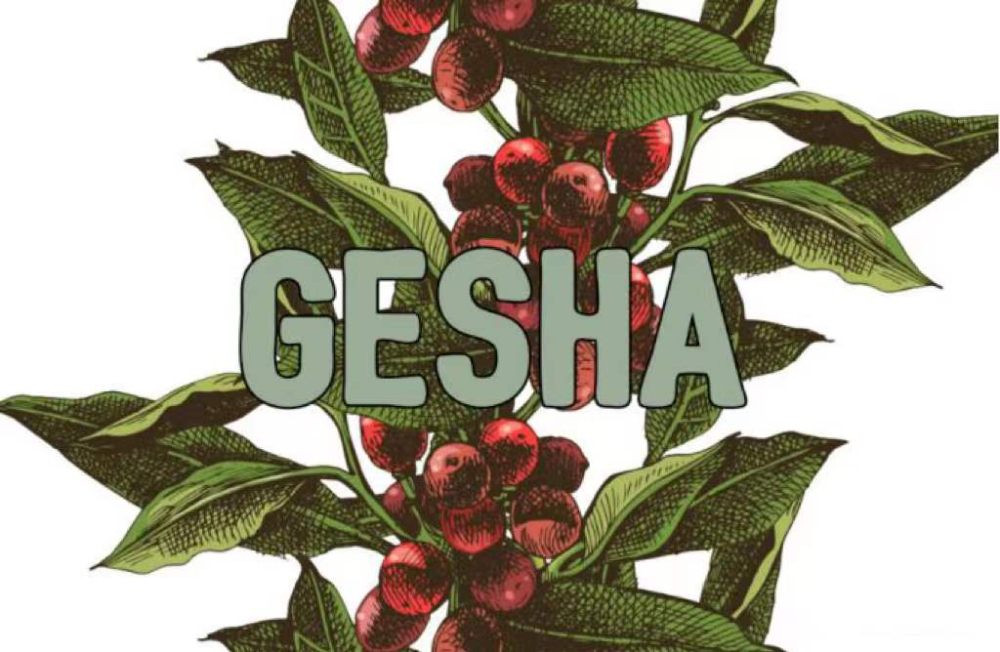
What Is a Gesha Coffee Variety and Why Two Spellings?
Gesha coffee and Geisha coffee refer to the same variety line; the difference is transliteration. According to Han Huaizong's book "The Fourth Wave of Specialty Coffee," the "i" in Geisha traces back to a spelling error. British Colonel Richard Whalley collected samples in the Gesha region of Ethiopia, and by 1936 he wrote "Geisha" in a letter, a spelling later adopted in breeding literature outside Ethiopia.
The history runs from the 1929 British consulate in Maji, Ethiopia, to the first samples sent to Kenya in 1931. Whalley mixed Gesha-area samples with market-purchased varieties and labeled all of them "Gesha." The widely grown Geisha today is one member of that group, numbered T2722, and Panama gesha coffee built its reputation on that line.
Is the name of Geisha coffee actually Gesha or Geisha? This question has been debated endlessly in coffee circles. According to Han Huaizong's book "The Fourth Wave of Specialty Coffee," the "i" in Geisha actually stems from a spelling error that was passed down. From the establishment of the British consulate in Maji, Ethiopia in 1929, to the first batch of coffee samples being sent to Kenya in 1931, and then to Colonel Whalley's first use of the term "Geisha" in a letter in 1936, this history reveals the complex origins behind the naming of the Geisha variety. In fact, whether Gesha or Geisha, they are merely differences in transliteration, referring to a general category of a variety line, and the Geisha that is now popular worldwide is just one member of this group, numbered Geisha T2722. This article will guide you through the naming history of Geisha, its distribution across production regions, and recommend several Front Street Coffee Geisha products, covering a rich selection from Red Label to everyday drinking level.
Regarding whether the correct name for Geisha coffee is "Gesha" or "Geisha," opinions remain divided to this day. In "The Fourth Wave of Specialty Coffee," Teacher Han Huaizong suggests that the "i" in Geisha is actually the product of an erroneous extension.
Back in 1929, in order to combat illegal activities, the British opened a consulate in Maji, Ethiopia, and appointed Colonel Richard Whalley as ambassador. Coincidentally, the area under Whalley's jurisdiction happened to be located in a place marked as Gesha on old maps, and he immediately set about collecting coffee samples from the region.
In 1931, the Maji consulate sent the first batch of coffee samples collected from the Gesha region, along with some cultivated varieties purchased at local markets, to the British plantations in Kenya. However, Whalley did not handle the samples collected from the Gesha region separately from those bought at the market; instead, he mixed them together and labeled them all as "Gesha."
By 1936, after completing his mission, Whalley wrote a letter to the British minister, but in the letter he used the spelling "Geisha" rather than the original "Gesha." From then on, all breeding literature outside Ethiopia continued to use Geisha to record these samples collected in the Gesha region.
In fact, whether Gesha or Geisha, it ultimately comes down to a difference in transliteration. Moreover, this name does not specifically refer to the Geisha variety we know today; it is actually a general term for a variety line. The Geisha variety that is widely known today is just one member of these Gesha lines, numbered Geisha T2722.
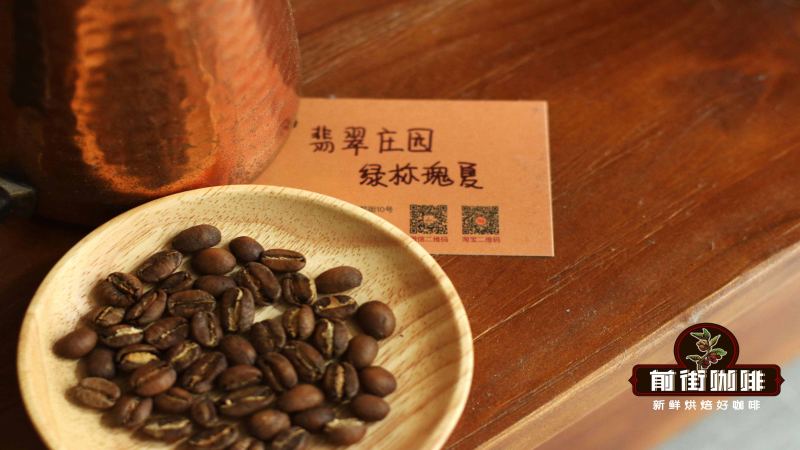
If you want to taste high-grade Geisha coffee, you can purchase Front Street Coffee Emerald Estate Geisha series products. Front Street Emerald Red Label is the highest-grade coffee, with a clear flavor profile, making it an excellent choice whether for your own enjoyment or as a gift for family and friends; Front Street Emerald Green Label is a blend of Geisha varieties, also possessing rich floral and fruity aromas, with diverse layers perceptible when pour-over brewing.
At present, Geisha coffee from Latin America generally uses the term Geisha, while official Ethiopian documents and coffees recorded as Geisha lines all use Gesha. The Ethiopian government has also specifically designated the area where Gesha samples were collected back then, naming it Gesha Woreda. To this day, many Gesha-line coffee varieties are still grown in Ethiopia.
If you want to buy an everyday drinking-level pure Geisha, I highly recommend Front Street Coffee Granja Estate Geisha. This single-origin product comes precisely from Ethiopia, the birthplace of coffee, so it not only has the floral and fruity notes of Geisha but also the white flowers and lemon-like bright acidity of Ethiopian coffee.
Front Street Coffee Granja Estate Geisha uses a natural process. At medium-light roast, the fruit flavors are mainly yellow peach, citrus, and guava, best prepared with pour-over or cold brew; at medium roast, it becomes Front Street Geisha SOE, which can be extracted as espresso, with flavors shifting to dried apricot, caramel, and nuts.
Of course, these are just guesses. In the image caption released, Luckin did not disclose specific origin information. Therefore, it is temporarily impossible to determine whether this Gesha SOE launched by Luckin is the Panamanian Geisha we usually refer to, or a South American production region Geisha derived from the Panamanian Geisha variety, or an Ethiopian production region Geisha, or some other bean.
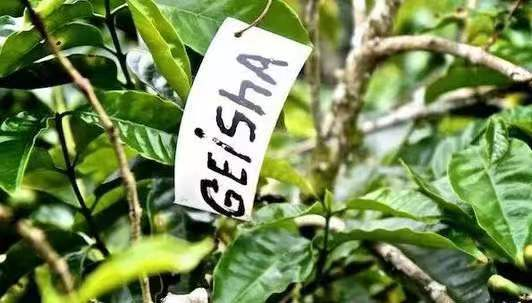
- The Geisha we usually talk about looks like this ↑
However, judging from this image itself, this bean is not the elongated type of the famous Panamanian Geisha variety that we commonly see.
The above content is compiled by CoffeeHunters, a coffee news website.


