







How Do Anaerobic Natural Beans Perform as an SOE Latte?
Finca El Paraiso in Colombia's Cauca region grows Bourbon at roughly 2,050 meters and processes it as an anaerobic natural, giving the beans a fermented, sweet character. That profile carries into espresso: pulled as a single-origin SOE latte, the shots keep a distinct fruit-forward sweetness that survives the milk instead of disappearing behind it.
The estate also uses a double anaerobic enzyme washed method for lots such as Strawberry Yogurt and Sakura, so the two processes can be compared directly. Anaerobic natural relies on whole fruit fermentation, while the washed version ferments without the pulp, and that difference in coffee beans process shows up in the cup long before brewing begins.
Finca El Paraiso is a family-owned coffee estate in the Cauca region of Colombia, renowned for its innovative processing methods. Its anaerobic natural coffee beans, with their distinct fermented character and sweetness, have become a favorite among many coffee enthusiasts. In this article, Front Street Coffee will take you through the estate's background, variety characteristics, and processing techniques, and share complete insights from roasting curves to cupping flavors, as well as V60 brewing and SOE extraction. Whether you are a pour-over enthusiast or an espresso player, you will find practical reference parameters and key operational points.
For more specialty coffee knowledge, please follow our WeChat official account: FrontStreet Coffee
When it comes to coffee beans from Finca El Paraiso in Colombia, many people immediately think of a series of strikingly distinctive, highly recognizable beans, such as Strawberry Yogurt, Sakura, and Tropical Delight. Front Street has purchased all of these beans, and Finca El Paraiso's products are truly unforgettable after just one taste. The three beans mentioned above all use double anaerobic enzyme washed processing, which is currently one of the most widely used special processing methods at the estate. Today, Front Street wants to talk about Finca El Paraiso's anaerobic natural coffee beans and compare the differences between anaerobic natural and double anaerobic washed processing methods.
FrontStreet Coffee — Colombia Finca El Paraiso Anaerobic Natural Coffee Beans
Region: Cauca, Colombia
Altitude: 2,050 meters
Processing Method: Anaerobic Natural
Grade: SUPREMO
Variety: Bourbon
Cauca Coffee Region
The Cauca Department is a certified Colombian coffee origin region, with an average altitude of about 1,758 meters, reaching up to 2,100 meters at its highest. The local topography, rainfall, temperature, and volcanic soil provide ideal conditions for coffee cultivation. Eighty percent of the department is mountainous, with parallel mountain ranges in the east and center that are part of the Andes. The central range includes two major volcanoes, Sotara and Petacas. Like other southwestern production regions, Cauca has a pronounced monomodal rainfall distribution.
The dry season typically occurs from August to September each year, followed by the rainy season that brings a concentrated coffee flowering period, and then the concentrated harvest season the following year. After cupping multiple coffee beans from the Cauca region, Front Street found that soft berry acidity and stone-fruit-like finish are present in almost every bean from this region. Colombia Finca El Paraiso Finca El Paraiso was established by Mr. Diego Samuel in 2008, originally a small 2.5-hectare family estate. The estate owner invested the surplus from each year's harvest into coffee agricultural research, continuously exploring how to better present specialty flavors. In 2015, he participated in a local regional competition for the first time and won first place. After gaining fame overnight, he received industry recognition, which gave him even more motivation to promote specialty coffee cultivation.
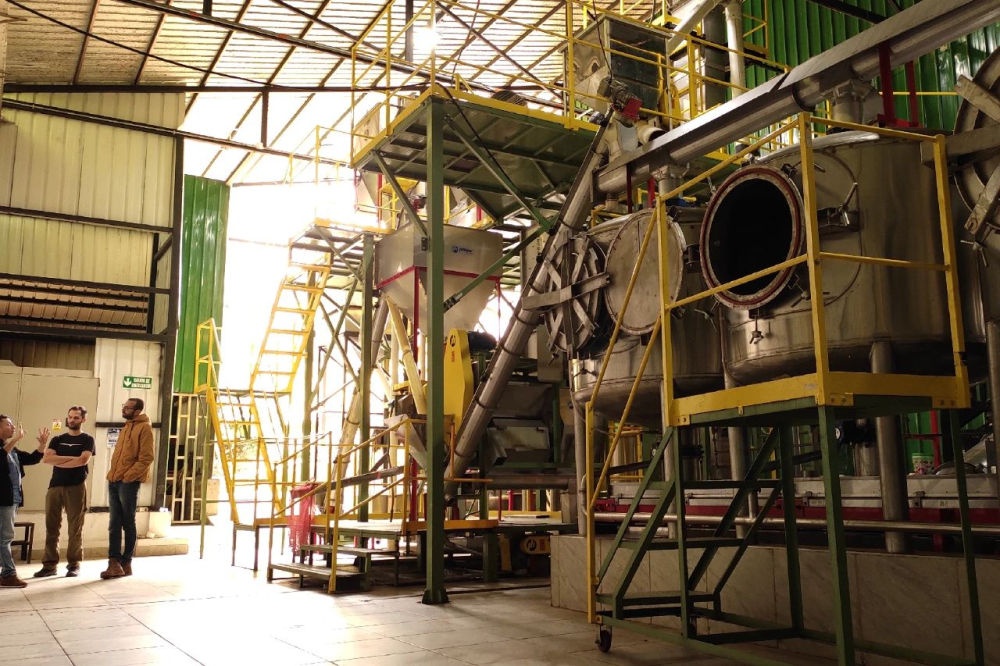
Through his company Indestec (Innovacion y Desarrollo Tecnologico para la Caficultura), Diego developed new innovative technologies to enhance and stabilize coffee quality. He says he likes to step out of his comfort zone because it helps him keep improving. Finca El Paraiso currently mainly cultivates Bourbon, Castillo, Geisha, and other varieties, and plans to try more different bean varieties. Anaerobic Natural Processing Anaerobic fermentation is a very popular post-processing method in recent years. Coffee cherries are typically placed in sealed containers or washing tanks to ferment in water, during which different microorganisms are used for fermentation to create special flavors. After fermentation is complete, these cherries are taken for sun-drying — this is the anaerobic natural process. Coffee beans processed this way have a distinct fermented character and relatively high sweetness.
Double anaerobic enzyme washed processing is more complex. After the coffee cherries are removed from the anaerobic environment, the skin and pulp are first removed by machine, then the coffee beans with mucilage still attached are placed in plastic bags or other sealed containers for a second anaerobic fermentation. The method of undergoing two anaerobic fermentations is called double anaerobic fermentation. After both fermentations are complete, the coffee beans are removed from the anaerobic environment and washed to remove the mucilage layer, then sun-dried. Coffee beans processed this way have unique flavors, intense aromatics, and more pronounced acidity than anaerobic natural.
Coffee Bean Variety The anaerobic natural coffee beans that FrontStreet Coffee sourced use the Bourbon variety. Bourbon is a sub-variety resulting from a mutation of Typica, and together with Typica, it is one of the oldest existing coffee varieties. The green fruit turns bright red when ripe. Compared to Typica, Bourbon has broader leaves and denser growth. Although its yield is higher than Typica, its harvest cycle is also 2 years, making it a relatively low-yield variety as well.
The coffee beans are relatively large, uniform in size, and even in color with a glossy appearance. They have excellent mouthfeel, with a red-wine-like acidity and a sweet finish. When Front Street's roaster received this green coffee, they noticed the beans had noticeably uneven color and a faint fermented aroma with grassy notes. How does FrontStreet Coffee roast Finca El Paraiso Anaerobic Natural coffee beans?
Yangjia 800N, charge weight: 480g. Charge at 170°C; set airflow to 3, gas to 100; turning point at 1'46"; at 133°C set airflow to 4; at 146.6°C, yellowing point at 5'10", when the bean surface turns yellow and the grassy smell completely disappears, entering the dehydration phase; at 155°C, reduce gas to 80.
At 8'17", ugly wrinkles and dark streaks appear on the bean surface, and the toasty bread aroma clearly transitions to coffee aroma, which can be defined as the prelude to first crack. At this point, listen carefully for the sound of first crack. First crack begins at 9'07"; open airflow fully; develop for 2'00" after first crack; drop at 196.5°C. FrontStreet Coffee Finca El Paraiso Anaerobic Natural Coffee Bean Cupping Report Dry Aroma: Fermented aroma Wet Aroma: Osmanthus Flavor: Citrus, plum, pineapple, lemon, cream, cane sugar, oolong tea
FrontStreet Coffee Finca El Paraiso Anaerobic Natural Coffee Bean Brewing Notes
Dripper: V60 #01
Water Temperature: 90°C
Dose: 15g
Ratio: 1:15 Grind Size: Medium-fine / caster sugar (80% passing through a #20 sieve)
Front Street brewing method: First rinse the filter paper and preheat the dripper and carafe. Bloom with 30g of water for 30 seconds, then pour in a slow circular motion until reaching 125g for the first pour. When the water level is about to expose the coffee bed, continue pouring to 225g and stop. When the water level is about to expose the coffee bed again, remove the dripper. (Timing starts from the beginning of blooming.) Total extraction time is 2 minutes.
Brewed Flavor: Osmanthus aroma with a faint fermented note; on sipping, flavors of pear, citrus, lemon, cane sugar, cream, and oolong tea.
Many coffee enthusiasts have a habit when they come across a bean they love — they are not satisfied with just one extraction method to taste the coffee, but rather want to use every tool at hand to extract it in every possible way. For example, the highly personalized SOE is one of the most popular approaches. Below, Front Street will demonstrate the process of making an SOE using Finca El Paraiso coffee beans.
Finca El Paraiso Anaerobic Natural SOE Extraction Parameters
Coffee Beans: Colombia · Finca El Paraiso
Dose: 20g
Yield: 40g
Ratio: 1:2
Extraction Time: 26–32 seconds
Grind Setting: Galileo 2.0
The espresso machine Front Street uses has a double basket capacity, requiring 20g of coffee grounds each time. The extraction ratio is 1:2, meaning 40g of espresso is yielded within a reasonable time. Extraction time is related to the flow rate of the coffee grounds. Generally, a single extraction is controlled between 20–35 seconds. If less than 20 seconds, the coffee tends to taste thin and weak; if more than 35 seconds, over-extraction can cause burnt bitterness in the coffee. Therefore, Front Street controls the espresso time within the range of 26–32 seconds.
Before extraction, wipe the portafilter basket dry, turn on the grinder, and grind a double dose of coffee grounds. Place on an electronic scale and adjust until reaching exactly 20g. Then use a distribution tool to level the coffee grounds, and use a tamper to press down firmly and vertically to compact the coffee puck, ensuring more stable extraction.
Then turn on the extraction switch to release water for 1–2 seconds to wet the group head, which also rinses away stuck coffee grounds. Place an electronic scale under the espresso cup, tare it to zero, and place it under the group head during extraction.
Gently lock the portafilter onto the group head and push down the extraction switch to start. Observe the changes in the extracted liquid. When the scale shows 40g of espresso, at approximately 30 seconds, pull down the extraction switch to stop. Brewing parameters will subtly change depending on daily air humidity and coffee bean condition, so the coffee dose, grind setting, and extraction yield need to be adjusted up or down accordingly.
The extracted SOE can be enjoyed directly. Remember to pair it with a glass of water to rinse your palate — you can taste the rich crema and the spice and berry aromas of the underlying espresso. If you cannot accept the intense bitterness of espresso, you can of course adjust to your preference by adding ice water or warm water at a 1:4 ratio to make a refreshing SOE Americano, or add steamed fresh milk at a 1:6 ratio to soften the mouthfeel, making a delicious SOE Latte.
The above content is compiled by CoffeeHunters, a coffee news website.


