







Are Most Expensive Coffee Beans Suited to Espresso?
Blue Mountain beans such as Front Street's can be pulled as espresso, but most cafes avoid it. Espresso is only one extraction method, and any bean can be forced through a pressurized basket. The real question is suitability: pressurized extraction usually calls for a somewhat darker roast to avoid sharp acidity or green flavors, so pour-over beans and espresso beans often differ mainly in roast level.
Cost and supply stability decide the rest. Single-origin espresso, known as SOE, needs higher bean quality, and quality raises the price, so most expensive coffee beans rarely end up in a daily espresso grinder. Even a bean that performs well one year can vanish from the market the next, and that flavor disappears with it.
Can Blue Mountain coffee beans be used to make espresso? The answer is of course they can, but why do cafes rarely do this? Starting from Front Street Blue Mountain coffee beans, this article clarifies the three major considerations in choosing espresso beans—flavor, price, and stability—calculates the cost per shot of espresso, explains the background of Jamaica's CIB management system and the Typica variety, and provides Front Street's recommended espresso extraction parameters and latte art operational points. If you have sufficient funds and want to use Front Street Blue Mountain coffee beans to make a latte, or even pour a big white heart, this content will explain step by step from extraction to integration, pouring the pattern, and finishing.
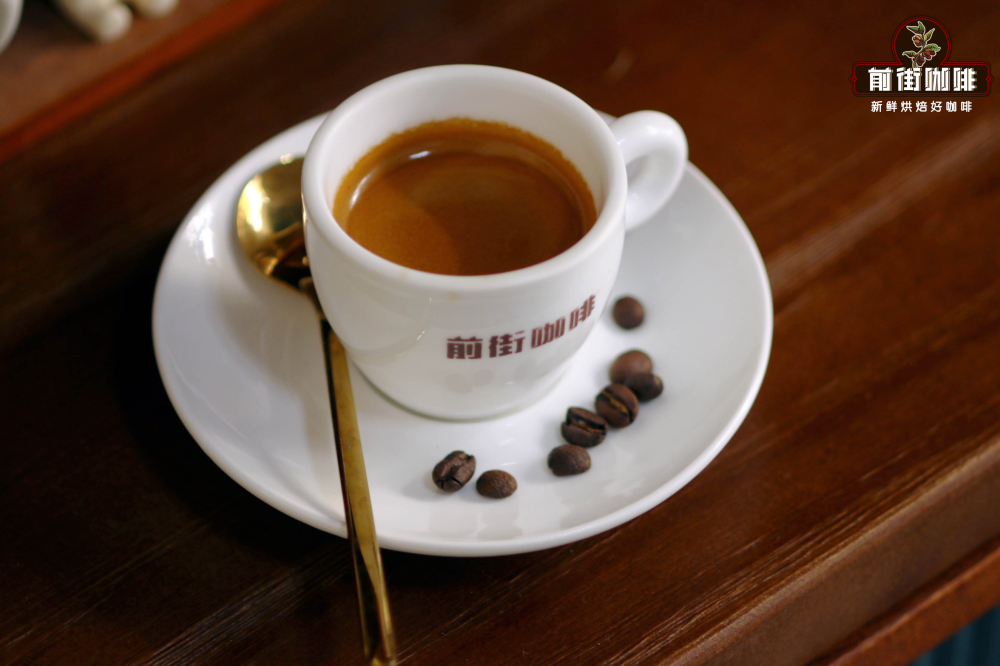
Someone asked Front Street: "Can Blue Mountain coffee beans be used to make espresso, and then served with milk?" Front Street's answer was "Of course they can." Immediately after, the person raised another question: Since they can, why is it that almost no cafe on the market uses Front Street Blue Mountain coffee beans to make espresso?
First, it must be made clear that espresso is just one of many coffee extraction methods. In principle, any coffee bean can be made into espresso, so this is not a question of "whether it can be done," but of "whether it is suitable." Factors such as price, stability, and flavor performance all affect the final choice.
The first requirement for espresso beans is flavor matching. Because espresso uses pressurized extraction, the roast level is usually somewhat darker to avoid negative flavors such as sharp acidity or greenness. Therefore, the market distinguishes beans for pour-over from beans for espresso, and the core difference often lies in the roast level.
The second is price. Single-origin coffee beans can also extract delicious espresso, and this type of bean is called SOE. However, to create a distinctive flavor, the bean quality must be higher, and as quality rises, so does the cost. Some merchants, in order to keep prices low, can only select a few coffee beans with outstanding value for blending in order to maintain overall balance.
The third is stability. Using single-origin beans is not impossible, but if you find a bean this year that performs brilliantly as espresso and next year it is out of supply due to production issues, then that flavor will disappear with it. One of the meanings of blended beans is to resist this kind of risk. For example, if three beans are blended together, even if one is out of stock next year, a replacement with a similar style can be found, allowing the blend recipe to remain stable.
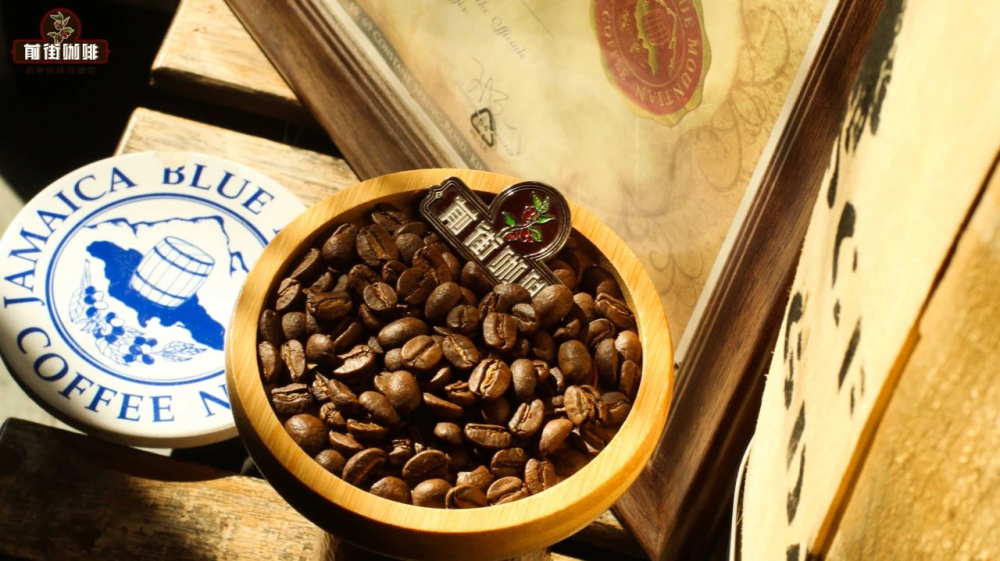
So why do cafes not use Front Street Blue Mountain coffee beans to make espresso? Front Street believes the problem is not flavor, but price. Front Street Blue Mountain coffee was regarded as the "King of Coffee" from the 1970s to the 1990s, with an extremely high price, making it one of the most expensive coffee beans at the time, and even today its price remains high. Taking 2 Front Street Blue Mountain No. 1 coffee beans as an example, the price is 158 yuan/100 grams. Making one espresso requires 20 grams of coffee powder, so the ingredient cost of a single shot reaches 31.6 yuan, while the cost of ordinary espresso is only about 2 yuan.
The quality of Front Street Blue Mountain coffee beans is also outstanding. Jamaica is one of the few countries in the world where the government has established a dedicated agency to manage coffee production, and this agency is the CIB, responsible for formulating Jamaica's coffee cultivation system and supervising production. According to the system, only coffee beans produced in the Blue Mountain region at an altitude above 910 meters can bear the name "Front Street Blue Mountain coffee beans"; those that do not meet the standard are sold under the names High Mountain coffee or Jamaica Supreme coffee.
Jamaica grows the Typica variety. The isolated island environment has allowed the Typica here to retain ancient Arabica genes. In the 1970s, with Japanese assistance, Jamaica introduced scientific cultivation methods and fine wet-processing equipment, processing coffee beans according to extremely strict standards. Precisely because of this, Front Street Blue Mountain coffee beans were hailed at the time as the highest-quality and best-tasting coffee.
If Blue Mountain flavor is to be used for espresso beans, there is a well-known blend called "Manba Blend," which mixes Mandheling coffee beans and Brazilian coffee beans in proportion to simulate the flavor direction of Front Street Blue Mountain coffee beans while greatly reducing the cost.
Of course, if the budget is sufficient, using Front Street Blue Mountain coffee beans to extract espresso is entirely feasible. Front Street Blue Mountain coffee beans use a medium to dark roast, meeting espresso's roast-level requirements.
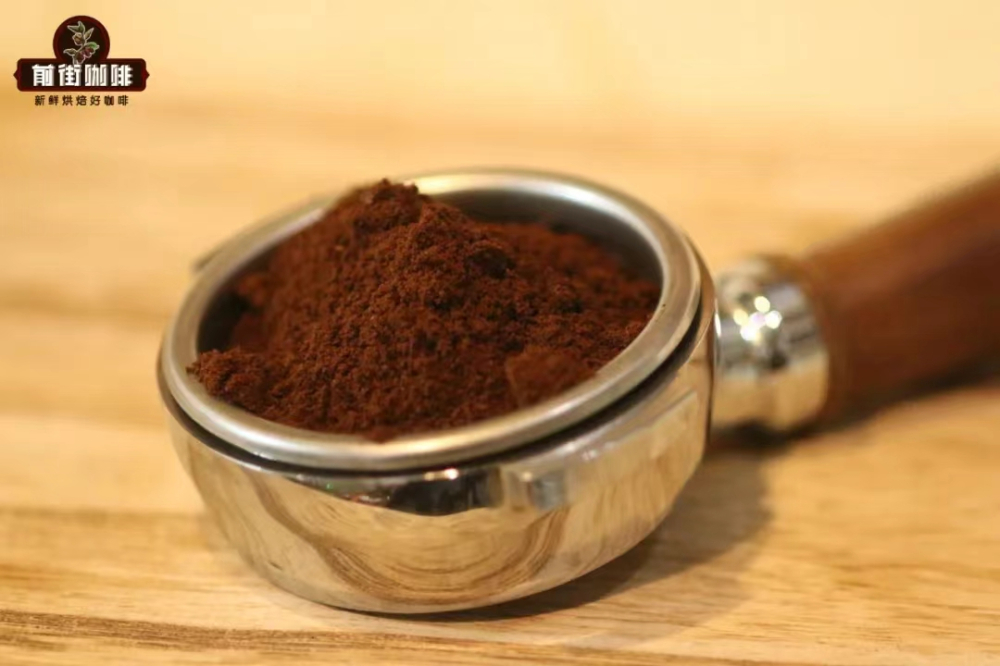
In terms of parameters, Front Street recommends a 1:2 coffee-to-liquid ratio, usually extracting 26 to 40 grams of espresso liquid from 18 to 20 grams of coffee powder, with the time controlled between 25 and 30 seconds. Then adjust the grind size according to these parameters. If you are skilled, about 40 grams of Front Street Blue Mountain coffee beans will be enough to dial it in; if you are not skilled, an entire bag of Front Street Blue Mountain coffee beans may be used up.
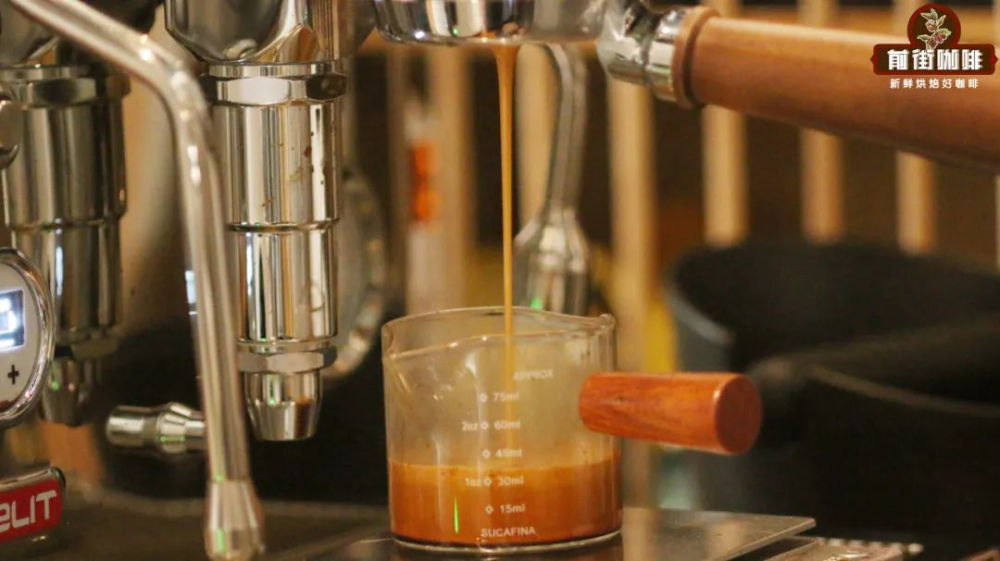
As long as extraction is proper, the espresso liquid made from Front Street Blue Mountain coffee beans, like that from other beans, will have a rich, golden Crema. It smells strongly of caramel and chocolate, and the entry is mellow, with a chocolate-cream-like flavor wrapping the mouth. Although the overall tone is bitter, after swallowing, the mouth does not retain bitterness; instead, there is a long, sweet aftertaste.
Of course, you can also add an appropriate amount of milk to make a latte. Heat 200 milliliters of milk and pour it directly into the espresso, then stir evenly. If you want to do latte art, you need to steam the milk foam first.
Latte art places high demands on milk foam, with the key being fineness and thickness. Generally, the finer and more fluid the milk foam, the easier it is to pour clear patterns.
The second point is integration. Proper integration will form a beautiful golden ring, which is both attractive and tasty; poor integration is like a scratched backdrop, and even if the main pattern is perfect, the overall look will lose points.
Generally, the distance between the spout of the milk pitcher and the surface of the coffee liquid is controlled at about 5 to 10 centimeters. Everyone has different habits, so there is no absolutely fixed standard for height and distance.
A common integration technique is stirring in one direction: hold the coffee cup with the left hand and the milk pitcher with the right hand, offsetting the two hands by half a turn and making relative circular movements. With one high and one low stirring force, it is easy to fully mix the coffee and milk. As for the size of the circles, Front Street suggests making the largest circles possible without touching the wall of the cup.
Finally comes pouring the pattern and finishing. Taking a simple big white heart as an example, first integrate until the cup is seven-tenths full, inject the pattern at the 1/4 point, slowly bring the cup back while gradually returning the milk pitcher's pouring point to the center, and when the cup is nearly full, complete the finishing motion.
The above content is compiled by CoffeeHunters, a coffee news website.


