







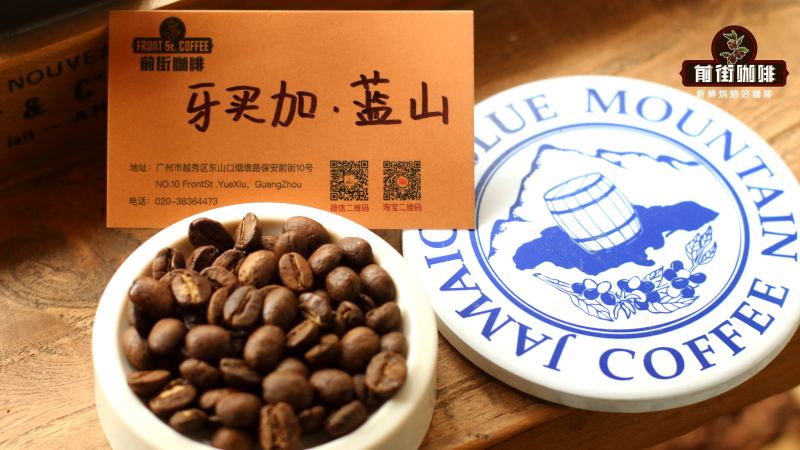
How Do You Spot Real Blue Mountain Coffee?
Authentic Jamaican Blue Mountain coffee comes from the Blue Mountain range between 910 and 1,700 meters, is Typica variety, and totals only around 900 tons a year. Labels reading Blue Mountain flavor or Blue Mountain blend are not the real thing. Buyers should check origin certification, barrel packaging, estate background and processing method before trusting a bag.
Blue Mountain is priced higher than many origins but is not the most expensive coffee in the world. Domestic retail for roasted No. 1 beans generally runs 150 to 400 yuan, depending on weight and brand strategy. Front Street Coffee's Blue Mountain No. 1 sells at 158 yuan per 100g, and the washed lots come from Clifton Estate.
Blue Mountain coffee is renowned worldwide for its outstanding quality and high price, yet the market is flooded with products labeled "Blue Mountain flavor" or "Blue Mountain blend," which have no connection to authentic Blue Mountain coffee. True Blue Mountain coffee comes from the Blue Mountain range in Jamaica at elevations between 910 and 1,700 meters, is of the ancient Typica variety, and has an annual output of only about 900 tons, with very limited quantities exported to each country. This article will systematically sort out the key points for identifying Blue Mountain No. 1 coffee, from origin certification, barrel packaging, estate background, and processing methods to brewing parameters, and introduce the washed Blue Mountain from Clifton Estate selected by Front Street Coffee, helping enthusiasts buy genuine products.
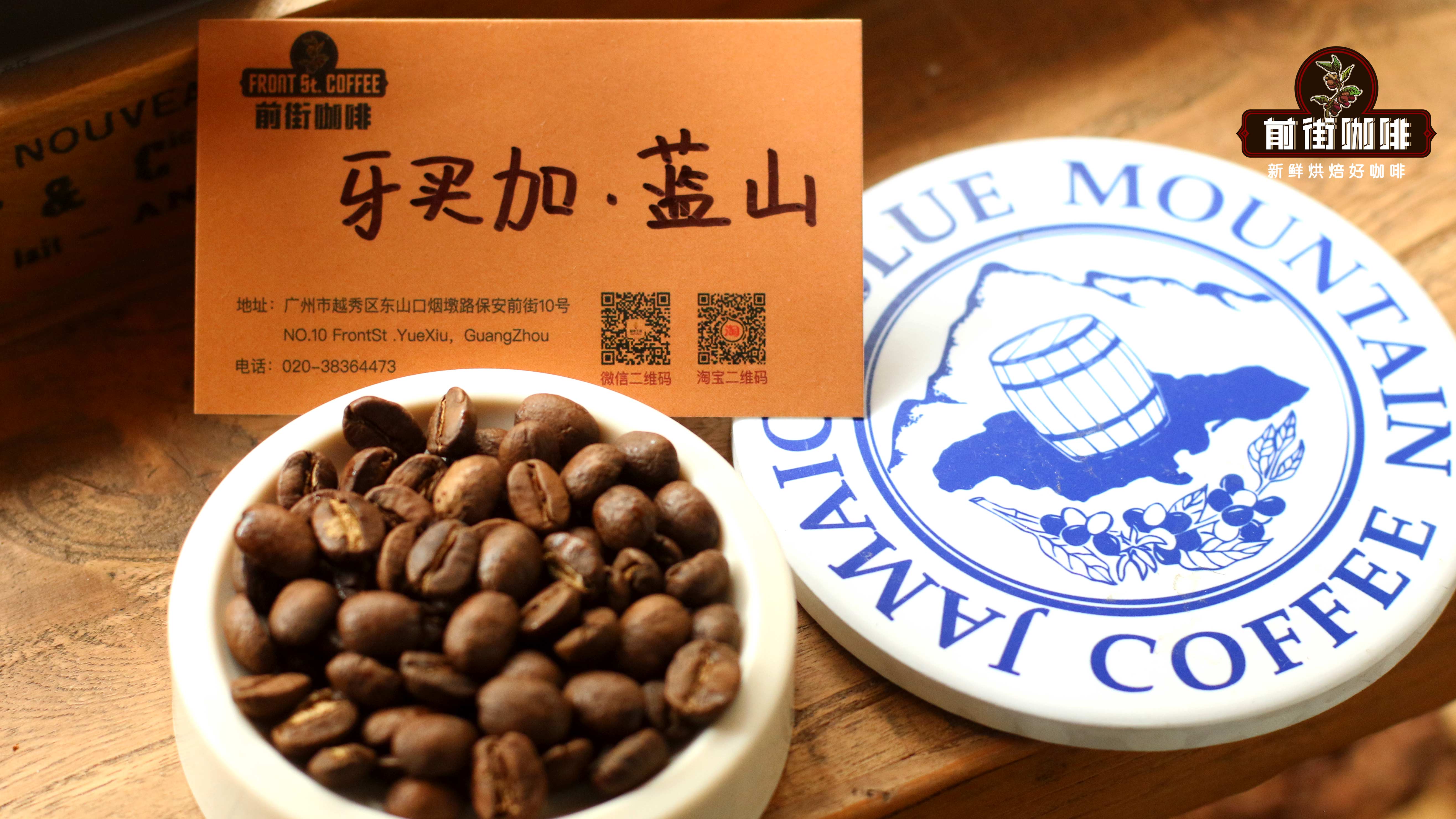
Blue Mountain coffee has long been renowned in the global coffee circle for its outstanding quality and high price. Precisely because it is so famous, many products flaunting the names "Blue Mountain flavor" and "Blue Mountain blend" have emerged on the market, but none of them can be considered true Blue Mountain coffee.
Authentic Blue Mountain coffee is produced in Jamaica's Blue Mountain range at elevations between 910 and 1,700 meters, and the variety is Typica, one of the oldest varieties in the Arabica lineage, whose signature characteristic is a clean and serene aroma and flavor. Limited by the restricted size of the growing region, the island's vulnerability to natural disasters, and the local predominance of small estates, which makes more comprehensive and unified planning and management difficult, Blue Mountain coffee's annual output has always remained low, at only about 900 tons.
900 tons may not sound like much, but after export allocation, the amount that actually reaches each country is quite limited. For this reason, compared with coffee beans from many other regions on the market, Blue Mountain coffee is priced somewhat higher, though it is not the most expensive coffee bean in the world. At present, the domestic retail price of roasted Blue Mountain No. 1 beans generally fluctuates between 150 and 400 yuan; different weights and different brands' profit strategies naturally lead to different listed prices, which is normal. Front Street Coffee's Blue Mountain No. 1 coffee beans currently sell for 158 yuan/100g, placing them in the mid-range with good value for money.
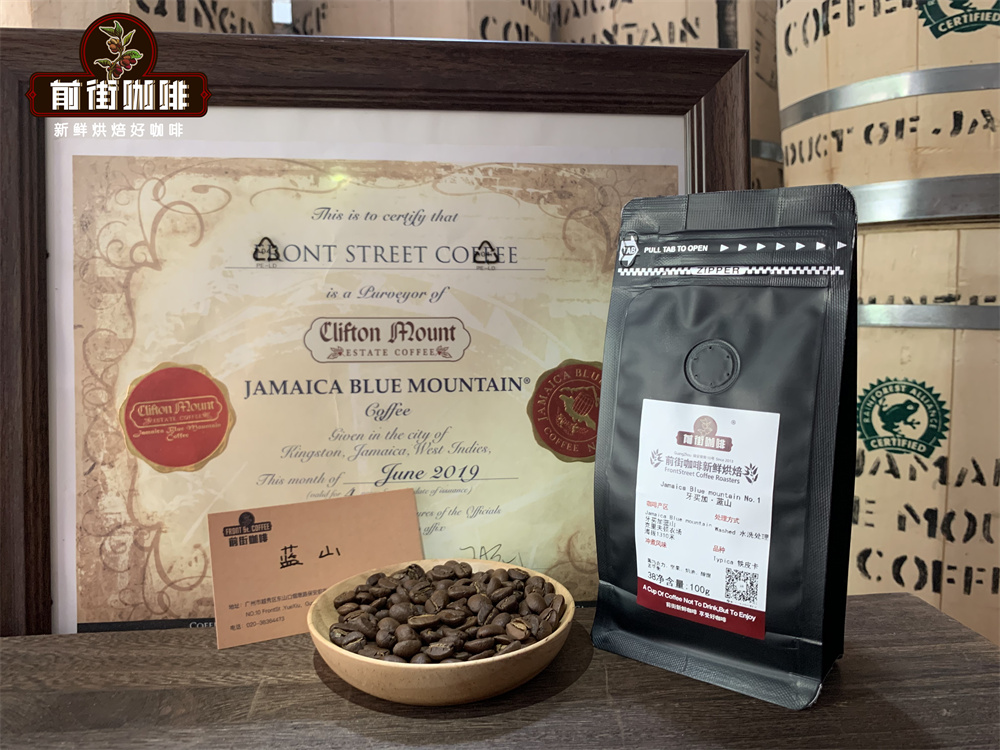
Authentic Blue Mountain coffee is always shipped for export in wooden barrels, available in three specifications: 15 kg, 30 kg, and 70 kg. At the same time, the Jamaican government or the coffee origin authority will issue a certificate of authenticity, so it is worth paying extra attention when purchasing. At Front Street Coffee's physical store, you can see the actual barrels as well as the origin certification.
In order to let consumers enjoy Blue Mountain No. 1 coffee of consistent quality over the long term, Front Street Coffee has chosen Blue Mountain No. 1 coffee beans from Clifton Estate, the oldest and one of the larger coffee plantations in Jamaica's Blue Mountain range.
This estate is an ancient coffee origin in Jamaica that is still in normal operation today, and throughout all of Jamaica, only Clifton Farm holds the "Rainforest Alliance Sustainable Certification." This certification means the farm has met the corresponding standards in environmental responsibility, social fairness, and economic development, so its exported Blue Mountain coffee barrels bear the green frog logo.
Clifton Farm's coffee cultivation and production history can be traced back to the mid-eighteenth century, beginning around 1750. The farm's cultivation and processing areas have an average elevation of 1,310.64 meters; sufficient altitude, gentle afternoon mist and clouds providing shade for the mountain forests, abundant sunshine, and mineral-rich soil together create a good growing environment for the coffee trees and also extend the ripening cycle of the coffee fruit, ultimately producing clean-flavored Blue Mountain coffee beans.
In response to diverse market demand, some estates have begun releasing small natural-process batches of Blue Mountain. However, Front Street believes that washed Blue Mountain coffee has a clearer flavor and best presents the classic Blue Mountain style. If you are trying it for the first time, it is recommended to start with washed Blue Mountain coffee.
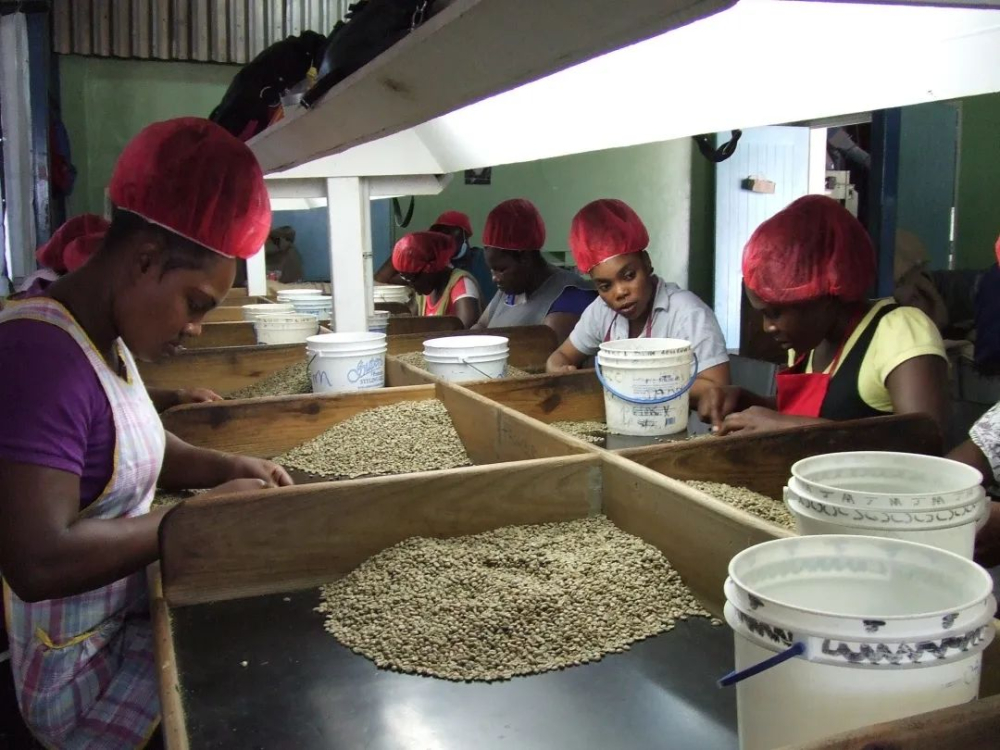
The hand-picked fresh coffee cherries are first put into water to remove floating defective beans, then the skin and pulp are removed, and the beans are left to ferment in tanks for 12 to 18 hours. After fermentation is complete, the beans are pushed back and forth in the tank, using the friction between the beans and the force of the water to wash the coffee beans until they are smooth and clean. They are then spread out in the sun to dehydrate and dry; once the moisture content drops to 12% to 14%, they can be packed and stored in the warehouse, and sent for quality inspection before export. The washed process greatly reduces the defect rate, better restores the aroma of the Blue Mountain coffee beans themselves, and delivers greater cleanliness in the cup.
To match the public's conventional impression of Blue Mountain coffee as mellow and rich, Front Street Coffee roasts Blue Mountain coffee to a medium-dark level, increasing body and enhancing the sweet aftertaste while retaining a touch of fruit acidity to enrich the coffee's layers.
The darker the roast of the coffee beans, the faster the coffee substances dissolve. To avoid over-extraction, Front Street uses a lower water temperature for extraction and also selects the slower-flow Kono dripper, aiming to extract as fully as possible under low-temperature conditions.
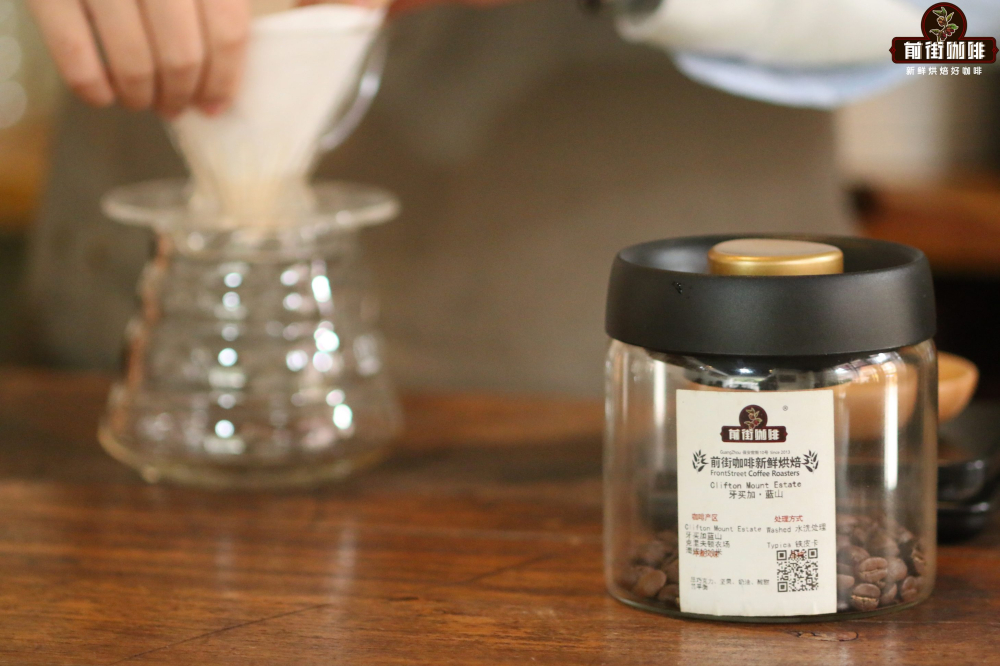
To let Blue Mountain coffee show a gentle body, Front Street Coffee uses a KONO dripper, paired with medium-coarse grinding (coarse sugar size / 70% passing rate on China No. 20 standard sieve) and a water temperature of 88 to 89 degrees Celsius for brewing.
The extraction method is as follows: in the first stage, pour 30 grams of water for blooming, with a blooming time of 30 seconds; in the second stage, pour until the water volume reaches about 125 grams, then wait for the coffee liquid to drop; when it has dropped by half, pour the final stage of water up to 225 grams, and end extraction after all the coffee has dripped through; the total extraction time is generally about 2 minutes 10 seconds.
"Front Street Coffee Blue Mountain No. 1 pour-over coffee flavor performance: rich black chocolate and nutty flavors, a creamy smooth mouthfeel, and a balance of acidity, sweetness, and bitterness.
The above content is compiled by CoffeeHunters, a coffee news website.


