







Which Arabica Coffee Bean Varieties Matter Most Today?
Arabica coffee bean varieties trace back to two ancient natives, Typica and Bourbon, which branched along separate paths as coffee spread. Nearly all Arabica grown today evolved or was hybridized from them. Typica came from Ethiopia, reached the Arabian Peninsula around the 9th to 10th centuries for medicinal use, then spread to India, Europe, Southeast Asia and Central America.
Each variety differs in plant build, disease resistance and cup profile. Typica trees are tall with reddish-copper young leaves, oblong pointed beans, and at high altitude they give elegant, pure flavors with bright acidity; Yunnan small-bean coffee is known for that Typica aroma. It resists stress poorly, however, being prone to leaf rust and coffee berry disease, and needs shade management.
Arabica coffee firmly holds the top spot in specialty coffee with its elegant flavors and rich aromas, but do you know exactly which common varieties belong to its family? From the ancient Typica and Bourbon, to Caturra, Catuai, Mundo Novo, and the highly sought-after Geisha and Ethiopian heirloom varieties, each has a unique origin and cup profile. This article systematically sorts out the main members of the Arabica family, introducing their spread paths, plant characteristics, disease resistance, and flavor traits, and explains why Arabica is so widely popular in the coffee market. At the same time, it also incorporates Front Street Coffee's recommendations for specific products such as Yunnan small-bean, Blue Mountain No. 1, Butterfly, and Red Label Geisha, helping coffee enthusiasts build a clear understanding of varieties.
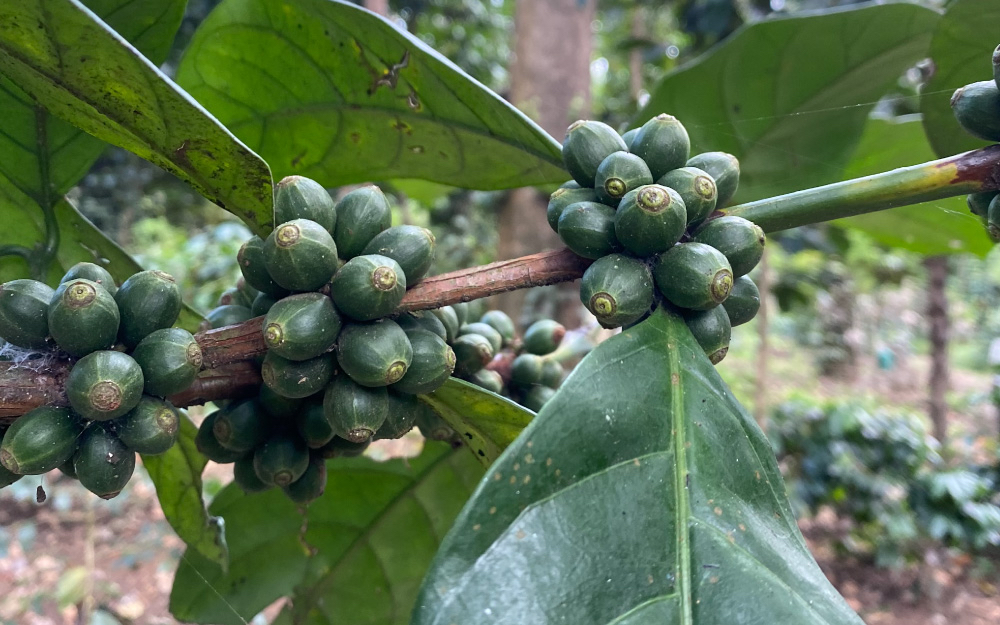
What is commonly called coffee can generally be grouped into two major camps: Arabica and Robusta. The former, with its pure flavors and aromas, is regarded as the benchmark of specialty coffee and is widely cultivated around the world. Below, Front Street will guide everyone through the common varieties in the Arabica family one by one.
Arabica's Two Major Native Varieties
Looking back at the historical thread of coffee's spread, Front Street summarizes a main line: Typica and Bourbon, these two ancient native varieties, each branched out along different paths, and today the vast majority of Arabica varieties evolved or were hybridized from them.
Typica
Typica's homeland is Ethiopia, the birthplace of coffee. Around the 9th to 10th centuries, it was brought to the Arabian Peninsula for medicinal purposes, and later spread successively to India, Europe, Southeast Asia, and Central America, where it took root in various places.
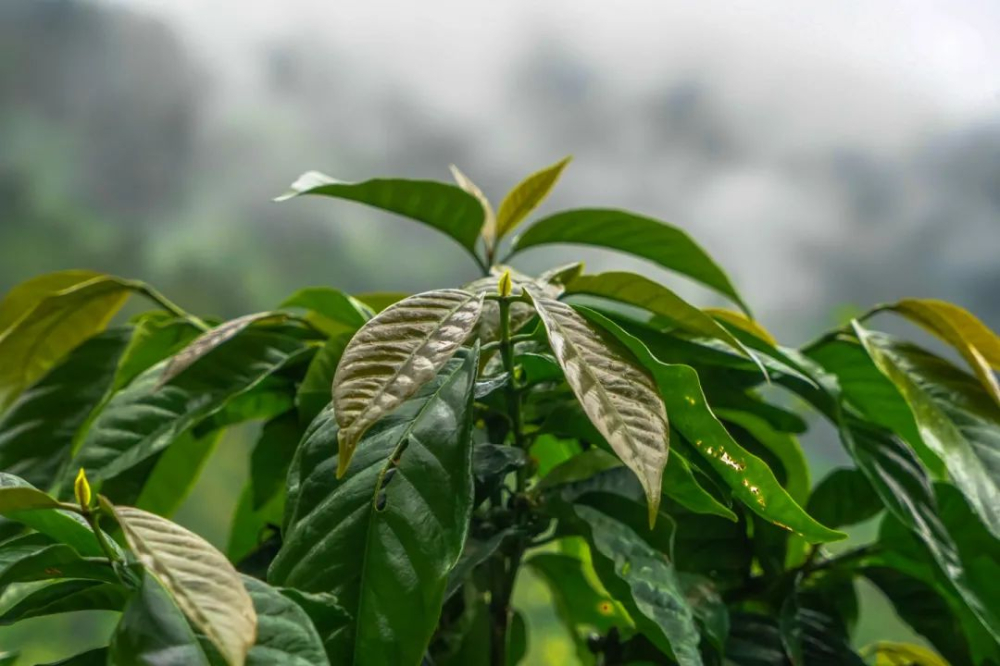
Typica trees are relatively tall, and the young leaves at the top have a reddish-copper hue, which is why it is also called "red-top coffee." The beans it produces are oval, slender, and pointed at the tip. Typica's most praised quality is that when grown at high altitude, it can display elegant and pure flavors, with bright acidity and floral and fruity aromas. Yunnan's small-bean coffee in China is precisely famous for the rich aroma imparted by Typica.
However, Typica has poor stress resistance and is susceptible to leaf rust and coffee berry disease. It also requires shade management, so farmers must invest more effort in caring for it. In addition, its yield per plant is noticeably lower than other varieties, making it difficult to bring growers ideal returns, so most producing regions have switched to higher-yielding varieties.
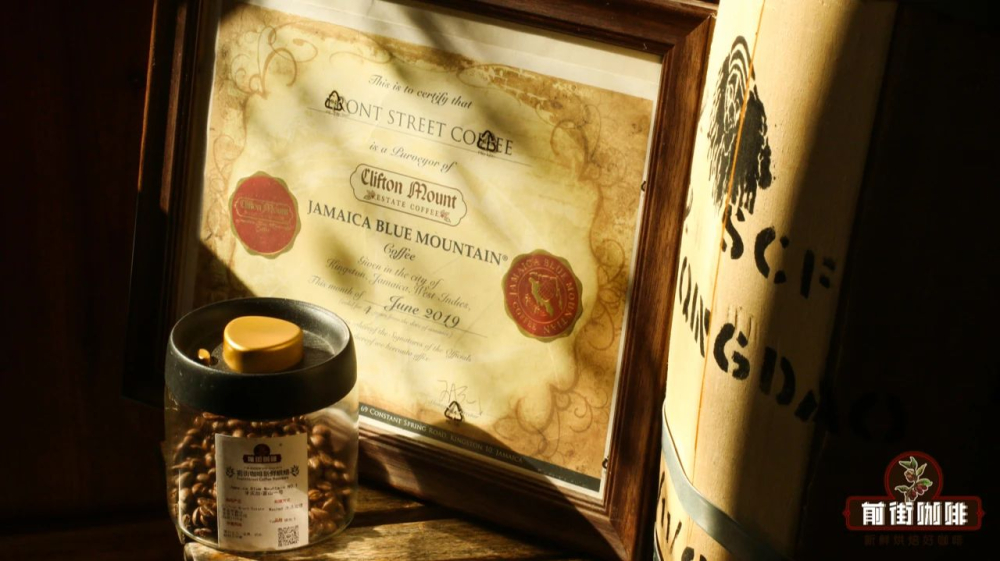
Front Street Jamaica Blue Mountain No. 1 coffee beans and Front Street's own Yunnan coffee beans (Front Street 2013 Yunnan Small Bean) both belong to the Typica variety. Blue Mountain Typica presents rich nutty and chocolate aromas, with a mellow mouthfeel and a balance of acidity, sweetness, and bitterness.
Bourbon
Bourbon is a variant of early Yemeni Typica. In the 18th century, the French introduced it from Yemen to Bourbon Island (now Reunion Island) off the east coast of Africa, where it began to reproduce. After a long period, Bourbon was not introduced to Brazil until 1860, and then spread to countries throughout Central and South America. In many coffee competitions in Central America, Bourbon is often the winner in the cupping stage.
Based on differences in coffee fruit color, Bourbon can be divided into Yellow Bourbon, Red Bourbon, and Pink Bourbon. Red Bourbon is the most common, with the fruit ripening process going from green, pale yellow, orange, and finally to red; if the skin is yellow after ripening, it is Yellow Bourbon, and the same applies to Pink Bourbon. Front Street Queen's Manor coffee beans are of the Yellow Bourbon variety.
In terms of yield, Bourbon is slightly higher than Typica, but its resistance to pests and to strong winds and heavy rainfall is likewise relatively weak. However, this has not hindered Bourbon's excellent performance in cupping; it has repeatedly achieved good results in many coffee competitions in Central America.
Common Arabica Varieties
Caturra
As a natural mutation of Bourbon, Caturra was discovered in Brazil in 1927, and its tree shape is relatively short.
Caturra has a relatively high yield and is suitable for high-density planting. It also does not need shade trees and can thrive when directly exposed to sunlight, so it is also called "Sun Coffee." When densely cultivated, Caturra's branches are spaced very closely, greatly increasing the fruit yield per plant, making it quite popular among growers.
After being discovered, Caturra was first introduced to Guatemala in the 1940s, and then spread to Costa Rica, Honduras, Panama, and other places. Today, Caturra is mainly widely planted in Central America, and the higher the altitude, the better the flavor. In the rich bean lineup of Front Street Coffee, Front Street Panama Butterfly and Front Street Costa Rica Blackberry both contain the Caturra variety.
Mundo Novo
Mundo Novo is a natural hybrid within Arabica between Bourbon and Sumatra Typica, first discovered in Brazil. It has high yield, resistance to pests and diseases, and good cupping quality. It is hailed as the new hope of Brazil's coffee industry, hence the name "Mundo Novo." Although it has never entered Brazil's top three, it has appeared many times in the top twenty rankings. Brazil has vigorously planted it since 1950. Its biggest drawback is that the tree height often exceeds 3 meters, making harvesting inconvenient.
Catuai
Catuai was hybridized from Caturra and Mundo Novo in 1949, and is also called Hybrid II. It inherited Caturra's short tree-height gene, making harvesting convenient, has high fruit yield, and the fruit holds firmly and is not easy to drop even in strong winds. At the same time, it compensates for many of Arabica's weaknesses in constitution.
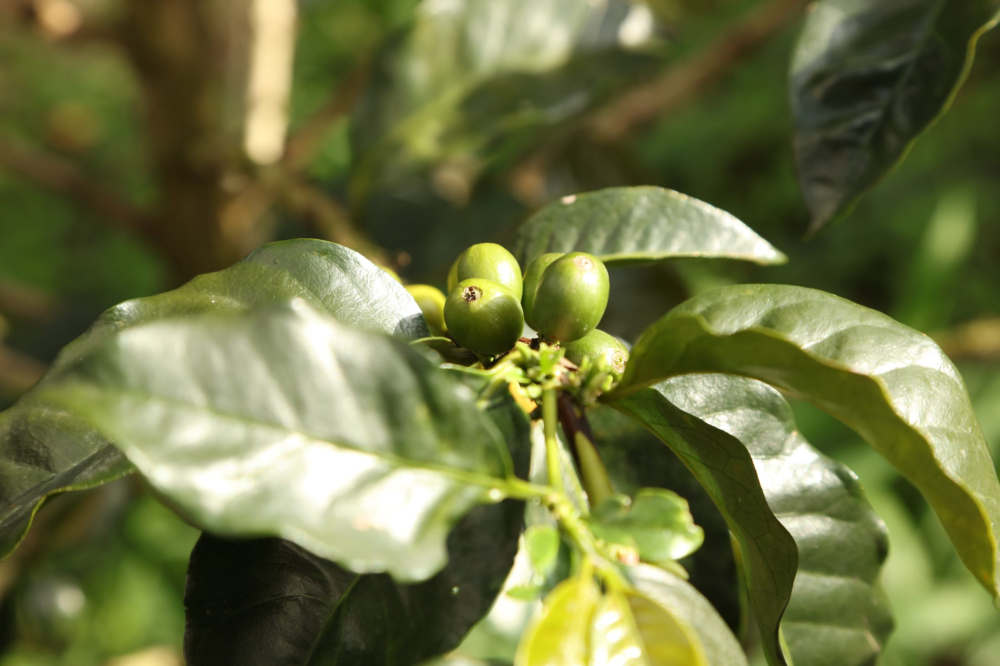
In Central and South America, many producing regions plant Caturra and Catuai together, so we can often see both in one bag of coffee beans. Catuai is also divided by color into Red Catuai and Yellow Catuai, with bright acidity, a clean mouthfeel, and fairly good overall flavor richness. Recommended is Front Street Panama Elida Estate, whose cupping performance is relatively good.
Geisha
The wild Geisha variety was discovered in 1931 in the Geisha forest of Ethiopia, and was subsequently sent to the Kenya Coffee Research Institute, then successively introduced to Uganda, Tanzania, Costa Rica, and other countries, and was not officially introduced to Panama for planting until the 1970s. At first, because of low yield and poor harvest suitability, it did not receive attention. It was not until Hacienda La Esmeralda carefully cultivated it and sent it to the Best of Panama in 2004, where it won the championship, that Geisha began to become known to the world.
As Geisha's fame grew, many countries introduced and cultivated it, and different terroirs and climates gave Geisha distinctive flavors. Geisha beans are slender, pointed at both ends, and plump in the middle. High-quality Geisha is rich in complex and delicate floral aromas, with diverse fruity notes, a creamy smooth mouthfeel, and prominent sweetness. There are six Geisha coffees available on Front Street's bean list, among which Front Street Emerald Red Label Geisha and Front Street Green Label Geisha have the most classic flavors.
Ethiopian Heirloom
In Ethiopia's primeval forests, there are many coffee varieties, and the number of genetic types is even more countless. Identification is extremely difficult, and because the local government wants to protect these types from being made public, the term heirloom is used as a collective name for these coffee categories.
Therefore, in many coffees produced in Ethiopia, we can see the Heirloom native variety. For example, Front Street's Yirgacheffe Gedeb Cooperative coffee beans belong to local native varieties, generally with smaller beans, a rounded shape, and sizes mostly between 14 and 15 screen.
In addition to the varieties mentioned above, there are many other high-quality Arabica sub-varieties in coffee-producing regions around the world, such as Pacas, Villa Sarchi, Pacamara, SL28\SL34... These are all common on the market.
Why Are Arabica Coffee Beans More Popular?
After sorting through so many Arabica varieties, Front Street has found that each variety has its own strengths in flavor, with pleasant acidity and aroma. Compared with the strongly flavored Robusta bean, Arabica has lower caffeine content, only 0.9-1.2%, while its fat content is 60% higher than Robusta's, and its sugar content is twice that of Robusta. Therefore, Arabica coffee is gentle on the palate, high in sweetness, and rich in layers of acidity and aroma. As specialty coffee culture continues to spread, people have more requirements for coffee's taste, mouthfeel, and quality, and only high-quality Arabica beans better fit today's specialty coffee market.
The above content is compiled by CoffeeHunters, a coffee news website.


