








How Did Bolivian Coffee Development Move Toward Specialty Grades?
Bolivian coffee comes from a landlocked South American country ringed by high mountains, where growing altitudes sit lower than those of neighboring producers. Despite that, the country has moved into specialty coffee, reaching strong scores at COE competitions. The cup shows deep sweetness and soft acidity, with Typica and Caturra planted alongside the Java variety.
Bolivia borders Brazil to the north and Peru to the west, and its capital La Paz sits at 3,660 meters, too cold for Arabica. Coffee instead grows in the Yungas region northeast of La Paz, where lower altitudes connect to basins with fertile soil. Cultivation dates to 1880, and the shift from the old Death Road export route to modern specialty production reshaped the country's coffee bean process and reputation.
In the central part of South America, there is a landlocked country surrounded by high mountains—Bolivia. Although its coffee-growing altitude is lower than that of its neighbors, thanks to its unique natural environment and continuous efforts toward specialty coffee, Bolivian coffee is gradually coming into the view of coffee lovers around the world. From the once treacherous "Death Road" to today's high scores at the COE competition, from Typica and Caturra to the uniquely flavored Java variety, this land produces coffee with deep sweetness and soft acidity. In this article, Front Street Coffee will take you into a deeper understanding of Bolivia's coffee geography, history, regional flavors, and this Valiki Estate Cacao Natural Java that Front Street has roasted and cupped, exploring its charming allure woven from ferment notes and floral-fruity aromas.
For more specialty coffee knowledge, please follow the WeChat official account: Front Street Coffee (FrontStreet Coffee)
Central and South America have long been famous for producing high-quality coffee, and Bolivia, located in the central part of South America, has long received insufficient attention because its coffee-growing altitude is generally lower than that of other South American producing countries. However, Front Street Coffee believes that a lower altitude does not mean Bolivian coffee is mediocre in quality. The country has beautiful natural scenery and abundant natural resources, making it a "paradise" for coffee cultivation. In this article, Front Street Coffee (FrontStreet Coffee) will take you into the world of Bolivian coffee.
Bolivia's Geography Bolivia is located in the central part of South America, with its north bordering the major coffee-producing country Brazil and the mysterious coffee country Peru. This country is known as the "Country of High Mountains," and the capital La Paz sits at an altitude of 3,660 meters. Even Arabica, which loves high altitudes, cannot grow in such a cold highland area. However, the Yungas region northeast of La Paz is connected to basins, has a relatively lower altitude, and has fertile soil, making it very suitable for growing coffee. Therefore, Bolivia is a country where coffee develops toward "lower altitudes."
Bolivia's Coffee-Growing History Bolivia has a fairly long history of coffee cultivation, traceable to 1880, when it basically operated in the form of large farms. Later, from 1932 to 1983, Bolivia suffered internal and external troubles and political turmoil, and the coffee-growing industry stagnated or even regressed. In 1991, after the situation stabilized, the government encouraged Indigenous people to participate in coffee-growing programs in order to revitalize the economy, but at that time coffee quality was not placed in an important position. Due to the country's lagging infrastructure construction, transportation difficulties also limited the development of the coffee industry in Victoria.
Bolivia's Coffee-Producing Regions Bolivia's main coffee-producing region is the Yungas area, where infrastructure is relatively backward and there is a lack of large washing stations. After the coffee cherries ripen, farmers must transport them immediately after picking to La Paz at a higher altitude for processing, and the road from Yungas to La Paz is steep and dangerous, known as the "Death Road." During transportation, the coffee cherries are prone to fermentation and rot, producing pungent and other undesirable flavors.
Flavors of Bolivia's Producing Regions Through cupping Bolivian coffee beans, Front Street has found that coffee produced at high altitudes usually has a deep and full sweetness, soft citrus acidity, and undulating black fruit and berry flavors; while coffee from relatively lower altitudes shows a balanced mouthfeel, excellent chocolate sweetness, soft acidity, and malt and dried fruit flavors.
A Marker of Bolivian Coffee's Shift Toward Specialty Before the 21st century, Bolivian coffee had all the advantages of timing and geography, lacking only the human factor. Between 2000 and 2004, the United States Agency for International Development, on the one hand needing to curb drugs and on the other recognizing Bolivia's coffee development potential, invested in building a large washing station and supporting facilities in the Yungas producing region, ending the "Death Road" that had lasted more than 100 years. Coffee experts from Panama also came to assist Bolivia's coffee industry. They believed that only by developing high-quality specialty coffee could coffee farmers be led toward prosperity, so they established the "Central Coffee Producers Association" in Caranavi in the Yungas region, aiming to improve coffee quality.
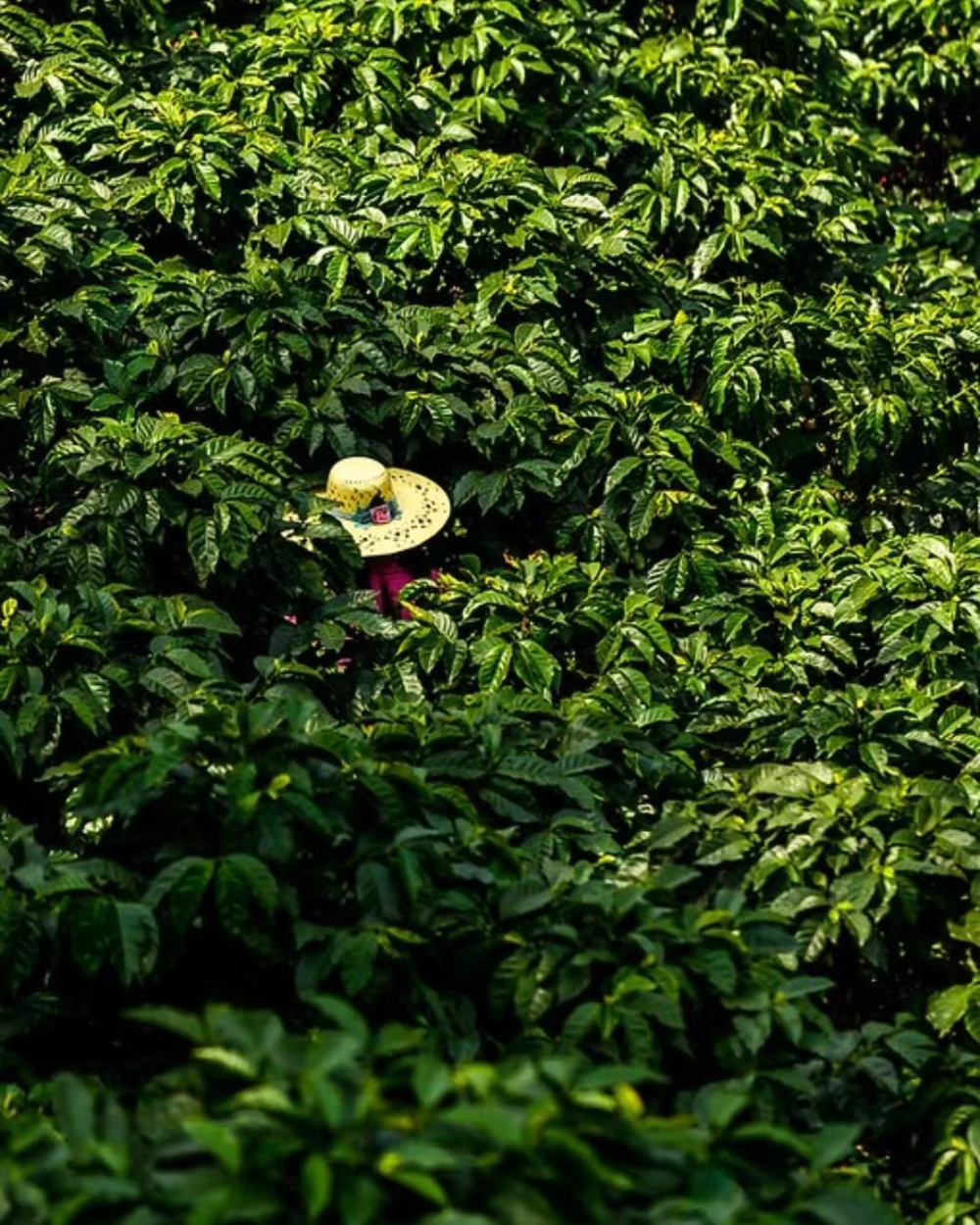
In 2004, Bolivia held its first COE Cup of Excellence competition, with a total of 13 specialty lots scoring above 84 points, among which the champion lot reached as high as 90.44 points, marking the first international recognition of Bolivian coffee. At the 2017 WBC (World Barista Championship), Japanese competitor Miki Suzuki used Geisha from Bolivia and, with superb skill and the profound flavors of Bolivian coffee, won the world runner-up title.
Tomorrow's Sun Plan This is a plan to comprehensively improve Bolivian coffee. It requires investing a large amount of funds and effort to guide small farmers, covering technical support, breeding, pruning, harvesting, and various other important techniques, and it purchases small farmers' coffee at high prices, allowing farmers' income and quality to enter a virtuous cycle of sustainable operation. The Rodriguez family visits all members of the Tomorrow's Sun Plan project every month, providing them with personalized technical assistance and agricultural advice. Even the simplest advice can bring great help.
As coffee farmers' production capacity continues to improve, the Rodriguez family emphasizes to them that they should continue to focus on quality rather than quantity. They also teach coffee farmers to take good care of what they have and make full use of it to maximize production. The Rodriguez family also holds seminars throughout the year with top agronomists. These seminars allow coffee farmers to meet one another, share experiences, and discuss ways to solve the problems they encounter.
Coffee Varieties Grown in Bolivia Bolivia mainly grows Arabica, primarily Typica, Caturra, and Catuai, and also grows varieties such as Geisha, SL-28, and Java. The entire country uses organic cultivation methods, and coffee quality is relatively high. The variety locally called long bean in Bolivia is named for its slender bean shape, and its formal name should be Java. Java is a very interesting bean variety. As the name suggests, it has a strong connection with Indonesia, but in fact Java was originally a coffee tree species born in the primitive forests of Ethiopia, collected by local ethnic groups, and later spread through Yemen to Indonesia, where it was named Java. People originally generally thought Java was a variant of Typica, but after genetic comparison it was found that Java is actually the coffee variety Abysinia from Ethiopia.
After being introduced to Indonesia, the Java variety first spread to the nearby Timor island group, and then to Cameroon in East Africa, where it was first released for farmers to grow in 1980. As for its introduction to Central and South America, under the leadership of breeding expert Benoit Bertrand, it was introduced to Costa Rica in 1991 through CIRAD (the Centre de Cooperation Internationale en Recherche Agronomique pour le Developpement). The first Central American country to officially recognize the Java variety was Panama. Java's fruit and seeds are both very long, the young shoots are bronze-colored, and the plant is quite tall, but its yield is low. Because of its outstanding flavor, not inferior to Geisha, and its stronger resistance to leaf rust and coffee berry disease, it is very suitable for small farmers to grow.
Front Street Coffee (FrontStreet Coffee)—Bolivia Valiki Estate Cacao Natural Java
Coffee-producing region: La Paz, Valiki Estate Growing altitude: 1,600 meters Coffee variety: Java Processing method: Cacao natural processing
Cacao Natural Processing During the harvest season, the estate hires pickers from the Bolinda community to carefully select coffee cherries during picking. These pickers are trained to select only ripe coffee cherries, and during the harvest season the estate picks in multiple rounds to ensure that the coffee cherries are picked at optimal ripeness. The estate uses crates, which ensure that the coffee is not damaged during transport and also allow the coffee cherries to remain ventilated, thereby preventing unnecessary early fermentation.
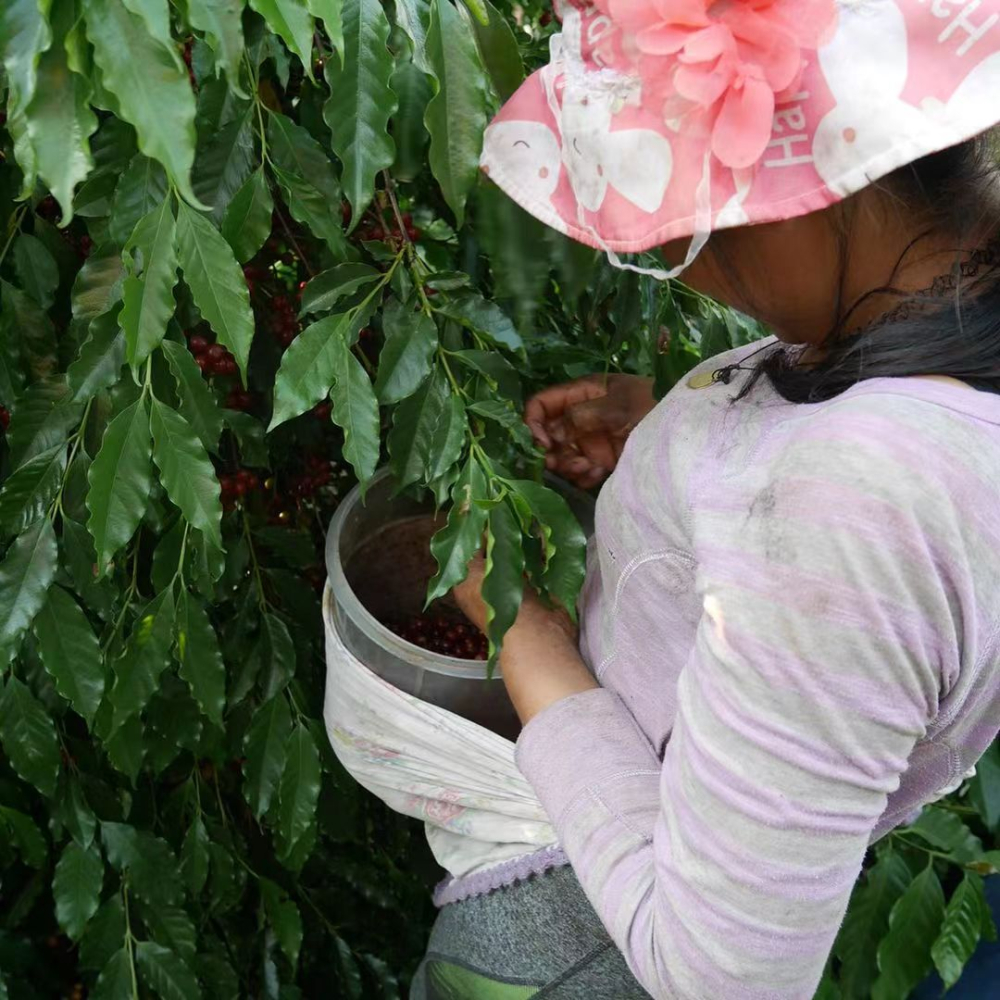
After selection and weighing, the coffee cherries are carefully washed and placed on raised African drying beds to dry, then turned every hour. After about a week, the coffee cherries are placed into a cacao dryer. Cacao dryers had never been seen used for coffee bean processing before, but Pedro of the Rodriguez family has always been innovating and trying different processing techniques, and discovered that a cacao dryer can dry coffee beans slowly and continuously at low temperature, thereby reducing the impact of weather conditions. After the coffee beans are dried, they are transported to La Paz to rest, and then hulled at Agricafe's dry mill La Luna. At this facility, mechanical methods are used for careful coffee hulling and sorting; in addition, manual sorting under ultraviolet and natural light is also required.
Front Street Coffee (FrontStreet Coffee) Roasting Recommendations When roasting this cacao natural Java, in order to highlight the ferment notes brought by the processing method and the floral, berry, and nut characteristics of the Java beans themselves, Front Street's roaster used a medium-light roast.
Yangjia 800N, roasting amount 480g: charge at a drum temperature of 170°C, firepower 120, airflow opened to 3; turning point at 1'36", and when the drum temperature is 111°C, open the airflow to 4; when the drum temperature is 151°C, the bean surface turns yellow, the grassy smell completely disappears, and it enters the dehydration stage; when the temperature reaches 164°C, open the airflow to 5, the bean surface shows ugly wrinkles and dark streaks, and the toast smell clearly turns into coffee aroma, which can be defined as the prelude to first crack. At this time, listen clearly for the sound of the first crack. At 10'18", first crack begins, airflow remains unchanged, develop for 1'00'' after first crack, and drop at 190°C.
Front Street Coffee (FrontStreet Coffee) Cupping Report Front Street Coffee (FrontStreet Coffee) conducts cupping within 8-24 hours after the sample coffee beans are roasted. The cupping bowls generally used by Front Street Coffee (FrontStreet Coffee)'s baristas have a capacity of 200 ml ceramic bowls, marked with 150 ml and 200 ml scale lines. According to SCAA standards, the TDS of the water is about 150 ppm. Too low TDS easily causes over-extraction, while too high TDS affects the mouthfeel and easily causes under-extraction. The water temperature used for cupping is 94°. According to SCAA cupping standards, the grinding degree is controlled so that the passing rate through a No. 20 standard sieve (0.85 mm) is 70%-75%. Ratio: 11 grams of coffee grounds plus 200 milliliters of hot water, that is, 1:18.18, so that the extracted concentration falls exactly within the golden cup range of 1.15%-1.35%. Steeping time: 4 minutes.
Dry aroma: fermentation aroma Wet aroma: grape, ferment notes Flavor: ferment notes, grape, nuts, slight floral aroma, honey, cream
Front Street Coffee (FrontStreet Coffee) Brewing Insights For brewing medium-light roasted beans, 90-91°C is recommended. Using a slightly higher water temperature can extract the aromatic substances and acidity of light-roasted beans. Because medium-light roasted beans are harder in density, increasing the water temperature can improve the extraction efficiency of the coffee grounds and avoid unpleasant flavors such as sharp acidity.
Water temperature: 90-91 degrees Grind size: BG#6m (80% passing rate through No. 20 sieve) Coffee-to-water ratio: 1:15 Coffee dose: 15 grams Regarding grind size, Front Street determines it through sieving. Based on the grinding recommendations provided by the Specialty Coffee Association of America SCA for pour-over coffee, Front Street then verifies it in combination with practical operation. If there is no sieve at home, Front Street Coffee (FrontStreet Coffee) suggests judging by observing the flow rate: if the flow is too fast, the grind is coarse; if the flow is too slow, the grind is fine.

Front Street brewing method: Pour 30 grams of water in the first stage for a 30-second bloom, then pour 95 grams (the electronic scale shows about 125 grams), finishing the pour in about 1 minute. When the water level drops to 2/3 of the coffee bed, pour the remaining 100 grams (the electronic scale shows about 225 grams), finishing the pour in about 1 minute 40 seconds. Dripping is completed at 1'55"-2'00". Remove the dripper and finish extraction. Brewing flavor: slight ferment notes, grape, slight nuts, floral aroma, medium acidity, juicy mouthfeel.
The above content is compiled by CoffeeHunters, a coffee news website.


