







What Makes Yellow Bourbon Coffee from Queen's Farm Stand Out?
Brazilian coffee is usually known for low acidity and full body with nutty and chocolate notes, often used as an espresso base. Yellow Bourbon coffee from Queen's Farm shows the country can also produce specialty-grade lots, with natural processing and a medium-dark roast delivering dark chocolate, cream, peanut, sugarcane, and nut flavors.
Queen's Farm sits in the Mogiana region of São Paulo, near southern Minas, at 1,400 to 1,950 meters. That altitude is higher than much of São Paulo, creating greater temperature variation and better coffee quality. The rolling terrain means cherries are mostly hand-picked, and the farm mainly exports Bourbon variety specialty coffee, which gives the cup more depth than typical commercial Brazilian beans.
Brazilian coffee has always been known for its low-acid, full-bodied nutty and chocolatey character, and is often used as the base for espresso blends. But Brazil doesn't only have commercial beans—specialty-grade Yellow Bourbon can also deliver stunning performance. This article will walk you through the origins of the Yellow Bourbon variety, take a deep dive into Queen's Farm in the Mogiana region, break down the secrets of its natural processing and medium-dark roast, and share Front Street Coffee's brewing parameters and flavor experience, offering a practical Brazilian single-origin guide for those who love a rich, full-bodied taste.
For more specialty coffee knowledge, please follow our WeChat official account: Front Street Coffee (FrontStreet Coffee)
Brazilian coffee is mostly grown on low-altitude flatlands using the sun-dried method. The lack of microclimates, combined with batch harvesting and processing, creates coffee with a low-acid, full-bodied nutty and chocolatey flavor profile, widely used in espresso recipes. Some may think such Brazilian coffee is too one-dimensional in flavor and mostly falls into the commercial grade, but Brazil also has specialty-grade quality coffee. We recommend Front Street's Brazil Queen's Farm coffee beans, featuring the exquisite Yellow Bourbon variety, naturally processed—a Brazilian single-origin coffee with excellent value for money.
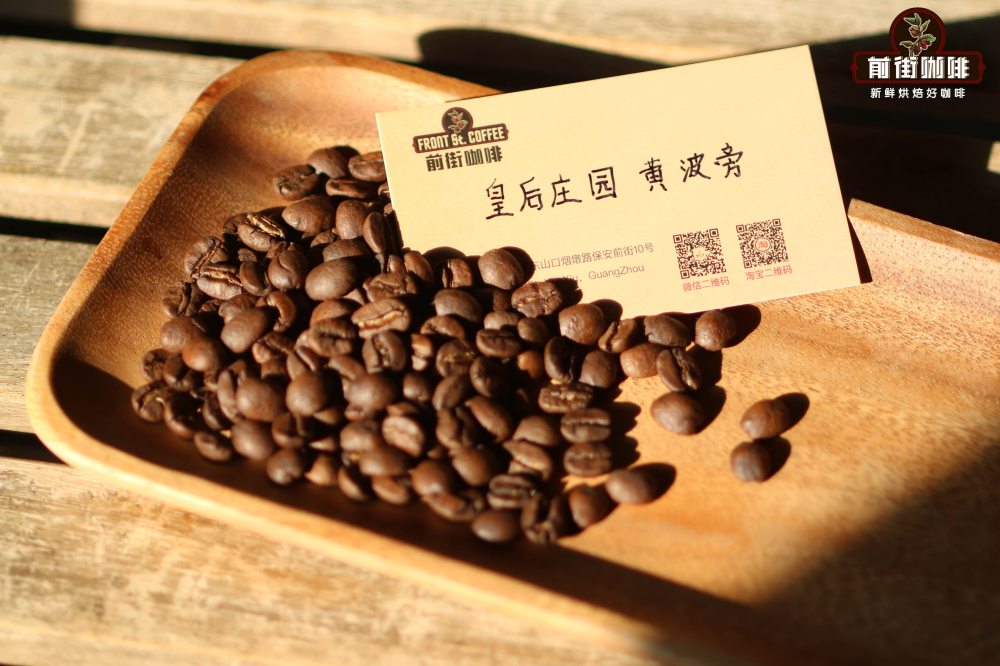
Front Street Coffee (FrontStreet Coffee) Brazil Queen's Farm Coffee Beans
Region: Brazil, Mogiana Region
Farm: Queen's Farm
Altitude: 1400–1950m
Variety: Yellow Bourbon
Processing: Natural
Flavor: Dark chocolate, cream, peanut, sugarcane, nuts
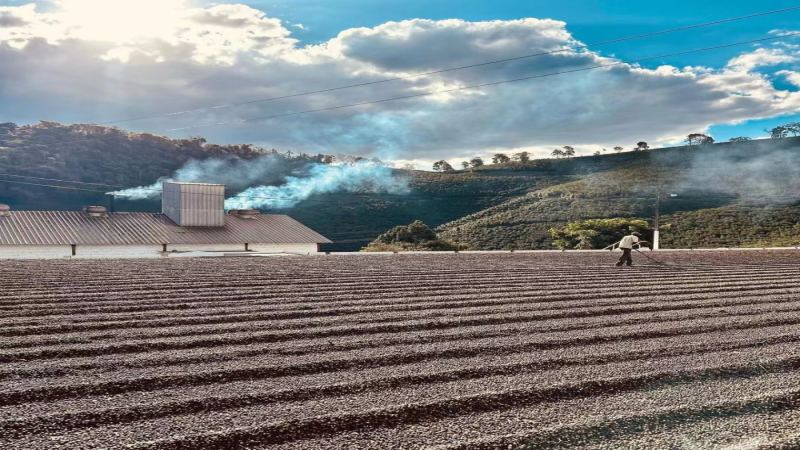
Queen's Farm is located in the Mogiana region of São Paulo, near southern Minas, and together with the Cerrado and South Minas regions, it is one of Brazil's three major specialty coffee regions. Unlike typical Brazilian coffee beans, Mogiana has a growing altitude of 1100–1250 meters, with terrain much higher than other parts of São Paulo, which also contributes to the rich aroma of Front Street's Brazilian coffee. The altitude difference creates greater temperature variation, resulting in higher coffee quality. At the same time, the rolling terrain means Queen's Farm mostly harvests coffee cherries by hand-picking, primarily exporting specialty coffee of the Bourbon variety. Among these, the exquisite Yellow Bourbon has earned Queen's Farm numerous top placements in many coffee competitions.
Yellow Bourbon is a Bourbon variant grown in Brazil. Common Bourbon cherries progress from flowering to ripe fruit, with color gradually shifting from green to slightly yellow, then red, and finally fully ripe dark red—hence the name Red Bourbon. Front Street's everyday Brazilian staple beans are selected from the traditional Red Bourbon variety, which after roasting carries chocolate and peanut flavors.
Yellow Bourbon, on the other hand, does not develop cherry-red fruit at maturity but instead turns orange-yellow, and was discovered in 1930. Later, research by the Campinas Agronomic Institute (IAC) found that plants with a dominant XcXc gene pair produce red berries; plants with a recessive xcxc gene pair produce yellow berries; and in rare cases, a plant with one dominant gene and one recessive gene (Xcxc) produces orange berries. Thus, the "yellow" of Yellow Bourbon is due to genetic color selection. Grown at high altitudes, Yellow Bourbon contains abundant fructose and can present a sweet, juicy flavor. It once swept Brazil's "Cup of Excellence" competition for two consecutive years, taking almost all of the top three awards, and took the specialty coffee world by storm!
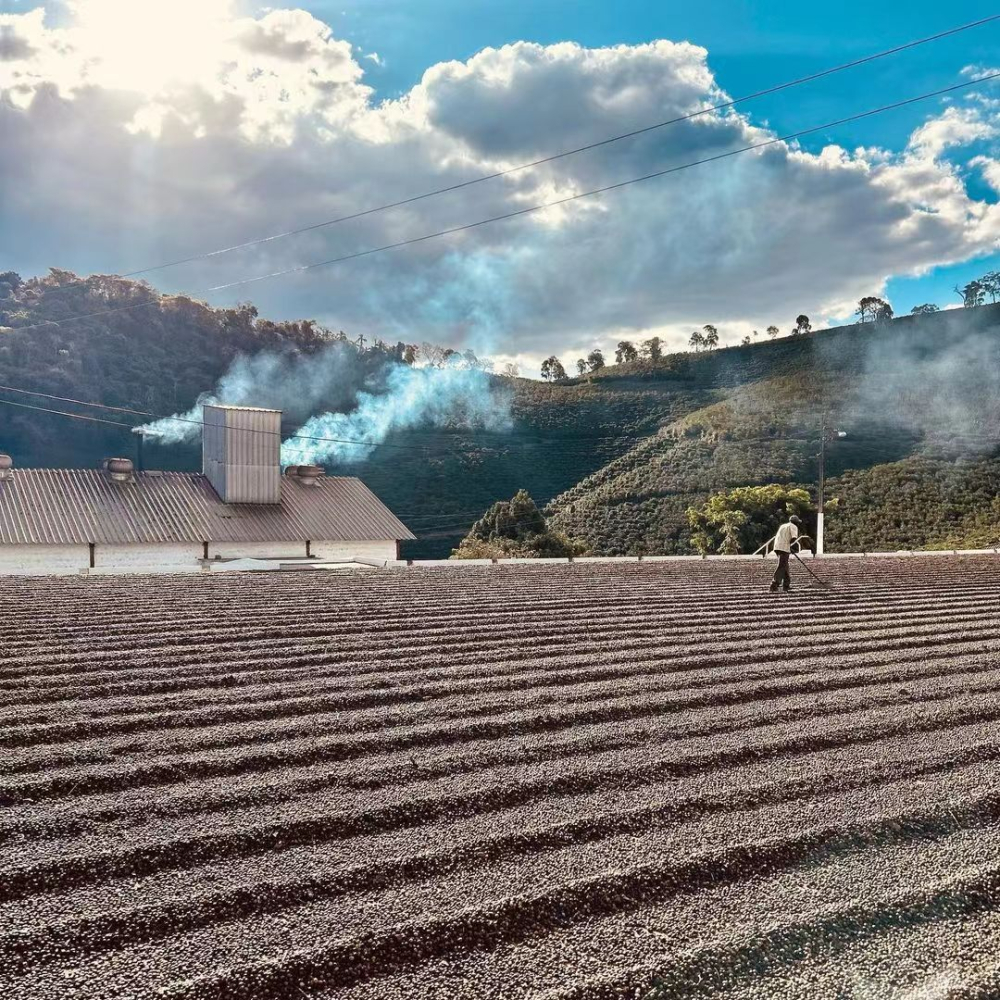
After harvesting ripe Yellow Bourbon coffee cherries, Queen's Farm uses natural processing, allowing the coffee cherries to absorb more sweetness from the pulp during drying. Brazil is located near the equator, and since the harvest season coincides with the dry season, coffee cherries are perfectly suited for direct sun-drying and dehydration.
However, the traditional "sun-dried method" is a very rough process—cherries are spread directly on dirt ground after picking, and the resulting coffee easily picks up earthy flavors, while uneven heating can produce negative over-fermentation notes. Queen's Farm first pours the coffee cherries into a water tank, using flotation to remove underripe cherries, then spreads the coffee in small batches on African raised beds with better airflow, turning them at irregular intervals, thereby avoiding earthy and over-fermented flavors, with sweetness reaching an even higher level than traditional natural processing.
For roasting, Front Street aims to highlight Queen's Farm's classic Brazilian flavor—that low-acid, full-bodied profile—so Front Street uses a medium-dark roast. Through cupping, Front Street tasted a very pronounced sweetness in this Queen's Farm coffee, so for brewing, a three-stage pour is used, hoping to present more layers in the coffee.
Since coffee beans enter their optimal flavor window 4–7 days after roasting, after this period (about a month and a half post-roast) the coffee's aroma may have already dissipated and some woody flavors may develop. To avoid this, as Front Street has mentioned in many articles, the most important thing is that Front Street only ships coffee beans freshly roasted within 5 days, so everyone can enjoy coffee with excellent flavor.
Dripper: Medium-dark roasted coffee beans mainly present a rich and rounded mouthfeel. For this characteristic, Front Street chooses the slower-flow KONO dripper for extraction. The upper part of the KONO is a smooth curve, and the lower part has guide ribs about one-third of its length. This allows the filter paper to fit more closely against the dripper, restricting airflow upward so hot water can only flow downward, creating a siphon-style extraction effect that allows the coffee grounds' aromatic compounds to be released more fully.
Medium roasting significantly changes the internal structure of the beans, making them looser, and when ground into coffee powder, they absorb water more readily. If brewing parameters aren't adjusted well, the coffee can easily over-extract and become bitter. To get enough aroma without over-extraction, the extraction rate needs to be lowered. Front Street uses a lower water temperature and a coarser grind to reduce the release of bitter large molecules in the coffee. Coffee grounds absorb about twice their weight in water. Front Street typically uses 15 grams of coffee powder, with a 1:15 coffee-to-water ratio, finally extracting close to 200ml of coffee liquid, i.e., 1–2 servings.
Dripper: KONO dripper
Water temperature: 87–88°C
Dose: 15 grams
Coffee-to-water ratio: 1:15
Grind size: Medium grind (70% passing through Chinese standard No. 20 sieve)
Wet the coffee bed with twice the amount of water as coffee powder to form a dome, and let it bloom for 30s. Then pour in a thin stream in a circular motion from inside to outside until reaching 125g, pause, and when the coffee bed drops to half the dripper's height, continue pouring the third stage with the same thin stream to 225g. Wait until all the coffee liquid has filtered through, then remove the dripper. Total time is about 2 minutes.
The hand-brewed Brazil Queen's Farm coffee smells of lemon, nuts, and peanut. On the palate, it is very rich with nutty, dark chocolate, and caramel flavors, with pronounced sweetness and a creamy, silky smooth mouthfeel—overall quite rounded.
The above content is compiled by CoffeeHunters, a coffee news website.


