








What Does the G1 Grade Mean for Indonesian Luwak Coffee?
Indonesia's green bean grading runs from G1 to G6, judged mainly by defect rate and secondarily by bean size, so a G1 lot carries the fewest defects. This matters for Indonesian luwak coffee because grade, not just origin, signals quality. Using PWN Golden Mandheling as an example, the label information can be read item by item to judge a lot.
Indonesia's variety landscape is unusually complex. Dutch colonists brought coffee in the seventeenth century, but leaf rust wiped out most Typica, and Tim Tim, Catimor, Caturra, S795, and Robusta were introduced to keep production going. Localized names multiplied, so beans are often sold by famous producing region rather than variety. The number of hand-sorting passes also affects what is kopi luwak and its final cup quality.
Indonesia is one of Asia's most important coffee-producing countries, yet its coffee variety system and green bean grading standards often leave enthusiasts confused. From the perspective of Front Street Coffee, this article systematically sorts out the historical causes of the complexity of Indonesian coffee varieties, explains in detail the G1 to G6 grading logic based primarily on defect rate and secondarily on bean size, and extends to the impact of the number of hand-sorting passes on quality. Using PWN Golden Mandheling as an example, the article interprets the packaging label information item by item, and also shares Front Street Coffee's roasting curve and KONO dripper brewing parameters, helping readers fully understand Mandheling coffee from origin to cup.
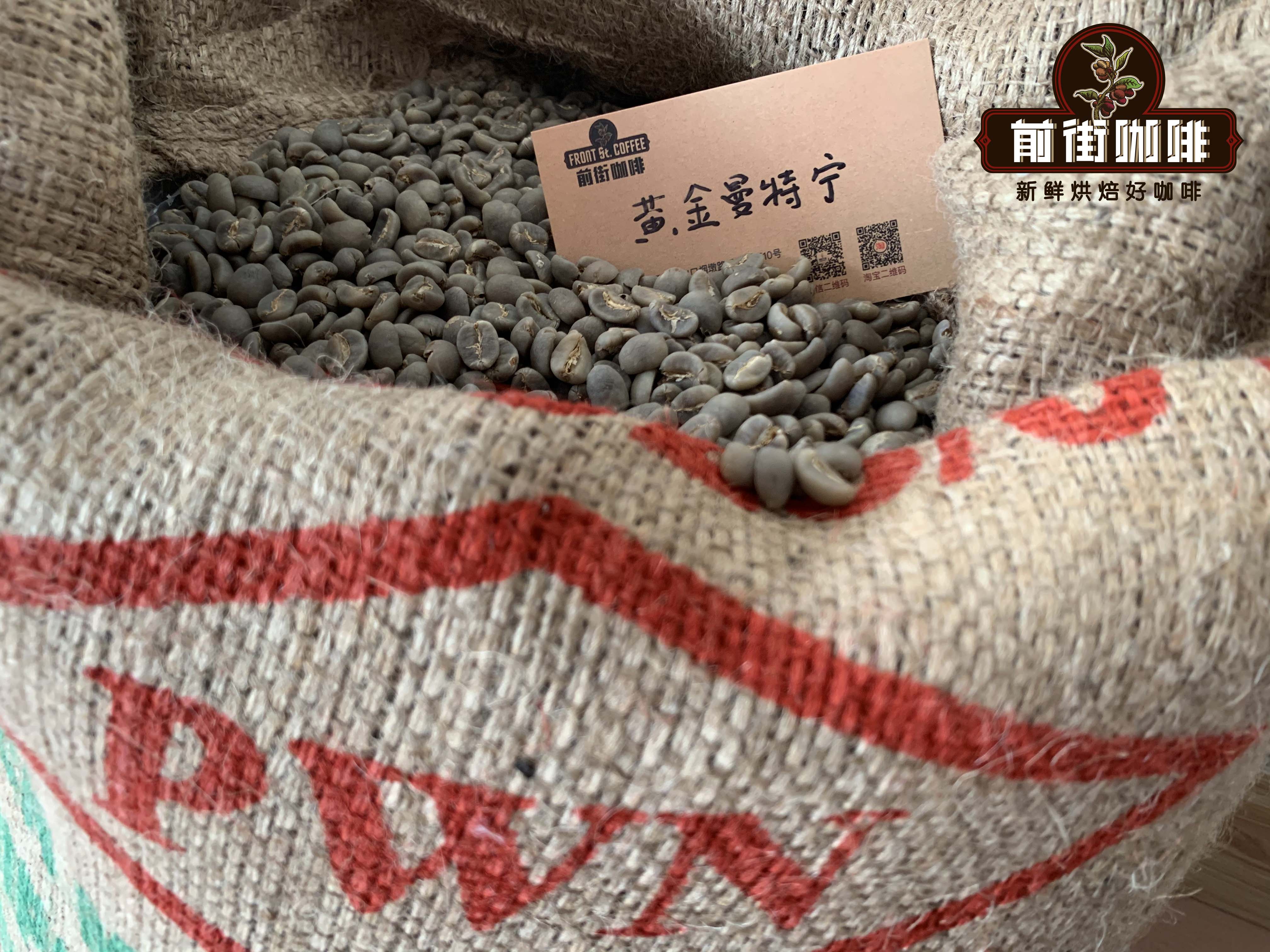
For more specialty coffee knowledge, please follow the WeChat public account: FrontStreet Coffee
Since Dutch colonists introduced coffee to the Indonesian archipelago in the seventeenth century, this Southeast Asian country's coffee-growing history has spanned several hundred years, and it now occupies a position in the international coffee landscape that cannot be ignored. It is precisely because of this special historical background that Indonesia's coffee variety pedigree appears especially complex, and its green bean grading system is likewise unfamiliar to the general public. Today Front Street Coffee (FrontStreet Coffee) will talk about how to identify the quality grade of Indonesian coffee.
Why are Indonesian coffee varieties so complex?
The root cause of Indonesia's current intricate variety landscape lies in the invasion of leaf rust. Most of the Typica planted by the Dutch back then declined due to disease, and in order to preserve production, disease-resistant varieties had to be introduced from surrounding regions. Tim Tim, Catimor, Caturra, S795, and Robusta successively entered Indonesia against this backdrop. However, local coffee farmers generally had limited cultivation knowledge, and after these varieties were distributed to farmers, many localized names emerged. For example, what is usually called the Tim variety is known locally in Indonesia as Tim Tim or Bor Bor.
Faced with such a diverse array of green bean varieties, it is difficult for Indonesia to name coffee by a single variety, so it distinguishes them according to historically famous producing regions. Generally speaking, coffee produced on Java is called Java coffee, Arabica coffee from North Sumatra is called Mandheling coffee, and the most famous coffee from Sulawesi is Toraja coffee—named after the ethnic group on the island known for cultivating coffee. There is also Kopi Luwak, named for its unique processing method.
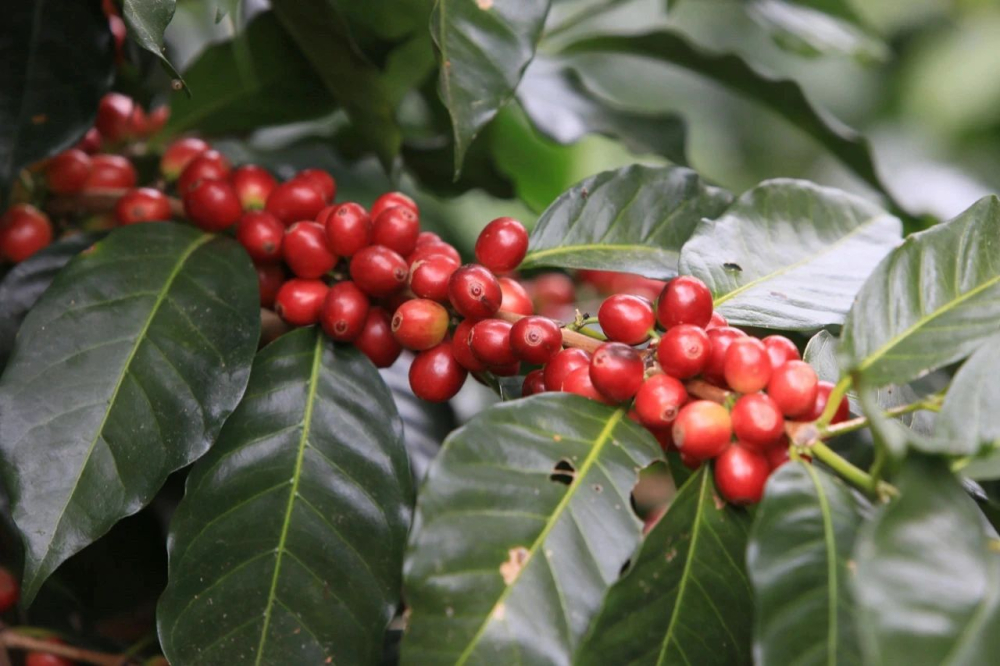
PWN's Golden Mandheling coffee beans are selected from the Gayo Mountain region of Aceh Province at the northern tip of Sumatra, and the variety is Ateng, which is the name given to Catimor after it was introduced to Aceh for cultivation; Ateng is also an abbreviation for Central Aceh.
Indonesia's complex green bean grading standards
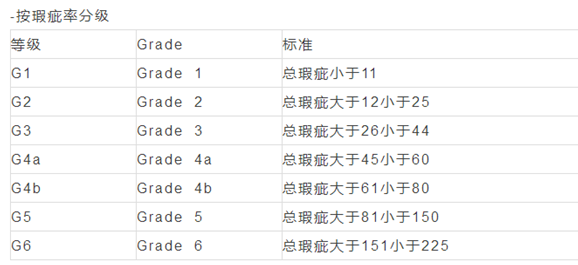
Such a complex green bean variety system has also given rise to Indonesia's complex set of coffee grade standards. Its grading standard is roughly based primarily on the number of defects and secondarily on coffee bean size. According to defect rate, it is divided into 6 grades, G1-G6.
Coffee bean size markings
Some higher-quality Indonesian coffees also indicate the coffee screen size; for example, Golden Mandheling is marked as 17 screen/18 screen.
Number of sorting passes
In addition to the above grading standards, some specialty-grade Indonesian coffees also undergo hand sorting, reflected on the label as Double Picked or Triple Picked. The reason is that Indonesia mostly uses the wet-hulled process, during which defective beans easily occur; the more hand-sorting passes, the better the coffee quality.
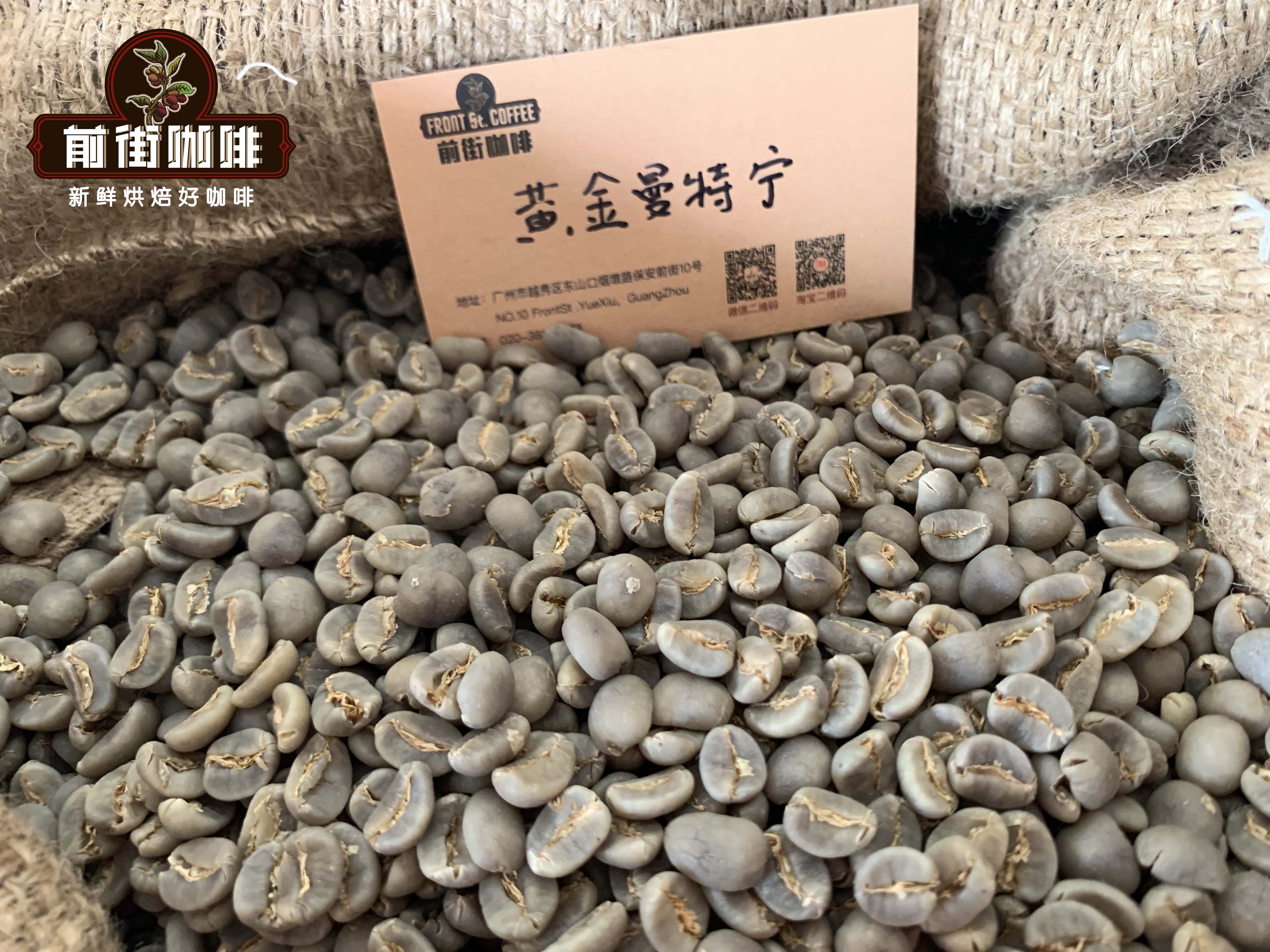
Front Street Coffee (FrontStreet Coffee) received a shipment in December 2020 of Golden Mandheling coffee from the new crop season of October that year. The packaging bags are printed with basic information about the coffee beans, so let's get to know it.
PWN: This is the logo of Pawani Company
GOLDEN MANDHELING: Golden Mandheling
TRIPLE PICKED: triple hand-sorted, reflecting its excellent quality
COFFEE ARABICA: Arabica coffee, referring to the coffee bean variety. PWN previously always selected coffee beans from the Lintong region (the variety being Typica), but in recent years, because coffee farmers in the Lintong region grafted tree varieties for yield and profit, yet quality dropped significantly, they now choose the producing region in the Gayo Mountains of Aceh, with the variety being Ateng.
GRADE 1: This is the standard of Indonesia's green bean grading system. G1 is the highest grade, with a total defect count of less than 11 beans in the green coffee.
PROD.OF INDONESIA: product of Indonesia, produced in Indonesia
30 KGS NET: 20 kilograms including the burlap sack
EXP: 10.2024: shelf life until October 2024, which also precisely confirms that this batch is from the October 2020 crop season.
Front Street Coffee (FrontStreet Coffee) roasting analysis
Golden Mandheling has a high-quality herbal aroma, a stronger caramel sweetness, and a relatively steady and elegant fruity acidity, with a rich sweetness and a mellow, wild spice flavor. Generally, Lintong Mandheling is best roasted until after second crack before being released, which can effectively reduce off-flavors, but Golden Mandheling has excellent transparency and sweetness even when released before second crack, and the room for roasting interpretation is broader.
Charge when the roaster temperature reaches 200°C, set the airflow to 3, adjust the heat to 160°C after 1 minute, keep the airflow unchanged, roast until 5'40 at 148°C, when the bean surface turns yellow, the grassy smell completely disappears, and dehydration is complete; adjust the heat to 140 and change the airflow to 4;
At 9'40, ugly wrinkles and dark blotches appear on the bean surface, and the toast aroma clearly turns into coffee aroma, which can be defined as the prelude to first crack. At this time, it is necessary to listen clearly for the sound of the first crack point. At 9'54, first crack begins; reduce the heat to 60, open the airflow fully (adjusting the heat must be done very carefully, not so low that there is no cracking sound), and release at 204.5°C.
Front Street Coffee (FrontStreet Coffee) brewing sharing
This brewing highlights the mellow, clean, and aromatic characteristics of Golden Mandheling, using a KONO dripper for brewing (this dripper was invented to imitate the rich coffee produced by flannel). For medium-dark roasted coffee, choose a medium-coarse grind (57% passing a No. 20 standard sieve). Use a 1:13 coffee-to-water ratio, with 20 grams of coffee powder; lowering the coffee-to-water ratio can make the coffee taste richer. Use a water temperature of 87°C.
Brewing process: slowly pour in the coffee powder, trying to keep it as level as possible while pouring, and avoid shaking the dripper (because shaking will reduce the spacing between coffee grounds, which is not conducive to degassing during blooming). In the first stage, pour 40g of water in a small circular motion around the center and bloom for 30 seconds; the coffee bed will slowly expand and puff up into a "hamburger."
In the second stage, pour 120g of water in a circular motion from the center outward, keeping the pouring height as close to the coffee bed as possible, moving slowly, and avoiding excessive agitation. In the final stage, pour 100g, and wait for all the coffee liquid in the dripper to flow into the server to end extraction. Extraction time is 2 minutes.
Golden Mandheling flavor description: nuts, chocolate, spices, herbs, caramel. Golden Mandheling tastes cleaner than Lintong Mandheling. Mandheling's original herbal, earthy, and woody notes are almost gone, but the caramel sweetness is stronger, and the fruity acidity is also brighter and more elegant.
The above content is compiled by CoffeeHunters, a coffee news website.


