







Arabica First Store Guide to Blue Mountain and Mandheling
Jamaican Blue Mountain and Indonesian Mandheling are both full-bodied, but they differ in origin, variety, grading, and price. Blue Mountain comes from Jamaica's Blue Mountain region, where volcanic soil and year-round fog and rain shape a mild, balanced cup. Mandheling grows in Sumatra, and its wet-hulling process produces earthy, herbal notes and a heavier body.
Grades and certification matter when buying. Authentic Blue Mountain carries a licensed mark from the Jamaican coffee board, while PWN Golden Mandheling is graded for defect count and bean size. At the arabica first store level, staff often brew both as dark roasts; pour-over with water between 85 and 90 degrees Celsius and a slower, steadier pour keeps the cup smooth instead of bitter.
Blue Mountain and Mandheling are both representatives of full-bodied coffee, but the two have obvious differences in origin, variety, grading, and flavor performance. From the professional perspective of Front Street Coffee, this article systematically sorts out the origin background, grade standards, and authentic certification methods of Jamaican Blue Mountain coffee, while also analyzing the unique processing techniques and flavor characteristics of Indonesian Mandheling, especially PWN Golden Mandheling. The article also shares in detail the pour-over parameters and brewing steps for two dark-roasted coffee beans, helping coffee lovers stably extract a rich and smooth cup of good coffee at home.
For more specialty coffee knowledge, please follow the WeChat public account: FrontStreet Coffee
Compared with those fresh and elegant coffees, the rich and full-bodied style also has a large number of loyal fans. Today's widely recognized top coffees are mostly represented by Panama Geisha, but in earlier times, people's understanding of top coffee was deeply influenced by Japan, with rich, mellow smoothness as the judging standard. It is against this background that Blue Mountain coffee and Mandheling coffee became synonymous with top-quality coffee.
So some friends have questions: since both are known for being full-bodied, what exactly is the difference between Blue Mountain coffee and Mandheling coffee? People who have bought these two kinds of coffee beans probably notice that Blue Mountain coffee is usually much more expensive than Mandheling. So which one is actually better, Blue Mountain coffee beans or Mandheling coffee beans? Below, Front Street will sort out the differences between these two coffee beans one by one.
[Blue Mountain Coffee]
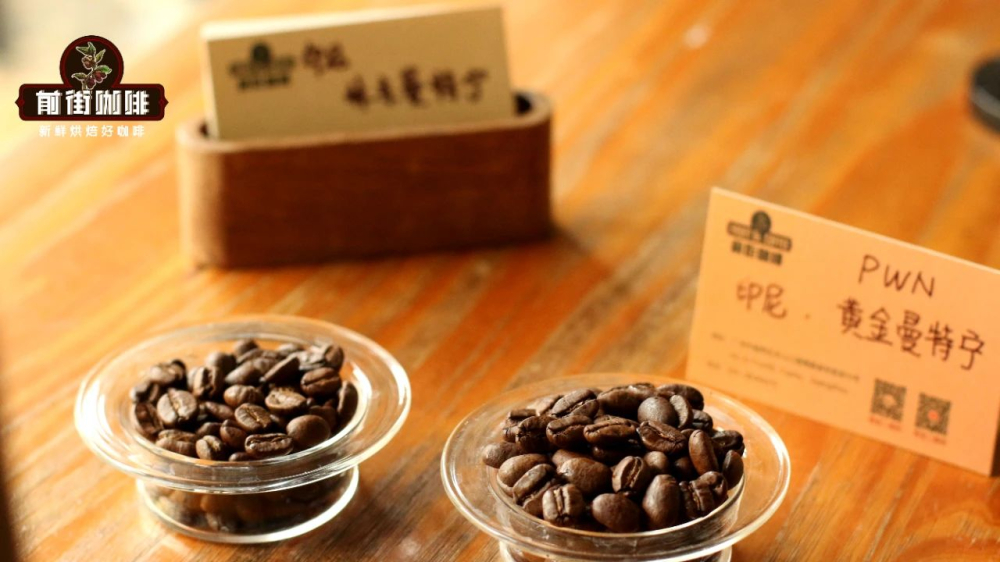
Blue Mountain coffee beans are produced in the Blue Mountain region of Jamaica. As a single-origin coffee bean, different origins naturally lead to different flavors. The Blue Mountains where Blue Mountain coffee is grown are located in eastern Jamaica. Embraced by the Caribbean Sea, on clear days sunlight shines directly on the azure sea, and the peaks of the Blue Mountains reflect the bright blue glow of the seawater, which is how the mountain range got the name Blue Mountain. The Blue Mountain coffee-growing area has fertile volcanic soil, fresh air, a humid climate, and fog and rain all year round. Together, these conditions create the world-renowned Jamaican Blue Mountain coffee.
The variety of Blue Mountain coffee beans is Typica. Typica was originally stolen by a French naval officer and escorted all the way to Martinique, and then spread widely throughout Central and South America. Jamaica's coffee-growing history can be traced back to the 18th century: in 1717, King Louis XV of France ordered coffee to be planted in Jamaica; in the mid-1720s, the governor of Jamaica introduced Arabica seeds from Martinique and began promoting cultivation in the St. Andrew area.
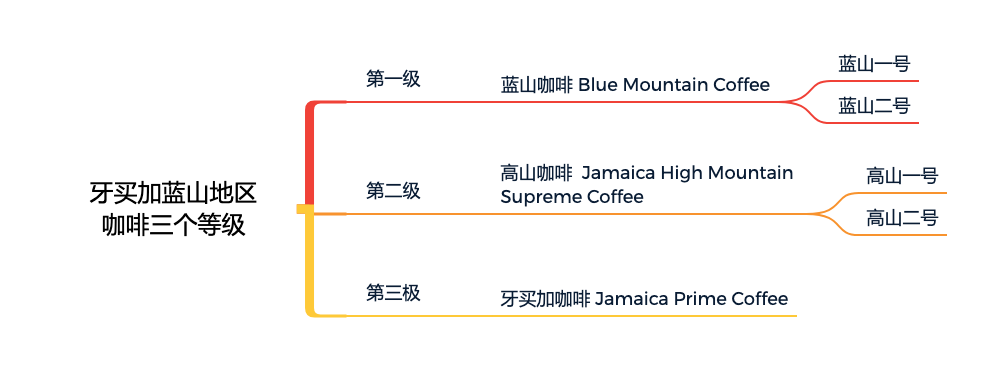
Although the Blue Mountains are more than 2,100 meters above sea level, not all coffee beans grown in the Blue Mountain area can be called Blue Mountain coffee. Jamaican coffee beans are divided into three major categories according to growing altitude: Jamaican Blue Mountain coffee, Jamaican High Mountain coffee, and Jamaican coffee.
Jamaican Blue Mountain coffee: according to CIB standards, only coffee beans grown at an altitude of 1,000 to 1,700 meters can be called Jamaican Blue Mountain coffee. Blue Mountain coffee beans of this grade are further divided by quality and bean size into four grades: No.1, No.2, No.3, and PB. Among them, Blue Mountain No.1 is the highest grade, with a bean size of 17/18 mesh, and the proportion of defective beans must not exceed 2%. Its flavor is balanced, with harmonious acidity, sweetness, and bitterness, fragrant and full-bodied, and it is recognized worldwide as an exceptional product. Such strict standards are clearly reflected in the price of Front Street's Blue Mountain coffee.
Jamaican High Mountain coffee: coffee beans grown at 500 to 1,000 meters in the Blue Mountain area are called High Mountain coffee, and their quality is second only to Blue Mountain coffee. Because the output of Jamaican Blue Mountain coffee is limited, if you want to experience the flavor of Jamaican coffee, High Mountain coffee is also a good choice.
Jamaican coffee: coffee grown outside the Blue Mountain range is called Jamaican coffee, with a growing altitude below 500 meters.
Jamaican Blue Mountain coffee is so classic that FrontStreet Coffee naturally reserves a place for it on its menu of half a hundred coffee beans. Front Street's Blue Mountain coffee beans are Blue Mountain No.1 grade, with large and uniform beans, a fragrant aroma, a clean and full-bodied taste, and balanced acidity, sweetness, and bitterness.
Jamaica Front Street Blue Mountain No.1 coffee beans
Region: Jamaica Blue Mountain
Farm: Clifton
Altitude: 1,310 meters
Variety: Typica
Grade: No.1
Processing method: washed process
Because some merchants on the market conflate "Blue Mountain coffee," "Blue Mountain flavor," and "Blue Mountain blend," they sell coffee beans with similar flavors under the "Blue Mountain" label. Many friends therefore worry that what they bought is not truly Blue Mountain coffee.
Friends who buy Blue Mountain coffee beans at Front Street can rest completely assured. Authentic Blue Mountain coffee beans come with a certificate issued by the Jamaica Coffee Board, a Jamaican Blue Mountain coffee certificate of origin, an authorized sales certificate issued by the Blue Mountain coffee producer, and wooden barrels printed with the Blue Mountain coffee logo. Relevant certificates are displayed in Front Street's store, and interested friends can also visit Front Street's store to inspect them on site.
[Mandheling]
Mandheling is a coffee bean produced in the Sumatra region of Indonesia. The reason Mandheling coffee is called "Mandheling" comes from a double misunderstanding. Because Mandheling coffee is full-bodied, it quickly became popular in the Japanese coffee market.
When it comes to Mandheling coffee beans, what everyone hears most often is probably Golden Mandheling. However, "Golden Mandheling" has long been registered as a trademark by the Indonesian company PWN. This means that only Golden Mandheling from PWN is truly Golden Mandheling in the genuine sense.
Front Street has previously acquired several coffee beans labeled "Golden Mandheling," and through blind tests, Front Street's baristas could all accurately identify PWN's Golden Mandheling. The reason is that the cleanliness of Front Street's PWN Golden Mandheling is unmatched by other products.
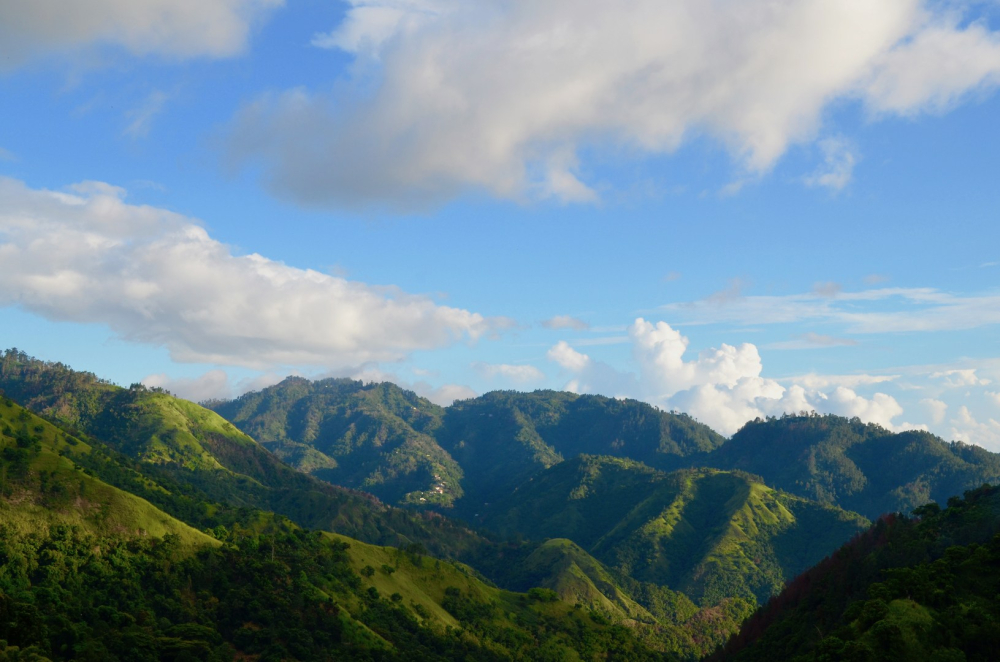
Indonesia Front Street Golden Mandheling coffee beans
Region: North Sumatra, Indonesia
Company: PWN
Grade: G1
Altitude: 1,100–1,600 meters
Variety: Ateng
Processing method: wet-hulled process
The reason Front Street's PWN Golden Mandheling can have such a clean taste is thanks to PWN's extremely high production standards. The bean size is above 18 mesh, and in every 300-gram sample of green beans there are fewer than 3 defective beans, belonging to the highest grade G1. The coffee beans are darker green in color and neat and uniform in shape. On this basis, PWN additionally performs three rounds of manual hand-sorting to ensure that defective beans in the green coffee are thoroughly removed. After such strict screening, Golden Mandheling no longer has the earthy, miscellaneous flavors of ordinary Mandheling, and its entry is clean and bright, with a stronger sweetness.
The outstanding quality of Front Street's PWN Golden Mandheling coffee beans has also led some merchants to get dishonest ideas, using ordinary Mandheling with the same screening standard applied to pass it off as Golden Mandheling. If you want to confirm whether what you bought is really the Front Street PWN Golden Mandheling you have been longing for, you can ask the merchant whether they can provide the green bean gunny sack of Front Street PWN Golden Mandheling and the certificate of origin issued by PWN. The above certificates are hung on the wall of Front Street's store, and interested friends are welcome to visit the store to see for themselves.
Many coffee friends, after tasting Front Street's Blue Mountain and Mandheling coffee at Front Street's store, ask Front Street's baristas: how should it be brewed to bring out the flavor of the coffee beans to the fullest? In fact, the best ingredients often require only the simplest preparation. FrontStreet Coffee is the same when brewing coffee. The specific brewing parameters are as follows:
Dripper: KONO dripper
Water temperature: 88°C
Coffee dose: 15 grams
Coffee-to-water ratio: 1:15
Grind size: 70% passing rate on China standard No. 20 sieve
Since both Mandheling and Blue Mountain coffee beans are dark-roasted, in order to brew a rich and mellow cup of coffee, Front Street recommends using a dripper with an immersion function, such as the KONO dripper. Dark-roasted coffee beans release substances easily during brewing, so Front Street sets the grind size at a 70% passing rate and uses a water temperature of 88°C to avoid extracting burnt and bitter flavors.
First pour 30 grams of hot water and bloom for 30 seconds. From the center point, slowly pour in a thin stream in circles until 125 grams. When the water level in the dripper drops to the point where the coffee bed is about to be exposed, continue pouring in circles until 225 grams. The total extraction time is about 2 minutes.
When friends place an order, Front Street ships coffee beans roasted within 5 days. By the time they arrive, they have already gone through a 4- to 7-day resting period, which is exactly when the flavor is at its best. When brewing the coffee beans at this time, Front Street recommends blooming for 30 seconds to allow the carbon dioxide in the coffee grounds to be fully released, making the flavor in the later stage of extraction more stable.
In addition, some friends do not have grinding equipment at home, and FrontStreet Coffee offers a grinding service. However, after coffee beans are ground into powder, the degassing activity becomes more intense, and flavor compounds also dissipate more quickly. Therefore, Front Street recommends grinding fresh and brewing immediately to better experience the coffee's flavor.
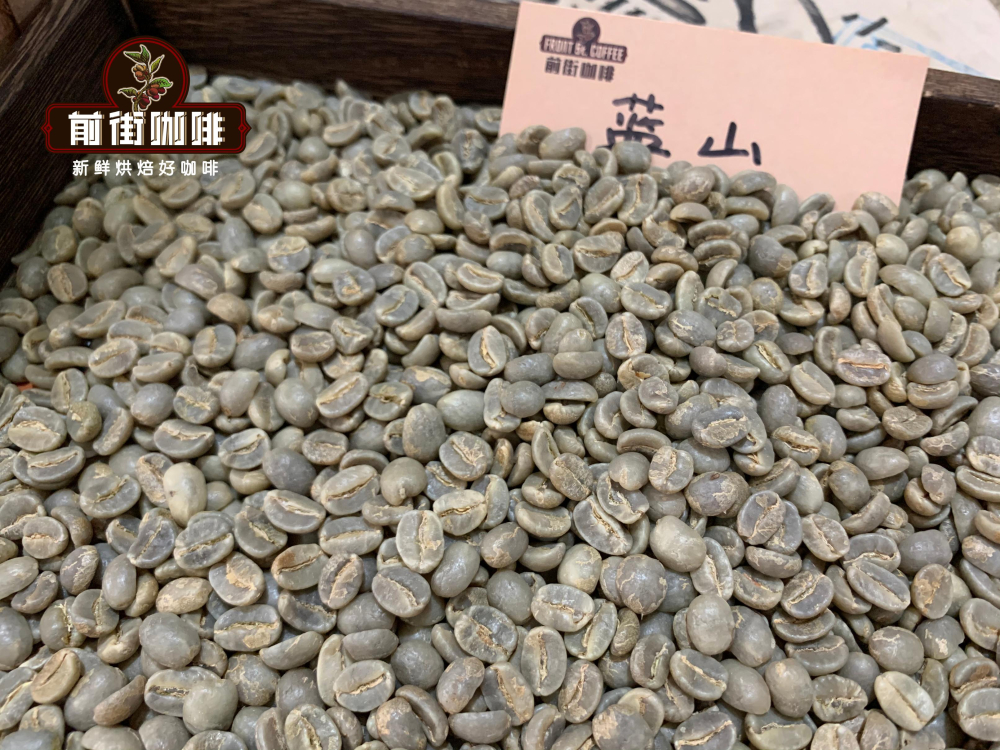
A delicious cup of Blue Mountain coffee has balanced acidity, sweetness, and bitterness, with no one aspect standing out or lacking. FrontStreet Coffee's Blue Mountain coffee is balanced in acidity, sweetness, and bitterness, with rich nutty and chocolate notes and a full, smooth mouthfeel. By contrast, Front Street PWN Golden Mandheling enters with the aroma of sweet herbs and cinnamon-like spices, full-bodied and rich, with caramel sweetness. After the temperature drops slightly, it gives off herbal and faint spicy aromas, and its fragrance carries a strong melon sweetness.
The above content is compiled by CoffeeHunters, a coffee news website.


