








Why do Sidamo geisha coffee beans taste different each year?
Hambella lots from Ethiopia's Sidamo region are prized for a strawberry-and-cream profile, but the flavor shifts from one harvest to the next. Coffee is an agricultural product, so rainfall, soil, fertilizer, and climate during cultivation all influence how the beans express themselves, and no lot stays identical year after year.
Comparing Hambella G1, 2.0, 3.0, 3.1, and 4.0 shows how those variables play out in the cup. Sun-dried processing adds its own layer, and brewers adjust V60, cake cup, or trapezoid dripper parameters to highlight different aspects. Continuous cupping is how a roaster decides which lots to release as geisha coffee beans worth buying.
Hambella coffee is an Ethiopian specialty bean that has gained much attention in recent years, winning the favor of many enthusiasts with its signature strawberry-and-cream flavor. However, many coffee fans have noticed that Hambella seems to taste different from year to year. What exactly are the reasons behind this? Drawing on Front Street Coffee's cupping experience, this article sorts through the sun-dried processing characteristics of the Sidamo region, compares the cupping flavor performance of Hambella G1, 2.0, 3.0, 3.1, and 4.0 lots, and shares in detail the brewing parameters and flavor presentation of different devices such as the V60, cake cup, and trapezoid dripper, helping readers gain a more comprehensive understanding of this coffee's story and charm.
A high-quality coffee should ideally maintain a relatively stable flavor—it can't change its taste every year, after all. Front Street has discussed this question with quite a few friends: why does the coffee we drink this year taste different from previous years? Is it a change in processing methods, or an influence from the natural environment? In fact, all of these factors can alter the direction of a coffee's flavor, which is why no coffee bean's flavor is ever consistent all the time.
Front Street uses the Hambella coffee beans of recent years as an example to illustrate this phenomenon. Front Street Hambella coffee has won widespread praise and affection with its prominent strawberry-and-cream tonality. But Front Street has also received feedback from many Hambella fans saying that this year's Hambella doesn't taste right—it doesn't quite resemble the Hambella they remember. The reasoning isn't complicated, and Hambella is far from the only bean whose flavor fluctuates; the vast majority of coffee beans show slight variations in flavor from year to year. Ultimately, coffee is an agricultural product, and during cultivation and care, climatic conditions, soil conditions, fertilizer amounts, and annual rainfall all more or less affect how the coffee expresses its flavor. In a natural environment, the scope of human control is very limited, and there are simply too many uncertain factors.
Therefore, this is a reality every specialty coffee shop must face—why Hambella no longer tastes like Hambella. It is precisely for this reason that Front Street continuously cups every coffee bean it puts on the shelf. Cupping is a relatively simple method for checking whether a coffee's flavor has changed, or whether it is representative enough to remain on Front Street's bean list.
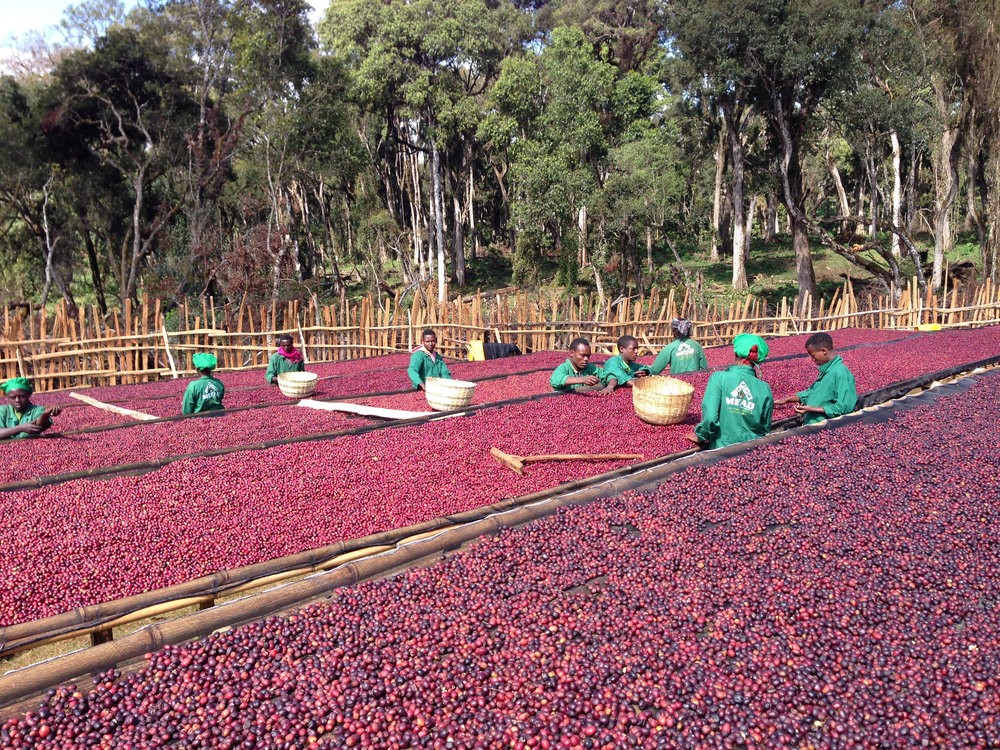
Next, Front Street introduces the Hambella coffee from the Sidamo region. The Sidamo region enjoys an extremely high reputation in Ethiopia and is one of the country's famous specialty coffee regions. The well-known Yirgacheffe and Guji regions became independent from the Sidamo region precisely because of their own unique flavor expressions. According to Front Street's understanding, the sun-dried method is the most common way of processing coffee beans in the Sidamo region.
Front Street's new-season Hambella coffee beans also use the sun-dried processing method. Sun-dried and washed processing each have their own distinctive characteristics. If you prefer coffee with a clean mouthfeel and bright acidity, you can prioritize washed beans. In Africa, Ethiopia's Yirgacheffe region commonly uses the washed method, and Front Street's Fruit Ding Ding coffee is a representative of washed processing. East African countries such as Tanzania, because of relatively high annual rainfall, also more often use the washed method—for example, Front Street's Tanzania Kilimanjaro coffee beans. Its acidity is not as fresh as Kenya's, leaning more toward citric acid, with an overall softer feel.
The ancient sun-dried processing method used in Sidamo, compared with the washed method, gives a fuller body, and the acidity is not as bright—not as clear and luminous as the lemon-citrus notes of the Yirgacheffe region. Describing the acidity of Sidamo sun-dried beans in terms of berry flavors is actually more apt.
Front Street has repeatedly cupped multiple Hambella coffee lots, covering Hambella G1, Hambella 2.0, Hambella 3.0, Hambella 3.1, and Hambella 4.0. Front Street Coffee's baristas use a 200ml standard cupping bowl, with the grind set so that 70%-75% passes through a No. 20 standard sieve, a dose of 11.3g, and a water temperature of 94 degrees Celsius. First grind and smell the dry aroma, then pour water to fill the bowl to confirm the wet aroma. After 4 minutes, break the crust and skim, then proceed with flavor evaluation.
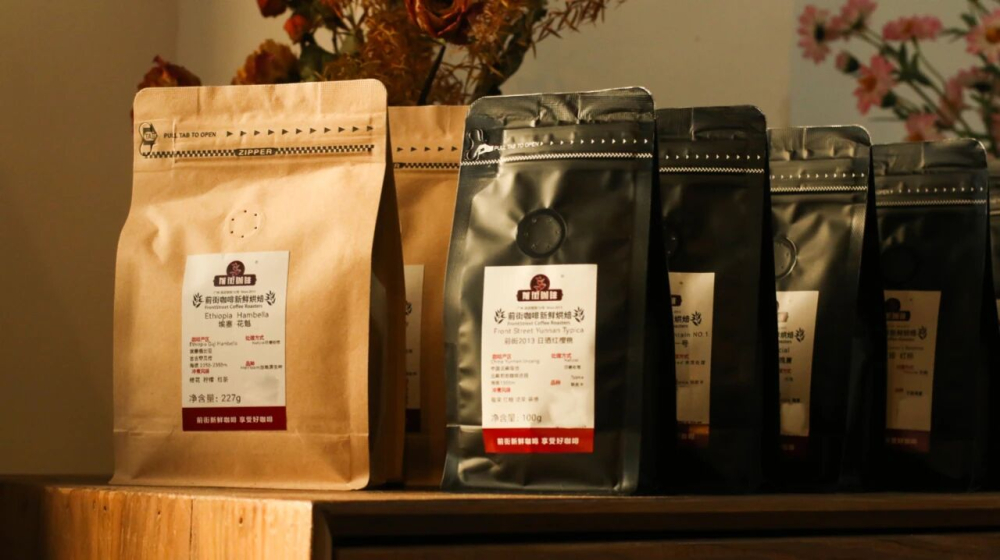
After cupping, Front Street found that each Hambella's flavor has certain differences, but the overall main direction remains consistent. For example, Hambella G1 has a smooth mouthfeel, with fermented wine aromas and acidity leaning toward passion fruit—a very classic Hambella flavor; Hambella 2.0 has an overall clean mouthfeel, with acidity leaning more toward berries, a slight nutty aroma, and rich layers; Hambella 3.0 has a faint strawberry jam flavor, with a black tea astringency, and the sweetness is not prominent enough; Hambella 3.1 is rich in floral aroma, with overall flavors leaning toward cream and tropical fruit, a caramel finish, and a lasting sweet aftertaste; Hambella 4.0 presents citrus acidity, a full berry-juice mouthfeel, the tea-like sensation of lemon black tea, and lasting sweetness.
Some may wonder why the same Hambella coffee has spawned so many versions. According to Front Street's understanding, the above lots of Hambella come from different estates and processing stations, but only the sun-dried coffee produced at the Buku Abel processing station is called Hambella coffee beans; those from other processing stations are named Hambella 2.0, Hambella 3.0, and Hambella 3.1. Hambella's English name is Hambella, and the Chinese name "Hambella" was coined by a Chinese green bean merchant, both because of its rich strawberry-and-cream flavor and as an expression of hope for this coffee—if future processing techniques become more refined, it is hoped that it will shine brilliantly and stand on equal footing with the reigning Geisha coffee.
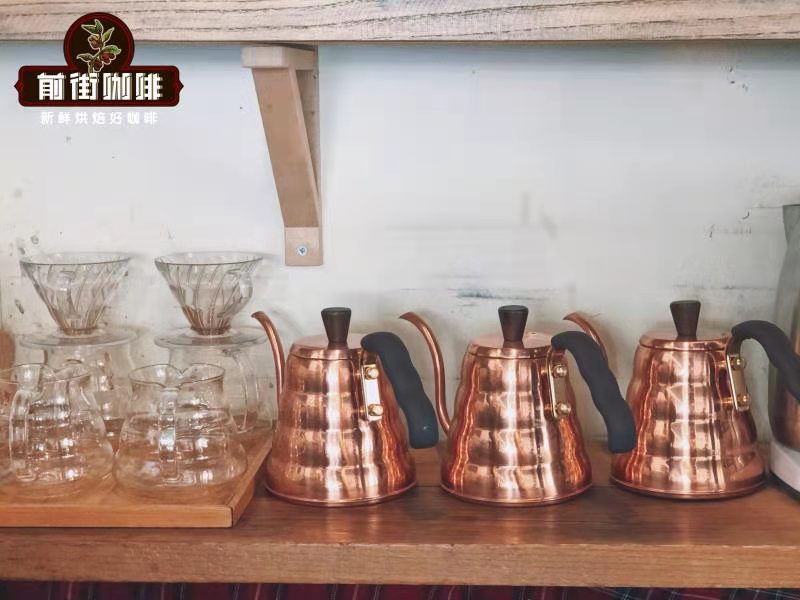
When brewing this coffee, in order to fully extract the rich layers of Front Street Hambella coffee beans, you can use a higher water temperature and a finer grind. But to avoid over-extraction caused by high temperatures, it is recommended to pair it with a faster-flow dripper, such as the V60. The V60 dripper is 60-degree conical, and the conical angle allows the coffee grounds to gather centrally; when pouring, the water flow also automatically converges toward the center of the dripper, ensuring sufficient contact time between water and coffee grounds, thereby extracting a suitable coffee liquid. In addition, the ribs on the inner wall of the V60 dripper form a clockwise spiral extending from the bottom to the top, leaving enough space between the filter paper and the dripper, so water flows well; combined with the large hole design at the bottom, the flow rate is faster than many drippers. Front Street brewing parameters: V60 dripper, water temperature 90°C, water-to-coffee ratio 1:15, dose 15g, grind size with 80% passing through a China No. 20 standard sieve.
Of course, you can also choose other drippers to brew this Hambella coffee, such as the V60, trapezoid dripper, and cake cup. Front Street previously conducted brewing tests on this coffee with different devices, using Front Street's commonly used staged extraction: the blooming water amount is twice the coffee grounds, that is, 30 grams of water for a 30-second bloom, then pour in a small stream in circles to 125 grams for the first stage; when the water level drops and is about to expose the coffee bed, continue pouring to 225 grams and stop. The entire extraction time (including blooming) is 2 minutes.
Front Street's new-season Hambella pour-over coffee smells distinctly of melon, with a soft acidity reminiscent of jackfruit on entry; in the middle, strawberry and berry flavors emerge, along with some sucrose-like sweetness in the aftertaste, making for fairly rich layers. If brewed with a cake cup, Hambella coffee has a smooth mouthfeel on entry, with prominent fermented berry aromas accompanied by passion fruit notes; after the temperature drops, strawberry-type berry sweet-and-sour notes emerge, and the overall flavor is relatively balanced. When using a trapezoid dripper, there is passion fruit and strawberry acidity on entry, with a peach-like sweetness in the finish, a round and full body, and a fuller mouthfeel. It can be seen that the choice of dripper has a considerable impact on how a coffee brews, and Front Street suggests choosing according to the method you are accustomed to.
The above content is compiled by CoffeeHunters, a coffee news website.


