







Does a deep roast explain espresso bitterness?
Espresso tastes bitter mainly because of how it is extracted, not because the drink is inherently unpleasant. A short, fast shot at high pressure pulls out concentrated compounds, and a deep roast adds darker, roast-driven notes on top of that. Served as a small cup with crema, it is meant to be sipped slowly, not gulped.
The usual routine starts with a sip of water to clear the palate, then smelling the crema before stirring the shot with a metal spoon. Blends built from Yirgacheffe Red Cherry and Honduras can bring whiskey, vanilla, nut, cream, chocolate, berry, and wine notes. Equipment choices, from grinder settings to the coffee machine name, also shift how much bitterness lands in the cup.
Espresso is the least frequently ordered beverage on its own in coffee shops, and many stores don't even bother to list it prominently on the menu. This small serving of coffee, which takes only tens of seconds to extract, what does it actually taste like? Is it really so bitter that it puts people off? What should an ideal Espresso look like, and how should it be properly enjoyed? This article, drawing on Front Street Coffee's practices, will analyze the sources of Espresso's bitterness, its extraction characteristics, and tasting methods, and introduce suitable espresso blend bean choices for making espresso.
For more specialty coffee knowledge, please follow our WeChat public account: Front Street Coffee (FrontStreet Coffee) Espresso, or Italian-style concentrated coffee, is one of the least ordered categories when served on its own in coffee shops. Take Front Street's stores as an example—it's usually "hidden" off the menu, only appearing when customers specifically ask for it. Today, Front Street is here to talk about what this small cup of coffee actually tastes like and how to drink it. Is Espresso really that bitter? When a customer says "Give me an Espresso," the barista at Front Street Coffee (FrontStreet Coffee) gets to work. About two minutes later, they'll bring over a glass of water and a small cup of thick coffee liquid topped with a golden-brown foam. Before drinking the Espresso, take a sip of water to clean your palate and avoid affecting your taste judgment. A qualified Espresso has a thick layer of crema and a rich mouthfeel, though each shop's Espresso has its own characteristics depending on the coffee beans used. The espresso beans used at Front Street's stores are their own roasted "Sunflower Warm Sun Blend," made from a blend of Yirgacheffe Red Cherry and Honduras.
When tasting a freshly extracted Espresso, Front Street first smells the aroma—this bean gives off rich notes of whiskey, vanilla, nuts, and cream. It can be drunk directly or with added sugar or milk according to preference. Use the prepared metal spoon to gently stir the coffee liquid to blend it evenly. The first sip reveals a dense crema and a full roasted aroma. Then comes the warm coffee liquid, where you can experience rich notes of nuts, chocolate, berries, and wine. Halfway through, take another sip of water to feel the sweet aftertaste left in your mouth. After finishing, a caramel-like rich aroma emerges at the bottom of the cup, leaving a lasting impression.
What are the characteristics of Espresso? Espresso's Chinese name, Italian-style concentrated coffee, makes it clear from the name that it originates from Italy. "Espresso" carries the meaning of "fast" in Italian. From the moment it's made to when it's handed to the customer, it takes only a few short minutes—Italians named it with the word "Express" (fast). Its biggest difference from other extraction methods is that making Espresso requires an espresso machine with pressure-boosting capability. Common commercial espresso machines can provide stable pressure of over nine atmospheres and hot water above 90°C. The high pressure forces hot water rapidly through finely ground coffee, extracting a coffee liquid with rich crema, intense aroma, and a heavy mouthfeel. To get an ideal shot of espresso, baristas need to master various parameters that affect flavor, thereby adjusting the extraction to its optimal range.
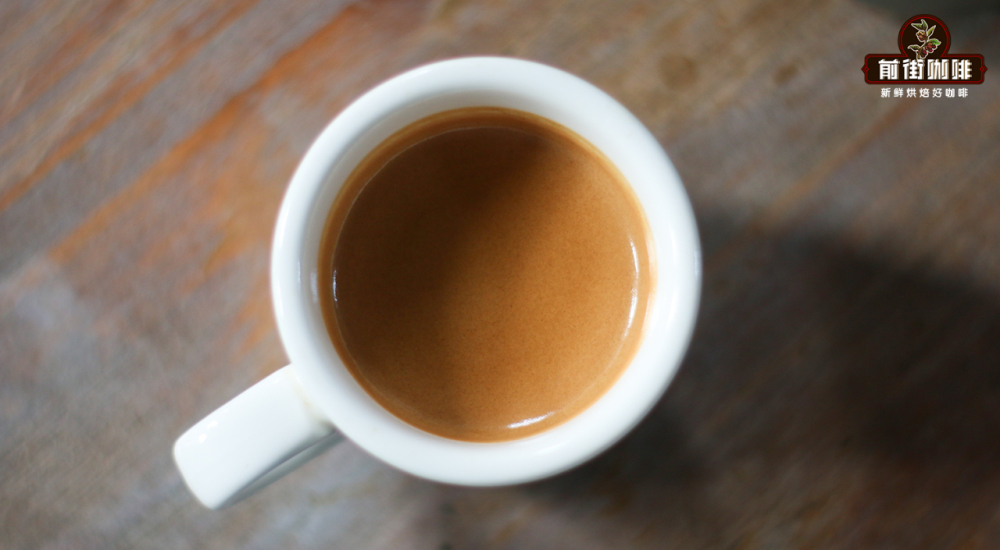
A perfect Espresso presents a beautiful golden color, with a thick and smooth crema layer, bearing faint amber-colored stripes—truly a delight to the eye.
Theoretically, making Espresso doesn't restrict you to a certain coffee bean or roast level—any type you like can be used for extraction. However, because Espresso is extracted under conditions of fine grinding, high water temperature, and high pressure, multiple flavors are highly concentrated, and various flavor compounds bombard the taste buds exponentially. So if you use light-roasted beans for extraction, the elegant and sweet fruity notes expressed in pour-over may well turn into sharp, strong acidity in Espresso; the rich mouthfeel of pour-over coffee instead becomes burnt and bitter in espresso. Therefore, to get a high-quality and stable Espresso, most coffee shops choose espresso blend coffee beans.
For friends who prefer rich, aromatic coffee, Front Street's Classic Espresso Blend is recommended. This blend combines coffees from three origins—Brazil, Indonesia, and Vietnam—and uses a deep roast, maximizing the rich coffee aroma and making it easy for everyone to extract abundant, dense crema. Whether making an Americano diluted with water or a latte paired with milk, it's very suitable. You can purchase it at Front Street's Taobao store or Front Street's Tmall flagship store.
The above content is compiled by CoffeeHunters, a coffee news website.


