







Why Is Geisha Coffee So Expensive and Distinct?
Geisha coffee is a rare Arabica variety that first gained worldwide attention at Hacienda La Esmeralda in Panama. It is known for a floral aroma, citrus and peach acidity, a creamy mouthfeel, and an oolong tea finish. Its high price comes from very low yields and the terroir of the Boquete growing region.
Hacienda La Esmeralda produces only about 150 bags of green beans a year, roughly 9,000 kilograms, while Panama's total annual coffee output is about 10,000 tons. Red Label sun-dried and Green Label washed Geisha coffee beans are usually roasted light and brewed as pour-over using a three-stage extraction method.
Why does Geisha coffee hold steady at the pinnacle of the specialty coffee pyramid? From the discovery of the variety at Hacienda La Esmeralda in Panama, to its breakthrough at the Best of Panama competition, and on to the grade differences between Red Label and Green Label, this article walks you through the complete story of the Geisha variety. Front Street Coffee will combine the cupping performance of the sun-dried Red Label and washed Green Label to share pour-over parameters under light roasting and a three-stage extraction method, and break down the terroir logic behind that rich floral aroma, citrus acidity, and oolong tea finish—so coffee lovers can understand this "fruit-tea-like" legendary flavor in one go.
For more specialty coffee knowledge, please follow our WeChat public account: Front Street Coffee (FrontStreet Coffee)
A rather tongue-in-cheek saying has circulated in coffee circles: specialty coffee is divided into only two categories—one called Geisha, and everything else lumped together as other Arabica. Of course, this can't be taken literally, but it also indirectly confirms Geisha's unshakable weight in the specialty coffee world.
What exactly makes Geisha coffee so special? Why does its price remain so high?
Even if you don't usually brew pour-over, you've likely heard of Geisha, and it always appears tied to the word "expensive," frequently occupying the top spots on lists of the world's most expensive coffees. So where exactly does Geisha's high price come from?
What allowed Geisha to sweep the globe is the rich, elegant floral aroma in the cup, the complex fruit acidity weaving together citrus and peach, the creamy smooth mouthfeel, and the oolong-tea-like sweet finish. This level of refinement makes people momentarily think they are tasting a fragrant fruit tea rather than coffee. Front Street has emphasized in many articles that coffee is ultimately an agricultural crop, and its flavor direction is always constrained by variety, climate, altitude, soil, field management, and other conditions—it is the most direct expression of variety and terroir; the role of post-processing and roasting should be to preserve, restore, and present these authentic flavors to the greatest extent possible. Geisha's performance today is precisely the result of these factors working together.
Rare things are precious, and Geisha's yield is astonishingly low. Panama's total annual coffee production is about 10,000 tons, while the renowned Hacienda La Esmeralda produces only 150 bags of green beans a year, equivalent to about 9,000 kilograms. If Geisha accounts for only 3% of that, it amounts to just 270 kilograms. Add to that the media's repeated hype of Geisha's flavor, and enthusiasts' pursuit of it only grows, so the price naturally stays firm.
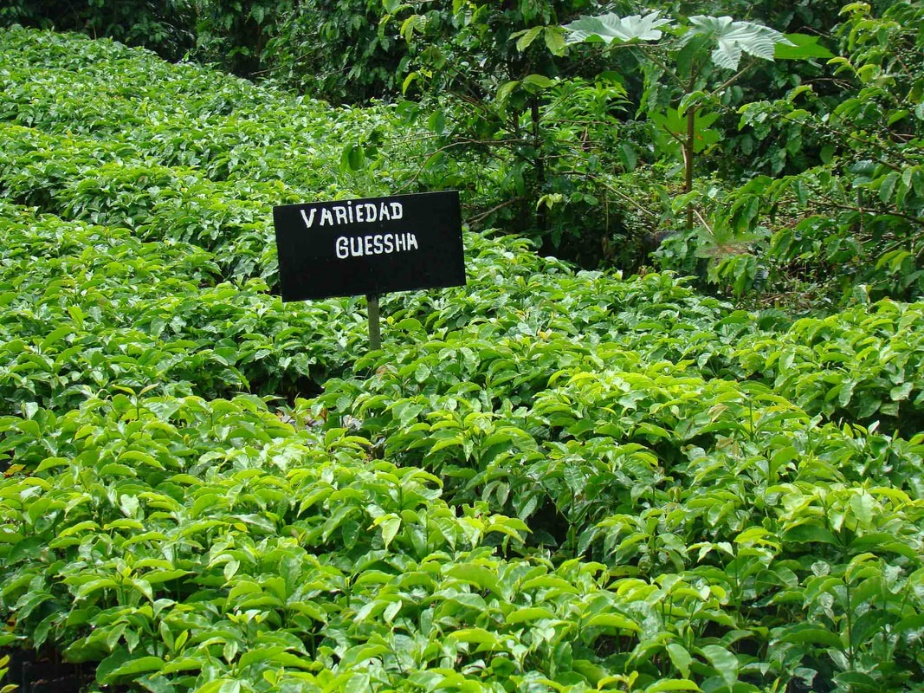
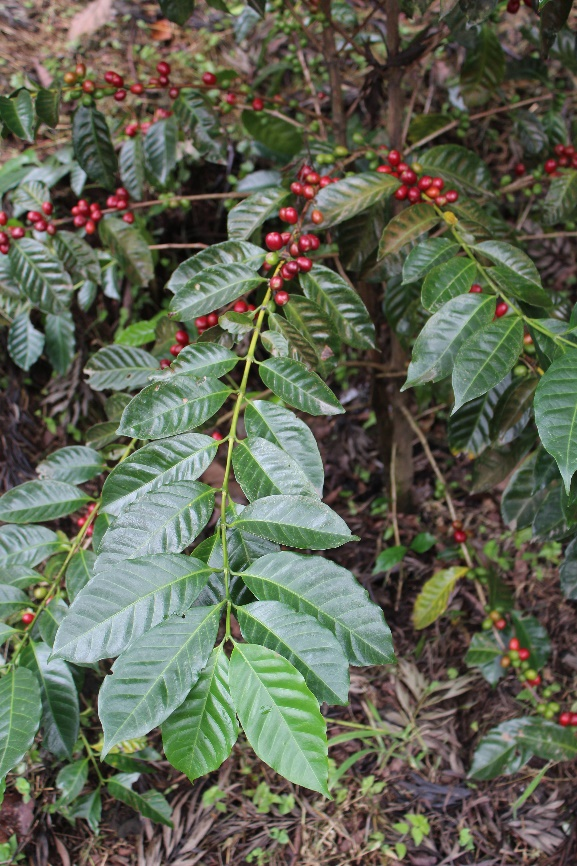
Compared with other Arabica varieties, Geisha not only bears less fruit, but the plant itself is also especially delicate and extremely picky about growing conditions. It prefers high altitudes and fertile soil, needs cloud cover or tree shade, and cannot withstand direct sunlight. Geisha's leaf system is extremely thin, and its photosynthetic efficiency is relatively low; its root system is likewise fragile, and the process of absorbing water and nutrients is slow, which makes yields very limited. The high-altitude environment also lengthens the fruit ripening period. A single Geisha tree produces only about half the fruit of a Caturra variety, which is also one of the important reasons for its high price.
The owner of Hacienda La Esmeralda who discovered Geisha's potential once mentioned that a large number of shade trees must be planted in the estate to block sunlight for the delicate Geisha, and traditional pruning methods must be used in the early planting stage, otherwise the plants can easily die. Geisha planted at higher altitudes takes longer for the fruit to ripen, and only then does the flavor become more complex and unique. Geisha cherries must be harvested at the optimal window of ripeness and immediately enter post-processing. This is a severe test of the estate owner's professional judgment and the estate's labor quality; once the timing is missed, quality declines and waste results.
Geisha coffee rose to fame at the Best of Panama competition
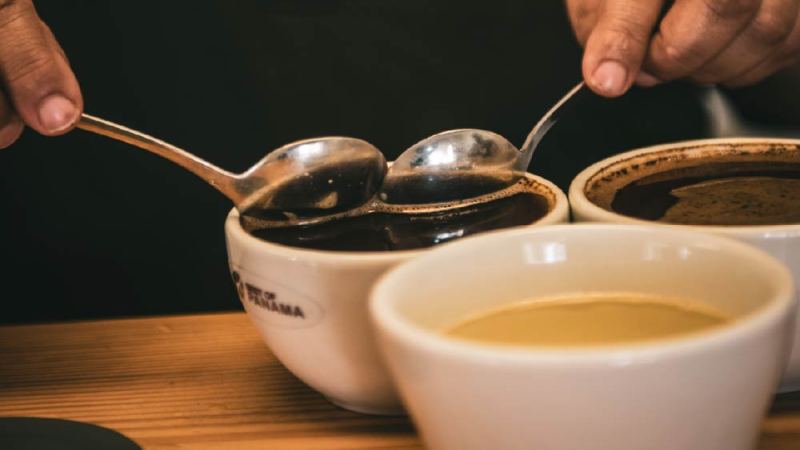
In the process of Geisha ascending to the altar, Front Street believes Hacienda La Esmeralda deserves the greatest credit. Daniel, the estate's third-generation owner, recalls that after years of comparative testing, he finally settled on this variety in 2003. Two weeks before the Best of Panama (BOP) competition that same year, while selecting competition lots on the internal cupping table, he discovered that Geisha carried outstanding flavors of jasmine, citrus, peach, blueberry, bergamot, sugarcane, and more. These flavors did not align with the popular preferences in the coffee world at the time, but Daniel still insisted on entering Geisha in the competition and took first place in one stroke.
In 2005, Hacienda La Esmeralda brought Geisha to the Specialty Coffee Association of America (SCAA) competition, defeated many star contenders, and won a world-class specialty coffee honor, then went on to sweep the world championships in 2006 and 2007, once again igniting global attention among coffee people. After that, producing regions introduced Geisha one after another, and Yunnan in China also began cultivating this popular variety. Although Geisha can now be produced all over the world, Front Street still believes that as the discoverer of Geisha's flavor, Hacienda La Esmeralda not only strictly controls quality, but its natural processing method best presents the classic "Geisha taste."
The difference between Red Label Geisha and Green Label Geisha
On Front Street's bean list, there are about 10 Geisha coffees alone to choose from. If you are trying Geisha for the first time, Front Street would recommend Front Street Hacienda La Esmeralda sun-dried Red Label or washed Green Label. Red Label refers to the Esmeralda Special grade (including auction lots), while Green Label refers to Private Collection.
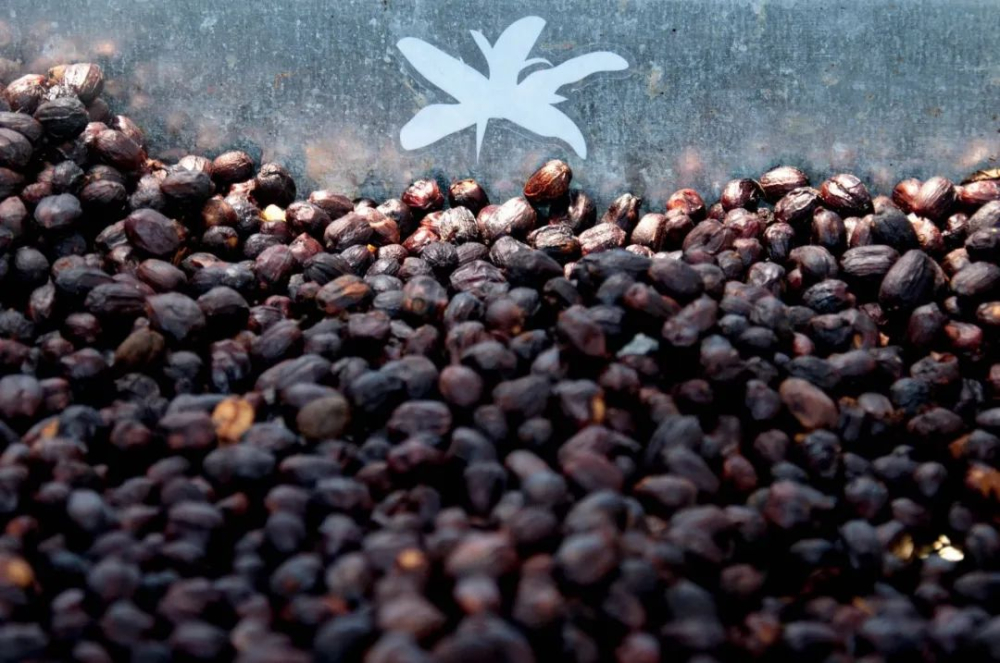
The highest-grade Red Label is picked from Geisha coffee cherries at 1,600 to 1,800 meters above sea level, scores over 90 points in cupping, and mainly comes from the Jaramillo and Cañas Verdes farms. Although high altitude brings challenges to cultivation and harvesting, Geisha from the Boquete production area shows the most prominent floral and fruity charm. Hacienda La Esmeralda holds an independent auction event, and among the divided plots, the Red Label lots put forward for competition are called auction lots. Auction lots have unique numbers, and each number corresponds to a complete lot from one plot. The most frequently mentioned is probably the Mario plot of the Jaramillo farm. The Front Street Hacienda La Esmeralda Red Label Geisha coffee beans Front Street carries come precisely from the Mario plot and use sun-dried processing.
Another Geisha, the washed Front Street Hacienda La Esmeralda Green Label grade, shows in cupping a fresher, more natural flavor of lemon, berries, pomelo, and Tieguanyin tea. Green Label is selected from micro-lots grown at 1,600 to 1,800 meters above sea level, from Jaramillo, Cañas Verdes, and other areas without specific plot separation. Green Label does not participate in auctions; although its grade is below Red Label, it mainly expresses the signature classic flavor of high-altitude Geisha.
Front Street believes that to present the classic "Geisha flavor," more floral aroma and acidity must be retained, so Front Street's Geisha coffee beans are all light-roasted, with roasting curves adjusted accordingly for different processing methods and flavor differences. Through cupping, Front Street sensed the rose aroma and the striking fragrance of citrus, berries, complex fruits, and honey in the Front Street Hacienda La Esmeralda sun-dried Red Label; the Front Street Hacienda La Esmeralda washed Green Label showed fresh, bright, and richly layered notes of jasmine, citrus, berries, honeysuckle, and oolong tea aroma.
Front Street Hacienda La Esmeralda Geisha coffee pour-over sharing
Light roasting allows high-altitude coffee beans to retain more floral and fruity aromas. Compared with medium-dark roasting, light-roasted beans have a denser internal structure and require higher water temperature and finer grinding to fully release flavor compounds. Front Street uses hot water at 92–93°C for extraction, with a grind size of 80% passing through a No. 20 standard sieve, that is, fine granulated sugar coarseness, and a setting of 10 on the Ek43s grinder at Front Street stores.
Front Street's flavor descriptions for every coffee are based on freshly roasted beans. If coffee beans have been stored for more than a month, the aroma may well have partially dissipated, and it is difficult to reproduce it in brewing. Front Street understands the importance of freshness, so it ensures it only ships coffee beans freshly roasted within 5 days, so everyone can enjoy the fullest flavor window upon receipt.
Regarding the choice of dripper, Front Street believes that Front Street Hacienda La Esmeralda Red Label Geisha should present rich layers of orange aroma and honeyed charm, so Front Street Coffee (FrontStreet Coffee) baristas use a resin V60 dripper. The V60 dripper body has guide ribs connecting the top and bottom and a large round hole in the center, which speeds up the water flow rate, while the spiral-shaped vent groove design lengthens the water flow path, increasing the contact time between coffee grounds and hot water. Each stream of water converges along the grooves toward the center point of the dripper, concentrating the pressure on the coffee grounds, and the extracted coffee has richer layering.
Below, Front Street demonstrates the brewing steps for the store's Front Street Hacienda La Esmeralda Red Label sun-dried Geisha, which everyone can use as a reference and compare with their own brewing approach.
The pour-over parameters for Front Street Hacienda La Esmeralda Red Label Geisha coffee are: dripper: V60, water temperature: 91–92°C, dose: 15g, coffee-to-water ratio: 1:16, grind size: fine granulated sugar size (80% passing a No. 20 sieve)
Three-stage extraction: pour 30 grams of water in the first stage for a 30-second bloom, then pour 95 grams (the electronic scale shows about 125 grams), completing the pour in about 1 minute; when the water level drops to two-thirds of the coffee bed, pour the remaining 100 grams (the electronic scale shows about 225 grams), completing the pour in about 1 minute 35 seconds. Dripping is completed at 2'10", then remove the dripper and finish extraction.
The pour-over Front Street Hacienda La Esmeralda Red Label Geisha coffee tastes of elegant rose, citrus, strawberry, and tropical fruit acidity, with a lingering and pleasant black tea character. The flavor layers vary with temperature, and the overall mouthfeel is smooth.
The above content is compiled by CoffeeHunters, a coffee news website.


