







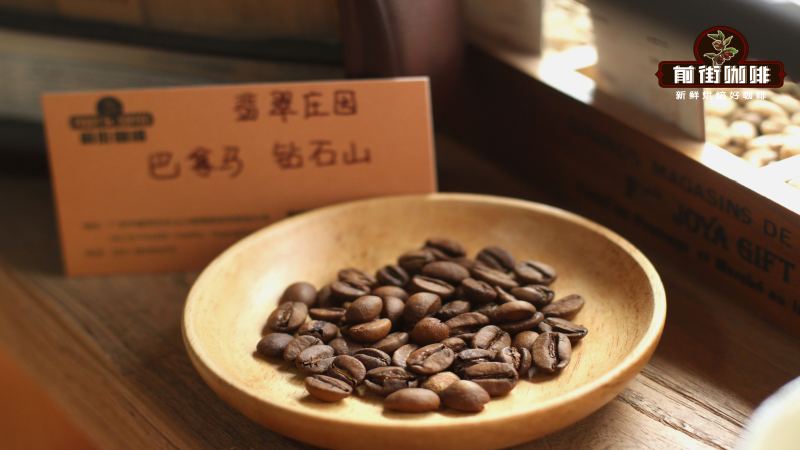
What makes Esmeralda Diamond Mountain coffee distinctive?
Diamond Mountain is Hacienda Esmeralda's non-Geisha line, built on the Catuai variety rather than Geisha. It comes from Boquete in Chiriqui Province, Panama, where coffee grows between 1,400 and 1,900 meters on volcanic ash soil near Baru Volcano. Expect citrus, honey, almond and a cocoa finish, with bright acidity and a smooth mouthfeel.
Before Geisha took the spotlight after 2004, the estate relied mainly on Caturra, and Geisha was planted along the boundaries as a windbreak. Diamond Mountain keeps the estate's strict sorting and quality control, and the natural process concentrates fruit sweetness. Roasters who also source rainforest alliance certified coffee beans will recognize the same emphasis on traceable, well-managed farms.
Hacienda Esmeralda is renowned for its Geisha coffee, but before Geisha took center stage, the estate long relied on Caturra as its main planted variety. This article focuses on Diamond Mountain coffee from Hacienda Esmeralda's non-Geisha series, introducing the terroir conditions of its origin Boquete, the origin and characteristics of the Catuai variety, the natural processing flow, as well as Front Street Coffee's roasting analysis and brewing suggestions. Although Diamond Mountain does not win by virtue of the Geisha variety, it likewise benefits from Hacienda Esmeralda's strict quality control, displaying rich flavors such as citrus, honey, almond, and a cocoa finish, making it suitable for coffee lovers who enjoy bright acidity and a smooth mouthfeel to explore in depth.
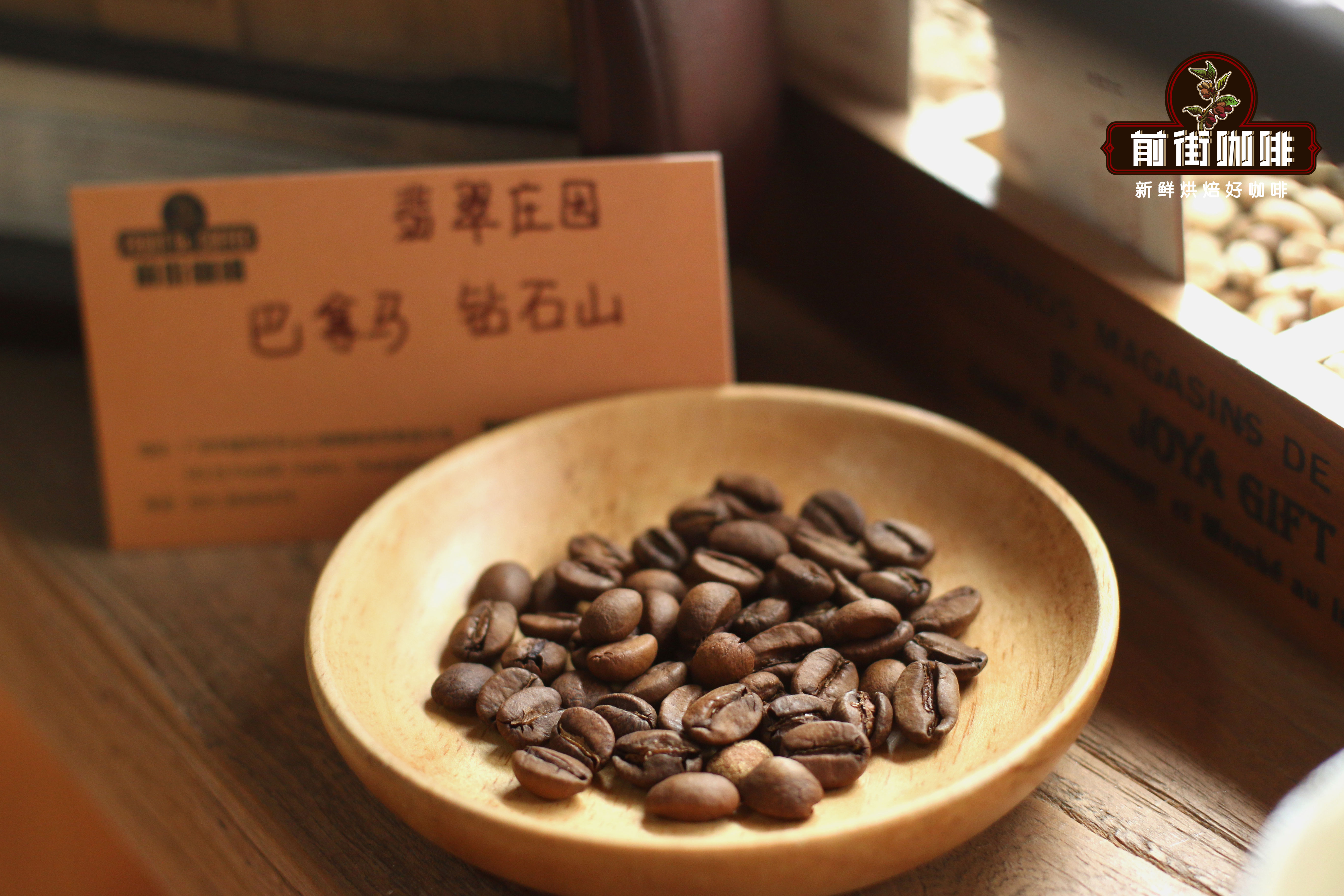
When Hacienda Esmeralda is mentioned, most people first think of Geisha coffee beans. It can be said that without Geisha, Hacienda Esmeralda might still be a little-known small estate; and without Hacienda Esmeralda, Geisha would also find it hard to set off a global craze. However, many people may not know that what Hacienda Esmeralda originally planted was not Geisha, but rather, like many countries in Central America, mainly Caturra. In this issue, Front Street Coffee (FrontStreet Coffee) will introduce a coffee from Hacienda Esmeralda's non-Geisha series—Diamond Mountain.
Hacienda Esmeralda Before 2004, Hacienda Esmeralda's main coffee variety was Caturra, while Geisha was at the time only planted along the estate's boundaries as a windbreak. The Boquete region where Panama is located is one of Panama's important coffee-producing areas. Coffee in the Boquete production area is mostly grown at altitudes between 1,400 and 1,900 meters, under the jurisdiction of Chiriqui Province, located near the border between Panama and Costa Rica and adjacent to the famous Baru Volcano, with beautiful scenery, deep and fertile soil, and climate and soil conditions highly suitable for producing high-quality coffee.
This is not only thanks to the mild climate of Panama's Boquete region and the fertile volcanic ash soil provided by Baru Volcano, but also a key factor is the variable microclimates possessed by the Boquete highlands. Panama's east-to-west topography causes cold air currents to converge along the central mountain range at altitudes between 1,200 and 2,000 meters; the mountain mist, rain, and variable winds thus form multiple microclimates in the Boquete area, making its temperature and rainfall very suitable for plant growth, so the coffee trees planted here grow well.
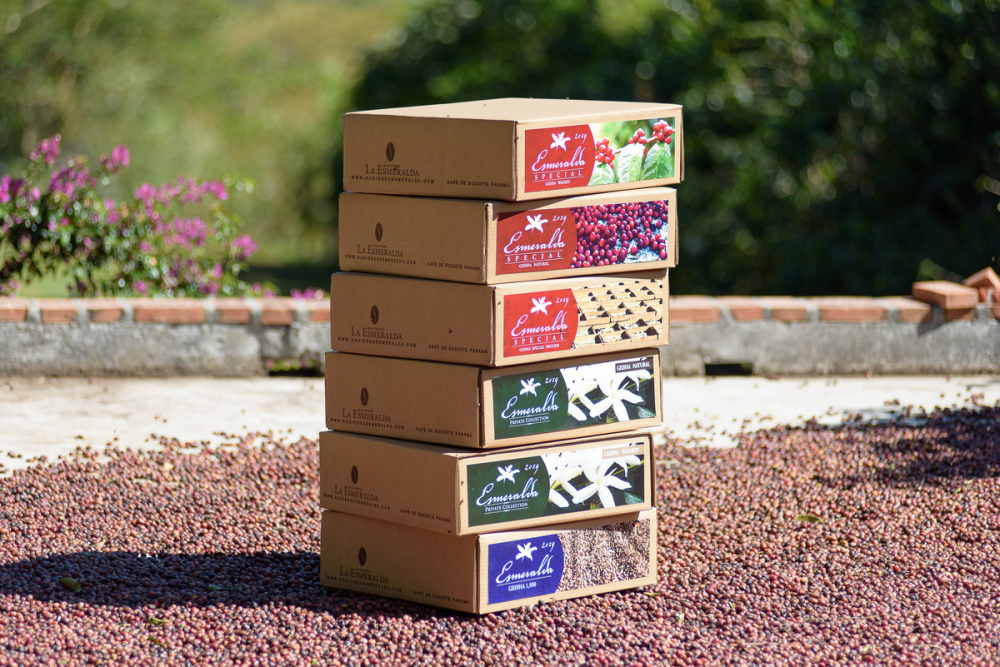
Hacienda Esmeralda divides its coffee into two parts according to Geisha and Catuai varieties. The Geisha part includes three brands, namely Esmeralda Special, Private Collection, and Geisha 1500, commonly known as Red Label, Green Label, and Blue Label.
The Catuai part is divided into Diamond Mountain and Palmyra. This bean from Front Street comes precisely from Diamond Mountain's natural-process Catuai coffee.
Diamond Mountain is planted in the Canas Verdes and Jaramillo areas, with the overall coffee planting distributed at altitudes of 1,400 to 1,600 meters. Diamond Mountain brand coffee holds Eco-friendly status as well as Rainforest Alliance Certified certification.
Front Street Coffee (FrontStreet Coffee) Diamond Mountain Series The variety of this Diamond Mountain coffee is Catuai. Catuai comes from the Guarani phrase multo mom, meaning "very good." This variety is divided into Yellow Catuai and Red Catuai. Catuai was created in 1949 by crossing Yellow Caturra with the Mundo Novo variety and was initially named H-2077.
The Catuai variety has been planted in Panama for a long time and is widely loved for its high yield, disease resistance, and clean brightness. Compared with the Bourbon variety, Catuai has a very high yield, one reason being that the plant is smaller, allowing the spacing between plants to be shortened; Catuai's planting density is almost twice that of Bourbon.
Processing Method This Diamond Mountain coffee adopts the natural processing method.
Hacienda Esmeralda's natural processing is not complicated. The first step is to send the harvested coffee cherries to the courtyard for sorting, with the purpose of removing unqualified green cherries or defective beans, then rinsing them once in clean water before spreading them evenly on drying beds to dry.
Depending on the weather and the composition of the site, the coffee cherries will dry on the platform for 3 to 5 days, 8 hours per day. When the coffee cherries have dried to a certain degree, they are then placed into a Guardiola drier and rotated for 72 hours to complete the drying process and prevent fermentation. After drying is completed, the coffee cherries are mechanically stripped of their skin, pulp, and other parts.
Front Street Coffee (FrontStreet Coffee) Roasting Analysis Charge at a drum temperature of 165°C, heat power 130, air damper opened to 3; turning point at 1'36", when the drum temperature is 112°C open the air damper to 4, heat power unchanged; when the drum temperature is 153.2°C the bean surface turns yellow, the grassy smell completely disappears, entering the dehydration stage; when the drum temperature reaches 150°C, adjust the heat power to 110, air damper unchanged;
At 8'38", the bean surface shows ugly wrinkles and dark streaks, and the toast aroma clearly turns into coffee aroma, which can be defined as the prelude to first crack. At this time, listen carefully to the sound of the first crack point. At 9'48" first crack begins, open the air damper to 4, develop for 1'20 after first crack, and drop the beans at 191°C.
Front Street Coffee (FrontStreet Coffee) Brewing Suggestions Although this Hacienda Esmeralda Diamond Mountain coffee cannot compare with Geisha coffee beans in terms of variety, it is likewise under Hacienda Esmeralda's high-quality management and is also excellent in quality. This coffee has a very excellent sweetness, and in brewing Front Street will highlight this coffee's fruity sweetness.
Dripper: V60#01 Water temperature: 90-91°C Dose: 15g Coffee-to-water ratio: 1:15 Grind size: medium-fine grind (80% passing rate on China standard No. 20 sieve)
Brewing method: three-stage extraction. Use 30 grams of water for a 30-second bloom, pour in a small stream in circles until 125 grams for the stage break, and when the water level is about to expose the coffee bed continue pouring until 225 grams and stop pouring. When the water level is about to expose the coffee bed, remove the dripper. (Start timing from the beginning of the bloom.) Extraction time is 2'00".
Flavor description: citrus, bright acidity, almond, honey, slight fermented note, smooth mouthfeel, cocoa finish.
The above content is compiled by CoffeeHunters, a coffee news website.


