







What Is Coffee Robusta and Can It Work as a Pour-Over?
Robusta is the commercial coffee variety usually blended into espresso rather than brewed as a single origin, because it carries high oil content and a heavy body but weaker flavor nuance. A dark-roasted Vietnamese robusta brewed as a pour-over still delivers a drinkable cup, though the taste leans toward bitter, earthy and nutty notes instead of the fruit and floral tones typical of Arabica.
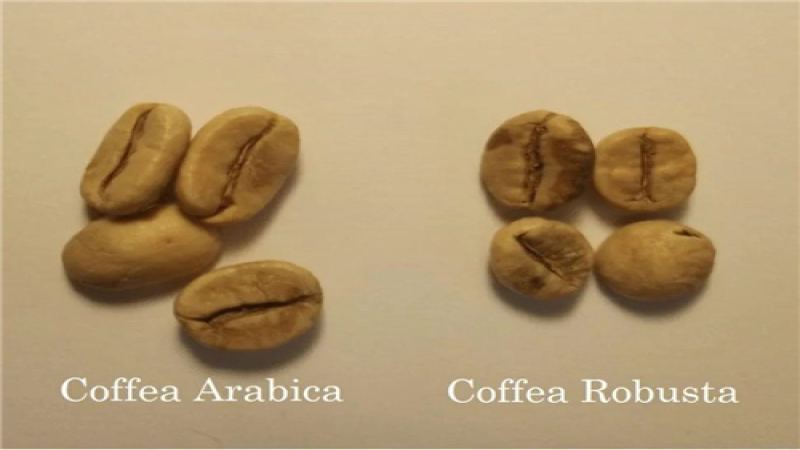
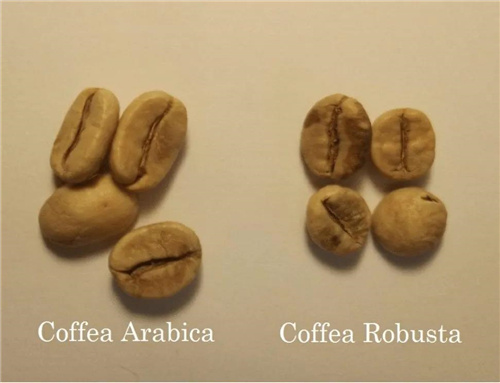
The bean is easy to tell apart: robusta's center line runs straight while Arabica's is curved and wavy. Robusta also holds more caffeine and costs roughly half the price of Arabica, which is why espresso blends have long relied on it. Where are robusta coffee beans grown? Mostly in Vietnam, Indonesia and parts of Africa, at lower altitudes than most Arabica.
Robusta beans are often seen as a supporting player in espresso blends—they are rich in oils, high in body, and affordable, but their weak spots in flavor keep them from appearing in pour-over very often. This time, Front Street Coffee decided to get hands-on and run a pour-over experiment with dark-roasted Vietnamese robusta to see what kind of taste it can actually deliver. The article will also discuss the differences between robusta and Arabica in appearance, composition, and cultivation, as well as today's attempts at "specialty-grade" robusta. If you're curious whether robusta can be brewed as a single origin, or you want to understand its value in blends, this hands-on test will give you a straightforward answer.
Today, Front Street Coffee is here to chat with everyone about what kind of flavor you'll actually get when you use pour-over to "tackle" robusta beans. But before we officially begin, let Front Street Coffee first give a brief introduction to what kind of bean robusta actually is.
What Is "Robusta"
"Robusta" is simply a shorthand way people refer to robusta. Because the coffee made from this variety has a very distinctive character, it was singled out and given a nickname—though that doesn't mean it's being excluded. Robusta and Arabica have one particularly obvious difference in appearance: the center line of robusta is a straight line, while the center line of Arabica is mostly curved and wavy.
Currently, the coffee varieties with real commercial value on the market are mainly Arabica and robusta. However, because robusta's flavor performance is not ideal enough, it has not been widely accepted in the specialty coffee world, especially in the pour-over circle.
But robusta is by no means useless. Its most prominent advantages are its especially high oil content and excellent body. The oils can bring more caramelized aromas to espresso, and the rich body also makes the whole cup feel fuller. That's why it often appears as a component of espresso blends. In addition, its price is quite friendly—roughly half the price of Arabica.
Robusta has a relatively high caffeine content, and combined with its rich oils, it was often used in espresso bean recipes during the period when espresso swept the globe—back then, a large part of why people drank coffee was to take in caffeine. Front Street Coffee's classic blend uses a combination of Brazil, Mandheling, and robusta, giving the coffee rich nutty and toasted-bread aromas, a full body, and a beautiful crema. It's very suitable for beginners.
In addition, for cafe owners, because they need to balance stability, value for money, and compatibility, a combination of Colombia, Brazil, and robusta is used. Brazil is responsible for creamy nutty aromas, Colombia provides chocolate-like sweetness and smoothness, and robusta adds thickness and oils. This way, even a novice barista can easily make a standard espresso.
From the above, you can see that if you want to find a coffee shop on the market that uses robusta as a pour-over bean, the odds are very low (they exist, but not many). So today, Front Street Coffee will experience it properly on everyone's behalf and see what pour-over coffee made with robusta actually tastes like.
Brewing Experiment
The robusta used by Front Street Coffee this time comes from Vietnam and is dark-roasted, so we will "handle" it according to the extraction parameters for dark-roasted beans.
Dripper used: Kono dripper
Dose used: 15g
Grind setting: 11 on the EK43 (70% passing through a No. 20 sieve)
Coffee-to-water ratio: 1:15
Brewing water temperature: 88°C
Brewing method: three-pour
First, we still bloom with twice the coffee dose in water (30ml). After 30 seconds have passed, we pour the second stage of hot water (120ml) in a steady, gentle stream in a large circle; finally, in the center of the dripper, we pour the remaining third stage of hot water (75ml) in a steady large stream in a small circle; after that, we just wait for the drip to finish, and the brewing is complete.
During brewing, we can clearly smell a wet aroma of hazelnut and caramel. Moreover, this aroma spreads very quickly and soon fills the entire Front Street Coffee shop. When tasting, caramel and grain-like flavors are very prominent, but more than anything it's the taste of barley tea, with a very full body; the bitterness is actually not bad. Freshly brewed robusta is actually pretty good.
But after sitting for a while, once the temperature drops, its shortcomings are exposed. The grain flavor intensifies and carries a hint of rubber, the cleanliness is on the low side, mixed with an earthy fishiness and a bitter, astringent finish—the negative impressions are very obvious.
From the above, it's clear that robusta's taste really isn't outstanding enough. To a large extent, this comes down to its caffeine and chlorogenic acid both being higher than Arabica's. With these two bitterness contributors backing it up, robusta is much more bitter than Arabica. Also, the one Front Street Coffee tasted is a commercial robusta bean grown below 800 meters, which causes it to grow faster and fail to fully absorb nutrients, so its flavor also carries certain flaws.
But robusta isn't all bad. Nowadays, some people are trying to apply Arabica cultivation methods to robusta growing, hoping to cultivate "specialty-grade" robusta, and they have indeed succeeded. This kind of high-quality robusta tastes very clean. Although the flavor still revolves around the original caramel, grain, and hazelnut notes without much change, overall it's still quite good. It's just that because it's so scarce, it's very hard for it to make its way to China for us to experience.
Well, Front Street Coffee can't keep a good thing to itself. There happen to be friends nearby, so let's all experience robusta's "wonderfulness" together!
The above content is compiled by CoffeeHunters, a coffee news website.


