








What Happens During Natural Coffee Bean Processing?
Natural processing, also called dry processing, is the oldest method of preparing coffee. Ripe cherries are spread out in the sun and turned regularly for roughly twenty-seven to thirty days until the fruit dries onto the seed. It needs little equipment but depends on steady clear weather, since too much direct sun can crack the beans and create defects.
The finished beans often look uneven, and the long contact with fruit sugar is what produces the heavy body and berry-like sweetness the method is known for. The trade-off is risk: rain or poor drying can lead to coffee bean mold. Natural lots make up around forty percent of the lineup at FrontStreet Coffee, including Natural Yirgacheffe Aricha and Natural Panama Janson Geisha.
This article is written by the content team of FrontStreet Coffee and provides a comprehensive discussion of the characteristics of the natural process, the oldest method of coffee processing. It frankly acknowledges its dependence on sunny weather and the disadvantage of a mediocre appearance in the finished product, while gradually breaking down the steps from fruit selection, sun drying, to hulling and storage. Using representative natural beans that make up forty percent of FrontStreet Coffee's lineup—Natural Yirgacheffe Aricha, Natural Panama Janson Geisha, and Natural Brazil Queen Estate—together with images and brewing plans, it carefully presents the flavor picture under three-pour extraction, helping readers gain a deeper understanding.

For more quality coffee information, please follow the WeChat public account: FrontStreet Coffee
In terms of coffee processing methods, FrontStreet Coffee's stores display beans processed in various ways, with the natural series accounting for about forty percent of FrontStreet Coffee's total, such as Natural Yirgacheffe, Natural Panama Geisha, and Natural Brazil coffee beans. FrontStreet Coffee points out that compared with other methods, the natural method is the simplest to carry out—merely spreading selected fruit out to receive sunlight and turning it regularly to ensure even drying. In this article, FrontStreet Coffee will explain in detail the specific steps of the natural method and the flavor performance of the finished product.
FrontStreet Coffee's natural coffee bean raw material (still with skin and pulp)
FrontStreet Coffee's washed green coffee beans
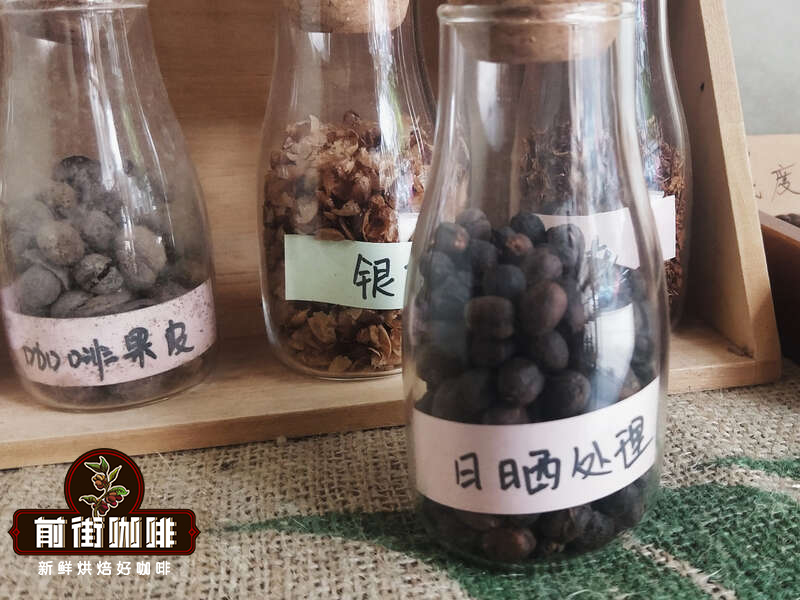
FrontStreet Coffee's coffee beans using the honey process
Natural processing method
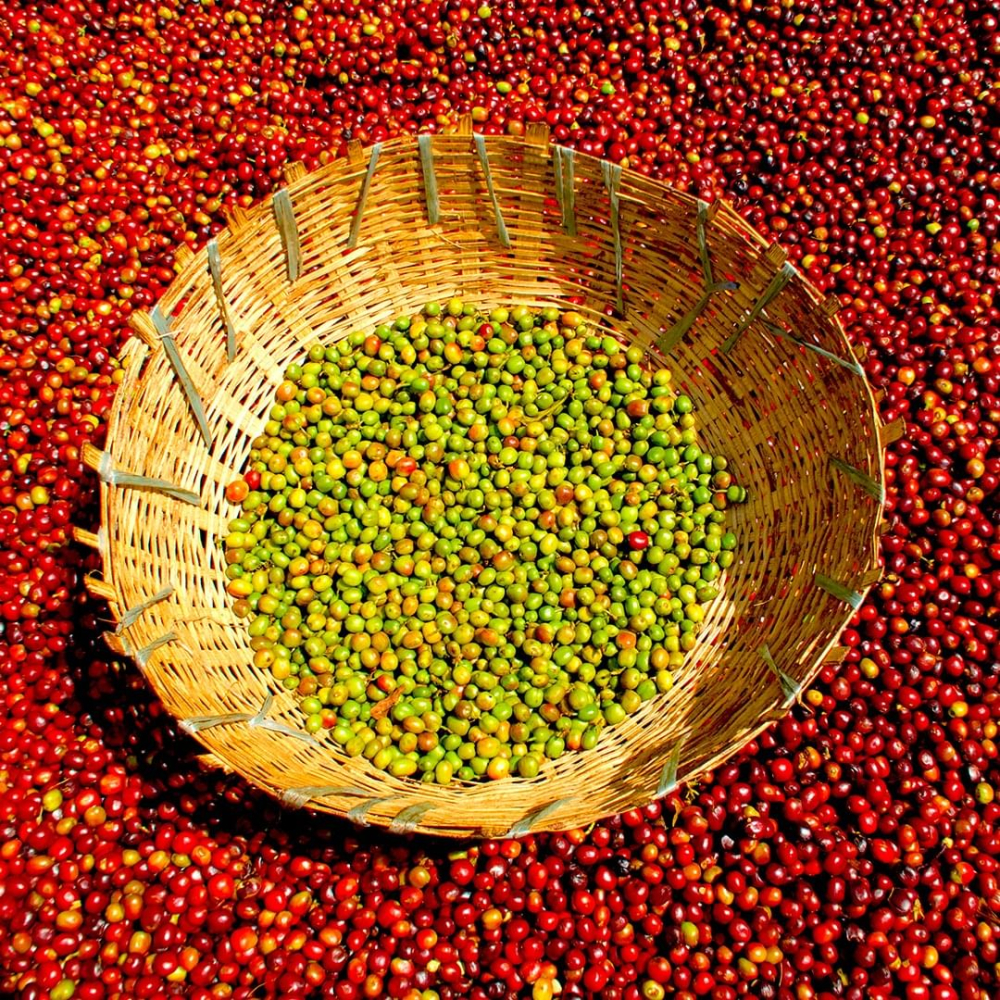
This method is also called the "dry natural method" and is the oldest coffee processing method in history. It requires very little mechanical equipment, yet it is extremely dependent on clear weather, requiring continuous sunny days, with the entire sun-drying cycle lasting about twenty-seven to thirty days. During drying, attention should be paid to the following: if exposed to excessively strong sun, the beans are prone to cracking and defective beans may appear; although the process is simple, natural dry beans have a poor appearance, and therefore have fewer fans. Ethiopia, as a typical producing region, widely uses this method because of its high altitude, dry climate with little rain, and water scarcity; farmers pick ripe coffee cherries and spread them flat on raised beds to receive direct sunlight.
Steps of the natural process
① Collection and selection After harvesting, the berries are first manually sorted to remove various defective fruits, such as overripe, underripe, and insect-damaged ones, while also clearing away non-fruit impurities mixed in.
② Dehydration and drying The selected fruits are transported to the drying area for drying. Equipment varies by location, commonly including tarps, raised beds, or concrete floors. This stage usually lasts three to four weeks and is completed only when the moisture content drops to eleven percent.
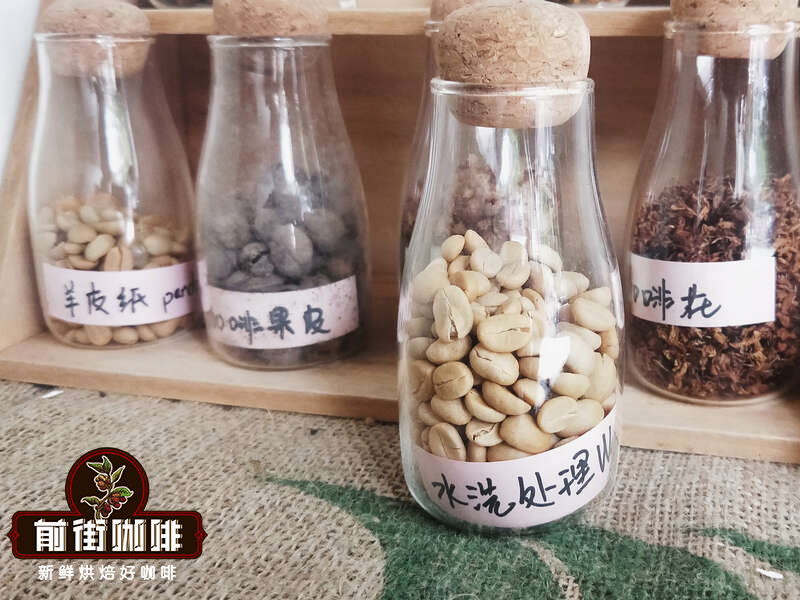
③ Hulling and peeling Once drying is finished, the fruits are sent to the processing plant for hulling and peeling, sometimes supplemented by polishing, and the skin and pulp are separated and discarded at this stage.
④ Grading and storage After hulling, the green beans need a second sorting to remove those with poor appearance. This also reflects the quality of the earlier drying: overly dry beans are brittle and easily break into fragments during hulling; under-dried beans have higher moisture, and active moisture promotes bacteria and mold. Beans that meet the standard will be stored in warehouses awaiting sale and export.
FrontStreet Coffee Natural Yirgacheffe Aricha green coffee beans
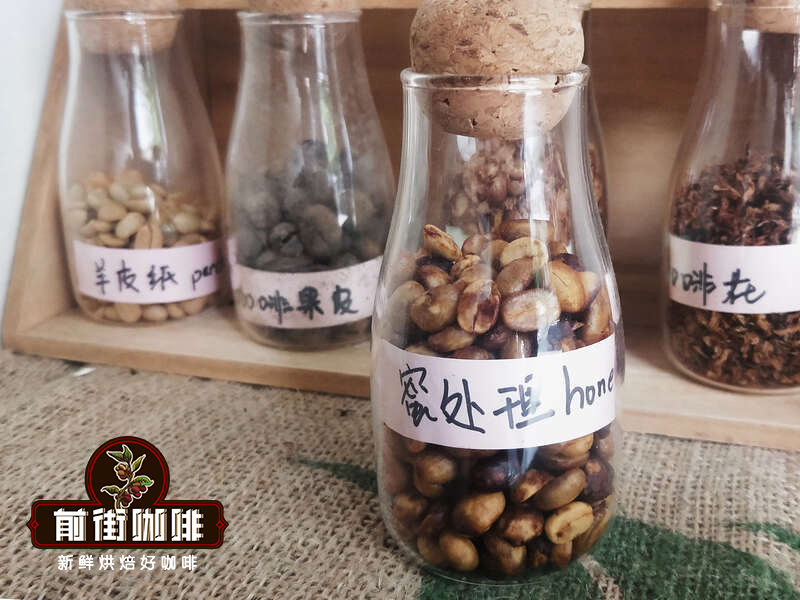
FrontStreet Coffee Natural Panama Janson Geisha green coffee beans
FrontStreet Coffee Natural Brazil Queen Estate coffee beans
Although the above three differ in variety, all are processed by the natural method, and their appearance is bluish with a yellowish tone. Next, FrontStreet Coffee will use the aforementioned Natural Yirgacheffe Aricha coffee beans, Natural Panama Janson Geisha coffee beans, and Natural Brazil Queen Estate coffee beans as examples to present the actual measured pour-over flavors.
FrontStreet Coffee Natural Yirgacheffe Aricha coffee beans
FrontStreet Coffee Natural Panama Janson Geisha coffee beans
FrontStreet Coffee Natural Brazil Queen Estate coffee beans
FrontStreet Coffee's recommended brewing parameters are: V60 dripper, coffee-to-water ratio 1:15, water temperature 90°C, with the grinding mesh based on an 80% pass rate through a Chinese standard No. 20 sieve. Because of differences in variety, altitude, processing method, and roast level, the grind size varies for each bean, so after receiving newly roasted beans, FrontStreet Coffee always first sieves them to establish the appropriate particle size. For the above three, the determined grind sizes are BG#5F (Yirgacheffe Aricha coffee beans), BG#4G (Panama Janson Geisha), and BG#5F (Brazil Queen Estate). Even with the same model of grinder, FrontStreet Coffee still recommends sieving for rigor.
As for the extraction method, FrontStreet Coffee adopts a staged method, namely three pours: the first pour uses 30 grams of water for a 30-second bloom; then pour 125 grams in a circular motion; after the water level nears exposure of the coffee bed, continue pouring to 225 grams, with a total time of 2 minutes (including the bloom).
Flavor analysis of Natural Yirgacheffe Aricha coffee beans: It gives off the fragrance of ripe fruit, with an obvious fermented note on the palate, accompanied by green grape flavor; as the temperature drops slightly, citric acidity and a creamy sensation appear, and the finish has a grape juice-like quality.
Flavor analysis of Natural Panama Janson Geisha coffee beans: It displays maple syrup, lemon citrus, and apple notes, with rose and dark chocolate fruit aromas interwoven, complemented by pomegranate, ripe grape, peach, and dark berries, with rich layers of sweetness and acidity.
Flavor analysis of Natural Brazil Queen Estate coffee beans: The sweetness is prominent, dotted with a faint lemon aroma, with rich nutty flavor, and a distinct dark chocolate note in the finish, giving an overall rounded mouthfeel.
The above content is compiled by CoffeeHunters, a coffee news website.


