







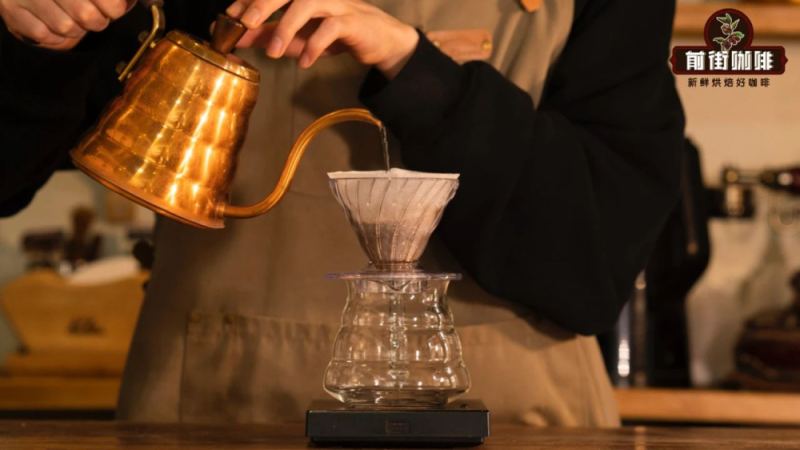
How is iced coffee made in the Japanese style?
Japanese-style iced coffee is brewed hot directly onto ice, so it is ready in the time of a normal pour-over rather than the overnight wait cold brew requires. Medium-dark roasted beans such as Blue Mountain or Mandheling suit the Japanese preference for a full, bold cup, and the ice chills the coffee quickly while preserving aroma.
A typical iced pour-over sets a dose, an ice-to-water ratio, water temperature, and a medium grind, then uses a bloom and staged pours. Because cold dulls perceived sweetness, the brew is kept slightly stronger, and cold brew served without ice is possible but tastes flatter than the flash-chilled version.
Japanese coffee culture has long been known for its artisan spirit, favoring rich and bold medium-dark roast flavors, with Blue Mountain and Mandheling as typical representatives. In the heat of summer, iced coffee is naturally indispensable. This article focuses on Japanese-style iced coffee, introducing its advantage of quick preparation, its differences from cold brew and iced Americano, and providing complete parameters for iced pour-over using beans like Front Street Yirgacheffe—covering dose, ice ratio, water temperature and grind size, blooming, and staged pouring techniques. It also answers the question of whether cold brew iced coffee can be served without ice, and reminds readers of the impact of low temperature on flavor perception, helping coffee lovers make a refreshing and bright cup of iced coffee in summer.
For more specialty coffee knowledge, welcome to follow our WeChat official account: Front Street Coffee (FrontStreet Coffee)
Looking across the globe, if there is a country that holds an artisan-like obsession with coffee, Japan must be among them. Front Street has learned that Japan possesses a long-standing coffee culture heritage, and locals particularly favor rich, full-bodied, intensely flavored coffee, with roasting levels tending toward medium-dark. Blue Mountain and Mandheling are the classic choices in the hearts of Japanese people. In the height of summer in Japan, iced coffee is of course a daily necessity. Today Front Street will share how to make a refreshing and delicious cup of iced coffee.
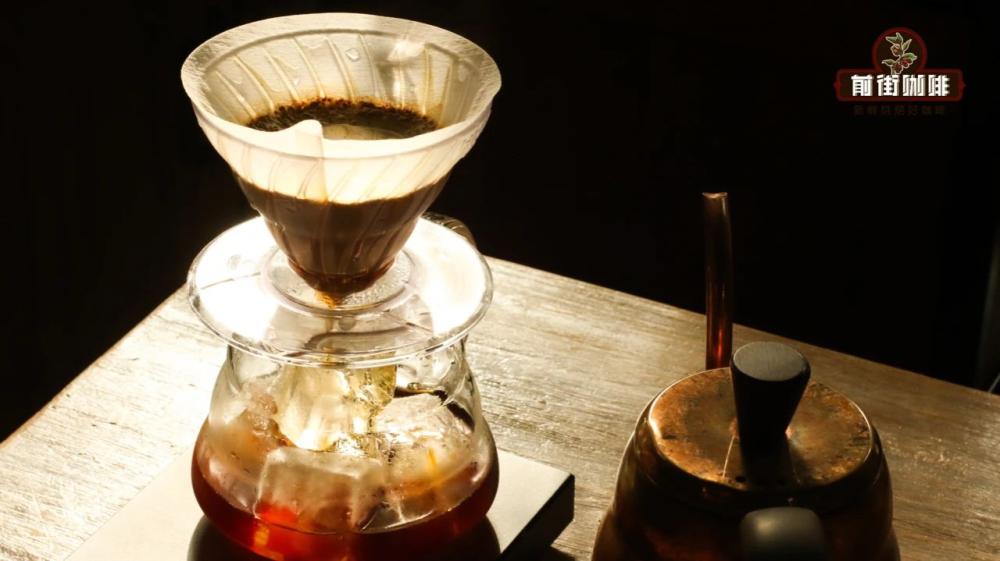
The method for Japanese-style iced coffee is not complicated—simply place ice cubes in the cup beforehand, then extract the coffee with hot water as usual.
I. The Advantage of Japanese-Style Iced Coffee: Fast Output
The biggest advantage of this method is speed. When you suddenly crave a cup of iced coffee, there is no need to wait overnight or even a whole day. As long as the parameters are handled properly, Japanese-style iced coffee has quite rich flavor layers and a bright, crisp mouthfeel. Front Street once tried this method with Yirgacheffe coffee beans, and the result outperformed any cold brew made with the same beans. Iced coffee made this way is full of flavor, yet takes exactly the same time as a regular pour-over—isn't that fascinating?
The process for Japanese-style iced coffee is largely the same as everyday pour-over, except that the water amount for a regular hot pour-over is cut in half, with the shortfall made up by ice.
Production process:
1. Coffee beans
It is recommended to choose medium-light roasted beans with a refreshing flavor profile. Fruit-acidity-oriented beans such as Front Street Washed Yirgacheffe, Front Street Huakui, Front Street Kenya Little Tomato, Front Street Flower Butterfly, and Front Street Strawberry Candy are all worth trying. Take 15 grams of grounds and pair with 100 grams of ice (use plenty of ice for proper chill). Rinse the dripper and filter paper in advance and drain them; for iced pour-over there is no need to preheat the cup or server.
2. Temperature and grind size
For water temperature, Front Street chooses 1°C higher than the 91°C recommended for regular pour-over; for grind size, use the fine-sugar coarseness of regular pour-over (Fuji Royal 3.5 setting), and when making iced pour-over, adjust finer by half a notch, i.e., Fuji Royal 3 setting.
This also explains why we suggested earlier choosing beans you are familiar with. The coffee-to-water ratio for iced pour-over is 1:10, and the extraction yield will be somewhat lower compared to regular pour-over (though not by much). At this point, you need to compensate accordingly through water temperature and grind size.
In other words, raising the water temperature combined with a finer grind equals increasing the extraction yield.
3. Brewing technique
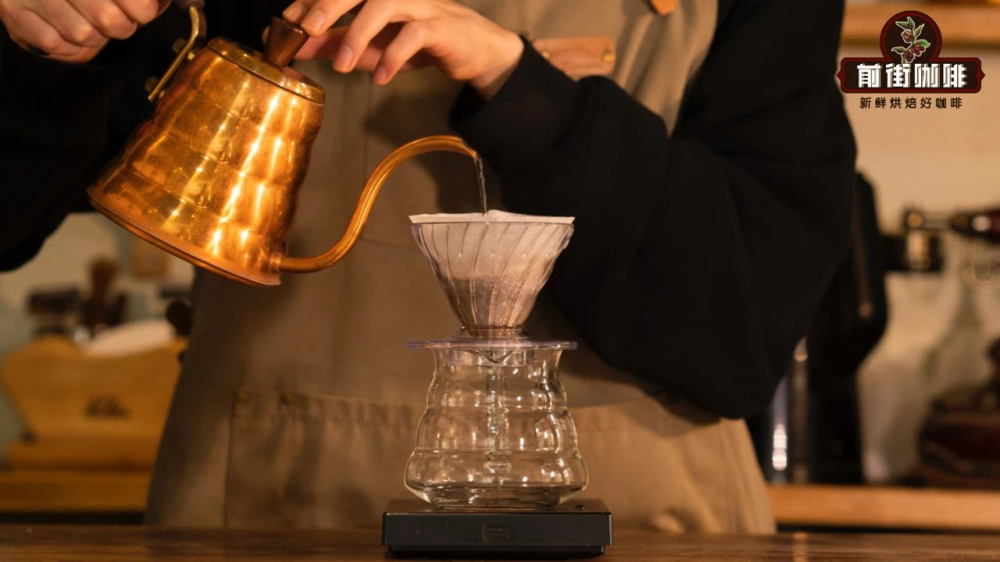
Use 40 grams of water for blooming, with a blooming time of 30 seconds.
At this stage, you can also add stirring or extend the blooming time to allow the coffee grounds to absorb water more fully and degas more smoothly; then pour vertically with a thin stream of water, maintaining an appropriate height, slowly circling until you reach 160 grams and then stop.
4. Staged pouring
Pour 60 grams of water in the first stage and 40 grams in the second stage. Use a thinner but taller pouring stream with forceful stirring and impact to encourage the coffee grounds to tumble fully, but be careful that the liquid level does not get too high and that you do not pour onto the edge of the filter paper.
5. Waiting
Because the grind is on the finer side, the drainage speed will be slightly slower. This is not a problem—this coffee-to-water ratio is unlikely to extract off-flavors, so you can rest assured. This is because what comes out first during extraction is the small-molecule fruit acidity and floral notes, while bitterness only gradually emerges in the later stages. Iced pour-over captures the front and middle stages, so as long as you are not pouring continuously at a single fixed point, the overall flavor will remain fresh and bright.
6. Completion
The entire extraction takes about two and a half minutes (similar to the extraction time for 20 grams of grounds on a regular day). Once all the coffee liquid has drained through, swirl to mix, and the ice will have melted mostly—the remaining ice continues to chill and slowly dilute the coffee. As you drink toward the end, the ice will have fully melted and the taste will become lighter, so it is recommended to finish the cup before the ice completely melts.

When making Japanese-style iced pour-over, there are a few key points worth noting:
① The ratio of ice to water is approximately 1:1. You do not need to strictly stick to 1:1, but do not deviate too much (you can adjust slightly based on room temperature), otherwise either the iced coffee will not be cold enough (too little ice), or the coffee will be too weak (too much ice and too little water, resulting in insufficient extraction).
② Regarding pour-over extraction yield. You may not get a satisfactory result on the first try. At that point, you need to examine whether your brew is too weak (extraction yield too low) or has off-flavors (extraction yield too high). Generally speaking, provided extraction is even, raising water temperature, grinding finer, increasing agitation, and extending extraction time can all increase extraction yield; conversely, lowering water temperature, grinding coarser, reducing agitation, and shortening extraction time can lower extraction yield.
③ Do not have overly high expectations for the flavor of iced pour-over. Sometimes the problem is not with the extraction yield or whether the brew succeeded or failed, but rather that human smell, taste, and touch naturally become duller in low-temperature environments. In addition, aroma molecules become less active at low temperatures and do not diffuse easily, making them hard to detect. So iced pour-over can satisfy a craving, wake you up, and keep you going, but it may not necessarily astonish you.
The above content is compiled by CoffeeHunters, a coffee news website.


