







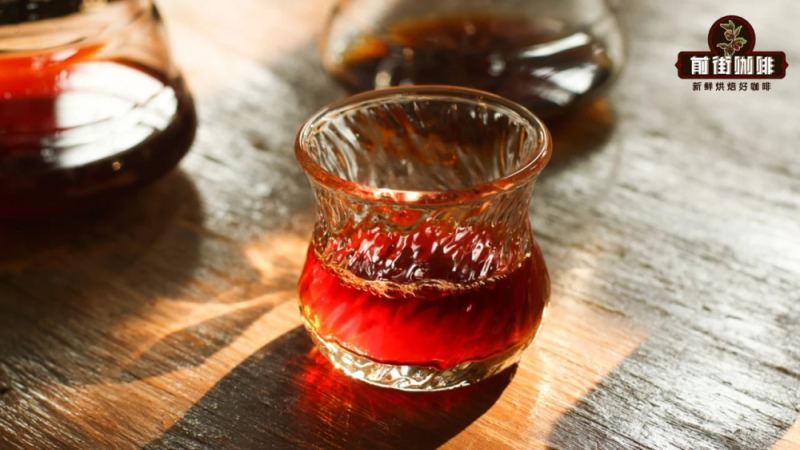
What equipment and ratios does pour-over coffee full form brewing need?
Pour-over brewing separates grounds from liquid through a dripper and filter paper, and beginners need only a short list of gear: freshly roasted beans, filtered or spring water, a gooseneck kettle, a dripper, a server, a grinder, filter paper, a scale, and a thermometer. Beans taste most ideal between days 4 and 30 after roasting.
The core parameters are the coffee-to-water ratio, the water temperature range, and a three-stage pour that starts with a bloom. Grind coarseness is matched to the roast level, and a washed Panama Boquete Geisha can be used to walk through each step from bloom to the end of dripping so the framework is easy to repeat at home.
Want to make a delicious pour-over coffee at home but don't know where to start? This article, drawing on Front Street Coffee's production experience, systematically sorts out all the equipment and material selection points needed for pour-over, including how to judge coffee bean freshness, grinding coarseness references for the grinder, water quality selection, and recommendations for drippers and pour-over kettles. It also explains in detail the coffee-to-water ratio, water temperature range, and the specific operations of three-stage pouring, and uses a Panama Boquete washed Geisha as an example to fully demonstrate each step from blooming to the end of dripping, helping beginners quickly build a pour-over framework.
For more specialty coffee knowledge, please follow: Front Street Coffee (Frontsteet Coffee)
More and more people are interested in pour-over coffee now, but many beginners still get stuck when facing the specific operations—either they don't know how to handle a certain step, or they never quite grasp the key essentials. Today Front Street Coffee (FrontStreet Coffee) will talk about a few practical tips around pour-over coffee~
Pour-over coffee, put simply, is a brewing method that uses a dedicated dripper together with filter paper or other filtering materials to separate the coffee grounds. Before officially starting, the equipment and materials must be prepared first: freshly roasted coffee beans, spring water or filtered water, a pour-over kettle, a dripper, a server, a grinder, filter paper, a digital scale, a thermometer, plus a relaxed and pleasant mood.
"Freshly Roasted Coffee Beans"
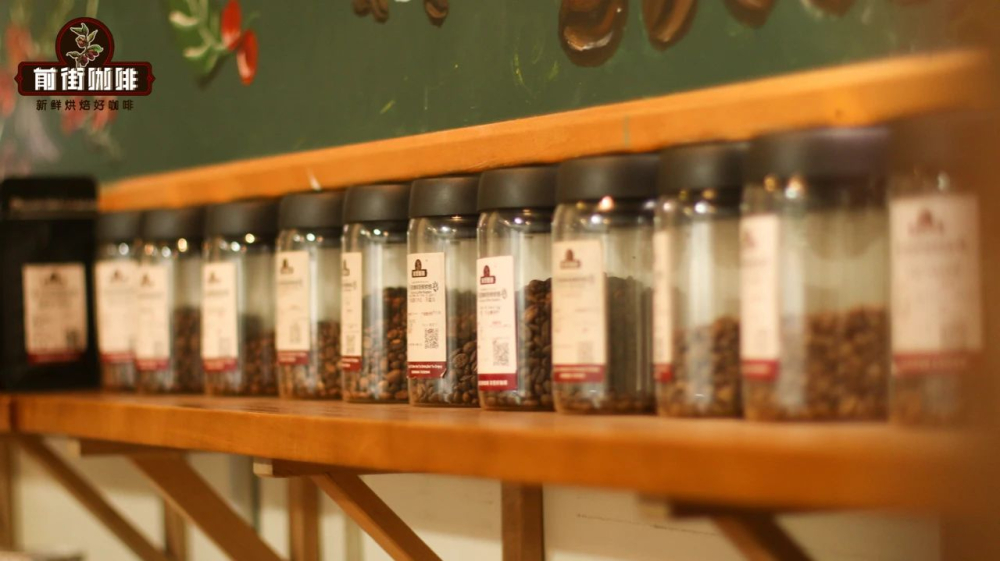
Whether a cup of coffee ultimately tastes good and how its flavors perform depends to a large extent on whether the beans are fresh enough. According to Front Street Coffee's (FrontStreet Coffee) daily experience, the period from the 4th day to the 30th day after the coffee beans are roasted is when the flavor state is most ideal.
The farther away from the roast date, the more the coffee's aroma and flavor are lost. All coffee beans currently sold by Front Street are arranged to be shipped within 5 days after roasting is completed, ensuring that everyone still receives them in a 100% freshly roasted state.
"Grinder"
The grinder is responsible for grinding coffee beans into powder, and beans of different roast levels correspond to different suitable coarseness. Front Street Coffee (FrontStreet Coffee) summarizes from brewing: medium-light to medium roast beans are suitable for medium-fine grinding (sifted with a Chinese No. 20 standard sieve, with a pass rate of 75-80%), visually looking close to the texture of fine granulated sugar; medium-dark to dark roast beans are suitable for medium-coarse grinding (same sieve pass rate 65-70%), feeling closer to coarse granulated white sugar.
"Spring Water/Filtered Water"
In terms of water quality, water that is too hard or too soft is not ideal, and different minerals have different effects on extraction. Generally speaking, simple filtered water or spring water can meet the needs of pour-over.
But purified water and mineral water are best not used directly; the former contains almost no minerals, while the latter often has too many minerals, and both will interfere with the extraction of coffee flavors. Hard water more easily brings out bitterness and astringency—tap water, for example, is hard water; soft water more easily extracts an overly sour taste. If you are unsure whether your home water is suitable, Front Street suggests simply buying a bottle of Nongfu Spring.
"Pour-Over Kettle"
For beginners, choosing a fine-spout gooseneck kettle is more reliable, as the pouring stream is easier to control.
"Coffee Dripper"
At the beginner stage, the V60 dripper is recommended. Its design of large holes paired with spiral ribs, on the one hand, can enhance the coffee's layering, and on the other hand, allows you to adjust the flow rate according to the flavor direction you want to express. It is highly playable and also friendly in price!
"Server"
Be sure to pay attention to this point: you must choose a material that is heat-resistant and cold-resistant. Don't save money on this, otherwise it will be troublesome if the carafe bursts during brewing.
"Digital Scale"
Used to weigh the coffee powder weight, poured water weight, and water temperature for each brew.
"Thermometer"
Used to confirm the water temperature used for each brew. Beans of different roast levels also have different suitable water temperatures. Based on Front Street Coffee's (FrontStreet Coffee) brewing experience: medium-light to medium roast beans are suitable for 90-92°C; medium-dark to dark roast beans are suitable for 87-89°C.
"Brewing Coffee-to-Water Ratio"
Taking Front Street Coffee's (FrontStreet Coffee) store production as an example, 15 grams of coffee powder are used, and a total of 225 grams of water is poured during brewing, that is, a coffee-to-water ratio of 1:15. The more powder there is, first, the pouring time must be extended, and second, the coffee bed is thicker and the flow rate is slower. The reason Front Street Coffee (FrontStreet Coffee) chooses 1:15 is that at this ratio the coffee has better overall balance and a more even distribution of taste.
"Brewing Technique"
For friends who are just getting into pour-over, Front Street Coffee (FrontStreet Coffee) suggests starting with segmented extraction. As long as the grind and water temperature are suitable, segmented extraction can increase the overall extraction yield, and the coffee tastes fuller.
Front Street Coffee's (FrontStreet Coffee) baristas often share the store's brewing formula: 15 grams of coffee powder with 225 grams of hot water, a coffee-to-water ratio of 1:15, medium-fine grinding, using three-stage pouring—the first stage pours 30 grams of water to bloom for 30 seconds; the second stage pours water up to 125 grams, then pauses for 10 seconds; the third stage tops up the remaining water to 225 grams, and after the water completely passes through the coffee bed, the total extraction time is about 2 minutes. Next, Front Street will use a store-produced cup of Panama · Geisha as an example to demonstrate the specific operation steps and details.
The reason Geisha coffee is popular worldwide is that the cup can present rich and elegant floral aromas, a complex fruit acidity interwoven with citrus and peach, a creamy-smooth mouthfeel, and a finish that also carries an oolong tea-like sweet fragrance. The flavor is so refined that it feels less like drinking coffee and more like savoring a fragrant fruit tea. Front Street has mentioned in many articles that coffee is essentially an agricultural product, and its flavor performance is always closely connected to factors such as variety, climate, altitude, soil, and management. It is the truest reflection of the variety and the local terroir, while what post-processing methods and roasting need to do is preserve, restore, and showcase their original flavors as much as possible. The reason Geisha can perform so excellently is precisely the combined result of all the conditions above.
For friends trying Geisha at Front Street for the first time, baristas usually first recommend the Panama region, because this is both the stage where Geisha became famous and a gathering place for many well-known estates. The Geisha produced here is more representative, and the brewed flavor is also more elegant, such as the very popular Boquete · Washed Geisha.
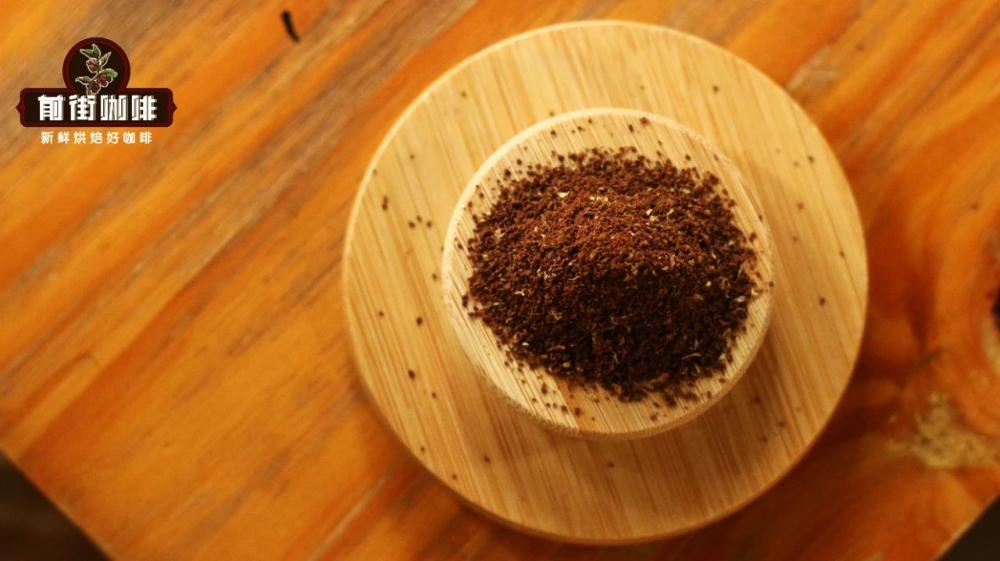
The pour-over parameters for Geisha coffee are: V60 dripper, water temperature 91-92°C, coffee dose 15 grams, coffee-to-water ratio 1:15, grind size like fine granulated sugar (No. 20 sieve bowl sifting pass rate 80%).
Three-stage extraction: first pour 15 grams of coffee powder into the dripper and tare the weight. In the first stage, pour 30 grams of water and bloom for 30 seconds while starting the timer. Throughout, use a small stream starting from the center point and circling outward, making sure to wet the entire coffee bed.
In the second stage, switch to a slightly larger stream and pour 100 grams of water. The purpose is to lift the entire coffee bed. The water column should be poured vertically and evenly. At this point the timer scale shows 130 grams, and pouring is completed in about 55 seconds.
When the liquid level drops to the halfway point, begin the third stage by pouring 95 grams in a small stream in small circles. Try to control the stream so the circles are not too large, otherwise it is easy to disturb the coffee bed and cause under-extraction. The final total poured water is 225 grams, and the drip completes in about 2 minutes 05 seconds. After removing the dripper, swirl the coffee liquid in the server to even it out, and it is ready to taste.
The Boquete Geisha brewed this way has an obvious white jasmine floral aroma. On the palate it has a lemon-like acidity, with bright citrus notes paired with a sweet caramel sensation, making it very pleasant to drink. As the temperature drops, you can also perceive bergamot and honey flavors, as well as a green tea-like mouthfeel, overall refreshing and delightful.
The above content is compiled by CoffeeHunters, a coffee news website.


