







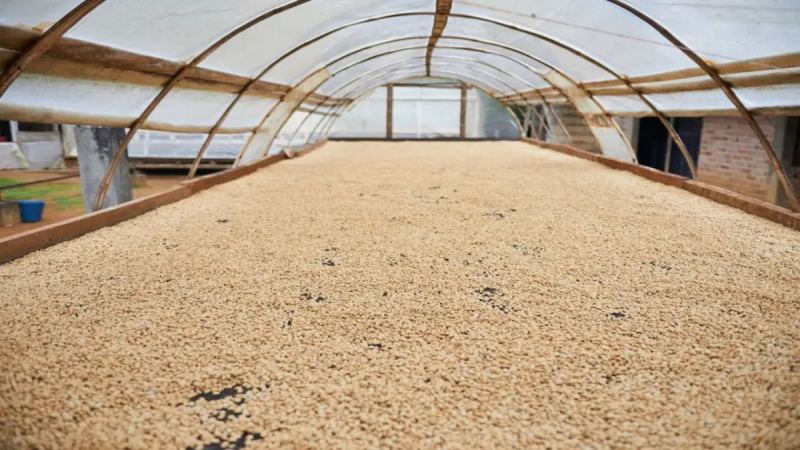
What makes Huila coffee different from other Colombian regions?
Colombia grows Arabica coffee across varied climates and high-altitude terrain, and this guide sorts the country's beans by variety, producing region and processing method. It covers Typica, Caturra and Castillo, compares the terroir of Huila, Cauca and Santander, and explains how washed, anaerobic natural, double enzyme washed, rum barrel fermentation and Swiss Water decaffeination change flavor.
Huila coffee often shows a rich, solid aroma with bright, high-quality acidity rather than sharp sourness, which is why beans from the region are commonly roasted to a medium level to bring out that body. The article also gives V60 brewing parameters and notes how the same origin can taste classic and balanced or fruit-forward depending on processing.
Colombia, as a major coffee-producing country in South America, nurtures Arabica coffee with diverse flavors thanks to its varied climates and high-altitude geographical advantages. This article approaches the subject from three dimensions—variety, producing region, and processing method—systematically sorting out the characteristics of varieties such as Typica, Caturra, and Castillo, interpreting the terroir differences of producing regions like Huila, Cauca, and Santander, and detailing the influence of processes such as washed, anaerobic natural, double enzyme washed, rum barrel fermentation, and Swiss Water decaffeination on flavor. At the same time, combined with products under Front Street Coffee such as Huila, Flower Moon Night, Rose Valley, Sakura, Decaf, and San Jose Estate, it presents the multifaceted charm of Colombian coffee from classic balance to innovative fruity notes, along with V60 brewing parameter recommendations.
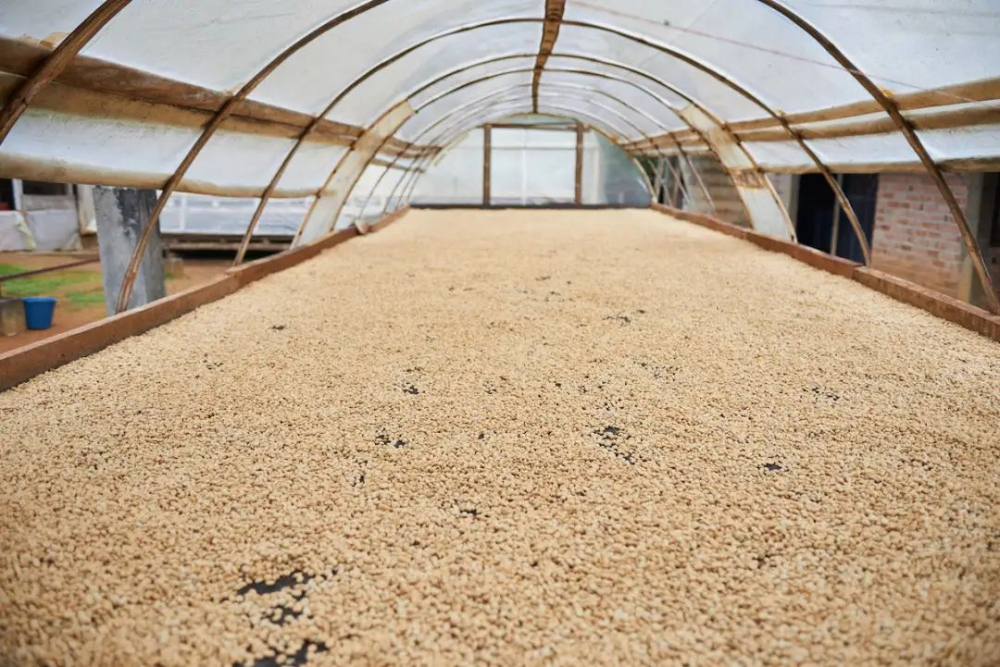
To delve deeper into the world of specialty coffee, welcome to follow the WeChat official account: Front Street Coffee (FrontStreet Coffee).
If you are a loyal fan of single-origin coffee, the Colombian series produced by Front Street is definitely worth trying. The premium Front Street Colombian coffee displays a rich and solid aroma; it does not taste overpowering on entry, nor is the acidity sharp—instead, it carries a bright and high-quality acidity. In order to fully present the full-bodied aroma characteristic of Colombian coffee, all Colombian beans on the Front Street bean list uniformly adopt a medium roast to maximize the expression of their aroma.
According to information available to Front Street, around the 16th to 17th century, a priest first brought Typica into Colombia from the Venezuelan region of the French Antilles. Although Typica has delicate floral notes and excellent acidity, its yield is unfortunately extremely low, so most coffee farmers prefer to grow other higher-yielding varieties.
When getting to know a coffee, Front Street habitually starts with its geographical location and climatic conditions. Colombia is located in the northwest of South America, bordering both the Pacific Ocean and the Atlantic Ocean. To its northwest is Panama, to the east is Venezuela, to the southeast is Brazil, to the south is Peru, and to the southwest is Ecuador. Colombia has a mild and humid climate, and its diverse climate types allow coffee to be harvested throughout the year, with the main harvest season concentrated from October to January and the secondary harvest season from April to July. Coffee of different varieties ripens in succession at different times. What is grown locally is all Arabica of unique quality, and the flavor expression of Colombian coffee beans is: rich mouthfeel and a long finish, making it a representative of specialty coffee.
Superior geographical conditions naturally give rise to numerous producing regions. Colombia has a considerable number of producing regions, among which the better known include Medellin, Armenia, and Manizales; these three producing regions are customarily collectively referred to as "MAM."
Next, Front Street will briefly introduce several Colombian coffees for everyone.
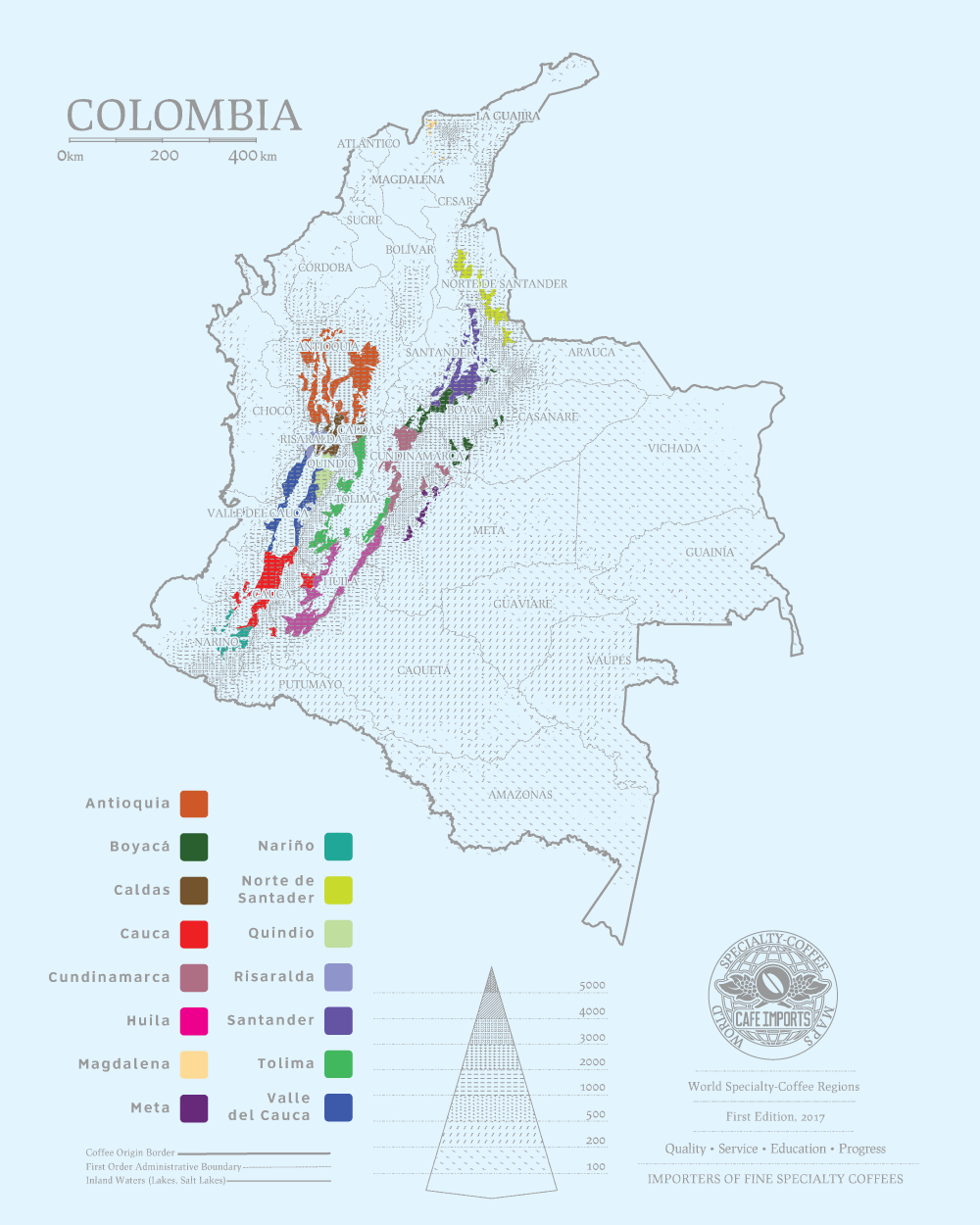
Front Street has multiple coffees from Colombia's Huila region. The province of Huila is located in the southern section of Colombia's Central Cordillera and is the country's most renowned specialty coffee producing region. Here hills roll on continuously and mountains surround the area, with altitudes generally above 1,500 meters, and important rivers flow through, bringing abundant rainfall. Such a geographical environment provides ideal conditions for the growth of high-quality coffee. Precisely because of this, Front Street selected coffee from Colombia's Huila region as one of Front Street's seven daily staple beans, aiming to let enthusiasts taste the most original, cleanest, and brightest flavor of Colombian coffee. The washed processing method can to the greatest extent showcase the unique charm of Front Street's coffee from Colombia's Huila producing region.
1. Front Street Colombia Huila Coffee
Producing region: Colombia Huila
Altitude: 1,500-1,800 meters
Variety: Caturra
Processing method: Washed
Flavor: Dark chocolate, nuts, and caramel notes on entry, accompanied by soft fruit acidity.
This Front Street Colombia Huila coffee is named directly after its place of origin, which sufficiently shows that the coffee quality of this area can represent the unique style of the Huila producing region. 100% Arabica, screened according to bean size and single variety. Its most notable characteristics are purity and balanced softness.
In recent years, when mentioning the specialty coffee producing region Huila, one always thinks of the Finca El Diviso that appeared at the World Barista Championship. Here we recommend Front Street Sidra Coffee and Front Street Big Belly Coffee; both beans adopt a medium roast and possess charming floral notes and a juicy feel, suitable for various brewing methods such as moka pot, coffee machine, cold brew pot, pour-over, and clever cup, thus becoming the first choice of many coffee enthusiasts. Everyone can go to the Front Street Tmall flagship store to place orders.
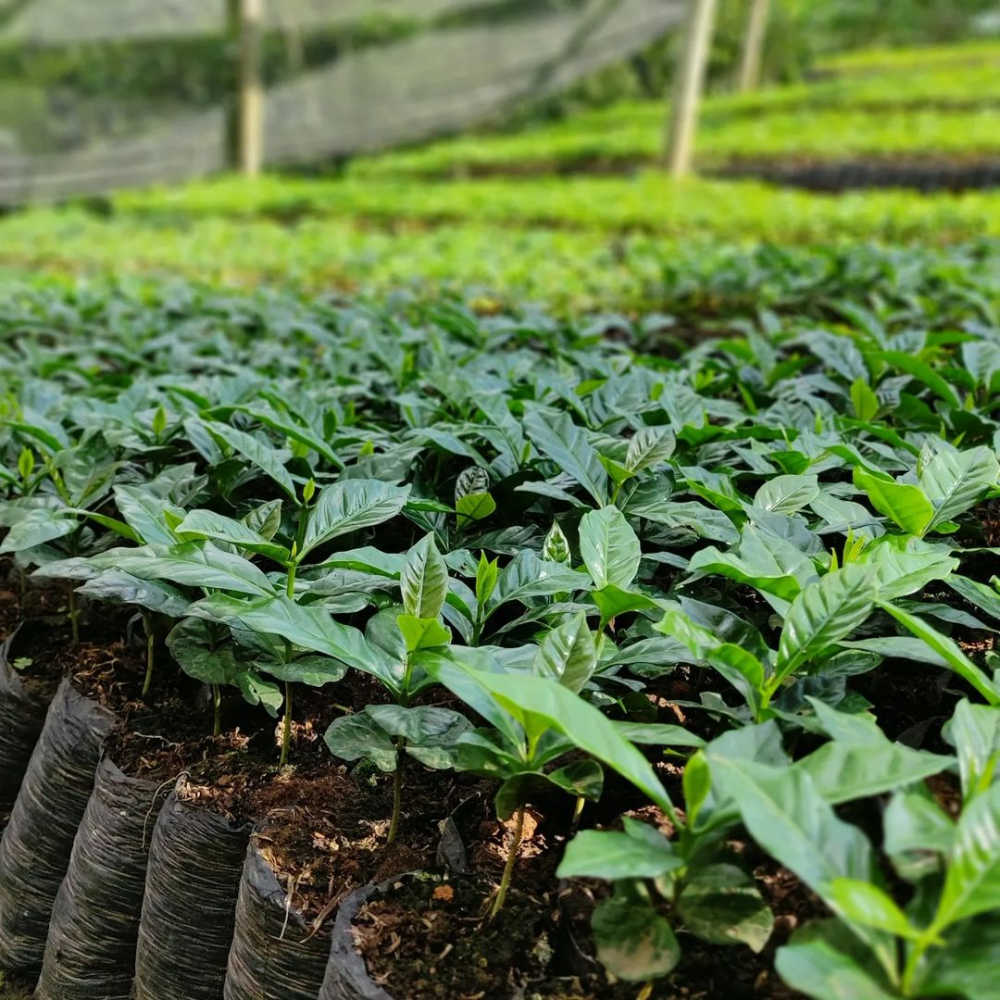
2. Front Street Colombia Flower Moon Night Coffee
Producing region: Huila Acevedo Gaitania Farm
Processing method: Anaerobic natural
Variety: Caturra
Altitude: 1,800 meters
This Front Street Flower Moon Night adopts the currently popular anaerobic processing method, presenting an extremely rich strawberry jam flavor, with prominent fermentation aromas and a sweet chocolate mouthfeel that is intoxicating.
In terms of specific operations, the coffee cherries are first loaded into sealed fermentation tanks, and low-temperature fermentation is used to extend the entire fermentation cycle, granting the coffee more flavor possibilities through 15 to 20 days of fermentation. As time brews it, slow drying allows the coffee cherries to develop their optimal water activity during this process, which is beneficial both for flavor development and for allowing the green beans to remain longer during seasonal cyclic storage. After fermentation is completed, the coffee cherries are then sun-dried. Front Street understands that the basic flavor of Colombian coffee in everyone's perception is nuts and chocolate, while Colombia continuously innovates in coffee post-processing methods, giving rise to many beans with prominent flavors, and Front Street has always kept paying attention. On this basis, this Front Street Flower Moon Night also displays rich fruity aromas, which is surprising.
3. Front Street Colombia Rose Valley Coffee
Estate: Colombia Big Tree Estate
Producing region: Santander producing region
Processing method: Anaerobic double enzyme washed
Altitude: 1,700 meters
Variety: Caturra
The coffee variety of Front Street Rose Valley is Caturra, commonly seen in the Americas. Caturra is a natural mutation of Bourbon, discovered in Brazil in 1937. It continues the citrus and nut tonality of the Bourbon variety, while its short stature instead gives it higher yield. After cupping many Colombian and Brazilian coffee beans, Front Street found that the difference between Colombian and Brazilian coffee beans lies in: Front Street Colombian coffee has a rich and solid aroma, excellent acidity, and extremely high balance; while Front Street Brazilian coffee is smooth on entry, lower in acidity, and outstanding in body. Colombia has quite a few excellent coffee estates, and Front Street also turned its attention to Big Tree Estate, which has been in operation for more than 20 years; its rich peach flavor astonishes many enthusiasts who love peach oolong.
Front Street Colombia Rose Valley coffee beans adopt the anaerobic enzyme washed processing method. The first half of this method is similar to the washed processing method: first, defective beans are removed through flotation, then the pulp and skin are removed by machine, after which the processed coffee beans are placed into a sealed container, carbon dioxide is injected to expel oxygen, and under an oxygen-free environment the decomposition rate of sugars in the coffee mucilage is slowed, and the pH value also declines at a slower rate, thereby extending the fermentation time. Coffee beans from this producing region are known for their intense taste, lasting finish, and unique fresh herbal flavor.
4. Front Street Colombia Sakura Coffee
Producing region: Colombia Cauca producing region
Coffee estate: El Paraiso Estate
Growing altitude: 2,050 meters
Coffee variety: Castillo
Processing method: Double anaerobic washed
Flavor: Sakura, osmanthus, passion fruit; sweet aroma, rounded mouthfeel, lasting finish.
This coffee, through double anaerobic washed processing, displays aromas of mugwort, mint, and eucalyptus, as well as flavors of berries and strawberry candy.
The terrain, rainfall, temperature, and volcanic soil of Cauca province create excellent conditions for growing Colombian coffee. Therefore, this place is generally regarded as a region of certified Colombian origin. 80% of the province is mountainous, and the high altitude creates the characteristic of a large temperature difference at night, enabling coffee seeds and fruits to fully absorb nutrients, and also giving Cauca province's coffee better acidity and widely praised sweetness.
In addition to growing Caturra, Bourbon, Typica, and Pacamara, which are common in the Americas producing regions, El Paraiso Estate also grows three disease-resistant varieties unique to Colombia, namely Castillo, Tabi, and the Colombia variety that shares the country's name, and is planning to try other different varieties.
This Front Street Colombia Sakura bean adopts the most popular processing method in recent years; generally, coffee cherries are placed in an anaerobic environment for fermentation, then removed from the anaerobic environment for the next step of processing. This method is called anaerobic fermentation processing. Therefore, this Front Street Sakura bean has the acidity of citrus lemon and a smooth mouthfeel.
5. Front Street Colombia Huila Decaf Coffee
Producing region: Colombia Huila
Altitude: 1,750 meters
Variety: Typica, Caturra, Castillo
Processing method: Swiss Water decaffeination
Flavor: Dark chocolate, caramel, nuts; rich mouthfeel.
This batch of Front Street Colombia Huila Decaf Coffee includes three varieties: Typica, Caturra, and Castillo. Among them, Caturra is a natural mutant variety of Bourbon with extremely strong adaptability; it requires no shade trees and can be directly exposed to sunlight, commonly known as sun-exposed coffee. It adopts Swiss Water decaffeination technology.
The Swiss Water process was developed by the Swiss company Coffex in the late 1970s, and SWISS WATER® is now patented. This processing method soaks green coffee beans in hot water; the soaking stage actually already partially removes caffeine. The soaked solution is then filtered through activated carbon, and finally the solution is returned to the coffee beans. This series of steps can more effectively remove caffeine. In addition to requiring no chemical solvents, the soaked solution can also be reused in processing procedures for different batches, but the coffee will still lose some flavor during the filtration process. The caffeine removal rate of this method can reach 99.9%, and it is also the method with the highest caffeine removal rate. This Front Street Colombia Decaf coffee bean satisfies the needs of some people who want to drink coffee but do not want to consume too much caffeine.
6. Front Street Colombia San Jose Estate Coffee
Processing method: Fine washed rum barrel processing method
Variety: Castillo variety
Altitude: 1,750 meters
Flavor: Rum, liqueur chocolate, tropical fruit, maple syrup
Castillo is a new-generation coffee variety resistant to leaf rust, jointly cultivated by the Colombian Coffee Growers Federation (FNC) and the National Coffee Research Center of Colombia (Cenicafé). After 23 years of research and experimentation, Cenicafé developed the fifth generation of Castillo and officially promoted commercial cultivation in 2005. Castillo is known for its smooth mouthfeel, aroma, and citric acidity.
This Front Street San Jose Estate coffee bean that Front Street obtained adopts the washed rum barrel fermentation method: after the coffee cherries are depulped, they are placed into aged oak barrels for low-temperature fermentation; after low-temperature fermentation, they undergo washed processing, and finally they are dried on raised sun-drying beds. Colombia's uniquely advantaged natural conditions produce coffee with a full mouthfeel, nut and dark chocolate aromas, and smooth, pleasant fruit acidity. Therefore, Colombian single-origin coffee has always been deeply loved by the public. Enthusiasts who like pour-over coffee must not miss these Front Street Colombian coffees recommended by Front Street.
How does Front Street Coffee (FrontStreet Coffee) brew Front Street Colombian coffee beans?
After Front Street introduced multiple Colombian coffee beans above, everyone can roughly understand what different flavors each bean presents through different processing methods. At the same time, this also gives rise to a question that friends often ask curiously in the store: how do you drink Front Street Colombian coffee?
[Brewing Parameters]
Because Front Street Colombian coffee aims to highlight its aroma and high-quality acidity, the Hario V60 dripper is used during brewing. The V60 dripper has a large opening, and together with its spiral rib design, air is more easily expelled, thereby improving extraction quality. The extracted coffee has a relatively light mouthfeel, with more obvious fruit acidity and aroma.
Dripper: Hario V60
Water temperature: 90℃
Dose: 15 grams
Coffee-to-water ratio: 1:15
Grind size: EK43s#10 (80% passing rate on China standard No. 20 sieve)
When brewing Front Street Colombian coffee, Front Street uses a three-stage pouring method. First pour 30 grams of water for a 30-second bloom, then pour the second stage of water up to 125 grams for segmentation; when the water level drops until the coffee bed is about to be exposed, pour the third stage of water up to 225 grams and stop pouring; wait until the water in the dripper has completely dripped through, then remove the dripper. Total extraction time 2'00''.
Through repeated brewing and careful observation, Front Street found that beans such as Front Street Flower Moon Night and Front Street Rose Valley—besides the fact that Front Street's coffee beans are usually freshly roasted within five days, which causes the coffee particles to absorb water and expand during the bloom—also, due to special processing, the coffee particles easily absorb water and expand, but the water flow rate during extraction is too fast; when pouring, the water flow should be controlled to be as small as possible.
The above content is compiled by CoffeeHunters, a coffee news website.


