







Why Does Arabica Coffee From Rwanda Taste the Way It Does?
Rwanda, the Land of a Thousand Hills, grows Arabica coffee on mountains and plateaus with fertile volcanic soil, plentiful rainfall and mild temperatures year-round. Coffee covers about 33,000 hectares nationwide and supports roughly 500,000 people, and exports are an economic pillar for this landlocked country. Most production comes from smallholders whose cherries go to nearby washing stations for fully washed processing.
That washing station system reshaped quality fast: the national count rose from 2 to 220 in about 12 years, all now privately held by exporters or cooperatives. Because the average farm holds fewer than 200 coffee trees, each station serves about 50 to 100 farms. Red Bourbon, washed and roasted medium-light, shows the clean, sweet profile that places Rwanda among the main coffee producers in Africa.
Rwanda is known as the Land of a Thousand Hills, with a terrain dominated by mountains and plateaus. It has fertile volcanic soil, abundant rainfall, and mild temperatures, making it an ideal place for growing Arabica coffee. Coffee exports are even the economic lifeline of this landlocked country. Front Street Coffee takes you through Rwanda's coffee-growing environment, the twists and turns of its development during the colonial period and after independence, the differences between the main southern and western production regions, and the varieties and processing methods centered on Red Bourbon and washed processing. The article also includes Front Street Coffee's medium-light roasting curve, cupping performance, and staged brewing parameters to help you fully grasp the flavor profile of this Rwandan washed Red Bourbon.
Rwanda is located inland in Africa. Its land area is not large, and after repeated periods of turmoil it has gradually moved toward stability, with its economy slowly recovering as well, and coffee exports are precisely an important economic pillar of this country. Today, Front Street Coffee will talk about Rwandan coffee.
Rwanda is called the Land of a Thousand Hills. Its terrain is mainly mountains and plateaus, and most areas have a tropical highland climate and tropical savanna climate, making it generally mild and cool. Coffee plantations nationwide cover about 33,000 hectares, and about 500,000 people make a living from coffee cultivation. Here, soil, altitude, and climate are perfectly combined, providing superior natural conditions for growing Arabica coffee: fertile volcanic soil, sufficient rainfall, and suitable temperatures year-round create the distinctive taste of local coffee.
Similar to most coffee-producing countries in Africa , Rwanda is also dominated by smallholder production. Under government promotion, farmers no longer process the beans themselves in a rough way. Instead, they send newly harvested cherries to nearby Coffee Washing Stations, where fully washed processing is uniformly adopted. In just 12 years, the number of washing stations nationwide increased from 2 to 220, and today all are privately owned, held by exporters or farmer cooperatives. Because the average farm plot is very small (each estate has on average fewer than 200 coffee trees), each washing station serves about 50 to 100 farms.
The Development of Coffee Cultivation in Rwanda
Rwanda is located in central Africa and is a standard landlocked country, with almost all its neighboring countries being major coffee producers. In the early 20th century, Rwanda successively became a colony of Germany and Belgium, and coffee was first introduced by German missionaries. Although production increased greatly during the colonial period, exploited labor, suppressed crop prices for coffee, and high export taxes meant the quality of the coffee beans was not ideal. This was also the general situation of commercial coffee at the time. Front Street Coffee notes that Brazil, which also experienced colonial rule, likewise long suffered a reputation for poor coffee quality because it emphasized quantity over quality.
After Rwanda gained independence, it established its first official coffee organization, OCIR, and only then gradually began to place importance on coffee bean production. From the 1960s to the 1980s, Rwanda's coffee production continued to grow, reaching a historical peak in 1986. It was not until the domestic political instability of the early 1990s (the Rwandan genocide) that the coffee industry fell into stagnation.
Today Rwanda has slowly regained its vitality. After 1995, relying on vigorous government development and the support of foreign nongovernmental organizations and private groups, the country returned to stability. However, this year, affected by the COVID-19 pandemic, Rwandan coffee sales have inevitably been hit. To help local coffee farmers get through the crisis, on May 14, Viya, Alibaba's top livestreaming host, recommended Rwandan coffee beans and sold a year's worth of sales in one second.
Front Street Coffee has also recently purchased several batches of Rwandan coffee beans from different production regions. First, because Rwanda's coffee industry is developing rapidly and quality is guaranteed; second, because Rwanda has gradually formed a distinct regional flavor that differs from Ethiopia and Kenya.
Rwanda Coffee Production Regions
Rwanda's land area is only four times that of Guangzhou. It is small, and the coffee-growing altitudes are similar, so the flavor differences among coffee beans from different areas are not too great.
Rwanda's Arabica coffee bean production regions are mainly distributed in the south and west. The higher-altitude mountainous areas of Huye and the Nyamagabe region in the south give coffee beans floral and citrus flavors; the Nyamasheke region by Lake Kivu in the west is rich in high-quality coffee with a full body and aromatic, juicy character.
Front Street Rwanda Washed Red Bourbon Coffee Beans
Region: Nyamasheke region
Altitude: 1500m
Variety: Red Bourbon
Processing method: Washed processing
Coffee Variety
More than 90% of Rwandan coffee varieties are the Bourbon variety introduced early on, as well as mixed varieties of the Bourbon family, which have the ability to resist natural disasters. Bourbon coffee was first planted on Réunion Island and was introduced to Brazil in 1860, then quickly spread northward throughout Latin America. Among the several Latin American Bourbon coffee beans currently purchased by Front Street Coffee are Brazil Red Bourbon, Brazil Yellow Bourbon, and Colombia Pink Bourbon. However, the advantages of Bourbon in Latin America no longer exist because of its poor disease resistance. By contrast, Rwandan Bourbon still retains its advantages, which is one reason Front Street Coffee purchases Rwandan coffee beans.
Processing Method
In 2000, Rwanda, having just experienced internal chaos, launched two major coffee development plans, PEARL and SPREAD, with funding from the United States Agency for International Development (USAID), aiming to support Rwanda's reconstruction. After the plans were implemented, Rwanda successively built 46 coffee washing stations, and the strong export of coffee beans drove significant economic growth.
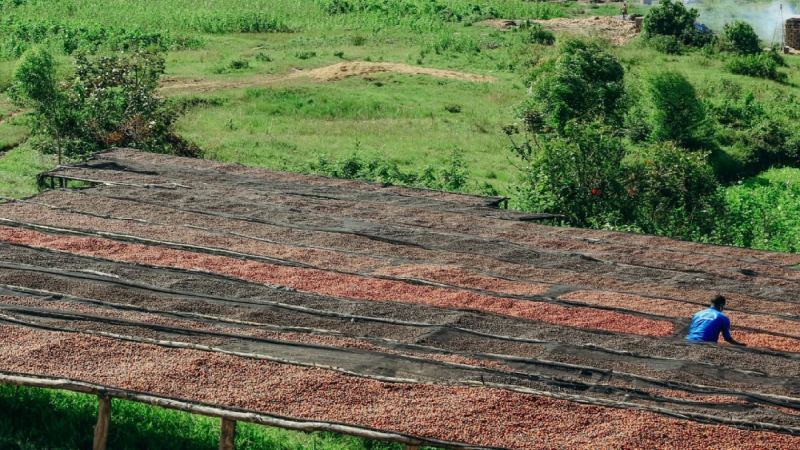
Therefore, Rwandan coffee beans are currently mainly processed by the washed method. Ripe cherries are selected by hand, the skin and pulp are removed, washed fermentation is carried out for 12 to 18 hours, the mucilage is cleaned off, and finally the beans are dried until the moisture content is below 14%.
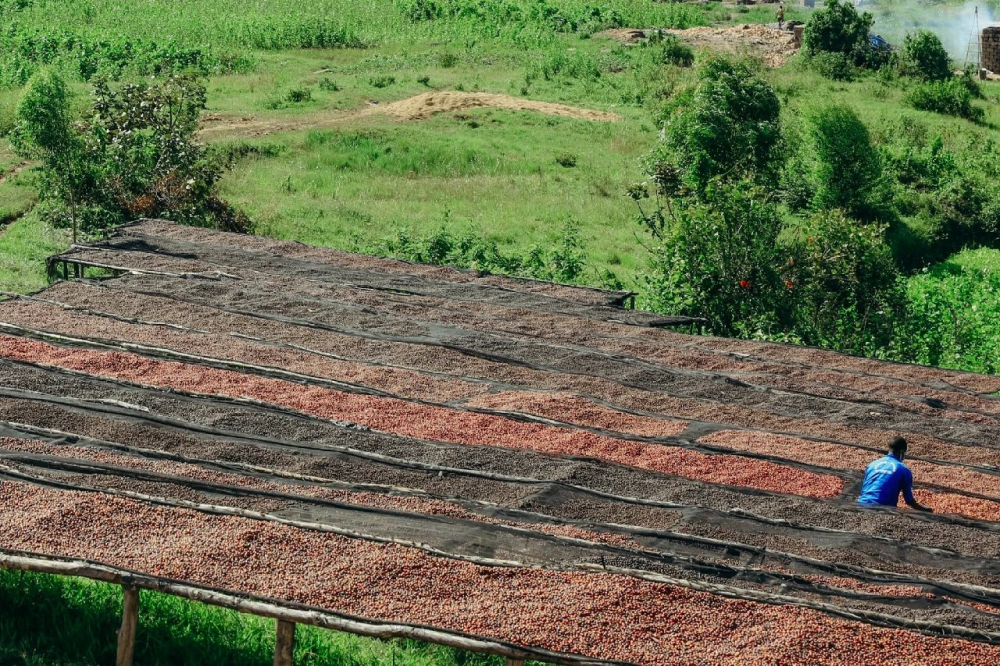
Front Street Coffee believes that establishing washed processing as the main method when Rwandan coffee beans first began to develop was a choice that can clearly highlight coffee flavor. This is because washed processing best reflects the essential flavor of coffee. When recommending a coffee production region, Front Street Coffee also first recommends washed coffee beans to customers, so they can understand the flavor characteristics of that region relatively clearly.
Front Street Coffee Roasting Recommendations
Rwandan coffee beans have a fresh acidity. In order to highlight this flavor, Front Street Coffee recommends using a medium-light roast.
Bean drop temperature: 175°C
Yellowing point: 5'55", 152.1°C
First crack: 9'20", 183°C
Development after first crack: 2'00'', removed from the roaster at 194.4°C
When Front Street Coffee cupped this Rwandan washed coffee, the dry aroma showed obvious floral and berry notes, the wet aroma had honey sweetness and nutty notes, and the overall flavor presented bright acidity with citrus, berries, and nuts, while the aftertaste was a caramel sweetness.
Front Street Coffee Brewing Recommendations
Coffee grounds: 15g
Ground coffee to water ratio: 1:15
Water temperature: 90°C
Grind size: fine grind (80% passing a No. 20 standard sieve)
Front Street Coffee uses staged extraction. Use 30 grams of water for a 30-second bloom, then pour in a small stream in a circular motion until 125 grams, at which point staged pouring begins. When the water level drops and is about to expose the coffee bed, continue pouring until 225 grams and stop. When the water level drops and is about to expose the coffee bed again, remove the dripper. The extraction time is 2'00" (starting from the beginning of the bloom).
Front Street Rwanda Washed Red Bourbon Flavor Description
Floral and berry aromas, with obvious citrus, berries, and plum on the palate, nutty notes in the middle, and a caramel sweetness in the aftertaste.
The above content is compiled by CoffeeHunters, a coffee news website.


