







Why Is Americano So Bitter When Espresso Parameters Drift?
Americano turns bitter when espresso extraction drifts. The same beans can pull balanced one day and sour or astringent the next because carbon dioxide keeps escaping after roasting and because air temperature, humidity and pressure change. Gas inside the puck creates resistance, and as it fades the same recipe extracts differently.
How bitter is americano depends on how those variables are handled. Three correction paths help: adjust the brew ratio first, then the dose, and change grind size last. A medium-dark classic espresso blend needs roughly a 7 to 10 day rest, then shows rich crema with dark chocolate, butter, cookie and roasted hazelnut notes.
Have you ever run into this situation: the same bag of beans pulls an espresso that sometimes tastes balanced, and sometimes is so sour it prickles, or so bitter it turns astringent? The key behind this is that the extraction state keeps drifting as the coffee beans degas and as ambient temperature, humidity, and air pressure change. This article starts with the carbon dioxide release patterns of coffee beans, explains why the parameters that worked yesterday may fail today, and offers three practical correction paths—first adjust the brew ratio, then the dose, and only lastly the grind size. It also combines the resting characteristics of Front Street Coffee's classic espresso blend to explain the ideal usage window for medium-dark roasted beans. If you just want to drink comfortably at home, you can also skip the complicated adjustments and find a casual approach that suits you.
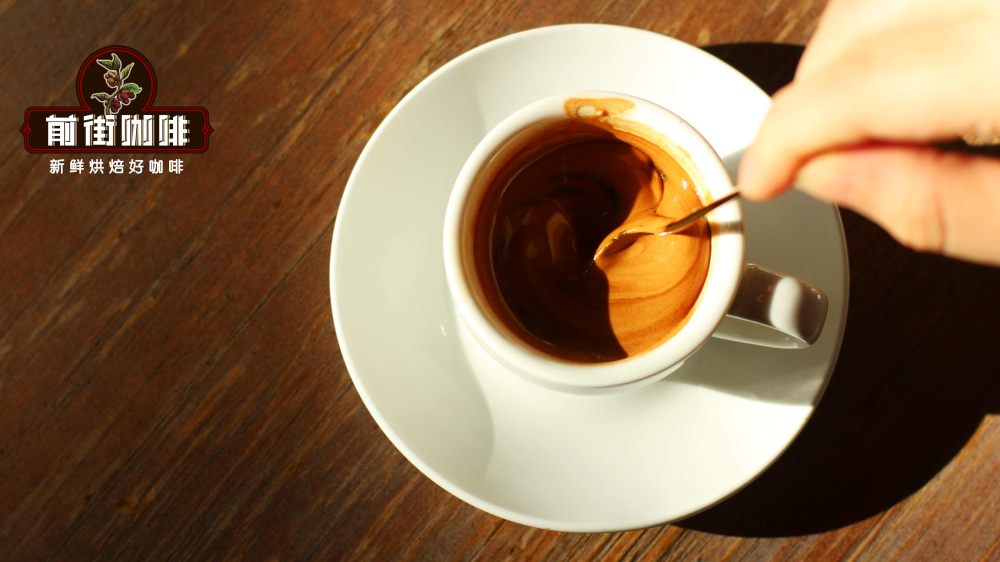
Has everyone ever encountered this: you pull an espresso, and sometimes it tastes incredibly smooth, while other times it's so sour it makes you frown!! Or the bitterness is so heavy it's hard to swallow!!!
Why does coffee change flavor?
The fundamental reason espresso tastes one way today and another way tomorrow is that the extraction process is governed by three variables: the state of the coffee beans themselves, air temperature, and humidity.
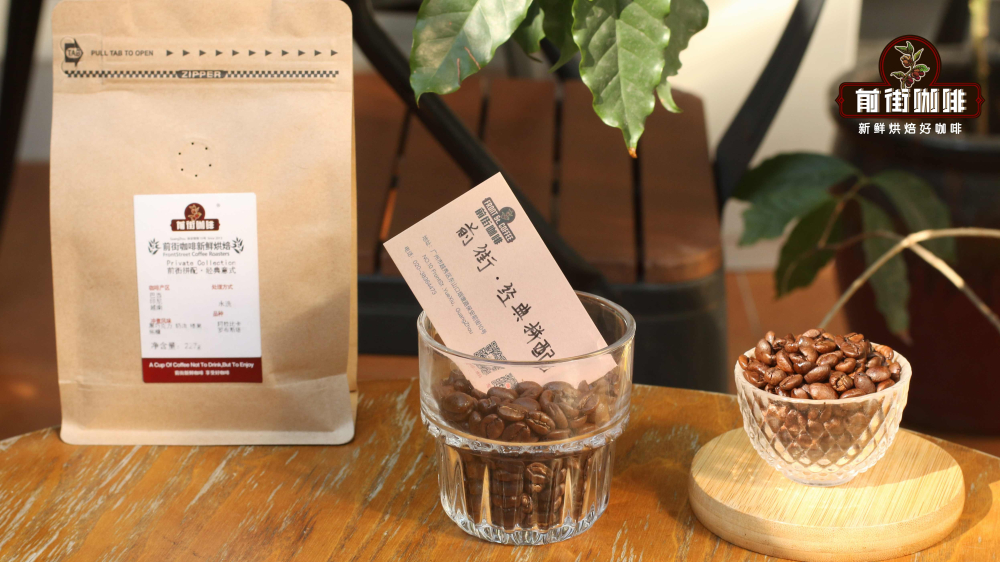
After roasting is finished, coffee beans continuously release carbon dioxide, and only when they enter their optimal flavor window does the internal state of the beans become relatively stable, so the flavor won't fluctuate too much. Take Front Street Coffee's classic espresso blend, which many home users like—because it is a medium-dark roast, it needs a 7 to 10 day resting period, and when it reaches the ideal state it presents a rich crema along with caramel-toned flavors like dark chocolate, butter, cookies, and roasted hazelnuts.
The amount of carbon dioxide stored inside the coffee beans is constantly changing. During extraction these gases create a certain resistance, and as the gas gradually escapes, the resistance slowly weakens, ultimately causing the extraction parameters to drift.
For example: on the first day you use 19g of coffee grounds and take 30 seconds to extract 38ml of liquid; but overnight the beans keep degassing, and the resistance is no longer as strong, so on the second day, using the same 19g of grounds to extract 38ml of liquid may only take 26 to 28 seconds.
There are also changes in humidity and air pressure! The higher the indoor humidity, the more water molecules there are in the air, and coffee beans in a dry environment easily absorb large amounts of water molecules, thereby disrupting the stability of espresso extraction; fluctuations in air pressure can also slightly affect the strength of the espresso machine's extraction pressure.
So if you copy yesterday's parameters to extract today's beans, you likely won't reproduce yesterday's taste. This is also why the first thing a barista does every morning is—calibrate the espresso's flavor, with the goal of keeping each day's coffee at a stable taste.
How do you calibrate espresso?
First, don't rush to change the grind size! Grinding is the last resort, because every time you adjust the grinder, you have to sacrifice at least one dose of coffee grounds as a "cannon fodder," and it's still mixed with grounds from the previous grind, so the extracted data has no reference value at all! It can only be thrown away.
If the parameters are roughly the same as yesterday's (for example, yesterday it was 18g of grounds extracting 36ml in 30 seconds, and today it's 18g of grounds extracting 36ml in 28 seconds), then we can start with the brew ratio.
The brew ratio for espresso
In the pour-over coffee world there is a widely recognized "golden brew ratio" of 1:16, but when it comes to espresso, there is instead no precise standard—the default brew ratio everyone uses is 1:2, meaning 1g of grounds extracts 2ml of liquid.
The reason there is no precise standard is that espresso extraction can be affected by too many factors, and it can't be handled by simply applying a template like pour-over to meet the need.
So when the espresso shows a sharp sourness, it's most likely under-extracted. We can lengthen the extraction time, increasing the original 18g of grounds extracting 36ml of liquid to 38ml, increasing by 2ml of liquid each time. If you can clearly feel the sharpness of the acidity decreasing, that means the adjustment direction is right.
But if a bitter flavor appears, that means the extraction amount has exceeded the aromatic substances that can be extracted, resulting in over-extraction, and at this point you need to adjust downward and reduce the extraction amount!
The dose of coffee grounds
Besides the brew ratio, you can also adjust the strength by adding or subtracting the amount of coffee grounds. A change of 0.2g of grounds is enough to make a big difference in the coffee's taste, so when adjusting the dose, also increase (or decrease) gradually by 0.2g.
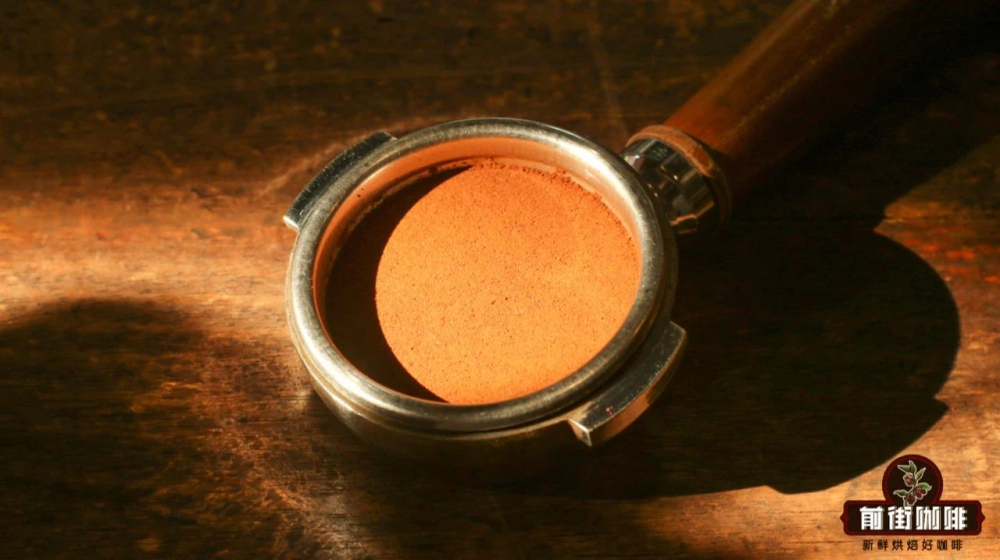
For example, if you used 19g of grounds and took 30 seconds to extract 38ml of liquid, but still feel it's under-extracted and a bit sharp (or over-extracted and bitter). Then, on the premise of keeping the liquid weight unchanged, you can appropriately reduce the dose, adjusting in increments of 0.2g each time.
Grind size
When the dose has already reached the limit of the portafilter basket—for example, a 20g basket filled with 20g of coffee grounds, but the extraction time is very fast, extracting 38-40ml of liquid in just 24 seconds, and it tastes very sharp! This phenomenon indicates the grind is too coarse, the gaps are too large, and the grounds cannot fully contact the hot water, causing ineffective extraction. At this point you must adjust the grind!
Turn the setting a small notch toward the smaller number, then discard the first batch of grounds from the grinder, and then use the same dose to extract the same liquid. You'll find the extraction time is longer than before and the flavor is fuller, and then you can use the above two methods for fine-tuning!
But if it's the same 20g dose and it takes more than 40 seconds to extract 38ml of liquid, and the espresso smells strongly burnt, then the extracted coffee liquid is most likely over-extracted.
At this point you need to adjust the grind toward the larger number—the larger the number, the coarser the grind—to increase the size of the gaps the water can pass through and reduce the extraction strength. Finally, use the first two methods for fine-tuning, and you'll get a properly extracted espresso!
Once you've mastered the adjustment techniques, you'll be able to quickly find the corresponding adjustment method. Sharp sourness, bitterness, and blandness are all no problem! But if you're just at home satisfying your daily cravings, with no need for output! Then there's no need for all this trouble—the convenient way that suits you is what matters most~
The above content is compiled by CoffeeHunters, a coffee news website.


