







Where Does the Coffee in Ana Sora Dorothy Beans Come From?
Coffee is made from which plant? It comes from Coffea trees, and Ethiopia is the birthplace of that plant. The Dorothy beans from the Ana Sora Estate in the Guji region use enzyme-washed processing, giving delicate floral notes, intense peach aroma and an oolong tea-like finish that resembles white peach oolong.
Ethiopian specialty lots usually follow natural or washed methods, yet simple techniques reveal distinct flavors. The Sidamo region has produced sweet, juicy fruit-forward coffees, and Front Street's Hambela Flor won the 2017 Ethiopia TOH natural group. The newer Sidamo offering shifts from intense berry to a refreshing peach profile.
Ethiopia, as the birthplace of coffee, has given rise to countless stunning specialty coffees. From the classic natural and washed processing methods to the enzyme-washed technique that has gained much attention in recent years, different processes impart vastly different flavor expressions to coffee beans. The Dorothy coffee beans launched by Front Street Coffee are a representative work from the Ana Sora Estate in the Guji region. Processed with the enzyme-washed method, they present delicate floral notes, intense peach aroma, and an oolong tea-like sweet finish, overall resembling a cup of white peach oolong tea. This article will provide an in-depth introduction to the background of Ana Sora Estate, the processing method of Dorothy, and roasting and brewing recommendations, giving you a comprehensive understanding of the unique charm of this popular fruit tea-flavored coffee bean.
Ethiopia is widely recognized as the birthplace of coffee, and the specialty coffees produced on this land are too numerous to count, with many seasoned coffee enthusiasts singing their praises. Most local specialty coffee beans are processed using either the natural or washed method. Even though the techniques may seem simple, they can reveal surprisingly unique flavors. Among them, the Sidamo region has produced many coffee beans that are sweet, tangy, and full of juicy fruitiness.
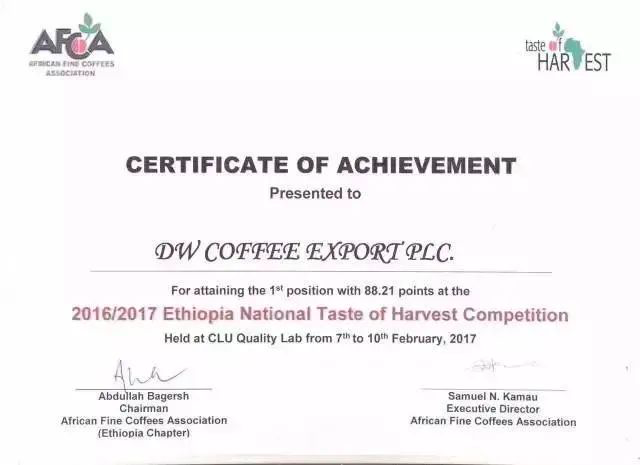
Sidamo is one of Ethiopia's important coffee-producing regions and a abundant source of high-quality specialty beans. Front Street's Hambela Flor is a typical example—in 2017, Flor coffee beans won the championship in the natural group of the TOH competition in the Ethiopia region with their intense strawberry cream flavor; subsequently, they helped contestant Li Jianfei secure second place in the World Brewers Cup China region, where the competition field was almost entirely Geisha coffee beans. In the years since, the captivating berry cream profile of Front Street Flor has been evident to all.
Now, Front Street's Sidamo coffee beans have made a fresh appearance, no longer following the intense berry route but instead presenting a refreshing peach flavor, giving many coffee lovers a new understanding of this region. There is a popular fruit tea-flavored coffee bean on the market that has received many positive reviews whether brewed as a hot pour-over or cold brew.
While white peach oolong-flavored coffee is certainly appealing, such a prominent flavor has led many to overlook that this "hot favorite" actually comes from the Guji region. The Guji region was originally part of Sidamo. Starting in 2010, the Ethiopia Commodity Exchange (ECX) separated Guji from Sidamo, aiming to create more specialty coffee regions similar to Yirgacheffe. Today, Guji has become a key development project in Ethiopia.
In recent years, the quality of specialty coffee from the Guji region has been evident to all, with Guji coffee beans frequently appearing in the TOH green bean competition and COE competition. Two Guji region coffee beans on Front Street's menu have won championships in the aforementioned competitions: one is Front Street Flor coffee beans, the 2017 TOH Ethiopia region natural champion; the other is Front Street Inflorescence coffee beans, the 2020 TOH washed group champion. Both beans have their own distinctive characteristics and are worth trying.
This shows that the Guji region is abundant in high-quality specialty coffee beans. The well-known white peach oolong-flavored coffee bean, with the green bean name Front Street Dorothy, comes from the Ana Sora area in the Guji region.
Front Street Coffee (FrontStreet Coffee) Ethiopia White Peach Oolong Dorothy Coffee Beans
Region: Guji
Estate: Ana Sora
Altitude: 1900m—2350m
Grade: G1
Variety: Local heirloom
Processing method: Enzyme-washed
Harvest season: 2021
Ana Sora is the name of a village in the Guji region of Ethiopia. Near the village, there is a young but quite well-known coffee plantation, which shares the same name as the village, also called Ana Sora. The estate was established in 2010, covering 250 hectares, of which approximately 150 hectares are planted with coffee. The growers have planted acacia trees, banana plants, and other vegetation near the coffee farm to provide shade for the coffee trees, while the fallen leaves and branches serve as a natural source of nutrients. The altitude here ranges between 1900 and 2350 meters, and the soil is fertile red earth rich in iron, which gives Ana Sora coffee beans their sweet and tangy flavor that is highly sought after.
Ana Sora Estate is one of the few privatized coffee processing stations in Ethiopia, currently taken over by second-generation operator Israel Degfa. In his youth, he learned much about coffee production from his father, who ran a coffee cooperative, and his mother, who sold green coffee beans at a station. Today, with years of experience and diligent management, Israel Degfa owns 48 washed processing plants and 5 natural processing plants.
Before 2018, Ana Sora Estate had no washed processing plant and only produced natural coffee beans. Since the estate is adjacent to the Turo River, they took advantage of this and built a washed processing plant in 2018, with the clean water used for washing coming from this river. The emergence of the washing station has also made Ana Sora's coffee beans one of the rare estate-style washed coffees in Ethiopia that are both produced and sold directly by the estate.
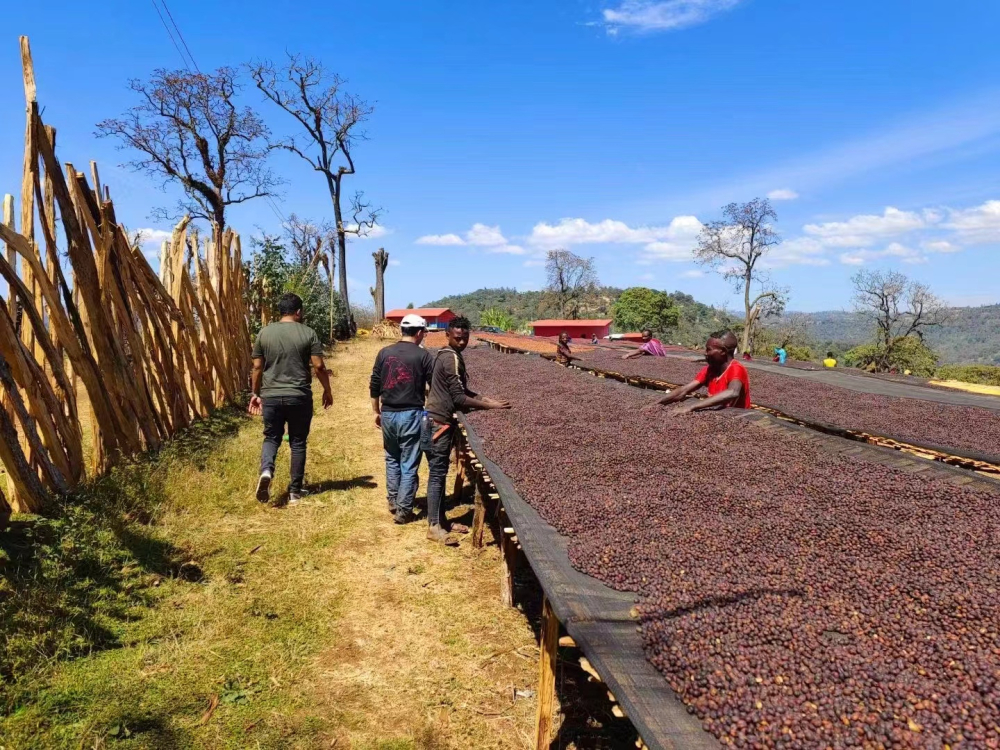
The Front Street Dorothy coffee beans launched by Front Street use the enzyme-washed processing method: first, the selected coffee cherries are depulped to remove the skin and flesh, then placed in a container with added enzymes and sealed for fermentation for 24 hours. After fermentation is complete, the coffee beans are poured into a large tank and soaked in clean water for 48 hours, then stirred. Through the friction between the beans and the force of the water, the sticky mucilage outside the parchment layer is cleaned off. Finally, the washed green coffee beans are evenly spread on drying beds to dry.
When roasting these Front Street Dorothy coffee beans, Front Street Coffee (FrontStreet Coffee)'s roasters slowed down the roasting pace and adopted a medium-light roast to highlight the bright acidity, intense peach flavor, and tea-like character, while ensuring that the local heirloom coffee beans of varying sizes are evenly heated.
When brewing these coffee beans, Front Street recommends using a Hario V60 dripper, 91°C water temperature, medium-fine grind, and a three-stage pouring method.
Dripper: Hario V60
Water temperature: 91°C
Dose: 15g
Coffee-to-water ratio: 1:15
Grind size: 80% passing through a Chinese standard No. 20 sieve
First, pour 30g of hot water to completely wet the coffee grounds and bloom for 30 seconds. Then, starting from the center point, pour in a small stream while slowly circling out to 125g for the first stage. When the water level in the dripper drops to just before exposing the coffee bed, continue circling and pouring to 225g. Once the water in the dripper has fully dripped through to the server below, remove the dripper. Total extraction time is approximately 2 minutes.
After brewing Front Street Ethiopia Dorothy coffee beans, you can smell delicate floral notes, with an intense peach aroma wafting toward you. On the palate, there is a citrus-like acidity, and the finish has an oolong tea-like sweetness. The overall experience is like a cup of white peach oolong tea.
The above content is compiled by CoffeeHunters, a coffee news website.


