







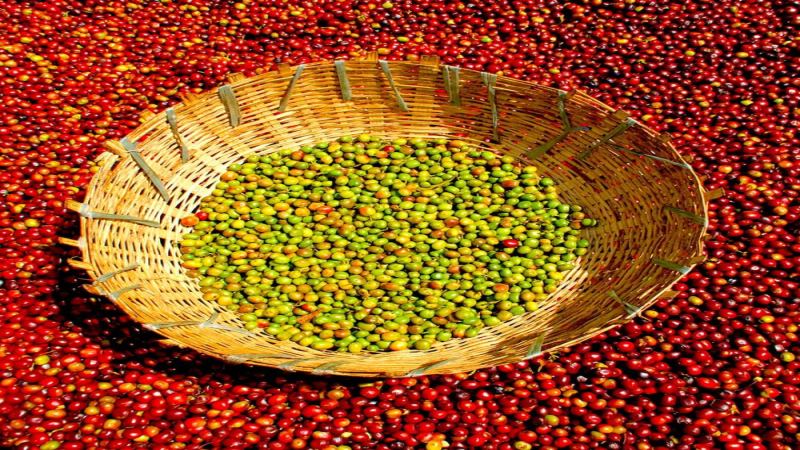
What Happens During Natural Coffee Bean Processing
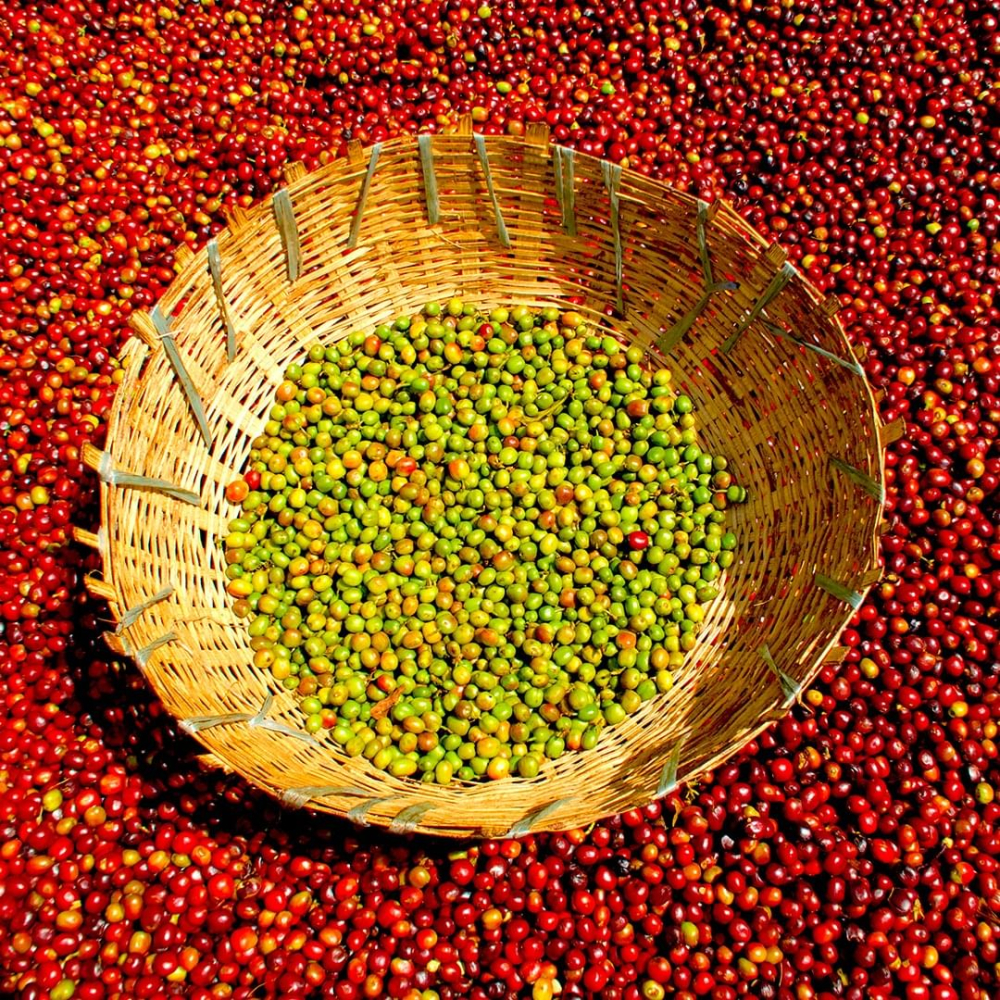
Natural coffee bean processing, also called the dry method, is the oldest approach: ripe cherries are spread evenly in the sun and turned regularly so each one dries evenly. The full sun-drying period usually runs 27 to 30 days, and it depends on continuous sunny weather. About 40% of the beans at Front Street Coffee stores are processed this way.
Drying too long makes beans brittle and cracked, producing defects, and the dried fruit skin and pulp often leave beans looking yellowish rather than attractive. Ethiopia widely uses this method because of high altitude, dry climate, and scarce water. Coffee processing choices like natural, washed, and honey each change the final cup.
As the oldest coffee processing method, the natural process is favored by many coffee lovers for its simple operation and unique flavor. About 40% of the coffee beans at Front Street Coffee stores are naturally processed, including Natural Yirgacheffe, Natural Panama Geisha, and Natural Brazil beans. This article will systematically outline the complete natural process—from fruit picking and sorting, weeks of sun-drying, to hulling and storage grading—and explain why natural beans look yellowish and less attractive yet still have outstanding flavor. It also uses three Front Street natural beans as examples to share pour-over parameters and brewing techniques, presenting their respective cupping flavor performance, helping readers fully understand the characteristics and tasting points of the natural process.
At Front Street Coffee stores, you can see a variety of coffee beans processed in different ways, among which naturally processed beans account for about 40% of all items, such as Natural Yirgacheffe, Natural Panama Geisha, and Natural Brazil coffee beans. Front Street Coffee believes that among all processing methods, the natural process is the simplest—just spread carefully selected coffee cherries evenly under the sun and turn them regularly so every cherry dries evenly. Today Front Street Coffee will walk you through the specific steps of the natural process and the flavors that naturally processed coffee beans present.
Front Street Coffee naturally processed coffee beans (with peel and pulp not removed)
Front Street Coffee washed processed coffee beans
Front Street Coffee honey processed coffee beans
Natural process
The natural process, also called the "dry method," is the oldest of all coffee processing methods. It has low requirements for equipment and facilities, yet is extremely dependent on weather conditions, requiring continuous sunny days, and the entire sun-drying process usually lasts 27 to 30 days. During drying, special attention is needed: if the drying time is too long, the coffee beans easily become brittle and cracked, resulting in defective beans. Although the steps are not complicated, naturally processed coffee beans often do not look attractive, so they are not very popular in the market. Ethiopia is a major producing country that widely uses the natural process; with high altitude, dry climate, and scarce water resources, local farmers spread harvested ripe cherries on raised beds to dry.
Natural process steps
① Collection & sorting
The harvested coffee cherries must first undergo manual hand sorting to remove defective cherries, including overripe, underripe, and insect-damaged ones, while also removing impurities and foreign matter other than the cherries.
② Drying
The sorted coffee cherries are sent to drying sites for processing. Different producing regions may use different drying facilities—tarps, raised drying beds, or concrete floors. The drying cycle averages three to four weeks, until the moisture content of the coffee beans drops to about 11%.
③ Hulling
After drying is complete, the coffee cherries are transported to the processing plant for hulling and shelling, and some are also polished. The peel and pulp are removed at this stage.
④ Sorting & storage
After hulling, the green coffee beans need to be sorted again to pick out beans with poor appearance. This step also reflects the quality of the drying stage: overly dried beans are fragile and easily break during hulling; under-dried beans have higher moisture content and stronger water activity, making them prone to bacteria or mold. After sorting is complete, the green beans are sent to warehouses for storage, waiting for export.
Front Street Coffee Natural Yirgacheffe Aricha green coffee beans
Front Street Coffee Natural Panama Janson Geisha green coffee beans
Front Street Coffee Natural Brazil Queen's Estate coffee beans
Although the above three coffee beans are different varieties, they have all undergone the natural process, and from their appearance you can see that their color is a greenish-yellow state. Next, Front Street Coffee will use [Natural Yirgacheffe Aricha coffee beans, Natural Panama Janson Geisha coffee beans, Natural Brazil Queen's Estate coffee beans] as examples to discuss the flavor performance after pour-over brewing.
Front Street Coffee Natural Yirgacheffe Aricha coffee beans
Front Street Coffee Natural Panama Janson Geisha coffee beans
Front Street Coffee Natural Brazil Queen's Estate coffee beans
The brewing parameters used by Front Street Coffee can be used for reference: V60 dripper, coffee-to-water ratio 1:15, water temperature 90℃, grind size based on 80% passing through a Chinese standard No. 20 sieve. The grind size differs for each bean because factors such as variety, altitude, processing method, and roast level all have an impact, so every time Front Street Coffee receives newly roasted beans, it first does a sieving test to determine the appropriate pour-over grind size. For these three beans, the grind sizes Front Street Coffee determined after sieving are BG#5F (Yirgacheffe Aricha), BG#4G (Panama Janson Geisha), and BG#5F (Brazil Queen's Estate). However, Front Street Coffee still recommends that even for the same brand of grinder, it is best to sieve once for greater reliability.
In terms of brewing technique, Front Street Coffee uses staged extraction, that is, three-stage pouring: first pour 30 grams of water to bloom for 30 seconds, then pour in a circular motion to 125 grams in the second stage, and when the water level drops to just before exposing the coffee bed, continue pouring to 225 grams, with a total time of about 2 minutes (including the bloom time).
[Yirgacheffe Aricha coffee bean flavor description]
Aroma of ripe fruit, with obvious fermented aroma on entry, green grapes, and as it cools slightly, citric acidity, cream, and a grape juice-like finish.
[Panama Janson Geisha coffee bean flavor description]
Maple syrup, lemon-citrus, apple, rose, and dark chocolate notes, fruity, pomegranate, ripe grapes, peaches, and dark berry flavors, with layered sweetness and acidity.
[Brazil Queen's Estate coffee bean flavor description]
With obvious sweetness, a faint lemon aroma, rich nutty flavor, and a distinct dark chocolate note in the aftertaste, the overall impression is relatively round.
For more specialty coffee beans, please add the private WeChat Front Street Coffee, WeChat ID: kaixinguoguo0925
The above content is compiled by CoffeeHunters, a coffee news website.


