







Where Do Gesha Coffee Beans Come From Originally
Gesha coffee rose to fame at Panama's Hacienda La Esmeralda, but its roots trace to the Geisha forest in southwestern Ethiopia, near the Sudanese border, at elevations of 1,700 to 2,100 meters. Gesha Village is a rare estate-level Ethiopian producer that grades its Gesha coffees into Auction, Gold, Red, Green, and Chaka.
Gesha is not a high-yield variety. Its elongated beans perform poorly at low elevations but resist leaf rust. Gesha Village's Gold Label comes from the Oma block, sun-dried for 32 days, and is built on Gori Gesha and Gesha 1931 varieties. Ethiopian and Panamanian Gesha differ in both variety and flavor.
Although Geisha coffee rose to fame at Panama's Hacienda La Esmeralda, its roots can be traced back to the Geisha forest in southwestern Ethiopia. Gesha Village, as a rare estate-level coffee producer in Ethiopia, follows the grading model of Panama's Hacienda La Esmeralda, classifying its Geisha coffees into five grades: Auction, Gold, Red, Green, and Chaka. This article will provide an in-depth introduction to the origin story of Gesha Village, its block divisions, variety characteristics, and the brewing performance of Front Street Coffee's Gold Label Geisha from this year's new crop season, giving you a comprehensive understanding of this Geisha 1931 coffee bean from the Oma block, sun-dried for 32 days.
For more specialty coffee information, welcome to follow our WeChat public account: FrontStreet Coffee
Geisha coffee gained fame because of Panama's Hacienda La Esmeralda, but its place of origin is the sparsely populated Geisha Mountain area in southern Ethiopia, located in the southwest of Ethiopia's Kaffa Forest, near the Sudanese border, at elevations ranging from 1,700 to 2,100 meters. Geisha is not a high-yield coffee variety, with elongated beans, and performs poorly in flavor at low elevations, but it is resistant to leaf rust and can be used as a mother plant for breeding hybrid varieties. Geisha grown in its native Ethiopia did not demonstrate the advantages the variety should have; instead, it was Panama's terroir and the harsh growing environment created by windbreaks that allowed Geisha coffee to fully express its varietal characteristics. Front Street has also noticed this pattern: the harsher the environment, the better the flavor of Geisha coffee.
Although they are both called Geisha, Ethiopian Geisha and Panamanian Geisha differ in both variety and flavor. Ethiopia is the birthplace of coffee, with a large number of wild coffee tree species growing within its borders. Many unknown coffee trees cannot even be identified by locals, so Ethiopians collectively refer to their country's coffee beans as Ethiopian heirloom varieties. Global coffee tree species all originated here, and Panama's Geisha coffee was likewise discovered in Ethiopia's Geisha forest. Afterwards, Geisha coffee was sent to Kenya for research, then spread to Uganda, Tanzania, and Costa Rica, and Panama's Geisha variety was introduced from Costa Rica.
The truly original heirloom Geisha coffee comes from the Gori Gesha forest in Ethiopia. Most Ethiopian coffee beans are produced in the form of cooperatives, and estate-level coffee beans are extremely rare. However, in Ethiopia's Kaffa Forest, there is an estate called Gesha Village, which borrowed the commercial operation model of Panama's Hacienda La Esmeralda and implements graded sales for the Geisha coffee beans grown on the estate.
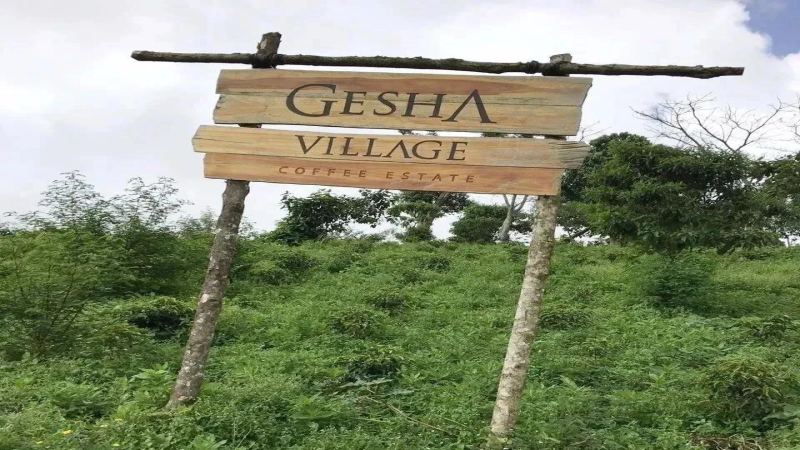
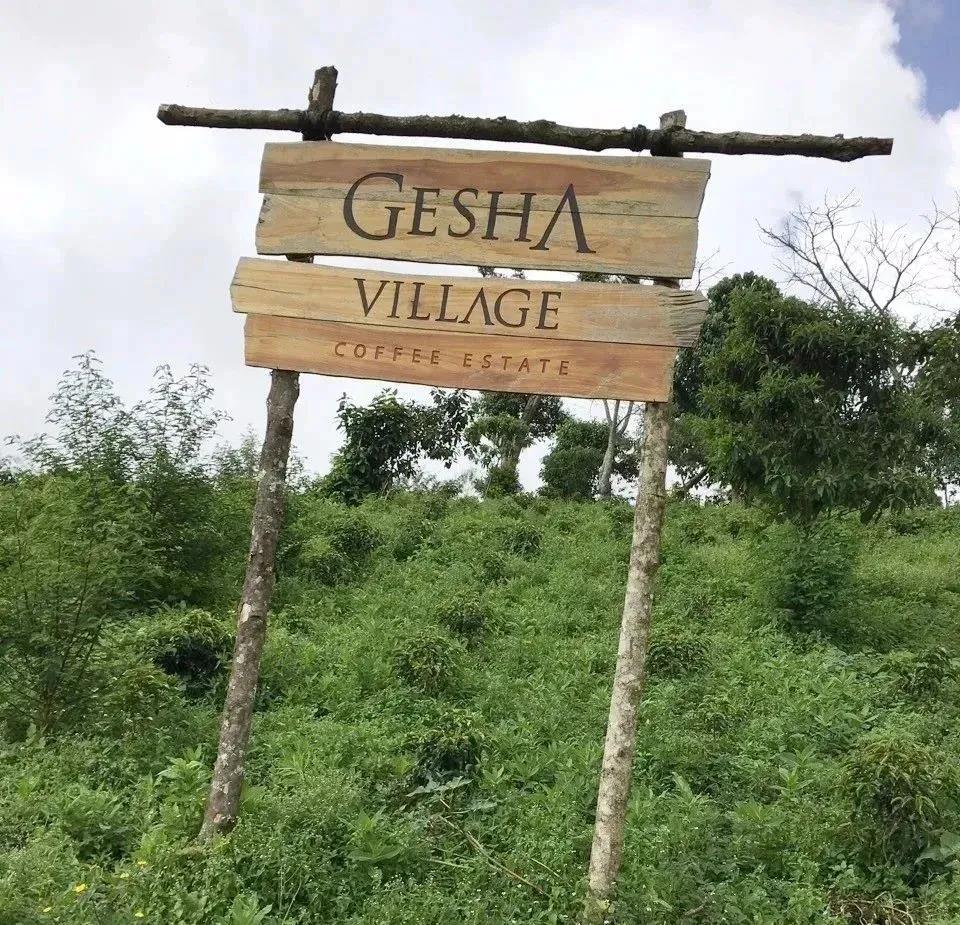
Gesha Village
Unlike the vast majority of Ethiopian farms, Gesha Village is not a small farm but a large farm covering 500 hectares, equipped with its own washing station and laboratory. The entire farm grows only Geisha varieties, rather than the generally unidentifiable Ethiopian heirloom varieties. In 2007, documentary filmmaker Adam Overton and his photographer wife Rachel Samuel, while filming a coffee documentary for the Ethiopian government, came into contact with the Gera coffee forest located in the Bench Maji region.
In 2009, they had the good fortune to meet the famous Mule Estate owner and BOP judge Willem Boot. Willem Boot's philosophy provided the Overton couple with a new opportunity—to return to Ethiopia and search for the original home of Geisha. Ultimately, Adam Overton decided to establish Gesha Village in the Gera coffee forest they had encountered, growing only Geisha coffee. Willem Boot also introduced Panama's commercial operation model to Gesha Village, which led to the formation of the grading system for Geisha coffee on the estate.
In 2015, Gesha Village welcomed its first harvest, which received enthusiastic responses from all sectors. So, with the assistance of Panama Mule Estate owner Willem Boot, the estate held its first international auction on May 31, 2017. Gesha Village offered 21 micro-lots, of which 19 were 120 kilograms, and the remaining lots were even smaller in quantity.
Gesha Village Geisha Coffee Grading System
Gesha Village implements a strict internal grading system, in order: Auction, Gold, Red, Green, and Chaka lots.
Auction
Auction lots account for only 3.7% of Gesha Village's annual production. They are the top-tier lots that stand out after rigorous层层 screening and can only be obtained through global auctions.
Gold Label RARITIES
Gold Label lots account for approximately 10% of Gesha Village's annual production, with complex flavors and extreme rarity. These rare coffees are the highest grade at Gesha Village apart from the Auction lots. Many baristas choose Gold Label lots as competition beans, and roasters with high quality requirements also purchase them. Gold Label lots have complete traceability, with each lot having prominent flavors and high complexity. The Gesha Village Gold Label that Front Street acquired comes from lot Oma 059.

Red Label RESERVE
Red Label lots account for approximately 15% of Gesha Village's annual production. They are lots with complete traceability, scoring over 88 points in cupping (SCA standard), presenting typical Gesha Village flavors. Their flavor intensity and complexity are slightly inferior to Gold Label lots, making them single-origin lots with extremely high cost-performance. Gesha Village Red Label is the Gori Gesha variety.
Green Label SINGLE-TERROIR
Green Label lots come from a single block of Gesha Village and are of a single variety. Each Green Label lot number provides complete traceability information, including the farm block name, coffee variety, and processing date.
Chaka CHAKA
Chaka lots blend coffee from all blocks of the estate and the entire production season. Currently, Front Street's Chaka coffee is sun-dried processed.
Gesha Village Block Divisions
Bangi
The Bangi block is located on the eastern side of Gesha Village, at an elevation of 1,911 to 2,001 meters, and is responsible for growing the Gori Gesha variety, with a planting area of approximately 54 hectares. Geisha produced from the Bangi block is mostly rich in honeysuckle and spice aromas, with intense dark chocolate and spice notes, blending flavors of red fruits, black tea, and blackcurrant.
Dimma
The Dimma block is located in the central position of Gesha Village, at an elevation of 1,966 to 2,019 meters, growing the Illubabor variety, with a block area of 28.7 hectares. Coffee produced from this block often has coffee floral and stone fruit flavors, mixed with fresh citrus notes.
Gaylee
The Gaylee block is located on the southeastern side of Gesha Village, growing the Illubabor variety like the Dimma block, at an elevation of 1,916 to 1,982 meters. The official description states that this block's cup profile has fruit and spice flavors, accompanied by notes of lemongrass and jasmine.
Oma
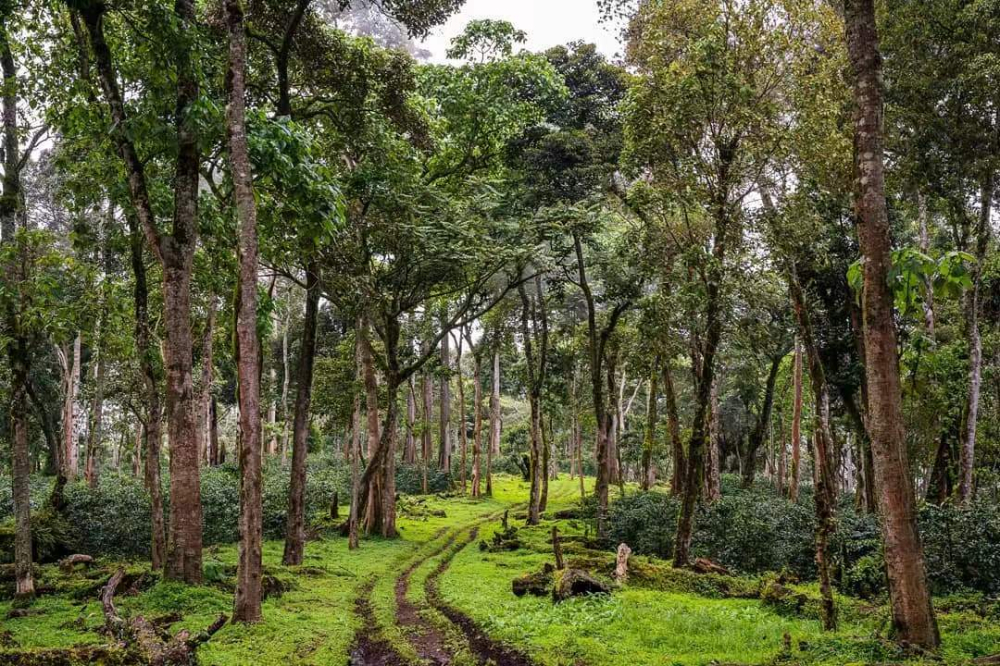
The Oma block is located on the southern side of Gesha Village, at an elevation of 1,931 to 2,040 meters, and is responsible for growing the Geisha 1931 variety, with a total area of 67.6 hectares. The Oma block has intense jasmine floral aromas, as well as subtle notes of peach, apricot, candied fruit, melon, and mandarin, blended with honey-like sweetness.
Narsha
The Narsha block is located on the eastern side of Gesha Village, adjacent to the western side of the Gaylee block. Its planting area is only 5.3 hectares, and the planted variety is Geisha 1931. The official description states that this block has flavors of honeysuckle, yellow fruits, lime, dark chocolate, white peach, apricot, and rose, with clean acidity and a bergamot finish.
FrontStreet Coffee's Gold Label Geisha coffee beans from this year's new crop season come from the Oma block, processed using a sun-dried method with a drying time of up to 32 days, and the variety is Geisha 1931, exclusive to the Oma block.
What Variety Is Geisha 1931
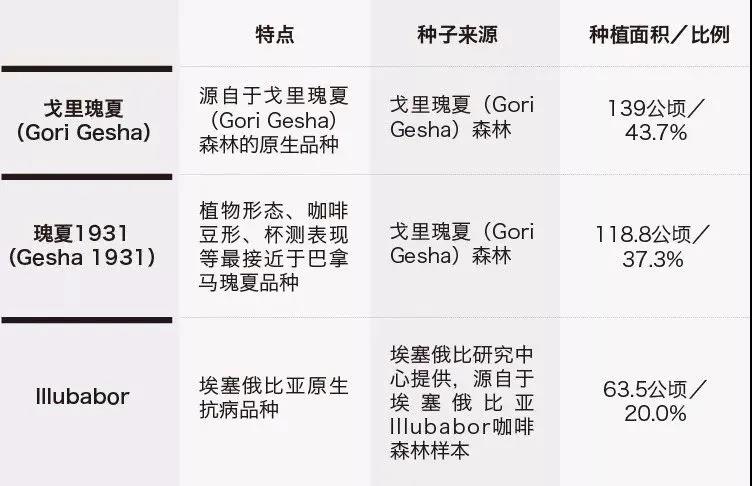
Gori Gesha: The owner of Gesha Village traced historical records and found a place called the Gori Gesha forest. Believing that the British had taken Geisha seeds from this place for sampling back then, they also sampled there and ultimately selected Geisha 1931. The selection was not based on genetic identification, but on observing plant morphology, bean shape, and cupping flavor. From the samples, they judged that this coffee variety was similar to Panama's Geisha. Historically, Geisha was discovered in 1931 in the Geisha Mountain area of southern Ethiopia (which coincidentally shares the same pronunciation as the Japanese word for geisha) and exported to Kenya. Geisha 1931 is essentially Geisha; the number after it merely indicates that this is the Geisha variety discovered in 1931.
Geisha 1931 (Gesha1931) was confirmed by observing plant morphology, bean shape, size, and cupping. It is the variety closest to the mother stock of Panama Geisha.
Gesha Village Coffee Bean Processing Methods
FrontStreet Coffee's Gesha Village Gold Label coffee, Gesha Village Red Label coffee, and Gesha Village CHAKA coffee are all sun-dried processed.
During processing, floating matter and impurities are first removed, then the beans are sun-dried in thin layers on African raised beds covered with plastic sheeting. During the drying process on the drying beds, they are screened again to pick out insect-damaged beans and greenish-colored coffee beans. The total drying time is 18 to 30 days.
Before brewing, you must first understand the coffee beans. FrontStreet Coffee's Gesha Village Red Label Geisha comes from an estate located in Bench Maji, Ethiopia, and this Red Label lot comes from the estate's Shewa-Jibabu block, located to the northwest of the estate, with coffee trees planted at elevations between 1,973 and 2,069 meters.
Front Street's Brewing Parameters for Gesha Village Coffee:
In order to preserve the unique bright acidity of Ethiopian coffee beans, FrontStreet Coffee roasts the coffee beans to a medium-light level. Coffee beans from high-elevation regions have a less dense structure. Due to the shorter roasting time, the bean structure does not change much, and the substances in the coffee are not easily extracted.
Therefore, when brewing medium-light roasted coffee beans, FrontStreet Coffee recommends using a medium-fine grind / fine granulated sugar coarseness (80% passing through China's No. 20 standard sieve), using 15 grams of coffee grounds, paired with a V60 dripper, 91°C water temperature, a 1:15 coffee-to-water ratio, and a three-stage pouring technique for brewing.
Using staged extraction, first bloom with water at twice the amount of coffee grounds, i.e., 30 grams of water for 30 seconds. The purpose of blooming is to allow the coffee grounds to release internal carbon dioxide gas, thereby making the subsequent extraction more stable. Pour in a circular motion with a slow stream until reaching 125 grams, then pause; continue pouring until reaching 225 grams and stop. After the water in the dripper has completely dripped through, remove the dripper. Timing from the start of pouring, the extraction time is 2 minutes 00 seconds. Next, swirl the entire cup of coffee to mix, then pour into a cup to taste.
Front Street Gesha Village Gold Label Coffee Flavor Characteristics: Sweet berry aroma, full and mellow mouthfeel, with slight chamomile and red berry flavors, and a finish with melon notes and a tea-like quality.
Front Street Gesha Village Red Label Coffee Flavor Characteristics: Coconut, licorice, cream, chocolate, toffee, citrus, almond, strawberry, with a fermented aroma. The overall flavor is relatively balanced, with a mellow mouthfeel and prominent nutty flavors.
Front Street's Coffee Brewing Recommendations:
Regarding coffee brewing, Front Street has always believed that the freshness of coffee beans has a great impact on coffee flavor. Therefore, all coffee beans shipped by FrontStreet Coffee are within 5 days of roasting. Front Street's roasting philosophy is "freshly roasted good coffee," so that every customer who places an order can receive the freshest coffee when they receive it. The resting period for coffee is about 4 to 7 days, so when customers receive it, it is at its optimal flavor.
For those who need ground coffee, Front Street kindly reminds: once coffee beans are ground in advance, there is no need for further resting, because the pressure from carbon dioxide inside the packaging during transport can also round out the coffee flavor, so you can brew a cup immediately upon receiving the ground coffee. However, ground coffee needs to be brewed promptly, because after contact with air, ground coffee oxidizes quickly, the coffee flavor dissipates faster, and quality declines. Therefore, Front Street recommends buying whole beans and grinding fresh for each brew, so you can better taste the coffee's flavor.
The above content is compiled by CoffeeHunters, a coffee news website.


