







What does java flavor mean across the Mandheling varieties?
Mandheling is Sumatra's classic coffee, recognized by full body, low acidity, and a rich, earthy aroma. The name covers several types: Lintong, Golden, Tiger, Aged, and Sun-Dried Mandheling. Each comes from a different producing region, uses a different processing method, and carries its own java flavor profile in the cup.
Golden Mandheling from PWN is the well-known example, costing more because yields are lower. Indonesian coffee history dates to 1696, when Dutch planters chose Java Island, but Sumatra's Mandheling now represents the origin. Knowing the categories helps drinkers identify what does java coffee taste like when they cup it.
Mandheling coffee is a classic representative of Sumatra, Indonesia, known for its full body, low acidity, and rich, earthy aroma. But many coffee enthusiasts are not aware that the common Mandheling on the market is actually divided into several types: Lintong Mandheling, Golden Mandheling, Tiger Mandheling, Aged Mandheling, and the recently emerged Sun-Dried Mandheling. Each comes from a different producing region, uses a different processing method, and has its own distinctive flavor profile. The 5 Mandheling coffees offered by Front Street Coffee happen to cover these types. This article will systematically sort out the classification, origins, processing methods, and brewing suggestions for Mandheling, helping readers more clearly identify the one in their cup when tasting, and also understand why Golden Mandheling is more expensive and lower in yield.
For more specialty coffee knowledge, please follow: Front Street Coffee (Frontsteet Coffee)
Anyone who regularly drinks Front Street Mandheling has experienced that this coffee has a relatively prominent bitterness, and its naming method is different from coffees from other origins. You may know where Mandheling comes from, but what categories is it actually divided into? Lintong Mandheling, Golden Mandheling, Tiger Mandheling, and Aged Mandheling all belong to the Mandheling family, so what are their respective characteristics? Today, Front Street will walk everyone through this coffee knowledge in detail.
Indonesian coffee has always won the favor of veteran coffee lovers with its low acidity, earthy aroma, and thick body. At Front Street Coffee (FrontStreet Coffee), when Indonesian coffee is mentioned, the first thing that almost always comes to mind is Mandheling. From the 5 Mandheling coffees currently offered by Front Street, it is clear that the Golden Mandheling from PWN Company is especially well known. Even if many people have heard this name, they may not truly understand what Golden Mandheling actually is.
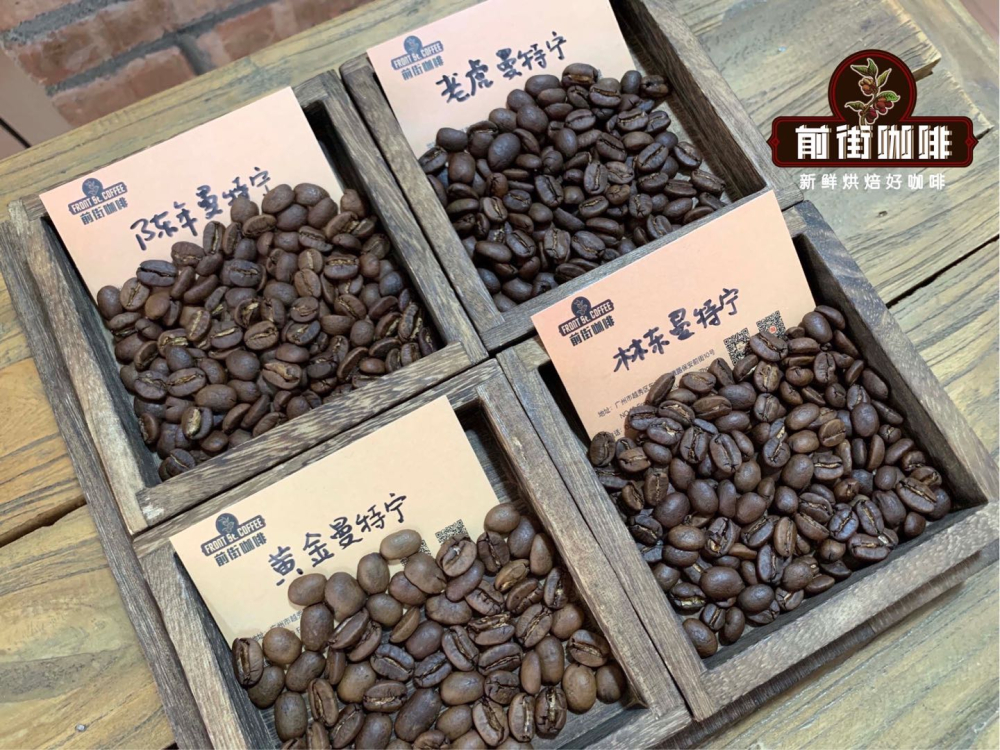
Sumatra Mandheling coffee beans
The coffee history of Indonesia can be traced back to 1696, when Dutch plantation owners, in search of broader planting grounds, selected Java Island after extensive investigation. Thirty years later, Indonesia had already established a firm foothold in the coffee market. But today what represents Indonesian coffee is actually Mandheling produced in Sumatra, and this is not surprising—much of the Java coffee sold to Europe in the early period came from Sumatra, and Mandheling is precisely a product of Sumatra. Therefore, Sumatra can be said to be a coffee-producing region of pivotal importance in Indonesia.
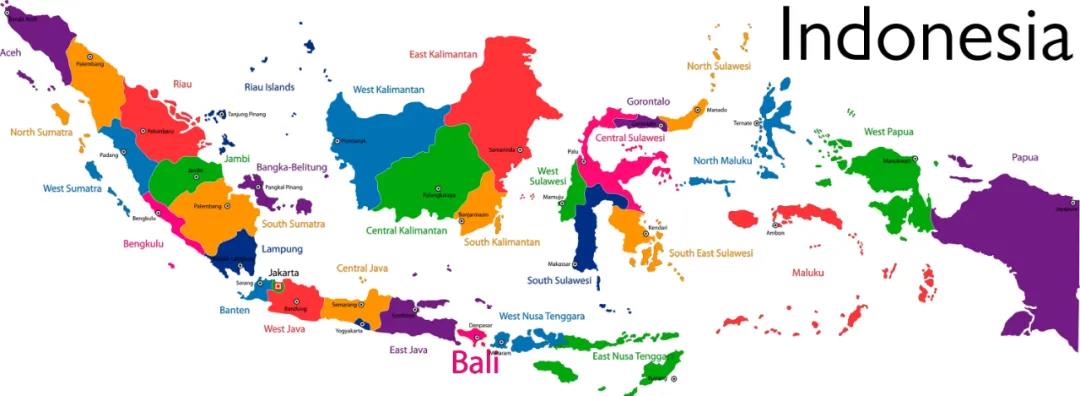
Sumatra is the main source of Indonesian specialty coffee beans, and its coffee system is quite complex. Here it is simplified into 4 types: 1. What is usually called Mandheling refers to semi-washed or sun-dried beans from the Lintong mountainous area at 900-1200 meters above sea level around Lake Toba in north-central Sumatra and on the southwest coast, and it is the most famous.
2. Golden Mandheling: After 4 rounds of manual sorting, its grade is higher than ordinary Mandheling.
3. Lake Tawar coffee: washed, semi-washed, or sun-dried beans from near Lake Tawar in the Aceh region at the northernmost tip of Sumatra, in the Gayo Mountain area at 800-1600 meters above sea level. 4. Aged Mandheling and Old Java Brown.
Front Street Coffee (FrontStreet Coffee) currently offers a total of 5 Mandheling coffees: Golden Mandheling, Lintong Mandheling, Tiger Mandheling, Aged Mandheling, and Sun-Dried Mandheling.
Mandheling was originally the name of an Indonesian tribe and, by a twist of fate, became the name of a coffee bean. There is a story behind this. After the Japanese army colonized Indonesia and returned to Japan, they could not forget the delicious coffee they had drunk locally, so they asked local people through trade friends to help collect high-quality coffee beans, among which was this Mandheling. The Japanese liked it very much and asked for its name. Because the commercial source was inconvenient to disclose, the local person casually said "Mandheling," and just like that, this name accidentally became the designation for the coffee beans. And that local person was precisely the owner of Indonesian PWN Company (Pawani Coffee Company), which will be mentioned below.
Golden Mandheling
Golden Mandheling is produced in the Lintong region of northern Sumatra, Indonesia. At harvest, only fully ripe cherries are picked entirely by hand one by one to ensure the initial quality of bean selection. The coffee cherries are processed by the semi-washed method, dried naturally in the sun, and after hulling undergo one more round of drying and refining, as well as two cleanings of green beans and four manual sortings. To a large extent, these details are exactly why Golden Mandheling became famous.
Ordinary coffee enthusiasts know Mandheling; those who have been drinking coffee longer will know the specific name Golden Mandheling; and if they communicate more deeply with baristas, they will know that the label Golden Mandheling comes from Indonesian Pawani Company, and only the Mandheling produced by that company is called Golden Mandheling. But when it really comes down to whether a cup of Mandheling is Front Street PWN Golden Mandheling, in fact quite a few people, including baristas, cannot explain clearly, and even vaguely gloss over it: "I know there is Golden Mandheling, and I also know that only what PWN produces is Golden Mandheling, but I don't know whether what I'm drinking is Front Street PWN Golden Mandheling." To a large extent, they treat all large-bean (18/19 screen) Mandheling as Golden Mandheling. The reason is that trademarks need to be registered separately in different countries, and China was once not an important coffee market. Pawani also did not expect Golden Mandheling to be so successful, and earlier did not register this trademark in China. After Golden Mandheling became a generic synonym for high-quality Mandheling, even Pawani could no longer register this name, which is also why large-bean Mandheling on the market is all labeled as Golden Mandheling.
Golden Mandheling Region: Gayo Mountain, Aceh, Sumatra Altitude: 1100-1600 meters Variety: Ateng Grade: G1, 3 times hand-sorted Processing Method: Wet Hulling Flavor: Spices, herbs, caramel, pine, nuts, chocolate
Golden Mandheling is mainly exported to the Japanese and American markets, and its price is 2-3 times that of ordinary Mandheling. More importantly, PWN's annual output is not high. Therefore, it is common on the market to see large-bean Mandheling sold under the name Golden Mandheling. Taking Front Street Coffee (FrontStreet Coffee)'s Golden Mandheling green beans as an example, PWN's Golden Mandheling not only has the PWN logo on the burlap sack, but Pawani also attaches a PWN Golden Mandheling certificate to each bag of green beans.
What distinguishes Golden Mandheling from ordinary Mandheling is not merely bean size; its production process and selection of producing region have already determined the difference in flavor. Front Street believes that for professional-level coffee tasters and coffee friends with sensitive palates, if they drink these two coffees at the same time, the result will be very clearly contrasted: Golden Mandheling is slightly superior to G1 in sweetness, cleanliness, body, and wild spice-family flavors, and this is one of the reasons why Golden Mandheling is much more expensive than G1.
Lintong Mandheling
Lintong Mandheling is produced in the Lintong mountainous area of north-central Sumatra, near Lake Toba. Lintong Mandheling is the regular version of Mandheling, and it also uses the regular wet-hulling method, which creates its characteristics of low acidity and high body. But the wet-hulling method brings about a situation: semi-hard, semi-soft moist green beans are easily crushed when the mucilage and parchment layer are removed, and the beans crack open like goat hooves, commonly known as goat-hoof beans. These are not defective beans; they can be said to be a very notable characteristic of Mandheling.
Lintong Mandheling Region: Lintong producing region, Sumatra Altitude: 1100-1600 meters Variety: Typica, Caturra Processing Method: Wet Hulling Flavor: Baked toast, nuts, caramel, pine, herbs
Tiger Mandheling
Tiger Mandheling, as the name suggests, is produced in Indonesia, the home of Mandheling. It is AA-grade Mandheling finally selected from ordinary Mandheling trees through three rounds of careful selection using a 19 screen (meaning the beans are strictly filtered through a sieve with 19 mesh holes and finally selected, with the aim of making each bean almost identical in size and diameter as much as possible). Therefore, some people also use "Sumatra's tiger" to describe the nobility and rarity of this 19-screen selected bean. In cupping, its mouthfeel shows high viscosity, the bean's fruity aroma and sweetness are very high, and it has a long lingering sweet aftertaste. It is truly a rare good bean and is deeply loved by veteran coffee connoisseurs.
There are different species of tigers, including the Siberian tiger, Bengal tiger, Sumatran tiger, and Indochinese tiger. The Sumatran tiger is mainly distributed across the Sumatra archipelago in Indonesia and is the only surviving tiger found solely on islands. Some people use "Sumatran tiger" to describe the rarity and preciousness of this Mandheling, so it is called "Sumatran Tiger Mandheling," and Chinese people also call it "Tiger Mandheling" or "Tiger Mandheling." Of course, there is finally another explanation: Sumatra has a "Tiger Estate" that specializes in producing Sumatra Mandheling, and the lot specially selected by them is named "Tiger Mandheling," also called "Tiger Mandheling."
Tiger Mandheling Region: Sumatra Altitude: 1500 meters Variety: Caturra, Typica, Sidikalong Processing Method: Wet Hulling Flavor: Nuts, cream, dark chocolate, caramel, pine
Aged Mandheling
For wine, everyone thinks the longer it is stored, the better, hence the name aged wine. The same is true for aged coffee, among which Aged Mandheling is the finest. In fact, the formation of this unique flavor was not intentional. Indonesia was once a Dutch colony, and during the colonial period Indonesia continuously had to ship coffee beans to Europe. To ensure uninterrupted supply, coffee beans would be properly stored. However, due to external factors such as the long transport distance, the shipping time was too long, and the beans also suffered erosion from sea winds. By the time the coffee beans arrived in Europe, another flavor had already formed. This was the origin of the aged flavor.
Fortunately, the European colonists at the time were amazed by this flavor and quickly accepted and promoted this processing method. Now the aging process for Aged Mandheling has become quite mature. The coffee beans first undergo the wet-hulling method (wet hulling means that during the ordinary washed process, the beans are sun-dried with parchment for 2-3 days until the moisture content is 20-24%, and finally the parchment is removed so the green beans dry to a moisture content of 12-13%), and are then sealed and stored in a warehouse. The warehouse environment must be cool and ventilated, and the beans must be turned regularly to prevent mold and spoilage, and stored for 2-3 years. During this period, the acidity of the coffee beans slowly weakens and turns into sugar, and the color also becomes deeper, mostly yellowish brown or dark brown, very recognizable.
Aged Mandheling Region: Sumatra Altitude: 1500 meters Variety: Caturra, Typica Processing Method: Wet Hulling Flavor: Ripe pu-erh, caramel, herbs, chocolate, relatively low acidity
Sun-Dried Mandheling
This Sun-Dried Mandheling from Wahana Estate that Front Street has obtained has a flavor different from the Mandheling in people's impressions. Traditional Mandheling leans more toward the deep, aged aroma of herbs and forest wood, with low acidity, while this Sun-Dried Mandheling, while retaining the herbal aroma, adds a soft fruity acidity. Wahana Estate was established in 2005 and is located near LeaMungkur Village in the Sidikalang district of northern Sumatra, Indonesia. Sidikalang has been one of Indonesia's famous coffee-producing regions since ancient times. The area where Wahana Estate is located has an altitude between 1200-1500 meters and annual rainfall of 2000-3000 millimeters. In addition, the region also has a relatively cool climate and a day-night temperature difference of more than 10°C. Based on the above conditions, the red cherries produced by Wahana all have a sugar content above 13%. Wahana Estate is still a relatively young estate and continues to develop year by year, covering an area of about 500 hectares. The estate owner plans to expand the coffee planting area as much as possible in the coming years. Wahana Estate isolates different coffee varieties by plot and harvests them separately to unleash the potential of each variety. In addition, only red cherries can be harvested and then processed separately.
Sun-Dried Mandheling Region: Lake Toba, Sumatra Estate: Wahana Estate Altitude: 1000-1700 meters Variety: Bourbon, Typica Processing Method: Sun-Dried Flavor: Melon, fermented aroma, mango, tropical fruit, peach
Mandheling's Regular Processing Method — Wet Hulling
Most Mandheling uses wet hulling, a coffee bean processing method unique to Sumatra. Because the local weather is often rainy, with constant typhoons, it cannot achieve the good weather required for sun-drying, and the local economy is not good either, so it also cannot use the relatively expensive washed method. Thus the wet-hulling method with strong local characteristics came into being.
In the first stage, the peel and pulp are removed with a wooden pulper, followed by 3 hours of fermentation and then drying, bringing the moisture content down to a semi-dry, semi-wet 30-50%. In the second stage, the mucilage and parchment layer are removed, and drying continues in the later stage. The drying process takes 2-4 days, and the moisture content drops to 12-13%.
In addition to the regular wet-hulling method, there is also an aged wet-hulling method. After the coffee beans first undergo ordinary wet-hulling treatment, they are then sealed and stored in a warehouse for 2-3 years. The warehouse environment must be cool and ventilated, and the beans must be turned regularly to prevent mold and spoilage. During this period, the acidity of the coffee beans slowly weakens and turns into sugar, and the color also becomes deeper, mostly yellowish brown or dark brown. Mandheling coffee beans using this processing method are also called Aged Mandheling coffee beans.
Wet hulling creates Mandheling's special flavor, and it can be said that Mandheling and wet hulling have a bound relationship. But today's coffee market no longer settles for remaining unchanged. Even if wet hulling is Mandheling's characteristic, there will still be attempts with other processing methods, such as the Sun-Dried Mandheling from Wahana Estate. Changes in processing method also have requirements: on the basis of retaining the original flavor of the coffee beans, other flavors need to be added.
How Front Street Brews Mandheling Coffee
When Front Street brews Mandheling coffee beans, it tries to keep the brewing parameters as consistent as possible. Because Sun-Dried Mandheling uses a medium-light roast, while the other four Mandheling coffees use a medium-dark roast, coffee beans with different roasts will use different brewing parameters.
Brewing parameters for light-medium roasted coffee beans: V60 dripper, 1:15 coffee-to-water ratio, 15 grams of coffee, 90°C water temperature, grind size (80% passing through a No. 20 standard sieve)
Brewing parameters for medium-dark roasted coffee beans: Kono dripper, 1:15 coffee-to-water ratio, 15 grams of coffee, 88°C water temperature, grind size (70-75% passing through a No. 20 standard sieve)
Front Street uses staged extraction, blooming with 30 grams of water for 30 seconds, then pouring in a small stream in circles until 125 grams for the stage break, and when the water level is about to expose the coffee bed, continuing to pour until 225 grams and stopping. When the water level is about to expose the coffee bed again, remove the dripper. (Timing starts at the beginning of blooming.) The extraction time for the V60 dripper is 2'00", and the Kono dripper takes slightly longer, at 2'10".
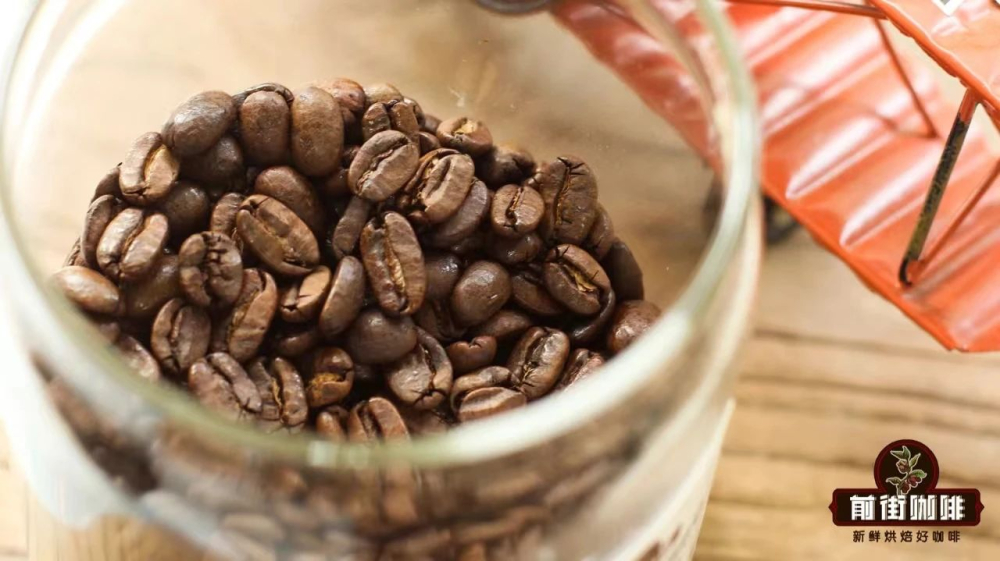
Golden Mandheling: Layered and varied, full-bodied and clean, highly balanced, with rich nut and caramel aroma, carrying chocolate notes, and a lasting finish. Lintong Mandheling: Herbal and medicinal notes on entry, dark chocolate, caramel, with a sweet aftertaste. Tiger Mandheling: Pine and spice aromas, relatively balanced mouthfeel, with obvious notes of cream, dark chocolate, and nuts. Aged Mandheling: Aromas of wood, malt, and caramel rush forth. On the palate, it lacks the wildness of traditional Mandheling and gains more fullness and finesse, with a sense of mature steadiness and relatively low acidity. On entry there are flavors of ripe pu-erh, caramel, herbs, and chocolate, with abundant sweetness. Sun-Dried Mandheling: Tropical fruit, fermented notes, moderate acidity, smooth mouthfeel, and obvious sweetness.
The above content is compiled by CoffeeHunters, a coffee news website.


