







How Do Dripper Shapes Affect Fine Coffee Extraction?
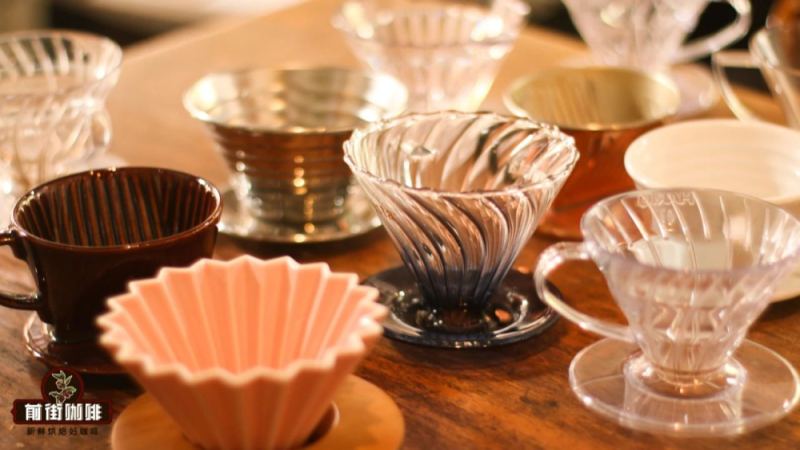
Dripper shape and material change how fast water flows through the coffee bed, and that changes the cup. Fan-shaped drippers, usually with one to three bottom holes, run slow and extend extraction time; conical and wave designs behave differently again, while ceramic, resin, and glass alter heat retention during the pour.
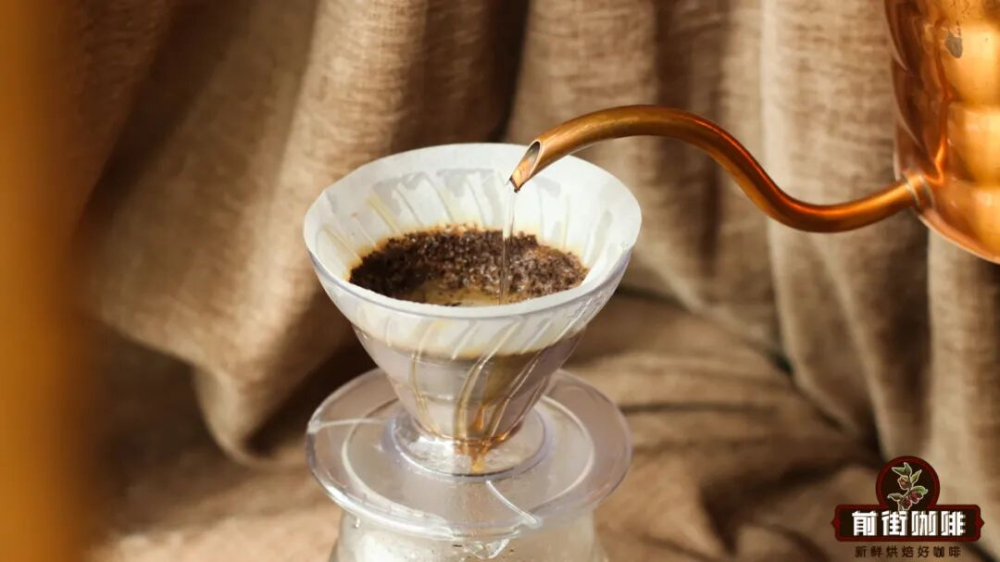
Filter paper and drippers appeared in the early twentieth century, and a century of refinement produced today's range of hole counts, ribs, and materials. Pairing a dripper with a matching coffee, such as Front Street Coffee's bean list, helps brewers match flow rate and body to the flavors they want in the cup.
In the world of pour-over coffee gear, the dripper plays a key role in determining the direction of extraction. Since the invention of filter paper and drippers in the early twentieth century, more than a hundred years of refinement have produced a market full of drippers in a wide variety of shapes, hole counts, ribs, and materials—and each difference directly affects flow rate and extraction time, ultimately showing up in the cup's body and flavor. This article systematically sorts through the design features and suitable uses of the mainstream dripper types—fan-shaped, conical, wave, and metal—and further explores how materials such as ceramic, resin, and glass affect heat retention. At the same time, drawing on Front Street Coffee's bean list, it offers specific pairing suggestions for different drippers, helping coffee lovers find a brewing approach that suits them based on an understanding of the equipment's characteristics.
Coffee Drippers—An Overlooked Part of Pour-Over Extraction
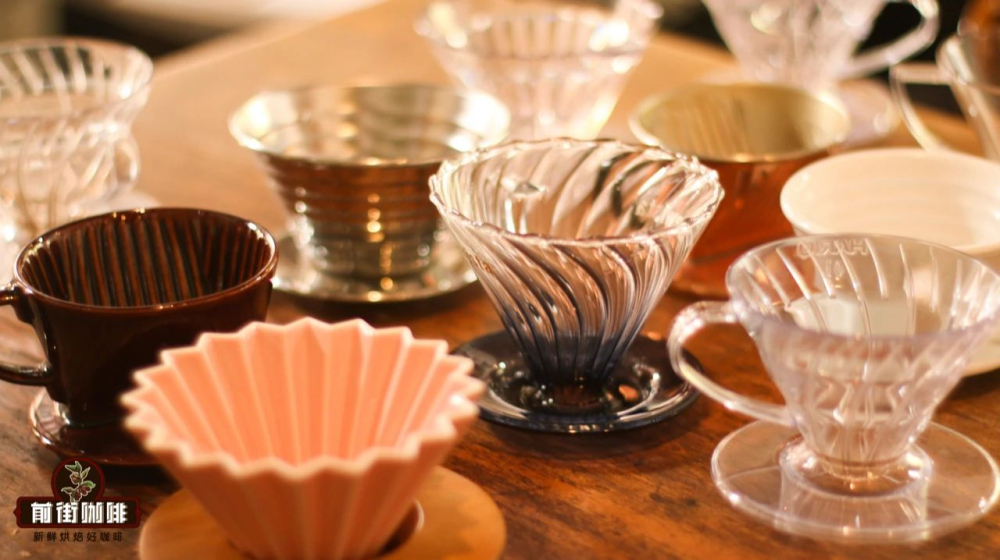
With the rise of the third wave of coffee, single-origin specialty coffee has drawn growing attention, and the drip brewing method that originated in Japan—what everyone now calls pour-over coffee—has become increasingly popular. Getting into pour-over is actually not hard; the basic equipment is just a gooseneck kettle, filter paper or a metal filter, a dripper, and ground coffee. Front Street Coffee has already discussed filter paper and pour-over kettles separately, so this time it's the dripper's turn—drippers of different shapes deliver completely different cup profiles.
What Types of Coffee Drippers Are There
Since filter paper and drippers were invented in the early twentieth century, a century of evolution and improvement has produced a huge variety of drippers and filters on the market today. They differ not only in appearance but also in how they affect water flow rate and extraction time, causing the same coffee to show different flavor expressions under different devices.
Fan-Shaped Drippers (Trapezoid Drippers, Trapezoidal Drippers)
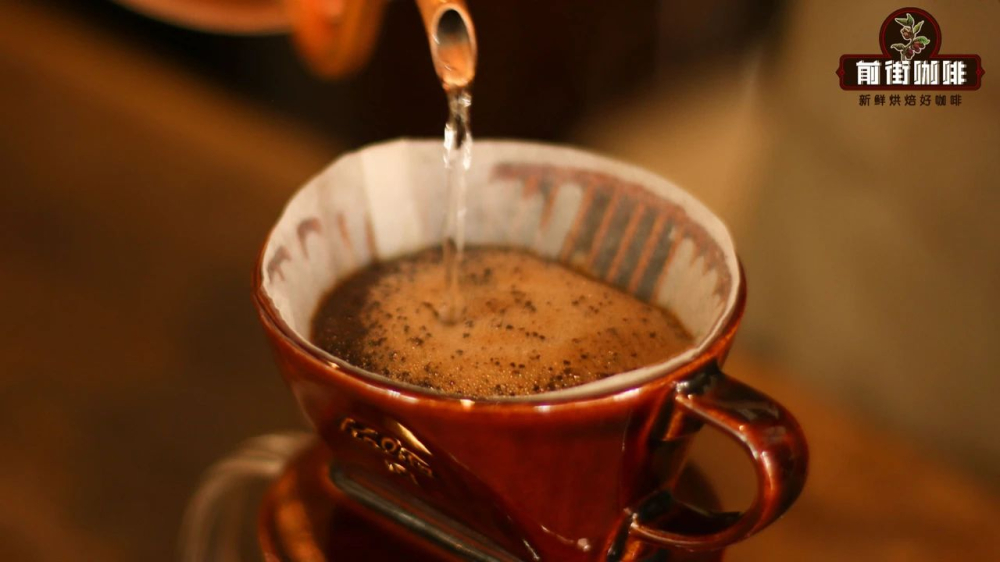
Fan-shaped drippers usually have a single hole, two holes, or three holes at the bottom, and the flow rate tends to be slow, so extraction time is correspondingly longer. When using one, pay attention to how well the filter paper fits the dripper. If the paper also covers the bottom holes, the flow can become even slower, leading to over-extraction and a bitter cup, so choose a filter size that matches well rather than one that fits too snugly.
The design of this shape can be traced back to 1908, when Melitta Bentz invented coffee filter paper. At first there was only a single-hole version, and multi-hole designs appeared later through improvements. The number of holes determines the flow rate; which hole count to choose depends on your personal preference for coffee flavor.
Conical Drippers
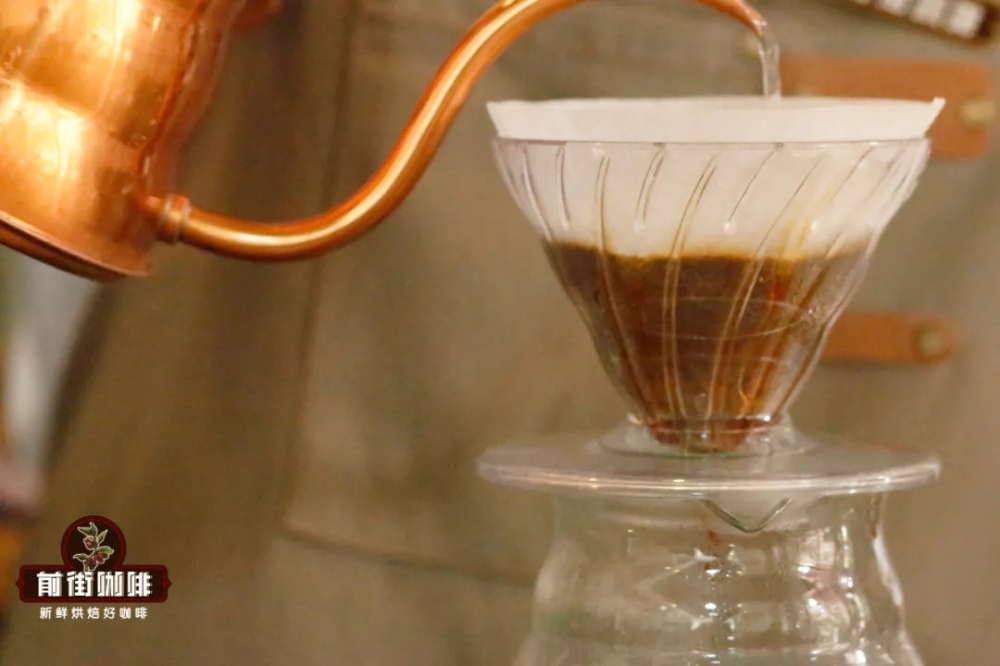
Besides fan-shaped drippers, the most common type on the market is the conical dripper. The differences among conical drippers are mostly in the design of the ribs on the body. The ribs are the channels that let the extracted coffee flow down into the cup, so the rib structure directly affects flow rate. Take the widely recommended KONO Meimon, for example: its ribs extend only halfway down the body or less, and where there are no ribs the filter paper clings tightly to the wall, so the flow rate tends to be slow—ideal for people who prefer a heavier body. In this case, Front Street PWN Golden Mandheling, Front Street Blue Mountain No. 1, Front Street Queen's Estate, and Front Street Brazil Cerrado are recommended first.
Another dripper that is used and recommended by the most people is the Hario V60. Its ribs extend all the way down the entire body, so the flow rate is faster and the brewed coffee is brighter and cleaner. It suits Front Street Yirgacheffe, including Front Street Gotiti, Front Street Red Cherry, Front Street Worka, as well as medium-light roasts such as Front Street Kenya Little Tomato. This is a dripper that the vast majority of baristas strongly recommend; Chi Shu, a finalist in Taiwan's pour-over coffee championship, also uses a V60.
Wave Drippers (Cake Drippers)
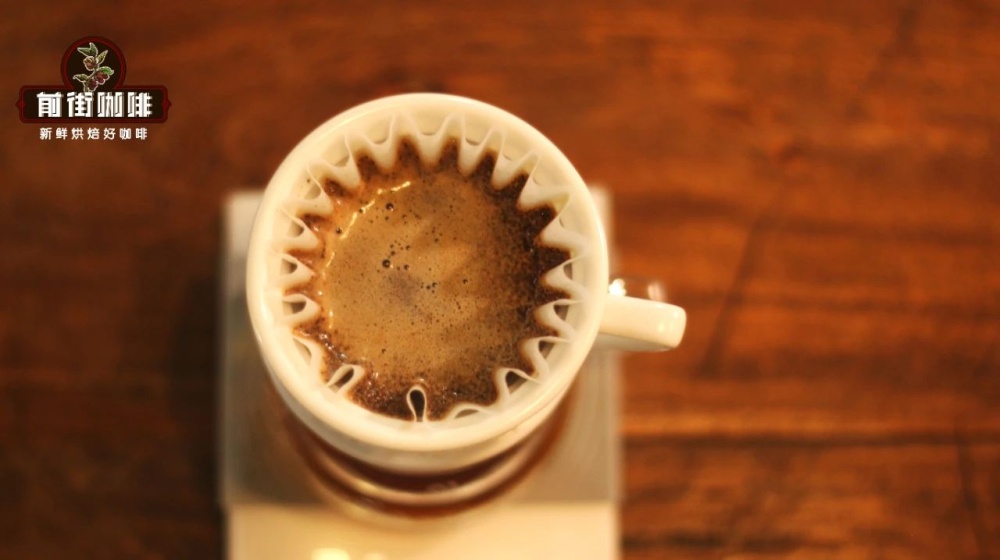
The wave dripper is a patented product of KALITA. The filter paper used with it has folds similar to cupcake liners, so it is also called a cake dripper; however, the English word used is Wave, so more people call it a wave dripper. It uses the folds of the filter paper instead of flow-guiding ribs. Because the contact area with the dripper body is smaller, the coffee grounds are extracted evenly, making it highly recommended for both beginners and seasoned enthusiasts. In recent years, wave drippers have also frequently appeared in pour-over competitions. The reason its market share isn't higher is that wave filter paper is on the expensive side—each sheet costs about twice as much as ordinary filter paper, which counts as a minor drawback.
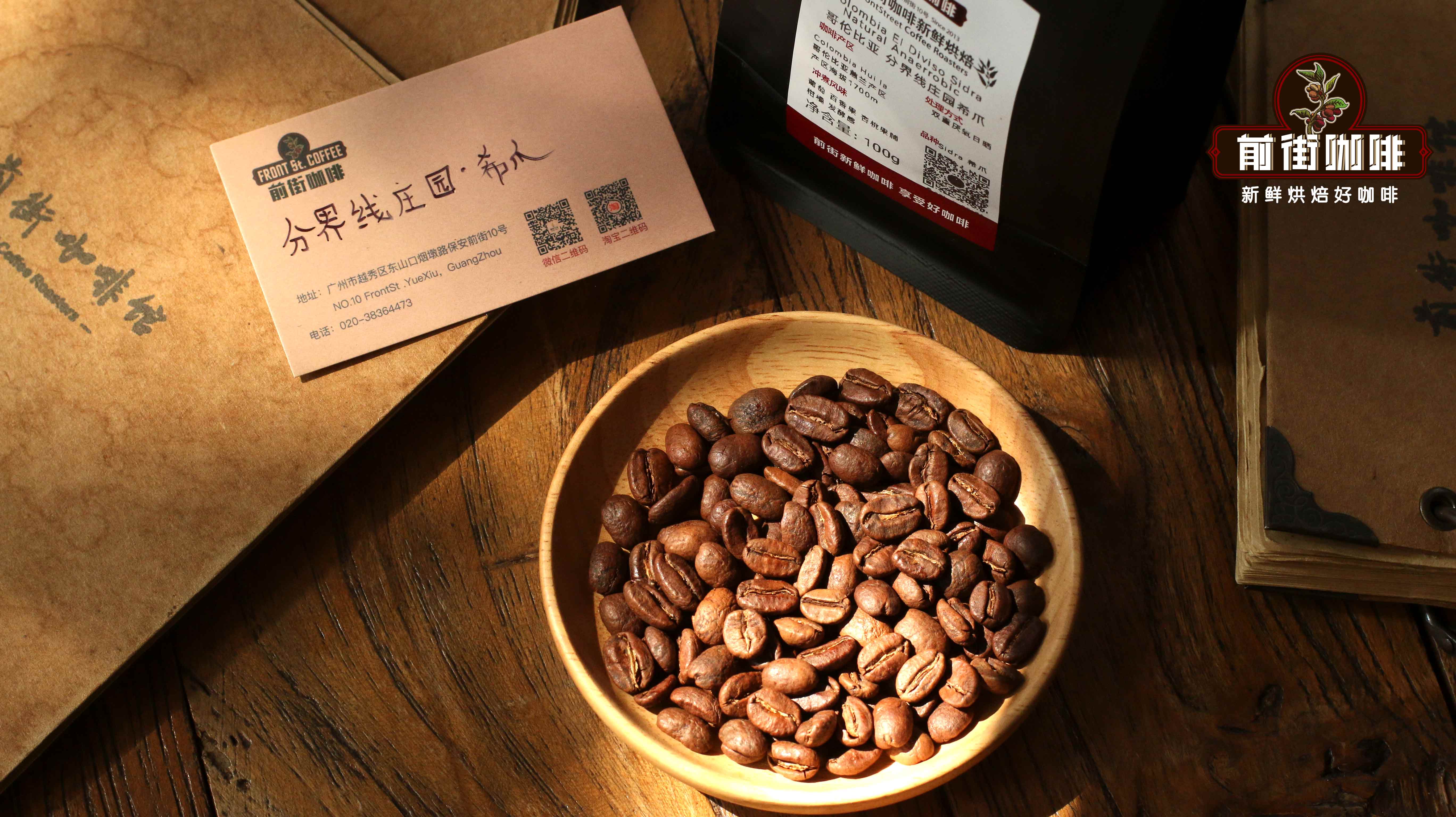
The cake dripper leans more toward immersion-style extraction, so it better brings out the coffee's roundness and rich body. It is recommended with fruity, medium-roast coffees, such as the popular Front Street Sidra (passion fruit, grape notes), Front Street Strawberry Candy (rose, berry juice notes), and Front Street Blackberry (floral, dried blueberry notes); with the flat-bottom design, they show characteristics similar to fruit wine.
Metal Drippers
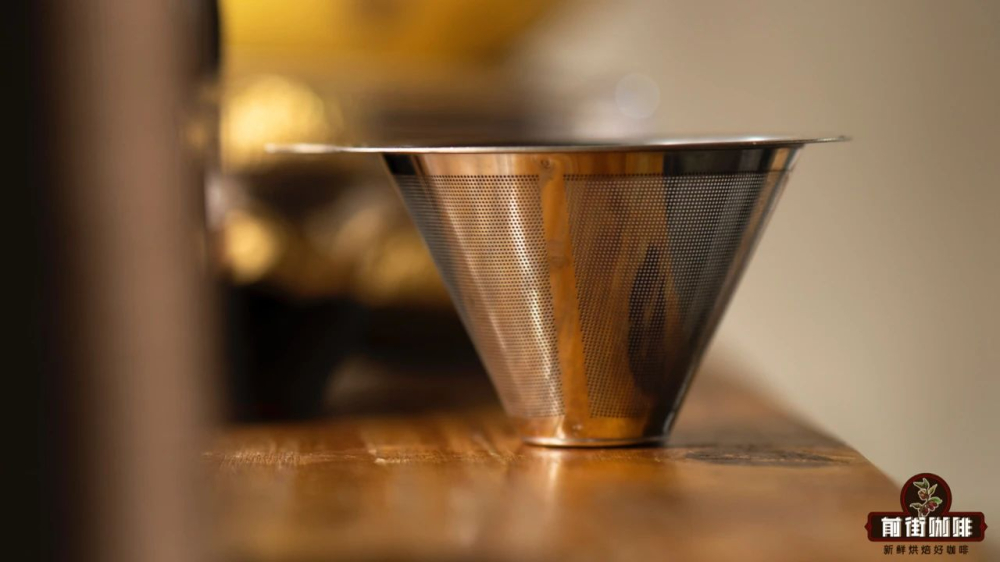
Metal materials preserve the coffee's oils and complexity, giving a fuller body than paper filters; coffee filtered through paper is cleaner and brighter. The advantage of metal is that it can be washed and reused again and again, while the obvious drawback is that fine coffee particles easily flow into the cup, causing sediment at the bottom and, in serious cases, affecting the whole cup's mouthfeel. To solve this, you can use a fines filter to make the coffee purer.
Differences in Dripper Materials
Differences in material are mainly reflected in specific heat. Ceramic, resin, plastic, stainless steel, metal, and so on each have different heat-retention effects. For example, ceramic is made thicker and controls temperature better than plastic, maintaining heat better during extraction. If you find your coffee tastes more bitter or weaker after switching materials, you may need to adjust the water temperature and search for the sweet spot with your equipment.
Material also affects price. To brew a good cup of coffee, what matters more is understanding your equipment and practicing a lot—it's not that the more expensive it is, the better it tastes. Let's all practice more together.
HARIO V60
Design
Designed by the veteran Japanese brand HARIO, the name V60 relates to its shape: it is V-shaped with a 60-degree angle and has spiral ribs. It comes in resin, glass, plastic, metal, and ceramic versions, and since its launch in 2005 it has held a dominant position in the market.
Advantages
Paired with V60-specific filter paper, it is thinner and lighter than other filters and doesn't have an overly strong papery taste. The spiral ribs speed up the flow rate, and the wide opening at the bottom prevents over-extraction, whereas other styles tend to cause over-extraction because grounds settle below. The V60 is well suited to presenting bright, fruity, fruit- or floral-toned coffees, such as Front Street Little Tomato (cherry tomato, berry notes), Front Street Huakui (creamy strawberry, guava notes), and Front Street Emerald Red Label Geisha (jasmine, mango, honey notes).
Coffees like Front Street Kenya, Front Street Costa Rica, and Front Street El Salvador are all very suitable for brewing with a V60.
KONO MEIMON
Design
Coffee Siphon Co., Ltd. was founded in 1925 and is one of the more famous names among Japan's many coffee brands. Like HARIO and KALITA, it arrived at today's coffee equipment through constant revision and improvement—perhaps in a few years, today's brewing methods will be replaced by newer gear. The KONO Meimon uses an extraction method similar to a siphon effect and was also the first company to use a conical dripper; the coffee it extracts has a richer, heavier mouthfeel.
Advantages
Like the V60, the KONO Meimon has twelve ribs, but they do not extend down the entire body, leaving more time for the coffee grounds to extract. Since the flow rate is not as fast as the V60's, you must be especially careful about over-extracting bitterness—which is also why people more often recommend the conical V60. It takes some practice and skill to get the hang of it easily.
KALITA WAVE
Design
The KALITA wave dripper has three holes at the bottom. Its flat design makes the water flow even, and it isn't as fast as conical drippers, making it better suited to coffees that need a longer extraction time. Also, like the V60, it comes in a variety of materials, such as stainless steel, resin, and glass.
Advantages
The wave dripper's temperature control is very stable; because the contact area with the dripper is smaller, heat is less likely to be drawn away. During brewing you only need to pour water into the center, and the coffee is extracted more evenly. Since its release it has been loved by many enthusiasts and competitors.
MELITTA
Design
As mentioned earlier, it was Melitta who designed the coffee dripper and filter paper in 1908, and today it has become a major international coffee brand. The original design had eight holes at the bottom, but after testing many options they decided to go back to a single hole, because that allowed more consistent quality control each time. Melitta's brewing principle is closer to the infusion method of a French press.
Advantages
It is very easy to get started with, because the flow rate is slower and the extraction time is on the longer side. Since there is only one hole, the variation between brews is minimal. Using this equipment also doesn't demand much gooseneck-kettle skill: pour water after blooming, and it handles the rest for you—it doesn't emphasize technique much.
SANYO SANGYO Arita Ware
Design
Taguchi Mamoru, called the god of coffee by the Japanese, sparked the pour-over coffee trend in the 1960s. In his coffee shop, the only coffee dripper you could see was this Sanyo. In terms of design, it comes in large, medium, and small sizes, paired with one to three water holes; the number of holes adjusts the water flow rate, and different sizes can also maintain a consistent extraction time.
Advantages
Arita ware is a representative ceramic fired in Kyushu, Japan. In ancient times it was exported to Europe in large quantities and is the pride of Japanese ceramics. Sanyo's flow rate is faster than other trapezoid drippers, and combined with ceramic's heat retention, the coffee stays very stable during extraction; the brewed coffee is full-bodied and tight.
ZERO JAPAN
Design
Mino ware comes from a region of Japan with a very long history of ceramic production. ZERO JAPAN's design is full of streamlined curves; its excellent glazing technique and special opening design let you directly observe the brewing process. The 2011 and 2012 world pour-over champions both used ZERO JAPAN.
Advantages
The special opening design makes the extraction and brewing process clearer. Unlike plastic and glass, the ceramic material allows direct observation, and the low-convection rib design avoids the problem of under-extraction caused by too fast a flow rate.
The above content is compiled by CoffeeHunters, a coffee news website.


