







What Does Golden Mandheling Coffee Taste Like?
Mandheling coffee is a bitter, full-bodied Indonesian cup that contrasts with the acidic style common in specialty coffee. Its herbal and pine notes come from the wet-hulling method used in Sumatra, and Golden Mandheling is the grade selected through strict screening of bean size and density.
Coffee reached Indonesia in the late seventeenth century, when Dutch colonists planted it on Java before it spread to Sumatra. Leaf rust in the nineteenth century pushed farmers toward Robusta, Tim Tim and Catimor, and those varieties adapted to local terroir now carry the herbal, spice-tinged java flavor associated with the region.
Mandheling coffee stands out in the specialty coffee world with its rich, bitter profile, forming a sharp contrast to the mainstream acidic style. This article, from the perspective of Front Street Coffee, systematically traces the cultivation origins of Sumatra coffee, the localization journey of Catimor and Tim Tim varieties, and delves into how the wet-hulling method shapes Mandheling's signature herbal and pine notes. It also explains in detail the screening criteria and grading system for Golden Mandheling. Meanwhile, Front Street will share the roasting approach for PWN Golden Mandheling, bean-resting recommendations, and hot pour-over brewing parameters, giving you a complete understanding of this classic bitter coffee's flavor logic from origin to cup.
For more specialty coffee knowledge, please follow our WeChat official account: Front Street Coffee (FrontStreet Coffee)
In today's coffee market where "acidic" profiles dominate, Indonesian Mandheling coffee stands out as particularly distinctive. With its rich, full-bodied bitterness as the core, although its popularity isn't what it once was, it has always maintained a loyal following. In the upper right corner of Front Street's bean menu, at least one Mandheling coffee bean is always kept available for customers to choose from. Today, Front Street will talk about this rather unique "bitter coffee."
When did coffee cultivation begin in Sumatra?
Indonesia is the world's second-largest coffee producer, with a very long history of cultivation. According to materials reviewed by Front Street, Indonesia's coffee story can be traced back to the late seventeenth century. Initially, Dutch colonists introduced coffee to the island of Java, and it gradually spread to Sumatra, where it began to be planted on a larger scale.
By the nineteenth century, leaf rust disease spread rampantly through Indonesian coffee plantations, severely devastating production. The government subsequently introduced more disease-resistant varieties, including Robusta, Tim Tim, and Catimor, to replace the more vulnerable Typica and Bourbon. To this day, Tim Tim and Catimor, which carry Robusta lineage, have become the main cultivated varieties locally. Through long years of adaptation to Sumatra's terroir, Catimor and Tim Tim gradually developed unique flavors with herbal and spice characteristics, and with their outstanding disease resistance and stable yields, they are highly favored by Indonesian coffee farmers.
Catimor was first discovered in the central Aceh region, so locals habitually call it Ateng, an abbreviation of Aceh Tengah. Tim Tim is called Tim Tim. The Indonesian Mandheling coffee on Front Street's bean menu is composed precisely of these two varieties, Ateng and Tim Tim.
About the wet-hulling method
Indonesia has year-round high temperatures and humidity, and locals face many thorny problems when processing green coffee beans, such as beans being prone to mold and unstable sunlight conditions. To shorten the processing cycle and reduce labor costs, a uniquely local processing method emerged—the wet-hulling method.
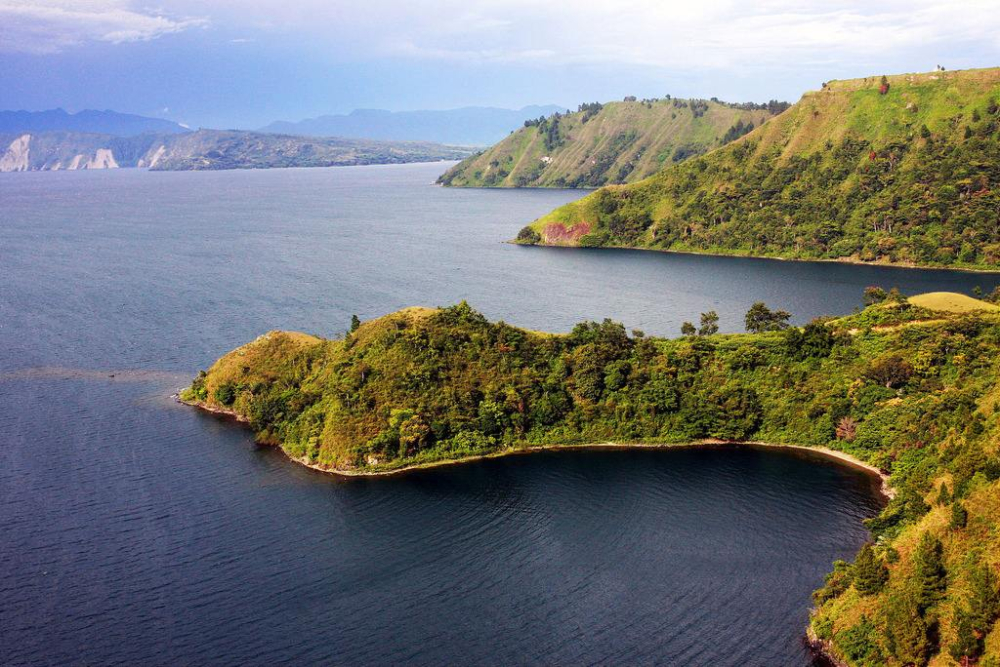
The coffee cherries first undergo floatation to remove beans that aren't sufficiently ripe, then the skin is removed by machine. At this point, the mucilage layer still feels slippery to the touch. After fermenting overnight, the mucilage layer is more easily washed off by flowing fresh water, and the surface of the parchment beans becomes rough. Next, the coffee beans are dried in the sun for two days, and the moisture content of the parchment beans drops to 30–50%, reaching a semi-dry state. Locals use specially made hulling equipment to remove the parchment layer, which still has some hardness, through friction. After hulling, the beans continue to dry for another two days until the moisture content drops to 12%.
Because the fermentation and drying stages are greatly compressed, and the entire process takes place in a high-temperature, high-humidity environment, the resulting Mandheling coffee carries a deep, low herbal note and flavors like pine wood. The wet-hulling method was originally created to adapt to local conditions, but it happened to give Mandheling coffee a flavor signature that distinguishes it from other full-bodied coffees, making it a classic representative among many coffees. Therefore, Front Street offers Indonesian Mandheling coffee beans in small daily-drinker packaging, hoping that friends who want to learn about the characteristics of different coffee regions can give this classic flavor a try.
What is Golden Mandheling coffee?
Although the wet-hulling method creates a unique flavor, because the semi-dry parchment layer is forcibly removed with considerable force before drying, the coffee beans are easily squeezed and deformed. Under subsequent high-temperature sun exposure, one side of the bean cracks open from the damage, taking on a shape like a sheep's hoof, so it is also called a sheep-hoof bean. Sheep-hoof beans are not considered defective beans, but their appearance is indeed not attractive. To improve overall quality, they need to be removed by hand.
PWN, a well-known Indonesian green bean purchasing company, uses one round of mechanical sorting plus three rounds of manual hand sorting for wet-hulled Mandheling green beans, ensuring that the produced batches reach Indonesia's highest grade, G1. The primary purpose of mechanical sorting is to screen out beans that must be 18 mesh or above, while the subsequent multiple rounds of manual sorting are responsible for removing irregularly shaped defective beans. Reducing the defect rate greatly improves the quality of Mandheling coffee. It is said that Mandheling coffee beans screened through such layers of selection emit a golden luster under sunlight, hence the name Golden Mandheling coffee. In the early days, in order to obtain exclusive supply rights for Golden Mandheling coffee, PWN registered the English name "Golden Mandheling" as a trademark, so when purchasing, please pay attention to whether it is Front Street PWN Golden Mandheling coffee.
Through cupping comparisons, Front Street found that the selected Golden Mandheling coffee has very high cleanliness, with various aromas and sweetness more prominent, and the flavor clearer and more transparent. As a fan of Mandheling coffee, Front Street of course hopes everyone can also share in excellent-quality Mandheling coffee, so in addition to the regular version of Lintong Mandheling daily-drinker beans, it has also added the refined Front Street PWN Golden Mandheling coffee to its regular bean menu.
Does Front Street PWN Golden Mandheling coffee taste good?
As mentioned above by Front Street, Mandheling coffee is mainly rich and bitter. After multiple cupping comparisons, Front Street selected a medium-dark roast level, presenting a rich, full-bodied flavor like dark chocolate, while retaining more herbal and spice notes along with some acidity and acidity quality.
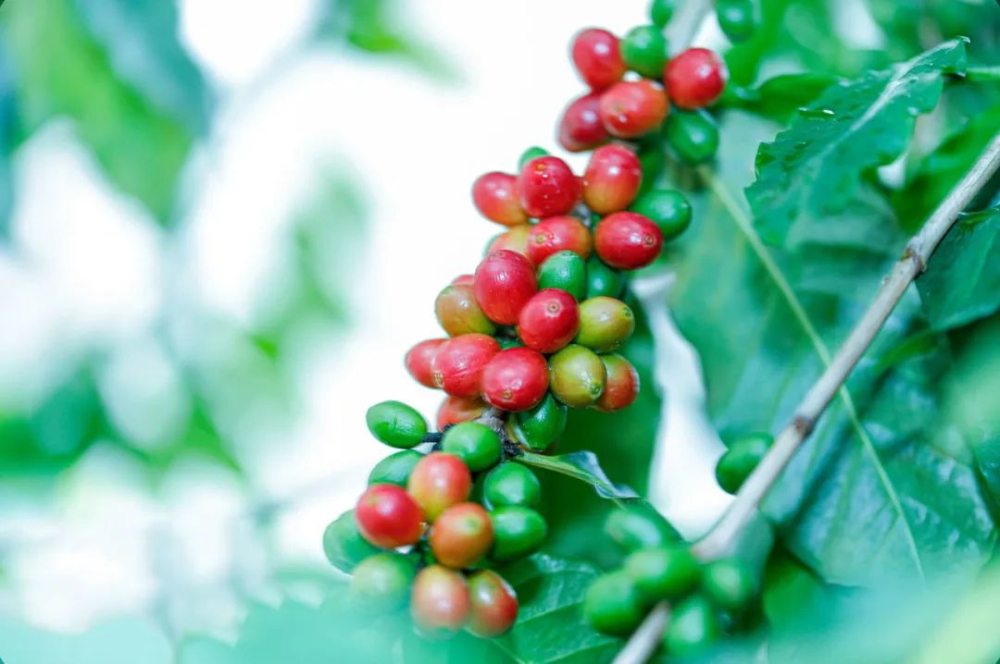
After roasting, Mandheling coffee beans are rich in carbon dioxide and need a process to release the internal gas so that the flavor is better during extraction. The resting period is related to the coffee's roast level. Light-roasted coffee beans need 4–7 days of degassing after roasting, while medium-dark roasts need about 7–10 days. As coffee beans pass the peak degassing period, the aroma gradually diminishes, so the freshness of the coffee beans is very important. All coffee shipped by Front Street is guaranteed to be freshly roasted within 5 days, so by the time you receive it, it's roughly at its optimal flavor period.
For a pure-aroma, high-quality coffee bean like Golden Mandheling, Front Street believes that black coffee best presents the coffee's refined aroma, and it can be extracted using pour-over, siphon, French press, AeroPress, and other methods. Here, Front Street uses the hot pour-over method commonly used in its stores.
Golden Mandheling coffee pour-over parameters: 87–88°C water temperature, medium grind (70% passing rate on China standard No. 20 sieve), coffee powder: 15 grams, coffee-to-water ratio 1:15, three-stage pouring.
Wet the coffee bed with twice the amount of water as the coffee powder, forming a dome and blooming for 30s, then pour in a small stream in circles from the inside out until 125g, then pause. When the coffee bed drops to half the position of the dripper, continue pouring the third stage with the same fine stream until 225g, until all the coffee liquid has filtered through, then remove the dripper. The time is about 2 minutes. Finally, swirl the server to mix the coffee liquid evenly and it's ready to enjoy~
The pour-over Front Street PWN Golden Mandheling coffee has an overall multi-layered profile, rich and full-bodied, with a clean mouthfeel. Nutty and caramel aromas, with chocolate notes, a long-lasting sweet aftertaste, and high balance.
For professional coffee knowledge exchange and more coffee bean information, please follow Coffee Workshop (WeChat official account: cafe_style)
For more specialty coffee beans, please add private WeChat Front Street Coffee (FrontStreet Coffee), WeChat ID: qjcoffeex
The above content is compiled by CoffeeHunters, a coffee news website.


