







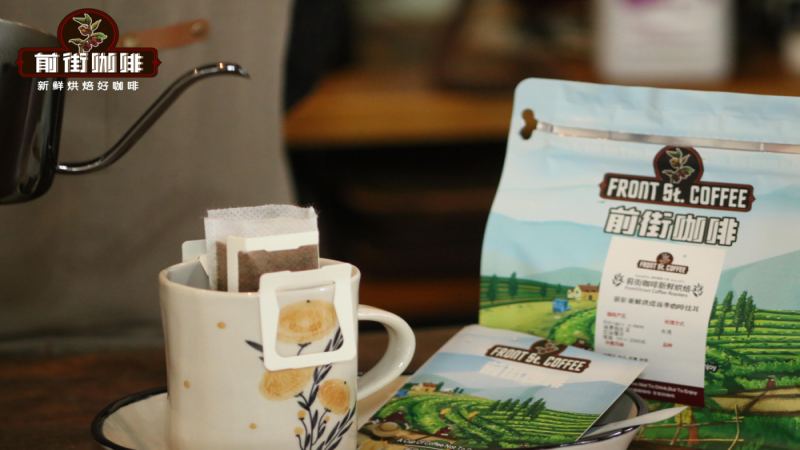
How long should Yirgacheffe drip coffee steep?
A Yirgacheffe drip bag should be brewed once, in hot water, and not reused. Freshly roasted beans are ground right after cooling and sealed into 10-gram bags, and Front Street ships its drip bags and beans within five days of roasting, so the floral notes and sweet finish come through during that window.
Drip bag coffee fits office coffee culture because it needs no equipment beyond a cup and hot water, lowering the barrier compared with pour-over. Front Street offers more than fifty single-origin beans as drip bags; fruit-acid options include Honey Orange, seasonal Yirgacheffe, and Panama Geisha, while richer picks suit a sweeter after coffee.
Drip bag coffee, with its dual advantages of convenience and flavor, has become the top choice for many coffee lovers in the office and at home. But exactly how long should a drip bag be brewed, can it be reused, and how should water be poured to fully release the aroma? This article takes the Yirgacheffe drip bag as an example, starting from Front Street Coffee's bean selection and packaging process, and sorts out the optimal tasting period, common brewing mistakes, and correct operating steps for drip bag coffee, helping you steadily brew a cup of black coffee with bright floral notes and a full, sweet aftertaste even during busy work breaks.
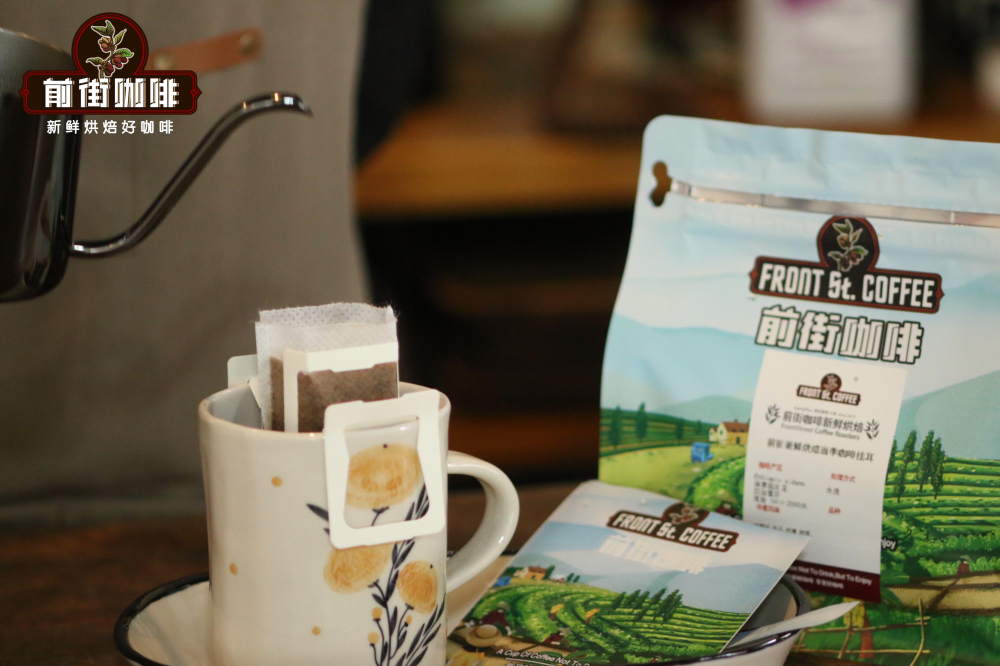
As specialty coffee culture grows more popular, drip bag coffee—a product made by grinding freshly roasted beans to a specific coarseness and then sealing them—has naturally found its way into the daily lives of office workers and home coffee enthusiasts. Compared with pour-over, drip bags have a much lower barrier to entry, requiring no complicated equipment while still easily producing a cup of black coffee full of aroma and with a sweet finish.
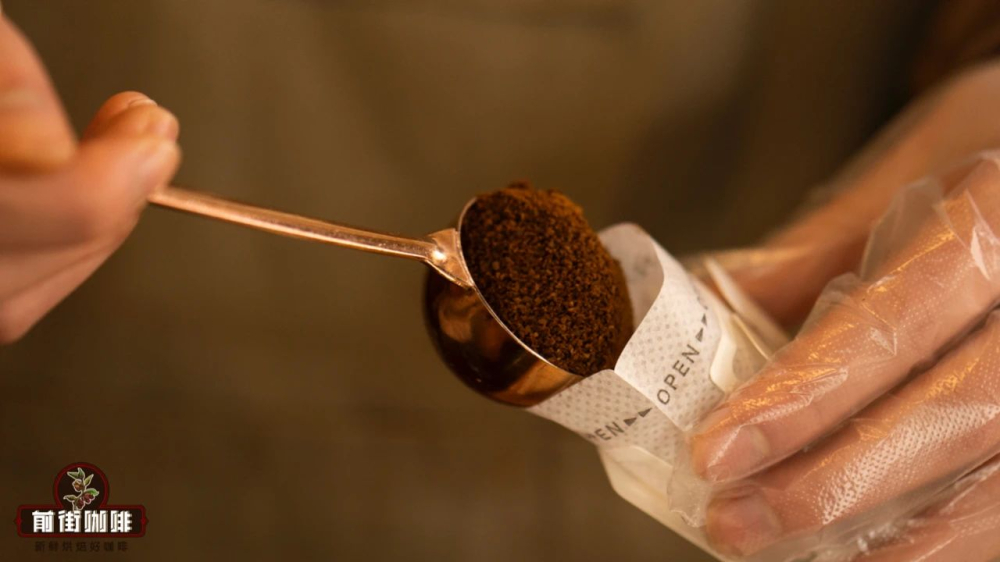
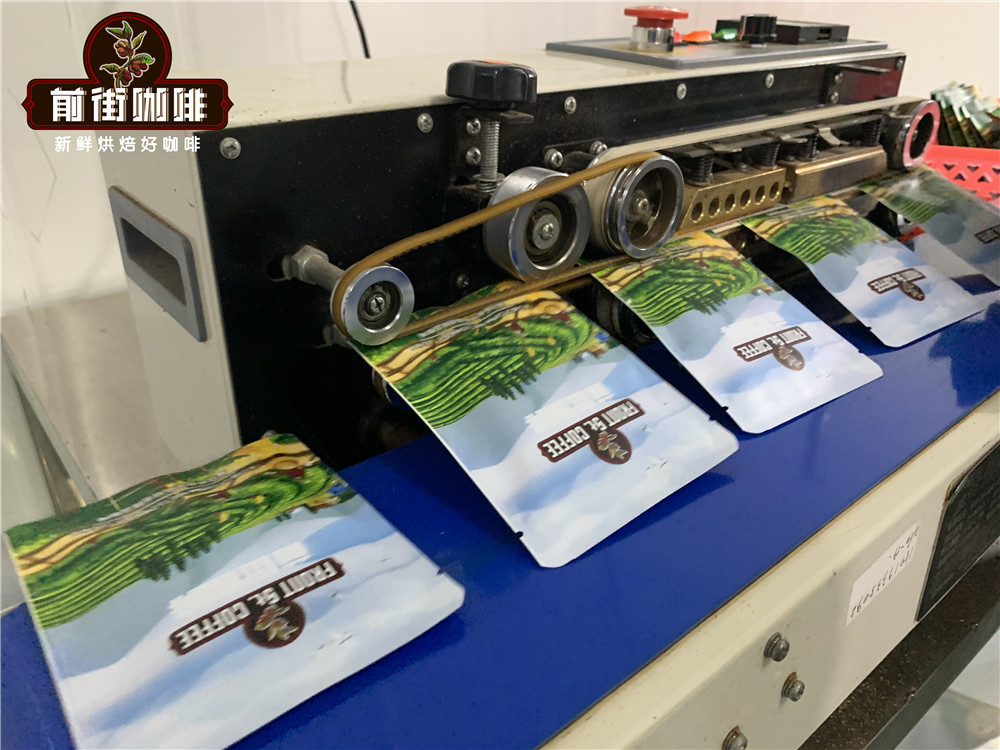
All the specialty beans from selected origins currently listed by Front Street can be processed into drip bag coffee. The beans used in these drip bags are ground immediately after roasting is completed and cooling is finished, then divided as quickly as possible into 10-gram drip bags per pack and individually sealed.
The key to good-tasting drip bag coffee
Whether drip bag coffee can present good flavor depends above all on using freshly roasted beans to make it. After coffee beans come out of the roaster, they slowly release carbon dioxide, and this process also carries away the aroma and flavor substances inside the beans. At present, the drip bag coffee and coffee beans sold by Front Street Coffee are all shipped within 5 days from the date roasting is completed.
The flavor choices for drip bag coffee are actually quite rich. Taking Front Street's bean list as an example, there are more than fifty single-origin coffee beans that can be made into drip bags. If you prefer floral or fruity notes, you can give priority to classic fruit-acid products such as Front Street Honey Orange drip bag, Front Street seasonal Yirgacheffe drip bag, and Front Street Panama Geisha drip bag;
If you prefer richness and a sweet aftertaste, you can choose drip bags made from specialty beans known for nutty flavors, such as Front Street seasonal Mandheling drip bag, Front Street Huilan drip bag, and Front Street Jamaica Blue Mountain No. 1.
Of course, if you are still unsure of your taste preference, you might as well start with the classic 5-origin drip bag series. This series covers five coffee-producing countries—Ethiopia, Kenya, Panama, Honduras, and Indonesia—allowing you to experience respectively the floral notes of Front Street Yirgacheffe, the berry acidity of Front Street Kenya, the citrus notes of Front Street Panama Geisha, the nutty sweetness of Front Street Honduras, and the wildly aromatic spice character of Front Street Indonesian Mandheling.
The following uses a brewing demonstration as an example, using Front Street seasonal Yirgacheffe drip bag. It can be called a representative of floral-and-fruity coffee, with a fresh and bright taste and an affordable price, and can be ordered from Front Street's Tmall flagship store or Front Street's Taobao store.
Yirgacheffe was originally a small town in Ethiopia, located in the Sidama administrative region. This small town has been wetlands since ancient times—in the old language, "Yirga" means "to settle down," while "Cheffe" refers to "wetlands." Yirgacheffe is one of the highest-altitude coffee-producing regions in the world and is also synonymous with Ethiopian specialty coffee. The local altitude reaches 1,700 to 2,100 meters, and it is cool and foggy year-round, like spring in all four seasons. Its unique terrain and cultivation system create superior conditions for growing specialty coffee.
What people often call the "Yirgacheffe flavor" refers to intense jasmine floral notes, lemon or lime-like acidity, and the sweetness and tea-like aroma of peach and almond. Yirgacheffe coffee is layered and rich, with a delicate body, alluring flavor, and a sweet finish. "Coffee enters the mouth, and a hundred flowers bloom" is the most fitting description, as if flowers awaken the taste buds and olfactory cells in the nasal cavity. Besides the floral notes, its delicate body is like silk massaging the mouth, a very wonderful tactile sensation.
The optimal tasting period for drip bag coffee
Drip bag coffee has already been pre-ground when it is made, and the increase in cut surfaces of the particles accelerates the loss of carbon dioxide and aroma. Although Front Street Coffee seals and packages it individually immediately after grinding, compared with whole coffee beans, the aroma of drip bag coffee still dissipates faster.
According to Front Street Coffee's test comparisons, freshly roasted and ground drip bag coffee has an optimal tasting period within 30 days after the roasting date. Generally speaking, after more than 30 days, both the aroma and flavor of drip bag coffee noticeably decline, so the brewed coffee naturally will not be fragrant enough.
Wrong ways to brew drip bag coffee—never do these!
Ⅹ Just grab an electric kettle and brew a cup casually. Although drip bag coffee is easy to operate, you still cannot brew it blindly; you still need to pay attention to water temperature, ratio, and pouring method.
Ⅹ Put the drip bag directly into a small cup and soak it in water; even if the parameters are correct, this will not help. Soaking the drip bag in water for a long time easily causes over-extraction.
Ⅹ Treat the drip bag like a tea bag and throw it into a cup to steep.
Ⅹ Pour the coffee grounds from the drip bag into a cup and brew directly.
Ⅹ Brew the same drip bag coffee a second time.
Correct ways to brew drip bag coffee:
Brewing temperature: 90°C (can be adjusted according to the roast level of the beans; light to medium roast is recommended at 91-93°C, medium-dark to dark roast is recommended at 88-89°C)
Brewing ratio: 1:15 (one 10-gram drip bag with 150 grams of hot water)
Brewing method: simplified three-stage pouring
Brewing equipment: a drip bag coffee pouring kettle (available for just over ten yuan and effective at stabilizing the pouring flow rate), a thermometer (optional), and a straight-walled heat-resistant cup.
Steps for brewing drip bag coffee:
1. Make sure the chosen cup is large enough so that during brewing the drip bag does not touch the brewed coffee liquid.
2. Open the outer packaging of the drip bag, take out the drip bag, tear it open along the dotted line, then gently pull open the cardboard tabs on both sides and hang it on the rim of the cup.
3. Pour 30 milliliters of water for the first pour, to about half the height of the drip bag, and wait about ten seconds to let the coffee grounds bloom and degas. Then begin the second pour, about 60 milliliters each time, pouring until the drip bag is about nine-tenths full.
4. After the coffee liquid has finished dripping, remove the drip bag and discard it, shake the cup to make the coffee liquid even, and it is ready to taste.
Note!!! It absolutely must not be brewed a second time! Because the delicious substances have already dissolved into the coffee liquid during the first brew.
The above content is compiled by CoffeeHunters, a coffee news website.


