







How does cold water change coffee extraction?
Cold brew uses room-temperature or ice water instead of hot water, steeped over a long period. Grounds stay in contact with 4 to 10 degrees Celsius water, so extraction is slow and bitter large molecules are hard to release. Sugars and organic acids come out more fully, giving a better balance of acidity, sweetness, and body in the final cup.
Two common forms exist: cold steep coffee, where grounds sit directly in cold water, and ice drip coffee, where a device passes water through the coffee bed drop by drop. Once hot water is involved, it is no longer cold brew. Ratio, grind size, and steeping time stay the main controls, and a dark Jamaica Blue Mountain No. 1 works well as a starting point.
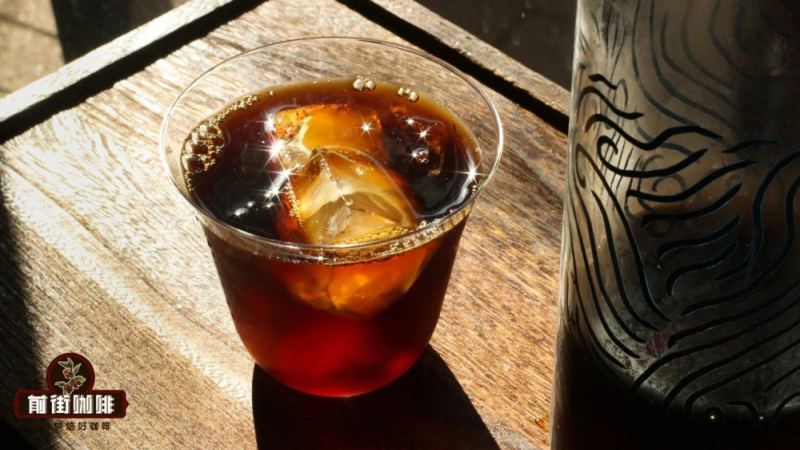
Cold brew coffee is made by steeping coffee in cold water for an extended period, delivering a flavor experience entirely different from hot brewing. This article explores the details of making cold brew coffee, covering key parameters such as bean selection, grind size, steeping time, and coffee-to-water ratio. Using Jamaica Blue Mountain No. 1 as an example, Front Street Coffee shares the complete process from bean selection to final output, along with roasting degree recommendations and specific ratio plans suited for cold brew, helping coffee enthusiasts easily make a balanced, smooth iced coffee in summer. 【Image 1】 For more specialty coffee knowledge, follow our WeChat official account: Front Street Coffee (FrontStreet Coffee). Coffee extraction doesn't have to rely solely on hot water—cold water can accomplish the same. Coffee extracted with cold water is called "cold brew coffee," and its flavor profile has its own distinct characteristics compared to hot-brewed coffee.
For more specialty coffee knowledge, follow our WeChat official account: Front Street Coffee (FrontStreet Coffee).
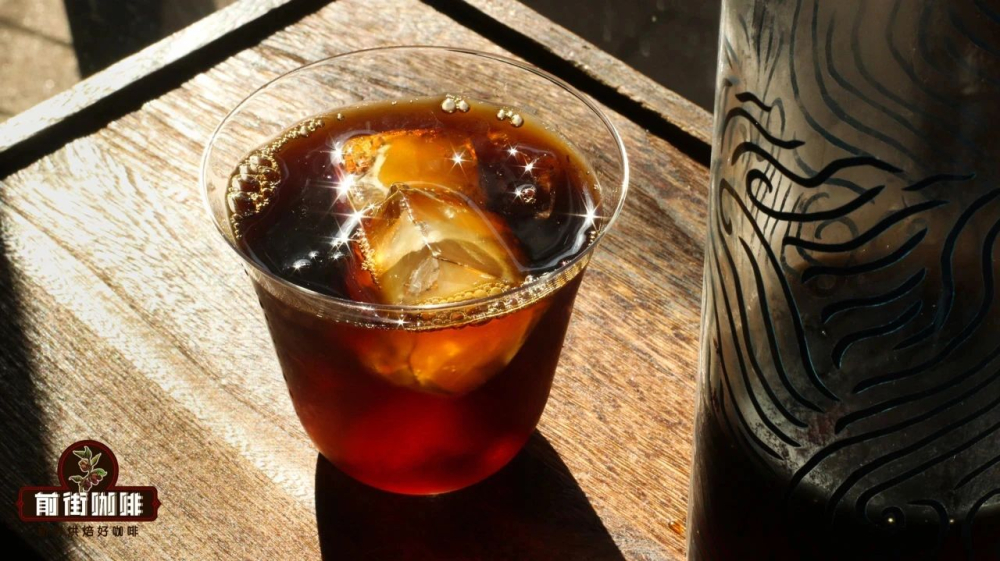
Coffee extraction doesn't have to rely solely on hot water—cold water can accomplish the same. Coffee extracted with cold water is called "cold brew coffee," and its flavor profile has its own distinct characteristics compared to hot-brewed coffee.
Cold brew coffee comes in two common forms: cold steep coffee and ice drip coffee. The former involves immersing coffee grounds directly in cold water, while the latter uses a drip device to let water pass through the coffee bed drop by drop to complete extraction. A friend once asked Front Street: "Can cold brew coffee be made with hot water?" The answer is no—once hot water is used, it can no longer be called cold brew coffee. Cold brew coffee must use room-temperature or ice water, and the entire steeping process must be maintained in a low-temperature environment.
Since the coffee grounds are in contact with 4-10°C cold water throughout, the extraction rate is extremely slow, and bitter large molecules are difficult to release. Meanwhile, the prolonged low-temperature steeping allows compounds such as sugars and organic acids to be more fully extracted, resulting in a better balance between acidity, sweetness, and body in the final product.
So how do you make cold brew coffee taste good? Front Street shares a few operational details here.
Choosing Coffee Beans
To avoid brewing failures, Front Street recommends prioritizing light-to-medium roasted coffee beans, as they offer greater margin for error compared to medium-dark roasts. There are many types of beans on the market with various processing methods and roast levels, but any single-origin coffee bean labeled for pour-over use can be used for cold brew. Dark-roasted coffee can present rich aromas when brewed with hot water, with a mellow bitterness on the palate followed by a sweet finish; however, when made into cold brew, at iced temperatures it tends to present more of a burnt bitterness and carbonized notes, making it difficult to replicate the refinement of hot coffee.
Therefore, Front Street recommends light to medium roast beans. If you're after a refreshing juicy quality, choose light-roasted washed coffees, such as washed Yirgacheffe or Kenya AA; if you prefer a more intense fruity and vinous expression, try barrel-processed or honey-processed beans, such as Colombia Rose Valley or Honduras Lychee Orchid; if you don't like acidity and just want a balanced "coffee taste," Papua New Guinea Bird of Paradise is also a good choice.
Today, we've chosen the Front Street Jamaica Blue Mountain No. 1 coffee bean, hailed as the "Emperor of Coffee," to see how it tastes when made into cold brew coffee.
The Unique Qualities of Blue Mountain Coffee
The key to Blue Mountain coffee's popularity lies in its unique Blue Mountain flavor, and the foundation of this flavor is the exceptional growing environment of Blue Mountain coffee. Richard Sharp, owner of Jamaica's Clifton Estate, which produces Blue Mountain coffee, once described the reasons for Blue Mountain coffee's quality in an interview: "It's the specific latitude, longitude, and the unique position of this Caribbean island—here, a microclimate exists that cannot be found anywhere else."
The Blue Mountain range is located in eastern Jamaica, situated in a seismic zone where volcanic eruptions brought abundant fertile soil rich in minerals. The Blue Mountains have the highest peaks in the entire Caribbean region and are also a famous local tourist destination. The air here is fresh and pollution-free, and with year-round rain, humidity, and coolness, coffee trees thrive in the misty clouds. The high altitude creates significant temperature differences, giving coffee cherries ample time to absorb nutrients, resulting in coffee with a mellow, sweet taste. Although the Blue Mountain range spans a wide area, the terrain is not flat—coffee trees are mostly planted on rugged slopes, making manual harvesting extremely difficult. Local estates hire skilled female workers to go up the mountain and hand-pick coffee cherries that have reached the proper ripeness to ensure coffee quality.
For many years, Jamaica has insisted on growing only Arabica varieties, which has kept local Typica from crossbreeding or mutation, maintaining a pure bloodline. Unlike many coffee-producing regions, Jamaica is a relatively isolated island nation with inherently superior microclimate conditions. Through over two hundred years of domestication and adaptation, Blue Mountain Typica has evolved better disease resistance, particularly outperforming ordinary Typica in resistance to coffee berry disease, with more stable yield and quality.
Front Street Blue Mountain No. 1 coffee uses a medium-dark roast, so whether during grinding or after brewing, it consistently presents the sweet aroma of dark chocolate, the sweetness of caramel, and a soft, elegant acidity, with all flavors in balanced harmony, smooth and rich on the palate, possessing a very typical Blue Mountain flavor.
Coffee Grounds Grind Size
Cold brew is made in a low-temperature environment, and cold water extracts coffee grounds more slowly. Compared to hot water extraction, bitter compounds are less likely to be released, so the grind size, coffee-to-water ratio, and steeping time are not as strict as with pour-over coffee. Generally, as long as they fall roughly within a reasonable range and you choose the right coffee beans, you can make a delicious iced coffee in just a few simple steps.
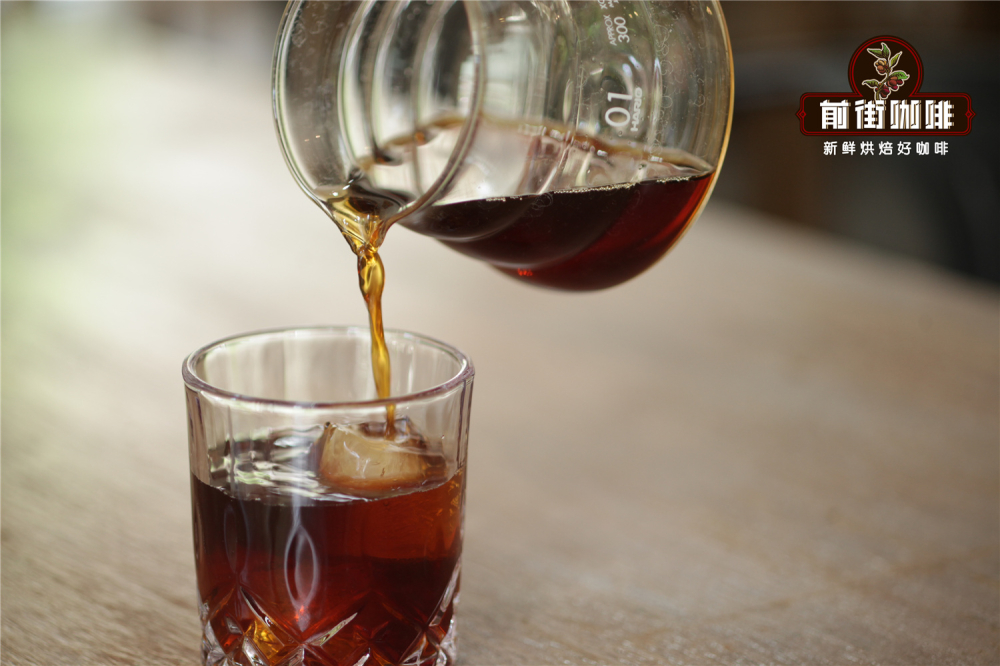
Taking Front Street's daily cold brew production as an example, the grind size is slightly finer than for pour-over, i.e., a 75-80% passing rate through a Chinese No. 20 standard sieve, visually about the texture of fine granulated sugar, corresponding to 9.5-10 on the EK43s, or approximately 22-26 clicks on a hand grinder such as the C40.
Steeping Time
Pour-over coffee places particular emphasis on water temperature and time, because water serves as the primary brewing medium and temperature directly affects extraction efficiency—too high or too low will alter the flavor. Cold brew, however, is in contact only with 4-10°C low-temperature water throughout, making extraction efficiency very slow. Therefore, the steeping time needs to be extended to allow more aromatic compounds to be released, which in turn allows sugars and organic acids to be more fully extracted, resulting in a more balanced final product in terms of acidity, sweetness, and body. Typically, the steeping time for cold brew coffee is recommended to be controlled between 8 and 18 hours.
Front Street once conducted a cold brew experiment using time as a variable, steeping the same coffee for 6 hours, 10 hours, 16 hours, and 24 hours respectively. The final findings were that the 6-hour coffee tasted thin with flat aromas, the 24-hour cold brew was noticeably bitter with signs of over-extraction, while the 10-hour and 16-hour groups performed best, with rich aromas and a full-bodied taste.
Coffee-to-Water Ratio
Front Street has noticed that some friends, for convenience, simply dump coffee grounds and water into a pitcher and start steeping. But whenever it comes to coffee extraction, the coffee-to-water ratio is an indispensable parameter. Without weighing, coffee is like opening a mystery box—you never know what flavor you'll get. To ensure better-tasting brewed coffee, Front Street recommends keeping the ratio between 1:10 and 1:13 when making cold brew. If the concentration is too high, add an appropriate amount of ice cubes to dilute.
Finally, Front Street will explain its own cold brew coffee-making method. For coffee beans, Front Street prefers light-to-medium roasted beans; for the container, all you need is a clean, sealable container. Prepare 40 grams of coffee grounds, grind to a fine grind (85% passing rate through a No. 20 sieve), pour into the container, then pour in 480 milliliters of cold water, stir evenly with a wooden stick, and cover with the lid.
After stirring evenly, seal with plastic wrap and refrigerate for 12 hours. Remove and strain out the coffee grounds—once filtered, you'll have a clear coffee liquid that can be enjoyed immediately; alternatively, you can pour the filtered coffee liquid into a bottle and continue refrigerating for 4 hours for an even better flavor and mouthfeel.
Generally speaking, for considerations of flavor experience and health safety, whether it's ice drip or cold brew, Front Street recommends that all low-temperature extraction methods be consumed within 5 days from the date of preparation.
The above content is compiled by CoffeeHunters, a coffee news website.


