








What makes Typica coffee different from other arabica coffee varieties?
Typica is one of the oldest Arabica varieties, and most Arabica coffee varieties today trace back to it. The cup is elegant and clean, but the plant is weak, prone to leaf rust, and low yielding. In Central and South America it has largely been replaced by Caturra and Catuai, making it scarce.
Typica beans are large and pointed, unlike the round Bourbon bean, and the flavor is serene and balanced with high cleanliness. Well-known subtypes include Jamaica Blue Mountain No. 1, Hawaiian Kona, Golden Mandheling and Yunnan Typica. Its low yield and poor disease resistance explain why it persists mainly on select farms.
Typica is one of the oldest varieties of Arabica coffee, and the vast majority of Arabica varieties today carry its genetic lineage. This variety has an elegant flavor and a clean mouthfeel, yet it is becoming increasingly rare due to its weak constitution, poor disease resistance, and limited yield. This article will systematically sort out Typica's origin and spread, its plant morphology, the impact of leaf rust on it, and the many well-known sub-varieties derived from it, and, in combination with representative beans sold by Front Street Coffee such as Golden Mandheling, Yunnan Typica, Jamaica Blue Mountain No. 1, and Hawaiian Kona, present the full flavor profile of the Typica family along with roasting and brewing ideas.
Typica can be regarded as a pearl in the specialty coffee field. As one of the oldest Arabica varieties, almost all Arabica coffee varieties today can be traced back to Typica, and most of the descendants derived from it have inherited its excellent flavor genes.
The original intention of Front Street Coffee was to taste coffee beans from all over the world, get to know different coffee varieties, producing regions, and processing methods one by one, and build a visual database through comparison. Front Street Coffee hopes that every friend who loves coffee can step more deeply into the world of coffee and explore its mysteries together with us. At present, Front Street Coffee has more than 30 coffee beans available in its stores and online Tmall shop, each with its own merits. Today, Front Street Coffee has specially selected several of the most representative Typica variety coffees to taste together with everyone.
Typica Variety
Typica has an elegant flavor, but the plant has a weak constitution and poor disease resistance, making it highly susceptible to leaf rust. Its coffee beans have a low yield and are difficult to satisfy economic returns. In recent years, Typica in Central and South America has gradually been replaced by Caturra and Catuai, so Typica is becoming increasingly rare. Despite its outstanding flavor, Typica's popularity is still not as high as Bourbon. Typica beans are relatively large, in a pointed conical round or thin pointed shape, in contrast to the round-bodied beans of the Bourbon variety. Typica coffee has a uniquely serene and clean flavor, with an overall balanced performance and a high degree of cleanliness in the cup.
Front Street Coffee Yunnan-Grown Typica
Typica Planting History
Typica was first commercially cultivated, originating from the Dutch people's persistent pursuit of coffee. In the early period when Europe still held a resistant attitude toward coffee, the Dutch had already begun planning to cultivate coffee for global trade. However, the Dutch did not realize for a long time that coffee is a tropical crop that cannot tolerate cold, and it was not until 1616 that the Dutch East India Company moved coffee trees into a greenhouse for cultivation and successfully transplanted them, and this tree was therefore called the "mother coffee tree."
In 1658, the Dutch transported the seeds of the "mother coffee tree" to Sri Lanka, which had a warmer climate, and attempted large-scale planting. Unfortunately, local cooperation was not high, and the planting did not succeed.
In 1690 and 1699, the Dutch East India Company transported Typica seedlings from Malabar, its territory in western India, to Java Island in two batches for trial planting. Java farmers showed strong interest in this and actively planted them, ultimately achieving success at once.
Typica Tree Characteristics
Typica has distinctive appearance characteristics and may be the easiest variety to identify. The plant is conical, with a vertical trunk, and can grow up to 5 meters tall. This height means that, compared with other varieties, Typica has longer distances between branches and between nodes on the same branch.
The angle between the lateral branches and the vertical trunk is between 50 and 80 degrees. Neither the trunk nor the branches are especially thick, and the leaves, fruit, and green beans are usually slender. The tips of young leaf buds are bronze-colored. Compared with other Arabica varieties, Typica's leaf surface is smoother and has fewer wavy edges. Typical Typica fruit is bright red when ripe.
The bronze color of Typica's top leaves is one of its signature characteristics. The beans are relatively large, in a pointed oval or thin pointed shape, so some people also call it "red-top coffee." Typica coffee has a uniquely serene and clean flavor, with a balanced mouthfeel and high cleanliness. Its shortcomings lie in limited yield, requirements for altitude, and susceptibility to leaf rust, as well as weak resistance to pests and diseases.
Leaf Rust
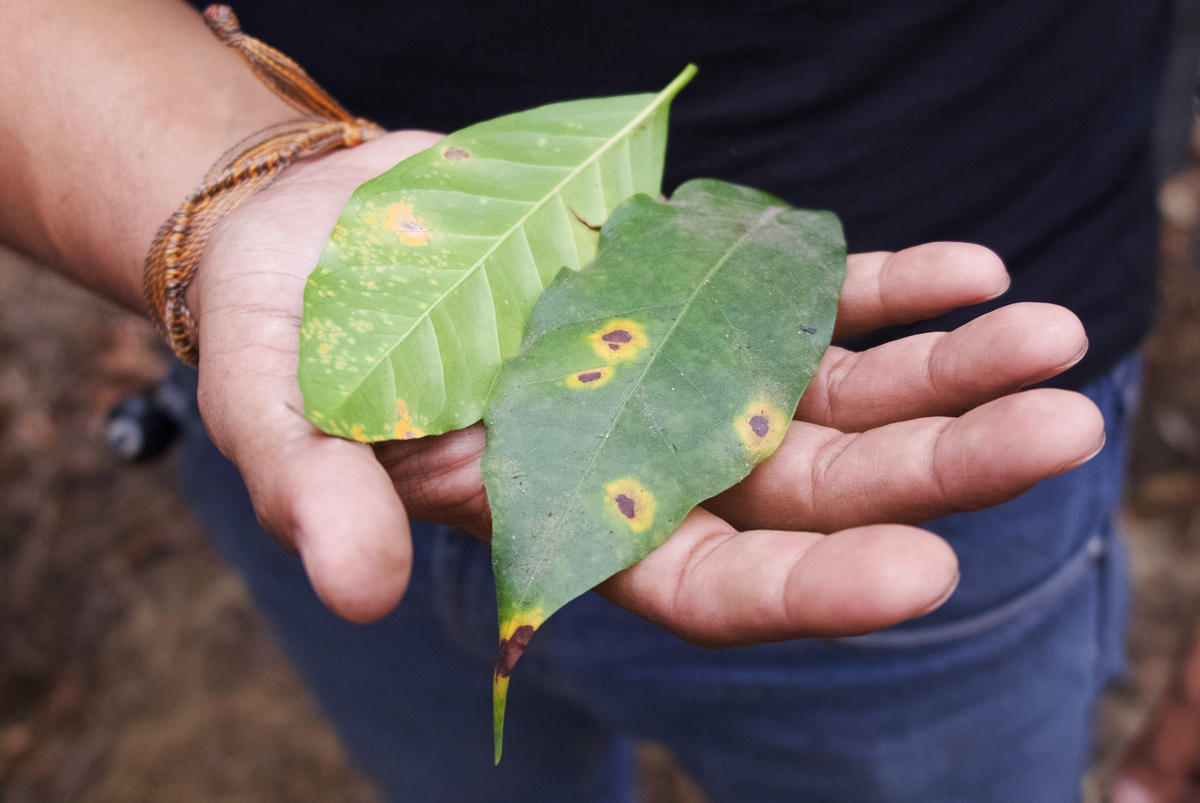
Front Street Coffee believes that many coffee lovers have heard of this disease that threatens coffee trees. Below is a brief understanding of leaf rust, which once caused heavy losses to coffee growers. Leaf rust is the most serious coffee disease. It first appeared in 1861 in the coffee-producing region around Lake Victoria in East Africa, ravaged Sri Lanka in 1867, causing the collapse of Sri Lanka's coffee industry, then spread rapidly to many places in Southeast Asia, and eventually affected coffee-producing regions throughout southern, central, and western Africa.
Before 1970, leaf rust had not appeared in the Western Hemisphere, until an outbreak occurred in 1970 in the Bahia region of Brazil. After that, the disease was found in all coffee-producing areas worldwide. Leaf rust is a parasitic fungus that infects coffee plants. It appears as yellow spots, first infecting the tips of leaves, then developing into yellow-orange powdery particles resembling rust on iron, and it spreads very easily between plants. One of the difficulties in fighting coffee leaf rust is that it is extremely contagious. The fungal spores are very light and powdery, and are easily spread by wind and rain, or even by workers' clothing and tools. After an outbreak of leaf rust, long-term monitoring and chemical prevention ultimately only treat the symptoms rather than the root cause. Since then, people have been committed to researching coffee tree varieties with strong disease resistance, striving to prevent leaf rust at its root while also safeguarding coffee bean yield and quality.
Typica: Layered and Rich, with a Smooth Flavor
As the variety closest to the original species, Typica originated in Kaffa, Ethiopia, and Yemen. It is the ancestor of Arabica varieties, with excellent quality, showing outstanding purity and body, citrus-like fruit acidity, and a sweet aftertaste. Typica's top leaves are bronze-colored, and the beans are oval or thin pointed; the tree is 3 to 4 meters tall, with a conical shape, and the angle between the trunk and branches is about 50 to 70 degrees. The leaves are narrow and bronze-colored, and the berries are more oval than those of other varieties. In Central America, it is called Arabigo or Criollo. Due to low resistance to leaf rust, difficult cultivation and management, low yield per tree, and a long harvest period, the yield is naturally low.
In the course of genetic evolution, Typica produced many variant varieties. They are better able to adapt to their surrounding environments and form new characteristics, and are usually regarded as new varieties. For example, Mexican Typica and Hawaiian Typica differ slightly, so they are named differently; Criollo (South America), Arabigo (America), Kona (Hawaii), Pluma Hidalgo (Mexico), Garundang (Sumatra), Blue Mountain (Jamaica, Papua New Guinea), San Bernado and San Ramon (Brazil), and Kent and Chickumalgu (India) all belong to the Typica family.
What Are the Famous Typica Variety Coffees?
Front Street Coffee — Indonesia Golden Mandheling Coffee
Company: PWN
Region: Sumatra
Altitude: 1100-1600m
Variety: Typica
Processing Method: Wet-hulled
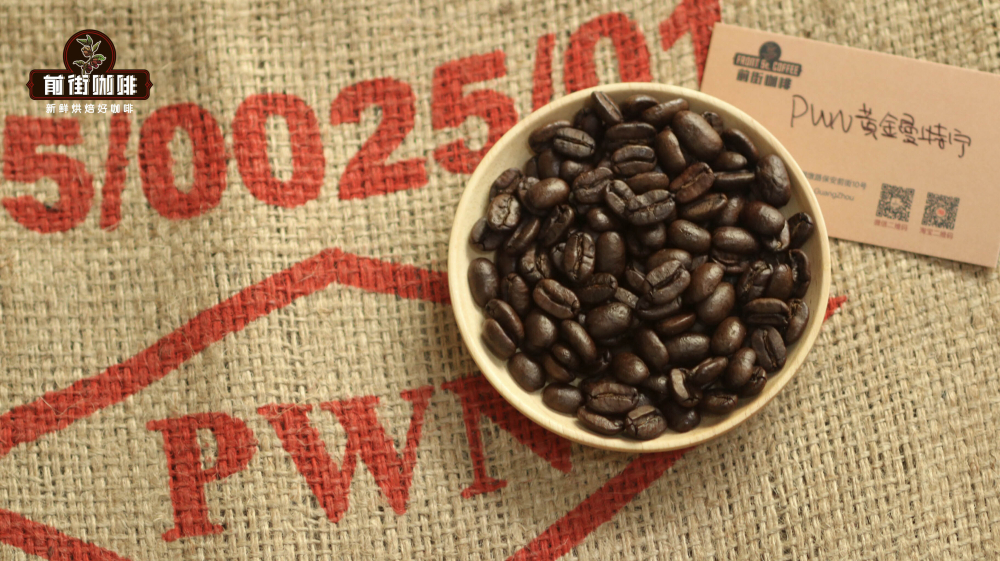
The specifications for Golden Mandheling require Typica variety beans of 19 screen size or above, with fewer than 3 defective beans (in a 300g green bean sample), belonging to the highest grade G1, with a darker green color and a neat flat bean shape. After strict screening, Front Street Coffee found that Golden Mandheling not only removes the earthy miscellaneous flavors unique to ordinary Mandheling, but also tastes cleaner and more transparent, with stronger sweetness and aroma. Front Street's Golden Mandheling comes from PWN. Golden Mandheling is actually produced by Pawani Coffee Company after purchasing Mandheling locally in Indonesia, and the company registered the name Golden Mandheling, so only Mandheling produced by this company is authentic Golden Mandheling.
Roasting Suggestions
Front Street Coffee believes that Golden Mandheling is a green bean with relatively high moisture content, with a large deviation in water content compared with natural-process beans, so special attention must be paid during the dehydration stage. For green beans with high moisture content, the damper can be closed immediately after charging, then opened to 3 after 30 seconds of steaming, until the green bean color turns light green or white, then the damper is opened to 4, and after first crack it is opened to 5 (maximum).
Charging temperature 200°C, turning point 5'40", first crack starts at 9'54'' at 191.2°C, first crack development 3'30'' and discharge at 204.5°C.
Brewing Parameters
Dripper: KONO dripper
Water temperature: 85-88°C (the higher the water temperature, the more bitter)
Dose: 15 grams
Coffee-to-water ratio: 1:15
Grind size: medium grind (70% passing rate on a No. 20 standard sieve)
When brewing Mandheling daily, Front Street Coffee recommends using a KONO dripper, because it can bring a rounder and fuller mouthfeel, and the flavor expression is also more direct. The only venting part of the Kono dripper is that one-quarter of the ribs. When the water level rises above the ribs, the amount of water in the dripper continues to increase, increasing pressure through the weight of the water. Because the outlet is relatively small, it can extend the contact time between coffee particles and water, and as the water flow drives extraction, soluble substances are extracted more effectively. Front Street Coffee uses this brewing method and can usually achieve the high-body effect expected by guests.
Brewing Technique
Pulse Pouring Extraction
Use 30 grams of water for blooming, with a blooming time of about 30 seconds. Pour 95 grams of water in a small stream in circles around the center, that is, pause in stages at 125 grams of water, then when the water level drops and is about to expose the coffee bed, continue pouring water until 225 grams and finish. When the water level drops and is about to expose the coffee bed, remove the dripper. (Start timing from the beginning of blooming.) The extraction time is 2'00".
Brewed flavor: layered and changeable, clean, balanced, with a long caramel sweetness in the finish; high sweetness and rich, full body.
-Front Street 2013 Typica-
At Front Street Coffee, you can find two kinds of Yunnan coffee beans: one is washed Typica, and the other is Catimor. At Front Street Coffee, Yunnan Typica is labeled as Yunnan specialty coffee, while Yunnan Catimor is labeled as Yunnan small-batch coffee according to market convention. Front Street Coffee roasts both beans to medium, because the Yunnan producing region is not an acidity-focused region, and the flavors are relatively balanced, with a base tone of nuts and brown sugar; Front Street Coffee chooses medium roasting to present Yunnan coffee's balance, nutty and brown sugar sweetness, and soft fruit acidity.
Front Street Coffee's predecessor was "Dazhen Coffee," named after our original intention to grow coffee in a place in Guangdong called Dazhen. When we grew seedlings from Catimor and they reached 20CM, more than half a year had passed, and only then did we truly understand the relationship and sequence among variety, altitude, and processing method. Choosing the right variety, planting it at an appropriate altitude, and, once mature, experimenting to find a processing method that can express its distinctive flavor — this is the only logical relationship by which Front Street Coffee believes specialty coffee can present clear regional flavor, and it is also the work recently led by the Yunnan Department of Agriculture: establishing a Yunnan specialty coffee flavor map. Later, amid the fog, Front Street Coffee happened to choose the most difficult path: selecting highlands, cultivating Arabica varieties, and planting reasonably. After that, we began planting and cultivating coffee seedlings in Yunnan.
Front Street Coffee — Front Street 2013 Typica
Coffee origin: China, Yunnan, Baoshan
Coffee variety: Typica
Production altitude: 1200M
Quality grade: AA
Processing method: Washed
Roast level: Medium roast
Roasting Suggestions
Front Street's roaster believes that medium slow roasting best expresses Huaguoshan coffee beans' round and smooth character without losing their rich floral and fruity aroma.
Roaster: Yangjia 600g semi-direct fire
Charge when the drum temperature reaches 200°C, set the damper to 3, adjust the heat to 160°C after 30 seconds, keep the damper unchanged, turning point 1'33'', adjust the heat once at 168°C, at which point the bean surface turns yellow, the grassy smell completely disappears, and dehydration is complete, adjust the heat to 130°C, set the damper to 4; At 8'45'', ugly wrinkles and dark spots appear on the bean surface, and the toast aroma clearly turns into coffee aroma, which can be defined as the prelude to first crack. At this time, listen carefully for the sound of first crack. First crack begins at 9'07'', reduce the heat to 80°C, open the damper fully to 5 (adjust the heat very carefully, not so low that there is no cracking sound), develop for 3'00'' after first crack, and discharge at 198°C.
Brewing Parameters
Dripper: V60 dripper
Water temperature: 90°C
Dose: 15 grams
Coffee-to-water ratio: 1:15
Grind size: medium grind
Brewing Technique
Pulse Pouring Extraction
Use 30 grams of water for blooming, with a blooming time of about 30 seconds. Pour 95 grams of water in a small stream in circles around the center, that is, pause in stages at 125 grams of water, then when the water level drops and is about to expose the coffee bed, continue pouring water until 225 grams and finish. When the water level drops and is about to expose the coffee bed, remove the dripper. (Start timing from the beginning of blooming.) The extraction time is 2'00".
Brewed flavor: Melon and fruit aroma, nuts, cane sugar, cream, soft fruit acidity, black tea.
-Jamaica Blue Mountain Coffee-
When people mention Jamaican coffee, everyone's first reaction is basically Jamaica Blue Mountain coffee. Blue Mountain coffee can be called the most popular and most unique coffee on the small island of Jamaica. Front Street Coffee's Jamaica Blue Mountain comes from Clifton Estate, and Clifton Mountain, where the estate is located, is the oldest coffee-producing area in Jamaica that is still in normal operation.
The island of Jamaica happens to be located in the coffee-growing belt, and the Blue Mountains are located in the eastern part of Jamaica. Here there is not only fertile volcanic soil providing nutrients, but also suitable temperatures and climate, with ample rainfall. The unique geographical environment provides superior growing conditions for coffee cultivation in Jamaica's Blue Mountains and has also created the world's second most expensive coffee. Real Jamaica Blue Mountain coffee has a rich aroma, a full and unique mouthfeel, an elegant flavor, and is extremely balanced. In Blue Mountain coffee's balanced taste, no single flavor stands out too much. It is precisely the full mouthfeel, pleasant aroma, and long-lasting finish and sweetness that attract many coffee lovers to taste it. Front Street Coffee's Blue Mountain from Clifton Estate is Blue Mountain coffee beans exported through a company designated by the Jamaica Coffee Industry Board, packed in wooden barrels as green beans, and Rainforest Alliance certified.
Rainforest Alliance certification indicates that the crop meets:
1. Less water pollution
2. Less acid damage
3. Reduced impact on the environment and human health
4. Protection of wildlife habitats
5. Less waste
6. Use of less water
7. Highly effective farm management mechanisms
8. Protection of the rights and welfare of agricultural workers
9. Protection of agricultural workers' income and competitiveness
10. Increased cooperation between agricultural workers and environmentalists.
Front Street Coffee — Jamaica Blue Mountain No. 1 Coffee Beans
Farm: Clifton Farm
Estate owner: The Sharp family
Certification: Rainforest Alliance certification
Location: Newcastle area
Total area: 250 acres
Coffee planting area: 180 acres
Altitude: 1310 meters
Processing method: Washed
Variety: Typica
Roast: Medium-dark
Roasting Suggestions
Jamaica Blue Mountain coffee is not grown at a very high altitude, and the traditional Typica variety makes the green beans relatively soft in texture, but they cannot withstand high heat. If too much energy is applied during roasting, the rate of temperature rise will become very high, and once the roast level is not well controlled, smoky and burnt flavors will appear. In order to highlight Blue Mountain coffee's full mouthfeel and chocolate, caramel flavors, Front Street Coffee chooses a medium-dark roast level.
Charging temperature: 170°C, turning point: 5'10'', 153°C, first crack starts: 8'12'', 182.5°C, first crack development: 4'00'', discharge at 201.3°C.
Brewing Experiment
Because this bean is medium roasted, Front Street Coffee uses KONO to brew it. KONO's ribs stop before reaching half the height of the dripper. This design is intended to ensure that after the dripper is wet, the filter paper stays close to the wall, restricting airflow, thereby increasing the water absorption time of the coffee grounds, making the brewed coffee more uniform overall, and enhancing the full mouthfeel. The groove framework at the bottom of the dripper is the key design that creates a siphon effect during subsequent brewing.
*Reason for choosing the Kono dripper: The Kono dripper has few ribs and they are located at the lower end. The filter paper fits closely against the dripper, which can restrict airflow, lengthen the contact time between water and coffee grounds, allow the coffee grounds to be fully extracted, and enhance the full mouthfeel.
Brewing Parameters
Dripper: KONO, dose: 15 grams, coffee-to-water ratio: 1:15, water temperature: 87°C, grind size: fine granulated sugar. Total extraction time: 2 minutes, total extraction amount: 225 grams.
Brewing Technique
Pulse Pouring Extraction
Use 30 grams of water for blooming, with a blooming time of about 30 seconds. Pour 95 grams of water in a small stream in circles around the center, that is, pause in stages at 125 grams of water, then when the water level drops and is about to expose the coffee bed, continue pouring water until 225 grams and finish. When the water level drops and is about to expose the coffee bed, remove the dripper. (Start timing from the beginning of blooming.) The extraction time is 2'00".
Flavor: The taste is clean and mild, with chocolate sweetness on the entry, a full mouthfeel, moderate and perfect acidity, and a long-lasting fruit flavor at the end.
-Hawaiian Kona-
Hawaiian coffee is one of Hawaii's best agricultural products. With annual output exceeding 8 million pounds, Hawaii is the only U.S. state that grows coffee. As early as the early 1800s, coffee plants were brought to Hawaii, but it was not until the early 20th century that coffee production finally got started, mainly on small farms. Although Big Island Kona coffee is still the most famous, coffee is now grown on more than 950 farms across every major island, with a harvested area of more than 7,900 acres.
For coffee, Front Street Coffee believes that in addition to variety, processing method, and cultivation method, the coffee-growing environment, climate, and altitude are equally important in affecting flavor. Hawaii is warm all year round, sunny, with rich volcanic soil, rolling hillsides, tranquil trade winds, and abundant rainfall. This combination is the main factor that makes Hawaiian coffee some of the best in the world. Hawaiian coffee is smooth and aromatic, with an attractive nutty aroma, and its acidity is also relatively balanced and moderate.
Most coffee trees in the Kona region grow on volcanoes, allowing them to absorb large amounts of nutrients stored in the soil. Combined with artificial cultivation techniques, this makes every coffee bean here unique. Kona coffee ground and brewed from these coffee beans is silky smooth, rich in aroma, with a slightly charming nutty fragrance and moderate acidity, as moving and endlessly meaningful as the colorful scenery on the Hawaiian islands. Before Kona green beans are exported, a numbered label is attached to the burlap sack, indicating certification by the Hawaii Department of Agriculture, along with an official identification seal, so the price is relatively high. Kona coffee's price is second only to Blue Mountain coffee. Kona coffee relies entirely on manual labor from sowing, harvesting, washing, sun-drying, and polishing, so production is limited. Combined with U.S. labor costs, it appears even more high-quality and expensive. At present, 100% Hawaiian Kona coffee and Blue Mountain coffee are both regarded as bywords for premium coffee.
Front Street Coffee — Hawaiian Kona Coffee Beans
Region: Kona region
Estate: Queen Estate
Altitude: 1100m
Variety: Typica
Processing method: Washed
Roasting Suggestions
Kona, like Blue Mountain coffee, is a low-density bean. The drop temperature cannot be too high. When sweetness is released, the color changes to light yellow. The moisture content is high, so sufficient steaming time is needed. The coffee beans are refreshing and clean yet have a solid, weighty tactility. Kona should not be roasted too dark. Front Street Coffee recommends a medium-light roast.
Machine: Yangjia 800N, charge 550g of green beans
Charging temperature: 200°C
Turning point: 5'35", 150.1°C
First crack: 9'30", 187°C
Develop 1'50'' after first crack, discharge at 193.4°C
Charge when the drum temperature reaches 200°C, set the damper to 3, adjust the heat to 150°C after 1 minute, keep the damper unchanged, roast until 5'35'' at 150°C, the bean surface turns yellow, the grassy smell completely disappears, dehydration is complete, adjust the heat to 140°C, change the damper to 4;
At 9'30'', ugly wrinkles and dark spots appear on the bean surface, and the toast aroma clearly turns into coffee aroma, which can be defined as the prelude to first crack. At this time, listen carefully for the sound of first crack. First crack begins at 9'30'', reduce the heat to 70°C, open the damper fully (adjust the heat very carefully, not so low that there is no cracking sound), turn off the heat at 182°C, and discharge at 193.4°C.
Front Street Coffee Brewing Suggestions
Brewing Parameters
Dripper: Hario V60
Water temperature: 90°C
Dose: 15 grams
Coffee-to-water ratio: 1:15
Grind size: medium-fine grind (BG#6S)
Brewing Technique
Pulse Pouring Extraction
Use 30 grams of water for blooming for 30 seconds. Pour water in a small stream in circles until 125 grams, then pause in stages. When the water level drops and is about to expose the coffee bed, continue pouring water until 225 grams and stop. When the water level drops and is about to expose the coffee bed, remove the dripper. (Start timing from the beginning of blooming.) The extraction time is 2'00".
Flavor Description
Balanced and warm osmanthus honey sweetness with an elegant, full yet not heavy mouthfeel. The brewed coffee gives off a mulberry aroma that makes people feel sweetly happy, and the finish has a smooth malt flavor. When it cools, it is like a cup of mulberry tea.
From the very beginning of entering the coffee industry, Front Street Coffee has been involved in coffee cultivation. Front Street Coffee also has its own coffee plantation and participates in various coffee-producing region auctions. On the one hand, this is for Front Street Coffee to understand changes in the world coffee industry; on the other hand, Front Street Coffee also wants to show everyone through words and pictures, so that they can understand coffee more deeply.
For more specialty coffee beans, please add the private WeChat of Front Street Coffee, WeChat ID: kaixinguoguo0925
The above content is compiled by CoffeeHunters, a coffee news website.


