







What gives Mandheling coffee beans their flavor?
Mandheling is the common name for Arabica coffee beans grown in North Sumatra. The beans are full-bodied and rich, and the green beans are often described as unattractive. Their flavor comes largely from Indonesia's wet-hulling method, and mistakes in that process can leave musty or earthy notes in the cup.
Comparing names helps clarify price and taste. Lintong Mandheling is wilder and more herbal, Golden Mandheling is cleaner with caramel sweetness and light fruit acidity, and Aged and Tiger Mandheling are separate designations. Origin, processing and roast curve together shape what ends up in the cup.
Arabica coffee beans produced in Sumatra are commonly grouped under the name Mandheling. It is world-famous for its rich, full-bodied mouthfeel. Although the green beans are often jokingly called the ugliest coffee beans, their flavor is highly distinctive. This article starts with the origin of the name Mandheling, the history of Indonesian coffee, and Sumatra's unique wet-hulling method, then compares in detail the flavor differences between Golden Mandheling, Lintong Mandheling, Aged Mandheling and Tiger Mandheling, and includes Front Street Coffee's roasting curve and pour-over parameters. Whether you want to know about Mandheling prices or want to clarify the difference between Golden Mandheling and regular Mandheling, you can find the answer in this article.
For more specialty coffee knowledge, please follow our WeChat official account: FrontStreet Coffee
Generally speaking, Arabica coffee beans produced in North Sumatra can all be classified as Mandheling coffee beans. Indonesian Mandheling Coffee Mandheling coffee is hailed as one of the fullest-bodied coffees in the world, and is also often jokingly called the ugliest-looking coffee bean. Although its green beans look unappealing, the brewed flavor is very rich and full-bodied.
Front Street has learned that it is precisely the special wet-hulling method that gives Indonesian Mandheling its unique flavor. Only when the green beans are processed properly can the rich and typical Mandheling flavor be presented. Conversely, if mistakes occur during wet hulling, Mandheling coffee can easily pick up musty, earthy flavors. Properly processed Mandheling coffee beans taste excellent. Take a high-performing Golden Mandheling from FrontStreet Coffee as an example: the Golden Mandheling brewed by Front Street has a fine herbal, medicinal note, lacks the wild mouthfeel of Lintong Mandheling, has more prominent caramel sweetness, and just the right amount of fruit acidity.
The most famous Indonesian coffee beans are undoubtedly Mandheling coffee beans. Front Street currently offers 5 Mandheling coffee beans with different flavors, including Golden Mandheling. Front Street is often asked what exactly is the difference between Golden Mandheling and regular Mandheling. Based on Front Street's comparison of these two Mandheling coffee beans, Golden Mandheling performs more cleanly and clearly in flavor, and its layering is much richer than that of regular Mandheling. This is mainly due to the fact that Golden Mandheling undergoes manual sorting more than 3 times, and the selected screen size is 18 or above, making the Golden Mandheling beans uniform in size and naturally more balanced in flavor. Therefore, whether by appearance or taste, the difference between Golden Mandheling and regular Mandheling can be clearly identified.
Sumatra Mandheling Coffee
Indonesia is located in Southeast Asia, and its coffee history can be traced back to 1696. At that time, Dutch coffee farm owners were trying to find broader planting areas. After extensive searching, they finally set their sights on Java Island in Indonesia. After 30 years of development, Indonesia had already established a sufficient foundation in the coffee market. However, today the representative of Indonesian coffee is Mandheling, which is actually expected, because among the Java coffee originally sold to Europe, a large portion came from the Sumatra region, and Mandheling originated in Sumatra. So Sumatra can be said to be an important coffee-producing region in Indonesia.
The Story of Mandheling Coffee
Mandheling was originally the name of an Indonesian tribe, and by a twist of fate it became the name of a coffee bean. There is a story behind this. After Japanese soldiers colonized Indonesia and returned to Japan, they could not forget the delicious local coffee, so through trade connections they asked local people to help collect high-quality coffee beans, among which was this Mandheling. The Japanese liked this coffee bean very much and asked for its name. Because the commercial source was inconvenient to disclose, the local person casually said "Mandheling," and just like that, Mandheling accidentally became the name of the coffee bean. The local person mentioned earlier was actually the owner of the Indonesian PWN company (Pwani Coffee Company), which will be discussed below.
Sumatra's Unique Processing Method: [Wet Hulling]
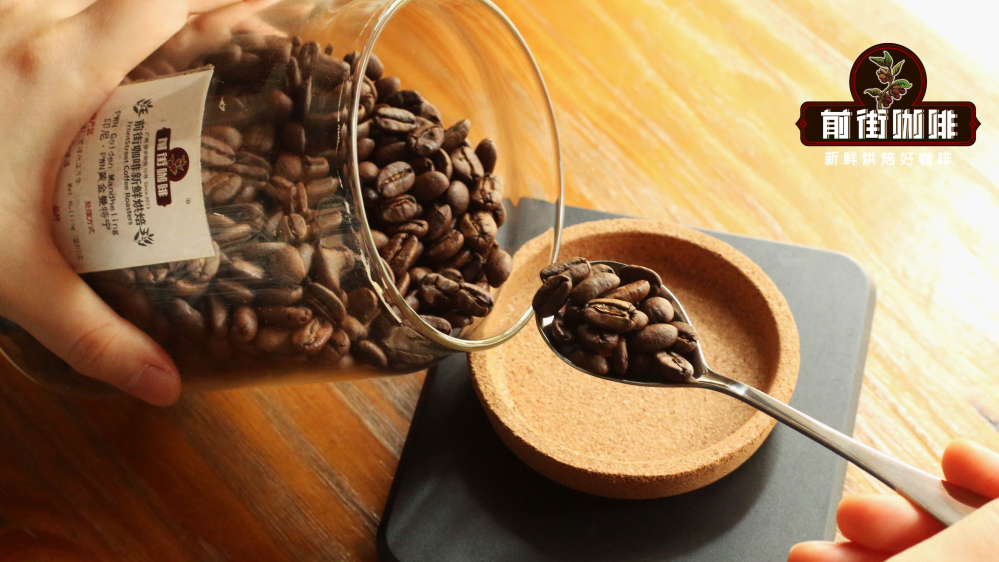
Mandheling mostly uses Sumatra's unique coffee bean processing method—wet hulling. Because the local weather is mostly rainy, with constant typhoons, it cannot achieve the good weather required for natural sun-drying. Moreover, the local economy is not good, so it also cannot use the more expensive washed method. This gave rise to the highly local wet-hulling method. In the first stage, the skin and pulp are removed with a wooden pulper, and after 3 hours of fermentation, the beans are dried until the moisture content drops to 30-50%, half-dry and half-wet. In the second stage, the mucilage and parchment layer are removed, and drying continues for the later stage. The drying process takes 2-4 days, and the moisture content drops to 12-13%.
In addition to the regular wet-hulling method, there is also an aged wet-hulling method.
After the coffee beans undergo ordinary wet hulling, they are sealed and stored in a warehouse for 2~3 years. The warehouse environment must be cool and well ventilated, and the beans must be turned regularly to prevent mold and spoilage. During this period, the acidity of the coffee beans gradually weakens and turns into sugar, and the color also becomes deeper, mostly yellowish-brown or dark brown. Mandheling coffee beans using this processing method are also called Aged Mandheling coffee beans.
Aged Mandheling
Aged Mandheling actually has a long history in Indonesia, because early shipping was not so developed. Transporting coffee from Indonesia to other countries required a considerable amount of time. As time passed, the fresh coffee beans originally rich in moisture gradually dried, and added to this was the blowing of sea breeze, which further added a rather special flavor.
A casual act produced an unexpected result, and this flavor was loved by the European colonists at the time. Gradually, advances in shipping greatly reduced transport time, which also meant these coffee beans did not have enough time to be "baptized" by the sea breeze. The coffee flavor returned to normal, but everyone actually felt the taste was instead not right! Later, people tried every possible way and developed the aging process to restore the taste of these "aged" coffee beans.
How does the aging process "age" coffee beans?
The coffee beans first undergo wet hulling (wet hulling means removing the skin and pulp with a wooden pulper, fermenting for 3 hours, then drying until the moisture content drops to 30-50%, half-dry and half-wet, then removing the mucilage and parchment layer, and continuing the later drying. The drying process takes 2-4 days, and the moisture content drops to 12-13%), and are then sealed and stored in a warehouse. The warehouse environment must be cool and well ventilated, and the beans must be turned regularly to prevent mold and spoilage. They are stored for more than two years and less than three years. During this period, the acidity of the coffee beans gradually weakens and turns into sugar, and the color also becomes deeper, mostly yellowish-brown or dark brown, very recognizable.
FrontStreet Coffee Aged Mandheling Coffee Beans
Region: Aceh, Sumatra, Indonesia
Altitude: 1100-1600m
Variety: Typica 18 mesh Processing method: Aged wet hulling
Through cupping, FrontStreet Coffee believes that Aged Mandheling has less of the wildness of traditional Mandheling in the mouth, and more richness and delicacy, with lower acidity and a sense of mature steadiness. If you want to drink a cup of coffee with high body at Front Street, then Aged Mandheling coffee is your best choice~
Front Street Tiger Mandheling Coffee Beans
Region: Aceh
Variety: Caturra, Typica, Sidikalong Soil: Volcanic soil
Altitude: 1500m
Processing method: Wet hulling
Flavor: Relatively balanced mouthfeel, high cleanliness, with obvious creamy, dark chocolate and nutty flavors.
The Difference Between Mandheling and Golden Mandheling
The Mandheling varieties currently common on the market and relatively widely accepted are Lintong Mandheling and Golden Mandheling. Lintong Mandheling is the most classic Mandheling.
Front Street Lintong Mandheling Coffee Beans
Region: Lintong producing area, Sumatra
Altitude: 1100-1600 meters
Variety: Typica, Caturra
Processing method: Wet hulling
Flavor: Baked toast, nuts, caramel, pine, herbs
Lintong Mandheling comes from the Lintong mountains in north-central Sumatra, near Lake Toba. Lintong Mandheling is the regular version of Mandheling. Lintong Mandheling also uses the regular wet-hulling method, which creates its characteristics of low acidity and high body. But one situation that arises from using wet hulling is that because the half-hard, half-soft moist green beans are easily crushed when the mucilage and parchment layer are removed, the beans are damaged and split open like sheep's hooves, commonly known as sheep-hoof beans. This is not a defective bean, and can be said to be a very notable characteristic of Mandheling.
Lintong Mandheling does not put much effort into sorting, and the lack of refinement in processing easily leads to instability in the coffee beans produced, but this does not diminish people's love for its rich flavor. Typica has a bronze-colored top leaf, and the bean body is oval or slender-pointed, with an elegant flavor, but it is relatively weak, has poor disease resistance, and low yield. Besides Mandheling coffee beans, several other Front Street coffee beans, such as Jamaica Blue Mountain and Hawaii Kona, are also Typica.
Caturra is a natural mutation of the Arabica variety Bourbon, discovered in Brazil in 1937. Its tree is not as tall as Bourbon, and is shorter. Because it inherits Bourbon's bloodline, its disease resistance is relatively weak, but its yield is higher than Bourbon's.
FrontStreet Coffee Front Street PWN Golden Mandheling Coffee Beans
Region: Mount Gayo, Aceh, Sumatra
Altitude: 1100-1600 meters
Variety: Ateng
Grade: G1, 3 times hand-sorted
Processing method: Wet hulling
Flavor: Spices, herbs, caramel, pine, nuts, chocolate
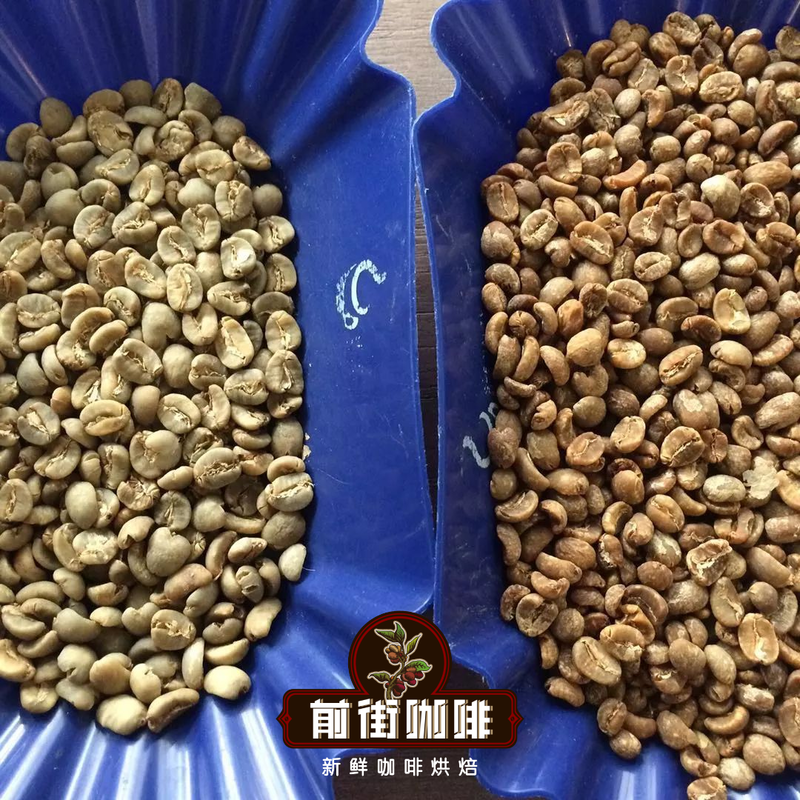
Since the Japanese discovered Mandheling, they have always been very attentive to this coffee bean. In the process of cooperating with local green bean merchants, they established a strict sorting system. After processing, the green beans undergo density and color sorting, and then also require multiple rounds of manual bean selection. The final result is Mandheling with uniform color and uniform bean shape. It is said that when processing the green beans, Mandheling under sunlight gives off a golden luster, hence the name Golden Mandheling.
The specification of Golden Mandheling is 18 mesh or above, with fewer than 3 defective beans (in a 300g green bean sample), belonging to the highest grade G1. The color is on the darker green side, and the shape is neat flat beans. After strict sorting, Golden Mandheling not only no longer has the earthy miscellaneous flavors unique to regular Mandheling, but also drinks cleaner and more transparent, with stronger sweetness and aroma.
However, the company that registered Golden Mandheling as a trademark was not a Japanese company, but the local Indonesian company that cooperated with Japanese companies in the early days to export Mandheling coffee beans—PWN Company (Pwani Coffee Company). The Japanese company registered "Gold Top Mandheling," that is, Ding Shang Golden Mandheling. In terms of flavor performance, the two are actually not very different, but because the brands are different and the merchants' marketing strategies are different, it is possible that public opinion ultimately changed somewhat.
Ateng is a hybrid variety between Arabica and Robusta, with several subtypes, widely planted in Sumatra and other small Indonesian islands. To put it plainly, it is a branch of Catimor; Ateng is the local name.
Further Reading: What Is the Typica Variety 18 Mesh?
Typica has a bronze-colored top leaf, and the bean body is oval or slender-pointed, with an elegant flavor, but it is relatively weak, has poor disease resistance, and low yield. 18 mesh refers to the aperture size of the coffee fruit screen, with the aim of making each bean as close as possible in diameter. When coffee beans are uniform in size, they heat more evenly during roasting, and the brewed coffee will be cleaner and the flavor clearer.
Front Street Roasting Comparison
When FrontStreet Coffee roasts Mandheling coffee, the roasting target is medium-dark, in order to erase Mandheling's excessive acidity and enhance its body and balance.
Machine: Yangjia 800N, 550g green beans charged
Charge temperature 200℃ 200℃
Turning point 5'40" 148℃ 5'18" 147.7℃
First crack 9'54" 191.2℃ 9'00" 186℃
Development after first crack 3'30'' 204.5℃
Drop 4'00'' 202℃ drop
FrontStreet Coffee · Golden Mandheling Roasting Record Sheet
Front Street Lintong Mandheling Roasting Record Sheet
Pour-over Flavor Comparison
When Front Street brews these two Mandheling coffee beans, it tries to keep the brewing parameters as consistent as possible.
Dripper: Kono dripper
Water temperature: 88℃
Dose: 15 grams
Coffee-to-water ratio: 1:15
Grind size: 70-75% passing through a No. 20 standard sieve
Reason for choosing the Kono dripper: The Kono dripper has few ribs and they are located at the lower end. The filter paper clings tightly to the dripper, which can restrict airflow and lengthen the contact time between water and coffee grounds, allowing the coffee grounds to be fully extracted and enhancing the rich mouthfeel.
Front Street uses staged extraction: use 30 grams of water for a 30-second bloom, pour in a small stream in circles until 125 grams for the stage break, and when the water level drops and is about to expose the coffee bed, continue pouring until 225 grams and stop. When the water level drops and is about to expose the coffee bed, remove the dripper. (Timing starts at the beginning of the bloom.) The extraction time is 2'00".
[Flavor Description] Golden Mandheling: Layered and changeable, rich and clean, highly balanced, with intense nutty and caramel aromas, a chocolate note, and a long finish. Lintong Mandheling: Herbal, medicinal notes on entry, dark chocolate, caramel, sweet aftertaste.
For more specialty coffee knowledge, please follow our WeChat official account: FrontStreet Coffee
The above content is compiled by CoffeeHunters, a coffee news website.


